Support

Western North Carolina Nature Center

About

The Western North Carolina Nature Center, located in the charming city of Asheville, USA, is a wonderful place to discover the unique flora and fauna of the Southern Appalachian region. This center is not just a zoo or a botanical garden, but a true educational complex dedicated to the conservation and study of the nature of Western North Carolina.
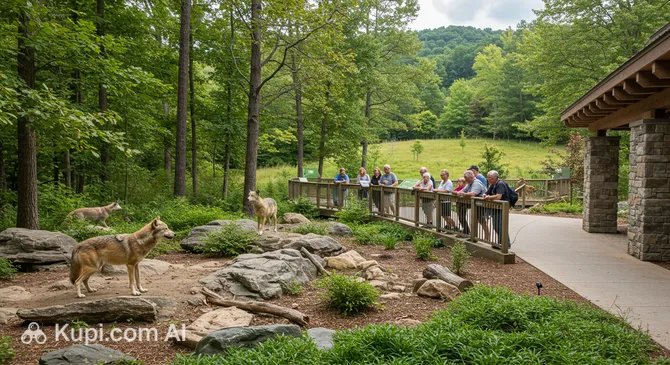
Western North Carolina Nature Center. Illustration.
Source: Kupi.com AI

Traveler photos:

Visitors to the center can see over 60 species of animals native to these parts. Among them are black bears, the elusive red wolves, playful river otters, as well as various reptiles, amphibians, and birds. The animals are kept in spacious enclosures that mimic their natural habitats, allowing for observation in conditions that are as close to the wild as possible. In addition to meeting the animal kingdom, guests can walk along scenic trails and learn about local flora.

The Western North Carolina Nature Center plays an important role in education and outreach. Interactive programs for children and adults are held regularly, teaching the importance of biodiversity conservation and environmental stewardship. Many exhibits are informative, making a visit not only fun but also beneficial. It is an excellent place for a family outing where you can spend the whole day enjoying nature and learning something new about the world around us.

Contacts

For up-to-date information on operating hours, ticket prices, and special programs at the Western North Carolina Nature Center, we recommend visiting the center's official website or contacting local tourist information resources in Asheville. Such centers typically provide detailed information online for the convenience of visitors.

How to contactContact
Address75 Gashes Crk Rd, Asheville, NC 28805, USA
Phone number+1 828-259-8080
Websitewww.wildwnc.org

What to Do

At the Western North Carolina Nature Center, visitors can look forward to an exciting immersion into the region's wildlife. The main activity here is animal observation in environments as close to their natural habitats as possible. You will be able to see iconic residents of the Southern Appalachians, such as black bears, rare red wolves, and amusing river otters. Walking along specially designed trails and observation decks, guests have a unique opportunity to watch the animals' behavior, their play, and daily lives, while capturing some impressive photos.

Beyond observing the fauna, the center offers active exploration of Western North Carolina's flora and ecosystems. Guests can go for a stroll along scenic nature trails, each revealing features of the local landscape and vegetation. Interactive exhibits and educational displays located throughout the park help deepen knowledge about local nature, its fragility, and the importance of conservation. For families with children and all curious visitors, special programs, workshops, and demonstrations are often held, making the visit both pleasant and educational.

The center places special emphasis on its educational mission and engaging visitors in conservation issues. You can learn about conservation programs for rare species, such as the red wolf, and the role the center plays in their protection. For those seeking a quieter experience, there are spots where you can simply enjoy the silence and beauty of nature, watch the birds, or have a small picnic. A visit to the Western North Carolina Nature Center is not just a tour, but an opportunity to touch the amazing world of nature and learn about the importance of preserving it for future generations.

Getting There

The Western North Carolina Nature Center is located right in the city of Asheville, making it relatively accessible for visitors. Asheville, situated in the scenic mountains of North Carolina, is a popular tourist destination, and reaching its attractions is usually quite straightforward. Before your trip, it is recommended to check the center's exact location using online maps or navigation apps to plan the best route from your starting point in the city.

The most convenient way to reach the Western North Carolina Nature Center is likely by car. If you are traveling in your own or a rented vehicle, you can easily get there by following the road signs. In Asheville, as in many cities across the USA, the road infrastructure is well-developed. You can also always use taxi services or popular ridesharing apps. A taxi ride from downtown Asheville or your hotel likely won't take much time, depending on your starting location and traffic conditions.

Regarding public transport, it is worth checking the availability and convenience of routes to the Western North Carolina Nature Center in advance. In some cases, nature centers and parks may be located some distance from major city transit routes, especially if they are in more secluded natural areas. Information about possible bus lines, their schedules, and the nearest stops is best checked on the nature center's official website, at Asheville tourist information centers, or through local transport apps. This will help you choose the most suitable and economical way to reach this wonderful corner of nature.

Nearest city: Asheville

History & Facts

The history of the Western North Carolina Nature Center is inextricably linked to the growing public awareness of the value and vulnerability of the unique Southern Appalachian ecosystem. Often, such initiatives originated in the second half of the 20th century through the efforts of concerned local residents, scientists, and conservationists. Initially, the center's key task was likely to introduce a wide audience to the diversity of local flora and fauna, as well as to draw attention to the need for their preservation in a rapidly changing world. Over time, the center has steadily expanded and developed, transforming from a local project into a prestigious institution dedicated to the deep study and careful preservation of the region's rich natural heritage.

One of the key and notable features of the center since its founding has been its focus on animal and plant species endemic to the mountains of Western North Carolina. It is not just a zoological park showcasing exotic animals from every continent, but a kind of living museum telling the story of the regional environment. From its early years, the center likely paid increased attention to species that were endangered or in need of special population recovery programs. For example, its active participation in conservation programs for rare predators like the red wolf clearly demonstrates the center's long-term commitment to its mission of protecting biodiversity.

An integral and fundamental part of the Western North Carolina Nature Center's history has always been its educational and outreach activities. Since its inception, it has aimed not just to display animals, but to tell engaging stories about their habits, lifestyles, their vital roles in the ecosystem, and the challenges and threats they face in the wild. Gradually, educational programs became more diverse, interactive, and engaging, attracting both organized school groups and families with children looking to spend time meaningfully. Thus, the center has established itself not only as a guardian of natural heritage but also as an important educational hub for the city of Asheville and the surrounding region, instilling a deep love and respect for the world around them in generations of visitors.

Time Needed

A typical visitor should set aside at least 2–3 hours for a full visit to the Western North Carolina Nature Center. This will be enough time to leisurely walk through the main animal enclosures, stroll along some of the scenic trails, and check out the most interesting interactive exhibits. The center offers quite a lot to explore, and there is no need to rush, as the main goal is to enjoy nature and learn something new.

If you plan a more in-depth exploration, want to attend special educational programs or lectures (if held on the day of your visit), participate in any activities, or simply spend more time observing specific animals, your visit could easily take half a day or even more. Photography enthusiasts may also find that time flies by while trying to capture the perfect shot. Families with young children may move at a slower pace, stopping at every enclosure and play area, if available.

Thus, the optimal time to visit the Western North Carolina Nature Center largely depends on your interests and pace. A few hours are enough for a general overview, but for a more complete immersion into the natural world of the Southern Appalachians, it is better to plan for at least half a day.

Working Hours

To get the most accurate and up-to-date information regarding the Western North Carolina Nature Center's operating hours, it is highly recommended to visit its official website or contact the center directly. Usually, such institutions are open to visitors year-round; however, hours may change depending on the season, weather conditions, or special events. On the official site, you can also find out if advance ticket booking or tour registration is required, especially if you plan to visit during peak season or as part of a group.

Generally, nature centers and zoos in the USA have clearly established operating hours that are published in advance. If you cannot find information on the website, it may be worth checking their social media pages or contacting the Asheville tourist information center. Planning ahead will help make your visit as comfortable and fulfilling as possible.

9:30 – 16:30

Nearby

Visiting the Western North Carolina Nature Center is undoubtedly a wonderful experience, but Asheville and its surroundings have much more to offer. Exploring nearby attractions will allow you to dive deeper into the atmosphere of this unique region of the USA, complementing your impressions and making your trip even more fulfilling and memorable. By expanding your itinerary, you can discover new facets of the culture, history, and nature of this area.

Located near the Nature Center are other noteworthy sites that could be a great continuation of your day. Whether they are cultural centers, scenic viewpoints, or other unique spots, they will help you form a more complete picture of the diversity Asheville has to offer.

NameDistance
Blue Ridge Parkway Visitor Center1.7 km
Folk Art Center1.9 km
Hillman Beer4.2 km
White Labs Asheville Kitchen & Tap5.1 km
Pack Square Park5.3 km
Asheville Art Museum5.4 km
Willow Winds Cabins5.4 km

Have you reached the end of the page?

So the route has been studied inside and out