Support

Eastern Sierra Regional Airport

About the Airport

Eastern Sierra Regional Airport is not just an air gateway, but your personal portal to the majestic mountains and untouched nature of California. Located in the picturesque Owens Valley at the foot of the Sierra Nevada mountain range, it serves as the ideal starting point for trips to famous national parks and ski resorts. This small yet strategically important airport saves you the long drive from major metropolises, allowing you to immediately immerse yourself in the atmosphere of adventure in Bishop.
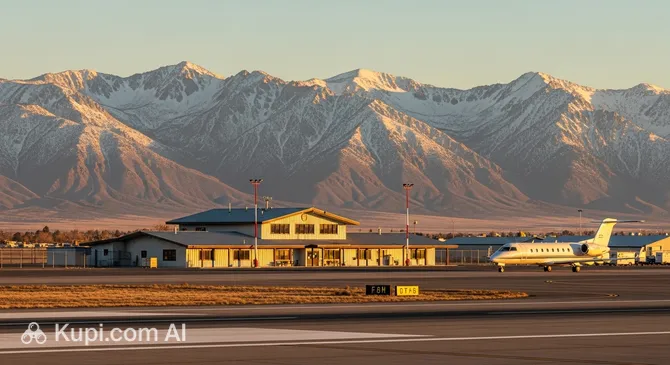
Eastern Sierra Regional Airport. Source: Kupi.com Binoculars
IATA Code BIH
ICAO Code KBIH
City Bishop
Distance to centre 3 km
Status Domestic
Annual Passengers About 15,000
Popular Airlines United Express

The main advantage of the airport is its unique location. It is the nearest commercial air hub for those heading to explore the eastern part of the Sierra Nevada range, including Yosemite, Sequoia, and Kings Canyon National Parks, as well as the popular Mammoth Lakes ski resort. This allows travellers to significantly reduce travel time and quickly find themselves amidst the natural beauties of the USA.

The airport in Bishop is a perfect example of how compactness becomes an advantage. There is no hustle or long queues typical of large international hubs here. The process of check-in, baggage drop, and security screening takes minimal time, making the start and end of your journey as calm and comfortable as possible.

Despite its modest size, the airport offers all necessary amenities for travellers, including car rental services, which is particularly important for further exploration of the region. It is also actively used by private and charter aviation. Flights to this region, especially in clear weather, offer passengers breathtaking views of the mountain peaks right from the window.

Contact Information

  • Official Website: The best place to find up-to-date information, flight schedules, and airport news is the official Inyo County website, in the section dedicated to the Bishop airport. It can usually be found by searching for "Eastern Sierra Regional Airport official website".
  • Inquiry Service Phone: For general questions related to airport operations, you can call the administration. We recommend verifying the current number on the official website, but the main contact phone is often listed as +1 (760) 872-2971.
  • Airport Address: 703 Airport Rd, Bishop, CA 93514, USA.
  • Email: A direct email address for general inquiries may not be available. The most reliable way to contact the administration online is through the contact form on the official website.
  • Social Media: Small regional airports do not always have their own social media pages. News and updates may be published on the official pages of Inyo County.
  • Lost Luggage Information: If your luggage was lost or damaged during the flight, you must immediately contact your airline's representative. The airport service does not search for checked baggage. For items left in the terminal building, please contact the airport administration.
  • Passenger Support Contacts: For all questions related to tickets, flight check-in, cancellations, or delays, you should contact the airline you are flying with directly. Airport staff can assist with terminal navigation and general questions.

How to Get to the Airport

Getting to Eastern Sierra Regional Airport (BIH) from the city centre of Bishop is effortless, as it is located just a few kilometres to the south. The trip usually takes no more than 5-10 minutes, making access to the air gateway of this picturesque corner of the USA quick and convenient. Depending on your budget and preferences, you can choose one of several modes of transport.

The most economical option is public transport. Local transport is provided by the Eastern Sierra Transit Authority (ESTA), whose buses operate throughout the region. This is an excellent choice for budget travellers, however, it is worth checking the schedule on the carrier's official website in advance, as the frequency of trips may be limited, especially on weekends and holidays. There is no rail service or metro in Bishop.

For maximum convenience, use taxi services or ridesharing apps. This is the fastest way to get to the terminal right from your hotel door. The trip will be short and comfortable, but also the most expensive compared to the bus. You can order a car by calling a local taxi company or via mobile apps, if available in the region.

Car rental is a popular choice among tourists planning to explore the national parks and natural beauties of the Eastern Sierra. You can rent a car at one of the rental agencies in the city or directly at the airport. If you are travelling in your own vehicle, parking is provided at the airport. There are zones for both short-term and long-term parking, which is convenient if you are flying away for a few days.

Ultimately, the choice of transport depends on your plans. If you are travelling light and want to save money, the bus will be a good solution. If you value comfort and time, a taxi is your choice. And for those who crave adventure and freedom of movement around the scenic surroundings, the best option would be car rental.

If you are looking for more flight options, it is worth considering other airports in the region, although they are at a significant distance. The nearest is Mammoth Lakes Airport (MMH), located approximately 50 km away. For international flights and a wider choice of destinations, you can consider Fresno Yosemite International Airport (FAT), which is about 140 km from Bishop.

Terminals and Map

Eastern Sierra Regional Airport (BIH) is a small and very passenger-friendly airport. Its key feature is one compact terminal that serves all flights, both departures and arrivals. Thanks to this, navigating here is extremely simple, and you will not spend much time moving around.

The terminal layout is intuitive. Immediately after entering, you find yourself in the general area where airline check-in counters are located. Since the airport serves a limited number of flights, there are rarely large queues here. Departure and arrival zones are under one roof and flow seamlessly into one another, eliminating the need for long walks or shuttles.

For departing passengers, the process is standard: after check-in, you proceed to a small security screening area, and then to the waiting lounge with the boarding gate. For arriving passengers, the path is even simpler: you walk from the aircraft to the terminal building and immediately find yourself in the baggage claim area, located next to the airport exit. All procedures take a minimal amount of time.

Check-in and screening at Eastern Sierra Airport usually go very quickly. Typically, all formalities take no more than 20-30 minutes. Nevertheless, it is recommended to arrive at the airport approximately 60-90 minutes before departure to check luggage and pass control without rushing. The main advice for navigation is simple: it is practically impossible to get lost here. Follow the few signs, and you will easily find everything you need.

Airport History

The history of Eastern Sierra Regional Airport (BIH) begins in 1940, when it was opened as a municipal airfield for the city of Bishop. However, its peaceful existence was short-lived. With the entry of the USA into World War II, the airfield was transferred to the US Army Air Forces and renamed Bishop Army Airfield. During the war years, it played an important role as a base for aircraft maintenance and supply, as well as a training centre for pilots and crews.

After the war ended, in 1945, the airfield was returned to civilian control and began serving the needs of the local population and tourists once again. This moment was key in the development of the airport as the main transport hub for the entire Eastern Sierra region. In subsequent decades, infrastructure gradually developed to meet growing needs—from private aviation to periodic commercial flights connecting this picturesque corner of California with major cities.

Throughout its history, the airport has undergone various stages of modernisation to maintain safety and efficiency standards. Runway reconstructions and terminal updates allowed it to accept various types of aircraft. Today, Eastern Sierra Airport is not only a gateway for tourists heading to ski resorts or national parks but also an important base for general aviation. It also plays a critical role as an operational centre for firefighting aviation during the forest fire season.

One of the most interesting facts about the airport is its unique location in the Owens Valley, between the Sierra Nevada and White Mountains ranges. This makes take-offs and landings here some of the most spectacular in the country. Additionally, thanks to the clean air and special geographical position, the airport is periodically used for scientific and atmospheric research. Although it holds no records for passenger traffic, its multifunctionality and strategic importance to the region make its history truly remarkable.

Services and Amenities

Eastern Sierra Regional Airport (BIH) is a compact and functional air hub offering passengers a necessary set of services for a comfortable wait before departure. Despite its modest size, the airport is designed to ensure convenience for all categories of travellers setting off to explore the beauties of California.

You will not find a wide variety of dining or shopping outlets in the terminal building, however, everything essential is here: vending machines with drinks and snacks where you can have a quick bite. Comfortable waiting areas are equipped for all passengers. There are no specialised VIP lounges in the airport. A significant plus is the availability of free Wi-Fi throughout the terminal, as well as power outlets for charging mobile devices, allowing you to stay connected.

The airport is fully accessible for passengers with reduced mobility: ramps and specially equipped toilets are provided. If you require additional assistance, it is recommended to contact your airline in advance. For families with small children, there are changing tables in the restrooms. In case of necessity, airport staff can provide first aid.

Please note that there are no bank branches or currency exchange points in the terminal, so financial matters are best settled in the city beforehand. There are also no conference rooms or business centres here. If you need to stay overnight, there are no hotels on the airport grounds, but the nearby city of Bishop has many hotels and motels to suit any taste and budget, which can be easily reached by taxi or rental car.

Where to Eat

When planning a trip through Eastern Sierra Regional Airport (BIH), it is important to remember that this is a very small airport with a limited range of services. There are no full-service restaurants or cafes in the terminal building. Options for dining directly at the airport are extremely limited.

Passengers are advised not to count on purchasing hot meals or a variety of snacks before departure. Vending machines with basic drinks and snacks may be installed in the terminal, but this does not guarantee a substantial meal. Travellers with special dietary needs (vegetarians, vegans, those requiring Halal options, as well as those needing gluten-free food) should take care of their meals in advance.

The best solution would be to eat in the city of Bishop, which is a few minutes' drive from the airport. In the city, you will find many cafes and dining venues to suit any taste and budget, where you can have a quiet lunch or grab food to go. Plan your time so that you can refresh yourself before arriving for check-in and security screening.

Travel Tips

Planning a trip through Eastern Sierra Regional Airport requires a slightly different approach than flying from major international hubs. To ensure your journey from Bishop goes as smoothly as possible, follow these tips. Generally, for domestic flights from this small airport, it is sufficient to arrive 1.5 hours before departure. This time is enough to check luggage, check in, and pass security screening without haste, as long queues are rare here.

To save time, check in for your flight online and print your boarding pass in advance or save it on your phone. The security screening procedure is standard for all airports in the USA and is conducted by the Transportation Security Administration (TSA). Have your ID and boarding pass ready. Although screening usually goes quickly, be prepared to remove laptops and liquids in permitted packaging from your carry-on luggage.

When choosing a seat on the plane, consider that the window offers stunning views of the Sierra Nevada mountain range—an excellent bonus to the trip. An aisle seat will provide more legroom and allow you to leave the cabin faster upon arrival. Regarding carry-on luggage, remember the "3-1-1" rule for liquids: containers no larger than 100 ml (3.4 oz), packed in one transparent bag of about one litre in volume. It is prohibited to carry sharp objects, flammable substances, and other dangerous materials.

Eastern Sierra Regional Airport does not serve international flights, so customs and border control are absent here. If you are flying with a connection, it will likely be at a larger airport. Study the map of the transfer airport in advance and ensure you have enough time between flights. Passengers with connections are advised to have all necessary documents for the next segment of the journey with them.

To save money, book tickets and car rentals well in advance, especially during peak seasons (ski season in winter, tourist season in summer). It is also worth bringing an empty water bottle to fill after security, and light snacks, as the choice of food and drinks in a small airport may be limited and expensive.

In case of a flight delay or cancellation, first contact your airline representative at the counter or check information via the mobile app. Sometimes weather conditions in the mountains can be the cause of delays. Have a phone charger, a book, or a pre-downloaded film with you to pass the time comfortably while waiting. Clarify the airline's policy on compensation and passenger assistance in such situations.

Reached the end of the page?

That means the route is fully explored