Support

Lincoln Park Zoo

About

Lincoln Park Zoo is one of Chicago's oldest and most beloved attractions, a true green oasis in the heart of the metropolis. Founded in 1868, it is one of the few free zoos in the USA, making it incredibly popular with both locals and tourists. Located in the picturesque Lincoln Park area, it offers a unique opportunity to observe wildlife in the shadow of skyscrapers.
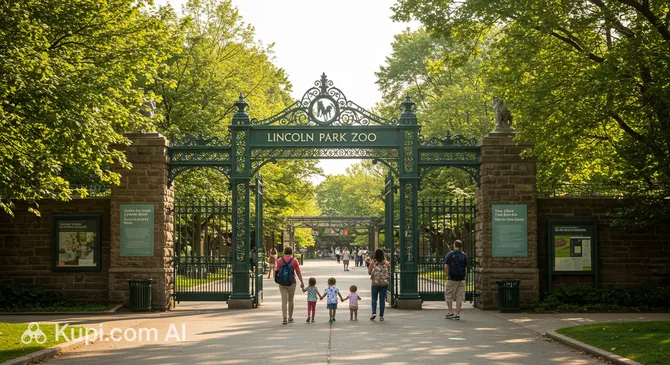
Lincoln Park Zoo. Illustration.
Source: Kupi.com AI

Traveller photos:

A wide variety of animal species from around the world live on its 14-hectare grounds. The zoo is not just a place for walks, but also an important cultural and educational center. It is accredited by the Association of Zoos and Aquariums (AZA), which guarantees high standards of animal care and active participation in rare species conservation programs. It is the only privately managed zoo in the country with free admission, highlighting its uniqueness.

Visitors can look forward to beautifully designed enclosures where they can see lions, gorillas, polar bears, penguins, and many other animals. In addition to learning about the fauna, the zoo offers various educational programs and events throughout the year, making every visit informative and exciting for guests of all ages.

Contacts

For the most up-to-date information on opening hours, special events, and visitor policies, it is recommended to visit the official zoo website. Below are the key contact details to help you plan your visit.

How to contactContact
AddressChicago, IL 60614, USA
Phone+1 312-742-2000
Websitewww.lpzoo.org

What to Do

The main reason people come to Lincoln Park Zoo is, of course, to encounter the amazing world of animals. Visitors can see representatives of fauna from all over the world, housed in thoughtfully designed enclosures. Among the many exhibits, historic pavilions stand out, such as the Lion House (now known as the Pepper Family Wildlife Center) and the Primate House, which bear witness to the zoo's long history. Management places great emphasis on creating conditions as close as possible to natural habitats, allowing guests to observe natural animal behavior, such as seal training and feedings.

In addition to animal watching, the zoo offers plenty of interactive entertainment. Children and adults can ride a carousel decorated with figures of endangered animal species or take a trip on the Lionel Train Adventure. For the youngest visitors, there is the Farm-in-the-Zoo section, where they can get closer to domestic animals and even help care for goats. The zoo also regularly hosts special events, including demonstrations of ape cognitive abilities and penguin feedings.

The zoo is not only a place for walking but also a major scientific center. Visitors can participate in various educational programs for all ages conducted by zoo scientists. These programs focus on protecting ecosystems both in Chicago and in remote corners of the planet, including the Republic of the Congo. This approach turns a regular visit into an educational adventure where you can not only see rare animals but also learn about global conservation efforts.

Getting There

Getting to Lincoln Park Zoo is quite simple, as it is conveniently located in one of Chicago's most famous parks. One of the most convenient and popular ways is to use public transport. Several Chicago Transit Authority (CTA) bus routes pass directly by the zoo. Buses No. 151 and No. 156 stop along Lake Shore Drive, near the east entrance, while routes No. 22 and No. 36 run along Clark Street and Stockton Drive near the zoo's western boundary. This is a great option to avoid parking issues and enjoy city views along the way.

Another public transport option is Chicago's famous subway, known as the 'L'. The nearest stations to the zoo are Armitage (Brown and Purple lines) and Fullerton (Red, Brown, and Purple lines). From both stations, you will need to walk about 1.5 kilometers east to the zoo, which takes about 15–20 minutes. This walk can be a pleasant part of your day, as the route passes through the picturesque Lincoln Park neighborhood.

If you prefer to arrive by car, there is paid parking near the zoo, with the entrance located at the intersection of Fullerton Parkway and Cannon Drive. However, keep in mind that space is limited and parking can fill up on weekends or holidays, and the cost is quite high. Alternatively, you can use taxi or ride-sharing services, specifying the zoo's west entrance on Stockton Drive as your drop-off point.

Nearest city: Chicago

History & Facts

The history of Lincoln Park Zoo began in 1868 with a modest but symbolic gift: the New York Central Park Commissioners presented the park with two pairs of swans. This gesture marked the beginning of one of the oldest zoos in the USA, and its collection quickly began to grow. Soon after the swans, other animals appeared at the zoo, including a cougar, two elk, three wolves, four eagles, and eight peacocks, forming the foundation for what would become Chicago's famous landmark.

The early years of the zoo were full of notable facts and amusing stories. For instance, in 1874, the first bear cub was purchased for just $10; he became famous for his frequent escapes and nighttime strolls through Lincoln Park. However, a truly landmark event was the birth of an American bison here in 1884 — the first of its kind to be born in captivity. This was particularly significant as bison were on the verge of extinction at the time. A few years later, in 1896, the US government purchased part of the herd from the zoo to help restore the population in Yellowstone National Park.

The 20th century was a period of prosperity and large-scale modernization for the zoo. The institution's "Golden Age" is associated with Director Marlin Perkins, who led it from 1944 to 1962 and gained wide fame as the host of the television show Wild Kingdom. In the 1970s and 1980s, the zoo underwent significant transformations: new pavilions were built and modern exhibits were opened, allowing the public to see species that had never been shown here before. These changes laid the foundation for the modern scientific and conservation center that the zoo is today.

Time Needed

To fully experience Lincoln Park Zoo, most visitors need 2 to 3 hours. This is generally enough time to leisurely walk through the main exhibits, see the most popular residents — from big cats and primates to polar bears and penguins — and enjoy the park's lush atmosphere. Given that the zoo covers 14 hectares (35 acres), this amount of time will allow you to walk without rushing and at a comfortable pace.

If you are traveling with children or want to dive deeper into zoo life, plan for 4-5 hours or even half a day. Extra time will be needed to visit special sections like the Farm-in-the-Zoo children's farm, as well as to catch educational keeper talks and animal feedings, such as the seals or penguins. Since zoo admission is free, you can always adjust the length of your visit based on your interests, but for a first-time visit, 2-3 hours is a good starting point for planning.

Working Hours

Lincoln Park Zoo is open to visitors year-round, making it accessible in any season. According to official information, standard operating hours are as follows: the zoo gates and the Farm-in-the-Zoo section open at 8:00 AM, and the main exhibit buildings open at 10:00 AM. Buildings and the farm close at 4:30 PM, and the zoo gates close completely at 5:00 PM. It is important to remember that operating hours may change during special events, so it is highly recommended to check the current schedule on the official zoo website before your visit.

Admission to the zoo is free, and advance reservations for a regular visit are generally not required, allowing guests to plan their visit spontaneously. However, some special attractions inside the zoo, such as the carousel or the train, may require separate tickets. Despite the free entry, the zoo is one of the most popular spots in Chicago, so it can be quite crowded on weekends and holidays.

DayOpening hours
Monday8:00 – 17:00
Tuesday8:00 – 17:00
Wednesday8:00 – 17:00
Thursday8:00 – 17:00
Friday8:00 – 17:00
Saturday8:00 – 19:00
Sunday8:00 – 19:00

Nearby

Visiting Lincoln Park Zoo is a highlight in itself, but exploring its surroundings can make your trip to Chicago even more fulfilling. The Lincoln Park neighborhood and its adjacent areas are rich with diverse attractions, from picturesque beaches on the shores of Lake Michigan to vibrant cultural and entertainment venues. A walk nearby will allow you to better feel the city's atmosphere and discover new interesting places.

Just a few minutes' walk or a short ride from the zoo, you'll find many options to continue your day. By putting together a small itinerary of nearby sites, you can combine spending time with nature and animals with beach relaxation, a cultural program, or culinary discoveries. Below is a list of nearby attractions to help you plan your further exploration of this beautiful area.

NameDistance
North Avenue Beach0.7 km
Kingston Mines1.5 km
Oak Street Beach2.3 km
360 Chicago2.7 km
Church of Saint John Cantius3.2 km
The Chicago Theatre4 km
Navy Pier4.1 km

Reached the bottom of the page?

Looks like you know this route inside out