Support

Columbia (McEntire JNGB)

Airports in the city

About the Airport

Columbia (McEntire JNGB). Source: Kupi.com Binoculars
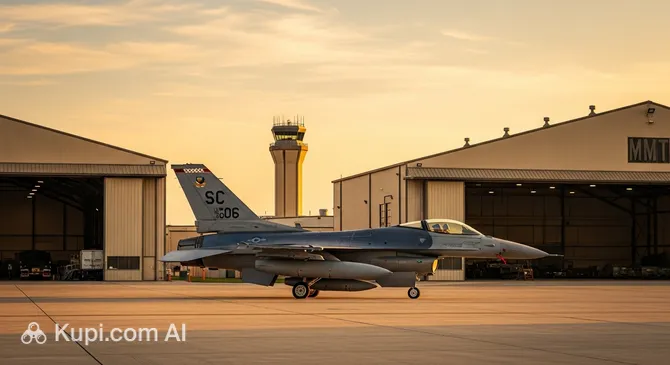
McEntire Airport (McEntire JNGB) is not your typical passenger hub with bustling terminals and duty-free shops; it is a strategically important military base in South Carolina. Travellers should be aware that this facility is home to the famous 169th Fighter Wing, the "Swamp Foxes," and is used by the National Guard, so civilian flights here are an extreme rarity. Unless you are an F-16 fighter pilot or an invited guest of the military department, your landing in the Columbia region will likely take place at the neighbouring civilian airport. However, knowing about the existence of this powerful air hub is useful for every knowledgeable tourist.
IATA CodeMMT
ICAO Code KMMT
City Columbia (Eastover), South Carolina
Distance to Centre ~25 km
Status Military Airbase (JNGB)
Passengers per Year 0 (closed to commercial flights)
ScheduleOnline board

Airport Features and Status

Although McEntire does not serve tourist traffic, it plays a vital role in the life of the region and the country. Here are a few facts to help you get your bearings:

  • Military Purpose: The base is the primary location for the South Carolina Air National Guard. Modern fighter jets are based here, which can sometimes be seen in the skies over Richland County during training flights.
  • Important Warning: Tourists should be careful when booking tickets or planning their route. Do not confuse this airfield (MMT) with the region's main civilian airport — Columbia Metropolitan (CAE), where all scheduled airline flights arrive.
  • Geography: The airfield is located in Eastover, in close proximity to Congaree National Park, known for its ancient forests.

Contact Information

  • Official Airport Website: www.169fw.ang.af.mil
  • Help Desk Phone (Base Operator): +1 (803) 647-8300
  • Airport Address: 1325 South Carolina Rd, Eastover, SC 29044, USA
  • Email (Public Affairs): 169.FW.Public.Affairs.org@us.af.mil
  • Airport Social Media: Facebook, Twitter, YouTube (current links available on the official 169th Fighter Wing website)
  • Lost Luggage Information: Not provided (military facility, commercial passenger flights are not served)
  • Passenger Support Contacts: None (access to the base territory is restricted, civilian transport is not conducted)

How to Get to the Airport

Since McEntire (McEntire JNGB) is an active military facility with restricted access, planning a trip here differs significantly from a route to a standard civilian airport. It is important to understand: there are no scheduled buses for tourists here, and entry to the territory is strictly by pass only.

If your goal is a tourist trip to the capital of South Carolina, you have most likely mistaken your destination, and you need Columbia Metropolitan Airport (CAE), which accepts all commercial flights. If, however, you have an official visit planned to the base or are heading to an air show (which are sometimes held here), the available transport options are listed below.

Car and Rental

A personal or rented car is the most reliable and, essentially, the only convenient way to get to the base, located in the rural area of Eastover. The drive from the city centre of Columbia takes about 30–40 minutes (approximately 25–30 km) depending on traffic.

  • Route: The main path lies along US-378 East (Garners Ferry Road). You need to drive east from the city to the intersection with South Carolina Highway 263.
  • Parking: There are parking zones on the base territory, but they are intended exclusively for military personnel and authorised visitors. There is no paid parking provided for civilians here.

Taxi and Transfer

Taxi services and ride-hailing apps (Uber, Lyft) operate in the region but have their limitations when travelling to a military facility.

  • Cost: A trip from the centre of Columbia to the base checkpoint will cost approximately 35–50 dollars.
  • Important Nuance: Civilian taxi drivers do not have the right to enter the base territory without special clearance. You can only be dropped off at the main security checkpoint, from where it may be a long distance to the required building.

Public Transport

Regular public transport (buses or trains) connecting the city with McEntire Air National Guard Base does not exist. The nearest bus routes of the COMET system end significantly earlier, not reaching Eastover.

Nearest Civilian Airports

For ordinary travellers, we recommend using civilian aviation hubs located nearby. They possess developed infrastructure, car rentals, and convenient connections to cities:

Terminals and Map

When it comes to the structure of McEntire Airport (MMT), it is important to clarify immediately: you will not find the familiar layout with Terminals A, B, or C here. Since this is an active military facility (McEntire Joint National Guard Base), its architecture and logistics are subject to strict defence and combat training tasks, not passenger comfort.

Number of Terminals and Purpose

McEntire Airport lacks passenger terminals in the classical sense. There are no departure zones, waiting lounges, Duty Free shops, or baggage belts here. The entire complex represents a single functional zone divided into security sectors:

  • Operational Zone: Includes runways, taxiways, and aprons for parking F-16 fighters and helicopters.
  • Hangars and Technical Buildings: Instead of gates, hangars for aircraft maintenance and equipment warehouses are located here.
  • Administrative Sector: The headquarters and offices of the 169th Fighter Wing, where access is closed to outsiders.

Navigation Map and Transfers

For a civilian tourist, the navigation map inside the base is irrelevant, as free movement around the territory is strictly prohibited. "Transfers" between buildings are carried out exclusively by service transport or on foot along strictly regulated routes for personnel.

If you are used to convenient signs pointing "To Boarding Gates," the only signs here will be warnings about restricted access zones and security requirements. Remember: any attempt to enter a prohibited zone or photograph infrastructure objects without permission may lead to serious legal consequences.

Departure, Arrival Zones and Security Procedures

Procedures at McEntire differ radically from civilian airports. There are no check-in counters that close 40 minutes before departure.

  • "Check-in": For military personnel and official guests, the clearance procedure begins at the security checkpoint (gate) upon entering the base. Document checks can take from 15 minutes to an hour depending on the access level.
  • Screening: Conducted by military police using specialised equipment. This is much stricter than standard TSA screening.
  • Boarding Zones: Boarding military aircraft (if provided for personnel transfer) takes place directly on the apron, often without the use of jet bridges.

Navigation Recommendations for Tourists

The main recommendation for a traveller looking for their terminal in Columbia: check your ticket again. With 99.9% probability, your flight departs from the civilian Columbia Metropolitan Airport (CAE). It is located approximately 30 kilometres from the McEntire base and features one convenient passenger terminal with two concourses, where cafes, rest zones, and clear navigation await you.

Airport History

The history of McEntire Airport (MMT) is a chronicle of South Carolina's military glory, closely intertwined with the development of American fighter aviation. Unlike civilian airports, where history is written by the number of passengers transported, the chronology of this base is measured by generations of combat machines and the heroism of pilots.

Founding and Military Baptism

The airfield was officially opened in 1943, at the height of World War II. At that time, the facility was named Congaree Army Airfield. Its main task was training flight crews for medium and light bombers (B-25 Mitchell and A-26 Invader). After the war ended, in 1946, the base found new life, becoming the home for the state's forming Air National Guard, which determined its fate for decades to come.

A Name That Became Legend

The base received its current name in 1961 in honour of Brigadier General Barnie B. McEntire Jr., the first commander of the South Carolina Air National Guard. This renaming was a tribute to his incredible courage.

In May 1961, while piloting an F-104 Starfighter jet over Pennsylvania, the general encountered an engine failure. Beneath the wings lay a densely populated area of Harrisburg and a school. Instead of safely ejecting, McEntire decided to stay in the cockpit until the last moment to steer the falling machine towards the Susquehanna River. He perished, but saved the lives of hundreds of people on the ground.

The Era of "Swamp Foxes" and Jet Power

The history of the airfield is inextricably linked with the famous 169th Fighter Wing, known as the "Swamp Foxes." This nickname refers to Revolutionary War hero Francis Marion and has become a symbol of the tactical skill of local pilots.

  • 1950s: The beginning of the jet era. The base was modernised to receive the first F-80 Shooting Star jet fighters, and later the supersonic F-104s.
  • Rearmament: In different years, the legendary F-4 Phantom IIs were based here, and since the early 1990s, the multi-role fighter F-16 Fighting Falcon became the main aircraft. Servicing them required a massive reconstruction of hangars and lengthening of the runway.
  • 2005: An important milestone in recent history — the facility received the status of "Joint National Guard Base." Now, not only pilots are stationed here, but also army units with Apache attack helicopters and Black Hawk transport helicopters.

Records and Interesting Facts

Over the years of its existence, McEntire has accumulated quite a few unique achievements that go beyond ordinary military service:

  • Space Harbour: Thanks to its long runway and favourable location, the airfield was certified by NASA as one of the reserve sites for the emergency landing of Space Shuttle orbiters.
  • Best Marksmen: Pilots of the "Swamp Foxes" have repeatedly won the prestigious US Air Force "Gunsmoke" competition, proving that National Guard pilots can surpass their active-duty colleagues in shooting and bombing accuracy.
  • "Wild Weasels": The 169th Fighter Wing became the first Guard unit to master the complex "Wild Weasel" missions — suppression of enemy air defences using specialised weaponry.

Services and Facilities

Since McEntire (MMT) is an active military base and not a commercial transport hub, the range of services here differs radically from what tourists are used to. You will not find shining Duty Free displays, spas, or playrooms for children here. All infrastructure is subject to strict discipline, functionality, and the support of military personnel.

If you find yourself here as an official guest or event participant (for example, an air show), it is important to know in advance what level of comfort you can count on.

Restaurants, Cafes, and Shops

Forget about food courts with famous fast-food brands or Starbucks coffee shops. Dining on the base is organised on the principle of providing for the personnel:

  • Dining Facilities (DFAC): Specialised canteens operate for service members, offering hearty and balanced meals. Access here for civilians is possible only when accompanied by an officer and with special permission.
  • Base Exchange (BX): Instead of shopping centres, a military store (Exchange) functions on the base. Here you can buy necessities, snacks, electronics, and tactical gear. Important: Only holders of a military ID card have the right to make purchases in such stores. An ordinary tourist cannot buy anything here.

Banks and Currency Exchange

There are no currency exchange points oriented towards tourists here. Financial services are represented by ATMs or small branches of credit unions serving the armed forces (e.g., Navy Federal or USAA). They are located in administrative zones and are not intended for general use by civilian visitors.

Connectivity and Wi-Fi

Unlike civilian airports where free Wi-Fi is standard, strict cyber security protocols operate at McEntire base.

  • Internet: There are no public open Wi-Fi networks here. Existing networks are secured and intended exclusively for official use.
  • Charging Stations: Special stands for charging gadgets in corridors are not provided. If you are an invited guest, it is recommended to carry a fully charged power bank.

Waiting Lounges and VIP Services

The concept of a "business lounge" is absent here. For senior command staff, there are officer clubs or briefing rooms that may boast slightly more comfort (presence of a coffee machine and soft chairs), but it is impossible to get there with a Priority Pass card. Waiting for a flight (if it concerns personnel transfer) takes place in simple halls or directly in hangars.

Medical Services and Accessibility

The base infrastructure complies with US federal standards, so main buildings are equipped with ramps and restrooms for people with disabilities.

  • Medicine: There is a medical unit on the territory, but it is oriented towards treating personnel and conducting medical examinations for pilots. In emergencies, first aid will be provided, but there is no pharmacy for travellers here where one can buy motion sickness medication or plasters.
  • Children: Mother and child rooms or playgrounds are not provided in the operational zone of the airfield.

Accommodation: Hotels

There are no commercial hotels on the McEntire base itself. Barracks or dormitories (billeting) are provided for deployed military personnel. Tourists and guests of the region should look for accommodation outside the guarded perimeter.

The nearest comfortable hotels are located towards the city of Columbia (about 20–30 minutes drive):

  • In the Garners Ferry Road area, mid-range motels can be found.
  • Chain hotels of major brands are concentrated closer to the state capital's centre or near the civilian airport.

Conference Rooms

"Business centres" on the base are rooms for tactical planning and classified meetings. They are equipped with advanced equipment, but it is impossible to rent them for a civilian business meeting.
Where to Eat

If you are accustomed to being greeted at the airport by the aroma of fresh coffee and signs of popular chain restaurants, then McEntire (MMT) will surprise you. There is no gastronomic variety here characteristic of civilian hubs. Since this is a military facility, food here is a matter of logistics and maintaining combat readiness, not pleasure and service. For "passengers" (in this case — military personnel and official guests), completely different rules apply.

Main Dining Zones: Canteen and Exchange

Forget about the division into "clean" and "dirty" zones with food courts. All dining infrastructure is located inside the guarded perimeter (Airside/Secure zone) and is accessible only with a pass.

  • DFAC (Dining Facility): The base's main canteen. This is not a restaurant, but a functional establishment with a serving line. Breakfast, lunch, and dinner are served here according to a strict schedule. The food is hearty, balanced, and intended to replenish calories after physical exertion.
  • Base Exchange (BX) Snack Bar: A small fast-food zone attached to the store. Usually, you can find sandwiches, hot dogs, pizza, or basic fast food here (often franchises like Subway or Burger King adapted for the military format), as well as coffee and snacks.
  • Vending Machines: Scattered across hangars and administrative buildings for a quick snack "on the go."

Menu and Local Cuisine

Finding authentic South Carolina delicacies right on the base is unlikely. The menu here is standardised according to US federal regulations.

  • What you can find: Classic American "comfort food": burgers, steaks, fried chicken, mashed potatoes, Mac & Cheese.
  • What is missing: They do not serve signature South Carolina barbecue with mustard sauce or exquisite seafood dishes (Shrimp and Grits) for which the region is famous. For these tastes, you will have to go into the city.
  • Alcohol: Bars in the usual sense are absent. Alcohol consumption on duty is strictly regulated. Access to beer or wine is possible only in specialised recreation zones (for example, in the officers' club) during off-duty hours and is often restricted for visitors.

Special Dietary Requirements (Vegetarian, Halal, Gluten-Free)

Military dining facilities (DFAC) are required to account for the diversity of personnel, so the choice for people with special dietary needs is surprisingly decent here, though without frills.

  • Salad Bar: A large selection of fresh vegetables and greens is almost always available — a salvation for vegans and vegetarians.
  • Labelling: Dishes on the serving line usually have colour coding (green/yellow/red) indicating calorie count and healthiness ("Go for Green" programme).
  • Halal and Kosher: Specialised MREs (Meals Ready-to-Eat) are available upon request, but in the hot canteen menu, the choice may be limited (usually there are options with chicken or fish).

Prices and Payment

One of the few advantages of military dining is the cost.

  • Average Bill: A full lunch in the canteen will cost a symbolic 5–7 dollars. Prices are subsidised by the state.
  • Payment Methods: Cards (including special military Eagle Cash) and cash are accepted. However, we remind you: it is impossible to simply walk in off the street and have lunch here.

Opening Hours

Dining is subject to the base's daily schedule. If you are late for the serving time, the canteen doors will be closed.

  • Breakfast: Usually from 06:00 to 08:00.
  • Lunch: From 11:00 to 13:00 (the busiest time).
  • Dinner: From 17:00 to 19:00.
  • On weekends and holidays, the schedule may shift ("brunch" mode).

Recommendations for Tourists

Since access to dining on the base is closed for the ordinary traveller, we recommend planning lunch outside the airfield. The nearest gastronomic spots are in the city of Columbia (about 25–30 minutes drive):

  • For a quick snack: On highway US-378 on the way to the base, there are several chain diners and petrol stations with an expanded food assortment.
  • To experience the cuisine: Be sure to visit local BBQ houses in Columbia. Try slow-cooked pork with the traditional South Carolina Carolina Gold mustard-based sauce.

Travel Tips

Travelling through the military airfield McEntire (MMT) differs radically from the experience in a civilian airport. There is no familiar bustle here, but there are strict regulations and safety rules. Our tips are oriented primarily towards those few civilians who may find themselves here by official invitation, participants of the Space-A flight programme (for military and their families), or air show guests.

Main Tip: Check Your Ticket!

Before delving into details, ensure that your ticket indeed specifies the code MMT. In 99% of cases, tourists confuse this military base with the civilian Columbia Metropolitan Airport (CAE). If you are flying with Delta, American Airlines, or United — you definitely do not need to be here. The mistake will cost you a missed flight, as the distance between the facilities is about 30 km.

Arrival Time Recommendations

If you have an official visit planned or a departure via military transport aircraft (Space-A category), the "arrive 2 hours early" standards work differently here.

  • For obtaining a pass: Allocate at least 30–45 minutes extra for the temporary pass issuance procedure at the Visitor Control Centre near the main gate. Queues are rare here, but document verification (biometric background check) can take time.
  • For Space-A departure: It is recommended to arrive no later than 2–3 hours before the estimated departure time. The schedule of military flights often changes ("sliding schedule"), and it is better to be on site in advance.

Registration and Security Features

Forget about removing shoes and placing laptops in plastic trays like in TSA. Here, security begins long before the runway.

  • Entry Control: Your vehicle may be subjected to a full inspection at the checkpoint. Be prepared to open the boot, glove compartment, and bonnet. All passengers must have identification documents (Real ID) with them.
  • Absence of Counters: There are no check-in counters with smiling agents here. Flight check-in ("Roll Call") takes place in the passenger terminal (if one exists) or directly in the hangar with the responsible loadmaster officer.

Seat Selection on the Plane

The concept of "choosing a window seat" on a military base is a great luxury.

  • Aircraft Type: Most often, flights are carried out on C-130 Hercules or C-17 Globemaster cargo planes. Instead of armchairs, there may be canvas side benches (web seating).
  • Tip: Dress in layers. It can be very cold or, conversely, hot in military transport planes. We also highly recommend bringing earplugs or noise-cancelling headphones — sound insulation in such planes is practically absent.

Hand Luggage: What is Allowed and Prohibited

Luggage regulations here are dictated not by commercial profit, but by operational security (OPSEC).

  • Strict Prohibition: It is categorically forbidden to bring professional cameras, drones, and radio scanners onto the airfield without written permission from the command (Public Affairs Office).
  • Electronics: Phones are allowed, but the use of cameras may be restricted. By taking a selfie with secret equipment in the background, you risk not only the deletion of the photo but also a serious conversation with the military police.
  • Weapons: Despite the military status of the facility, personal firearms are strictly prohibited for civilians on the base.

Recommendations for Connecting Passengers

McEntire Airport is a final destination, not a transit hub. There are no connecting flights here.

  • Transport: If you need to get from here to a civilian airport or train station, arrange a transfer in advance. Uber/Lyft taxis will not be let onto the territory; they will drop you off only at the outer perimeter, from where it may be several kilometres to the aircraft parking. Arrange for the meeting party to pick you up in a car with a pass.

Customs Control

If you arrive at the base from abroad (for example, returning contingent), the customs clearance procedure (Customs and Border Protection) is conducted directly on board or on the apron.

  • Agricultural Products: Military customs are extremely strict regarding the import of food products, fruits, soil, or souvenirs of animal origin from other countries. Fines for a "forgotten" apple in a backpack are issued instantly here.

What to Do in Case of Flight Delay

In military aviation, there is a saying: "Hurry up and wait."

  • Mission Priority: Departure can be postponed or cancelled at any moment due to a change in combat mission, weather, or technical malfunction. No compensation, hotel vouchers, or food are provided.
  • Plan B: Always have a backup option (money for a hotel or a ticket for a commercial flight from a civilian airport) if your military flight does not depart on schedule.
  • Entertainment: Bring a book, a power bank, and downloaded movies. Wi-Fi may not be available, and the wait could be long.

Reached the end of the page?

That means the route is fully explored