Support

John F. Kennedy Memorial Plaza

About

The John F. Kennedy Memorial Plaza is an iconic and moving landmark in Dallas, USA, dedicated to the memory of the 35th President of the United States. Located near Dealey Plaza, where John F. Kennedy's life tragically ended on November 22, 1963, this plaza serves as a place for reflection and honor of his legacy.
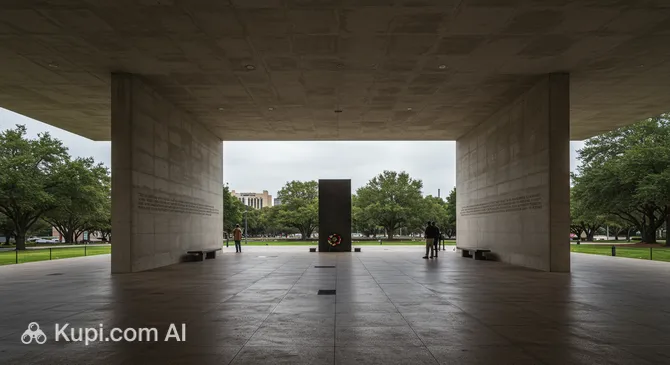
John F. Kennedy Memorial Plaza. Illustration.
Source: Kupi.com AI

Traveler photos:

Conceived as a cenotaph, or "empty tomb," the memorial is an impressive structure. Its high, seemingly floating walls are made of white marble, creating a sense of an open yet secluded space. At the heart of the plaza is a low black granite cube, engraved in gold with Kennedy's name and dates of life. White stones surround this central element, symbolizing the nation's unity in the face of tragedy and difficult times.

This is more than just a monument; it is an important historical site that serves as a reminder of a turning point in American history. The John F. Kennedy Memorial Plaza is part of a historic district where Main, Elm, and Commerce Streets converge. A visit here is often paired with a walk through nearby Dealey Plaza, often called the "birthplace of Dallas."

Contacts

Since the John F. Kennedy Memorial Plaza is an open public space, it does not have a direct contact phone number or an official website. For the most up-to-date visitor information, nearby tourist services, or events taking place in this area of Dallas, it is recommended to consult the city's official tourism portal.

How to contactContact
Address646 Main St, Dallas, TX 75202, USA
Phone number+1 214-747-6660
Websitewww.jfk.org

What to Do

Visitors to the John F. Kennedy Memorial Plaza can first and foremost explore the architectural ensemble itself. This stark and minimalist structure was designed by architect Philip Johnson, who sought to fulfill the wishes of the President's widow, Jacqueline Kennedy. While here, you can feel an atmosphere of deep respect and remembrance, taking time for quiet reflection on the legacy of John F. Kennedy. The open space, enclosed by high marble walls, is specifically designed for solitude and honoring his memory.

For a deeper dive into the historical context of the events surrounding the President, many visitors combine their time at the plaza with a visit to the nearby, world-famous Sixth Floor Museum. The museum's exhibits tell the detailed story of John F. Kennedy's life, work, and tragic death through unique photographs, authentic artifacts, and historical documents. This provides a better understanding of the significance of those November days in 1963 and deepens the historical context.

Within the memorial grounds, observant visitors may also notice the white crosses on the street. These markings reportedly indicate the spots where shots hit President Kennedy's limousine, adding another poignant layer to the visit and the contemplation of the tragedy that occurred.

Getting There

Getting to the John F. Kennedy Memorial Plaza is quite easy, as it is located in the heart of Dallas, within the historic West End district. If you are traveling by car, the plaza is situated near the intersection of major thoroughfares such as Main Street, Elm Street, and Commerce Street. Downtown Dallas has a well-developed road network, and finding nearby parking is usually straightforward, though it can be more challenging during peak hours.

For those who prefer public transportation, Dallas offers convenient options. The memorial can be reached via numerous bus routes that run through the city center. Additionally, streetcars operate downtown, with stops often within walking distance of the plaza. Thanks to this developed transport infrastructure, the John F. Kennedy Memorial Plaza is easily accessible from almost anywhere in Dallas.

If you are arriving in Dallas from another city or country, the nearest major transport hub is Dallas/Fort Worth International Airport (DFW). From the airport, you can reach the downtown area where the memorial is located in several ways: by taxi, rental car, or by using public transportation, such as dedicated shuttles or trains connecting the airport to central Dallas.

Nearest city: Dallas

History & Facts

The history of the John F. Kennedy Memorial Plaza is inextricably linked to the adjacent Dealey Plaza. Completed in 1940 as part of the WPA (Works Progress Administration) program, Dealey Plaza was named after George Dealey, a prominent Dallas publisher and civic leader. It was here, at Dealey Plaza, on November 22, 1963, that a tragedy occurred that shocked the world—the fatal shooting of President John F. Kennedy. This tragic event forever etched Dallas and this location into the annals of US history, instantly placing it on the international stage.

The John F. Kennedy Memorial itself, located on the plaza of the same name, was opened to the public in 1970, seven years after the tragic events. Designed by the renowned architect Philip Johnson, the memorial is an impressive cenotaph in the form of a marble cube. Notably, the President's widow, Jacqueline Kennedy, was personally involved in the design selection process, seeking to create a space that would worthily immortalize her husband's memory and reflect the depth of national mourning.

The significance of this historic site was officially recognized at the national level. In 1993, Dealey Plaza, a silent witness to one of the most dramatic moments in American history, was designated a National Historic Landmark. This decision underscores its exceptional importance not only to the people of Dallas but to American history and culture as a whole, serving as an eternal reminder of the life, legacy, and tragic death of John F. Kennedy.

Time Needed

Generally, 30–45 minutes is sufficient to explore the John F. Kennedy Memorial Plaza itself. This time allows you to soak in the atmosphere, appreciate the architectural design of the cenotaph memorial and the granite cube inscribed with the President's name, and spend a few moments in quiet reflection.

However, many visitors choose to combine their visit to the plaza with a trip to the Sixth Floor Museum, located in the former Texas School Book Depository building from which the shots were allegedly fired. The museum's exhibits are extensive and detail the life and tragic death of John F. Kennedy. If you plan to visit the museum as well, you should set aside an additional 1.5–2 hours.

Therefore, the total time required for a full experience of the memorial complex and the museum can range from 2 to 3 hours. If your interest is limited to the plaza itself, less than an hour will be quite sufficient.

Working Hours

The John F. Kennedy Memorial Plaza in Dallas is an open public space and is therefore available to visit 24 hours a day, year-round. No advance booking or tickets are required for the memorial itself.

However, please note that nearby museums and other institutions related to President Kennedy's history, such as the Sixth Floor Museum, have their own operating hours and may require ticket purchases. We recommend checking the official websites of these organizations or Dallas tourist information centers in advance for up-to-date information on their schedules and visiting requirements.

Open 24 hours

Nearby

Visiting the John F. Kennedy Memorial Plaza is undoubtedly a deeply moving experience. However, to make your trip to Dallas even more enriching and complete, it is worth exploring the nearby attractions. Discovering the surroundings will help you better understand the historical and cultural context of this iconic landmark and uncover other fascinating corners of the city.

Several significant sites are located near the memorial, which can complement your experience and expand your Dallas itinerary. From historical museums to modern entertainment centers, the variety is broad enough for everyone to find something of interest.

NameDistance
The Sixth Floor Museum at Dealey Plaza0.2 km
The Dallas World Aquarium0.5 km
Perot Museum of Nature and Science0.9 km
Dallas Museum of Art1.1 km
Terry Black's Barbecue2.6 km
Medieval Times Dinner & Tournament2.8 km
African American Museum of Dallas3.9 km

Have you reached the end of the page?

So the route has been studied inside and out