Support

Dugway (Michael AAF)

About the Airport

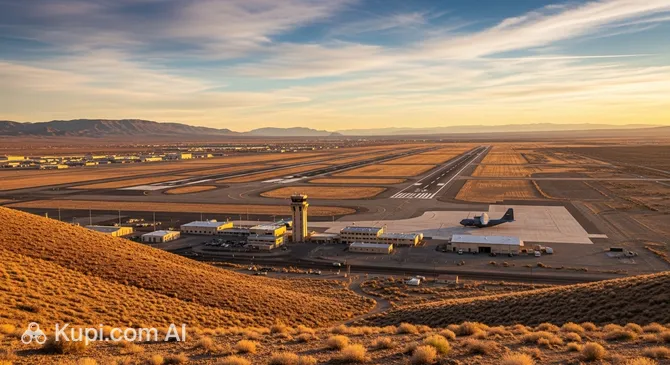
Dugway (Michael Army Airfield). Source: Kupi.com Binoculars

Michael Army Airfield, located in the vast expanses of the Great Salt Lake Desert, is far from the typical air harbour tourists are accustomed to. This airfield serves as a key transport hub for the Dugway Proving Ground, shrouded in an aura of mystery and dedicated to specialised government missions. Its gigantic runway, capable of accepting practically any type of aircraft, stands out sharply against the harsh and ascetic landscape of Utah.

It is important for travellers to understand that Michael is an active military facility, access to which is strictly regulated and closed to ordinary civil aviation. You will not find familiar terminals with cafes and duty-free shops here; instead, the airfield lives in a rhythm of strict discipline and scientific research. Nevertheless, for aviation and history enthusiasts, this site represents a unique landmark symbolising power and technological potential in one of the most isolated corners of the USA.

IATA CodeDPG
ICAO Code KDPG
City Dugway, Utah
Distance to Centre ~3 km (located within the proving ground)
Status Military (closed to civil flights)
Annual Passengers Data not disclosed (restricted facility)
ScheduleOnline board

Features and Advantages of the Airport:

The main pride of the airbase is its runway, which is over 3 kilometres long (about 11,000 feet). It is so extensive and of such high quality that it was once considered as one of the emergency landing sites for the Space Shuttle. This highlights the exceptional technical characteristics of the surface and the facility's readiness to receive heavy aviation.

Another feature is its strategic isolation. Its location far from major settlements ensures ideal conditions for conducting tests without risk to the civilian population. For the few who receive permission to land, an incredible view of desert landscapes opens up, often compared to the surface of another planet.

Finally, the airport boasts the highest level of security. Being part of a military proving ground, it is equipped with advanced control and protection systems. This creates a special atmosphere of seriousness and professionalism that is felt even from a distance, making Michael a sort of "closed club" in the world of aviation.

Contact Information

Since Michael Army Airfield is an active military facility within the Dugway Proving Ground, standard contact information for civilian passengers differs here from ordinary airports. Below are the current details for contacting the base's official services:

  • Official Website: www.dugway.army.mil (official resource of Dugway Proving Ground)
  • Base Operations Phone: +1 (435) 831-5322 (for questions related to the airfield)
  • Visitor Control Center Phone: +1 (435) 831-2244 (information on passes and access)
  • Address: Michael Army Airfield, Dugway Proving Ground, Tooele County, Utah 84022, USA
  • Email: There is no direct public address for passengers. For official inquiries, it is recommended to use the feedback form on the website or contact the Public Affairs office.
  • Social Media: Official U.S. Army Dugway Proving Ground Facebook page (current news of the proving ground and airfield).
  • Lost Luggage Information: Service unavailable. As the airfield does not serve commercial civil flights, there is no classic Lost & Found service here.
  • Support Services Contacts: For all questions regarding visits or logistics, it is necessary to contact the hosting officer (visit sponsor) or the proving ground duty desk at +1 (435) 831-2929 (24/7).

How to Get to the Airport

It is important to remember that Michael (the airbase) is a restricted facility with strictly limited access. You cannot buy a regular plane ticket here, and civilian public transport does not serve this location. For most visitors (personnel, contractors, or guests with an official invitation), the journey to the airfield begins with arrival at one of the region's major civilian airports, followed by a trip by car.

Personal Car and Rental

This is the most reliable and, essentially, the only way to get to Dugway on your own. The route usually lies from Salt Lake City. A trip in a rental car will take about 1.5 – 2 hours (approximately 135 km). The route follows Interstate I-80 West, then you need to turn south onto UT-196 (Skull Valley Road).

The road runs through desert terrain, so it is recommended to:

  • Fill up a full tank of petrol in advance (there are practically no petrol stations on the UT-196 highway).
  • Have a supply of water and food.
  • Download offline maps, as mobile coverage may be unstable.

Upon arrival, all vehicles undergo inspection at the Visitor Control Center located at the entrance to the proving ground.

Taxi and Transfer

Ordering a regular taxi (Uber, Lyft) from Salt Lake City is possible, but it will be an extremely expensive trip. The estimated cost one way can range from $150 to $250 and higher. An important nuance: the taxi will only take you to the outer gates. Entry of a commercial taxi onto the base territory without a special pass is prohibited. Furthermore, calling a car for the return trip from the desert will be practically impossible.

Official delegations and employees often use specialised shuttles organised by the proving ground itself or the military department.

Public Transport

Regular public transport (buses, trains, or metro) connecting Utah cities with Michael Airbase does not exist. The nearest Greyhound bus stops are in Salt Lake City, far from the base gates.

Parking

There are parking zones directly at the airfield and administrative buildings, but they are intended exclusively for service vehicles and personal cars of employees with appropriate stickers. Guest parking is available at the Visitor Control Center before entering the base. Leaving a car on the shoulders of access roads (UT-196) is not recommended.

Nearest Civilian Airports

Since Michael is closed to commercial flights, travellers use neighbouring civilian aviation hubs. The main hub is Salt Lake City International Airport (SLC), located approximately 103 km away. This is the region's largest airport, accepting international flights.

Other options for arrival:

Terminals and Map

Structure and Terminals: Features of a Military Facility

When planning a visit or studying information about Michael Airfield (DPG), it is important to immediately discard familiar notions of civilian airports. There is no division into Terminal 1 or Terminal 2 here, no gates with jet bridges, and no waiting lounges with soft armchairs. The entire infrastructure of the airbase is subject to strict military logic and functionality.

Number of Terminals and Their Purpose

Instead of classic passenger terminals, the airport has a single flight control complex (Base Operations) and a series of hangars. This building acts as the administrative centre and "terminal" for arriving crews and authorised personnel.

  • Operations Centre: Pre-flight briefings, flight plan registration, and processing of arriving cargo take place here. For passengers (usually military personnel or scientists), a small waiting area of a spartan type is allocated.
  • Hangars: Serve for maintenance and storage of aircraft. Access there is strictly limited and possible only for technical personnel.

Airport Map and Navigation

The airfield layout is extremely simple and linear, which eliminates the possibility of getting lost, however, free movement here is prohibited.

Navigation is built around the gigantic runway and the adjacent apron. Buildings are located along the apron line. Independent navigation for visitors is not provided: upon arrival, you are either met by an escorting officer, or transport is provided directly to the aircraft stairs.

Departure and Arrival Zones

Zoning into "departure" and "arrival" here is nominal and occurs on one level — directly on the airfield.

  • Arrival Zone: After landing, the aircraft taxis to the parking stand in front of the operations building. Passengers descend via the aircraft's own stairs directly onto the concrete surface of the airfield.
  • Departure Zone: Boarding is carried out similarly — on foot from the operations building to the aircraft or via transfer on service transport.

Transfers Between Facilities

There are no complex transfer systems, escalators, or shuttle trains here. Movement between the aircraft and the administrative corps is carried out on foot along marked paths on the apron. In case of bad weather or remote aircraft parking, military vehicle transport is used. Important: going outside the designated safety zones without a command from the escort is categorically prohibited.

Procedure Times

Procedures at Michael (DPG) differ significantly from civilian ones:

Check-in and Screening: There is no classic ticket check-in. Identity identification and clearance checks are carried out in advance, at the flight approval stage. Directly before departure, document checking takes 5–10 minutes. However, the main security control takes place not in the "terminal," but at the entrance to the Dugway Proving Ground (if you arrive by land) or immediately upon arrival.

Recommendations for Navigation and Conduct

To ensure your stay on the airfield territory passes without incidents, follow simple rules:

  • Always keep your identification document (ID or passport) with you.
  • Do not photograph infrastructure, aircraft, or equipment without direct permission (this may lead to confiscation of equipment).
  • Follow strictly behind the escorting person. The airbase is a high-danger zone, and "strolls" around the territory are impermissible.
  • Wait for transport only in designated places, do not walk onto taxiways.

Airport History

The history of Michael Army Airfield is a chronicle of the transformation of a temporary site in the desert into one of the most technically equipped military facilities in the USA. Its past is inextricably linked with the development of military aviation, testing of the latest technologies, and even space programmes.

Foundation and War Years

The official birth date of the airbase is considered to be 1942. At the height of World War II, the US government chose the isolated desert of the Great Salt Lake to create the Dugway Proving Ground. Initially, the airfield was a modest dirt strip necessary for logistics and weapons testing support. Construction conditions were extreme: engineers had to fight sandstorms, heat, and salt soil.

In 1943, the airfield received its current name in honour of Captain Francis M. Michael. This outstanding pilot, serving in the 33rd Bombardment Squadron, died heroically during a combat mission in 1942. Naming the base after him was a tribute to military aviation.

Cold War Era and Modernisation

After the war ended, the significance of the facility only grew. During the Cold War, Dugway became a centre for biological and chemical defence research. The airfield required serious modernisation to receive heavy transport aircraft delivering secret cargo and equipment.

In the 1950s and 60s, the infrastructure was significantly expanded. Hangars and a command-dispatch point were built, and the runway surface was improved. The airfield became a key link in the chain of military bases in the western USA, ensuring the connection of the isolated proving ground with the outside world.

Connection with Space: Space Shuttle Programme

One of the most significant pages in the airbase's history was the 1990s. At this time, NASA was looking for reliable sites for the emergency landing of Space Shuttles. Thanks to its remoteness, flat landscape, and good weather, Michael became an ideal candidate.

To meet strict NASA standards, a massive reconstruction was carried out. The runway was lengthened to an impressive 3-plus kilometres (11,000 feet) and the surface was reinforced. Although a Shuttle never landed here, this status raised the technical equipment of the airfield to a fundamentally new level.

Modern Stage: Era of Drones

In the 21st century, the focus shifted to high technologies. Since the early 2000s, Michael Airbase has become an important centre for testing Unmanned Aerial Vehicles (UAVs). Here, away from civilian air corridors, the newest drone systems are tested, including the famous Shadow and Hunter. The history of the airfield continues, but now in the digital era.

Interesting Historical Facts:

  • Record Runway: The runway at Michael Airfield is one of the longest in the state of Utah and is capable of accepting the largest aircraft in the US arsenal — the C-5 Galaxy.
  • "New Area 51": Due to the secrecy of tests conducted at the proving ground, in pop culture and among ufologists, Dugway (and its airfield) is often called "Area 52," attributing the storage of alien technologies to it, although the real history of the base is linked exclusively to terrestrial science.
  • Climate Tests: There were periods in the airfield's history when it was used not only for flights but also for testing the resistance of aviation equipment to extreme temperatures and the effects of salts with which the local soil is saturated.

Services and Facilities

Since Dugway Airport (Michael Airbase) is a military facility with limited access, the range of services here differs radically from what passengers are used to seeing in commercial terminals. There are no luxury boutiques or food courts here, however, basic infrastructure to ensure the vital activity of personnel and authorised guests is organised at a decent level. Amenities are concentrated not so much on the runway itself, but in the administrative zone of the proving ground located nearby.

Dining and Shops

There are no cafes or restaurants directly in the flight control building (Base Operations). However, in the residential zone of the base, which can be reached by service transport in 10–15 minutes, several dining points are available. The main place is the Community Club, where American-style lunches and dinners are served (burgers, steaks, salads). Also on the territory, there is a chain eatery (usually Subway) and a canteen for military personnel. For purchasing essential goods, snacks, souvenirs with base symbols, and electronics, the army store Post Exchange (PX) operates. It is important to note that alcohol and tobacco products are sold only to persons holding appropriate identification.

Lounges and Connectivity

The concept of VIP lounges here is transformed into briefing rooms and offices for high-ranking guests. Waiting for departure takes place in a simple but functional hall in the operations building or directly in a hangar. As for Wi-Fi, internet access is strictly regulated by security considerations. There are no open public networks at the airfield itself. Guests are recommended to check in advance regarding the possibility of using personal gadgets, as in some zones (especially secret ones) bringing phones and laptops may be prohibited. Device charging is possible via standard American-type sockets (110V), so travellers from other countries will require adapters.

Financial and Medical Services

There are no currency exchange points on the base; all settlements are made exclusively in US dollars. Banking services are represented by ATMs located near the PX store and the community club. They service major international cards (Visa, MasterCard) but may charge a fee for cash withdrawal. Medical provision on the base is at a high level: the Dugway Health Clinic functions, ready to provide first aid and conduct urgent treatment. In emergency cases, medical evacuation by helicopter to Salt Lake City hospitals is carried out.

Accommodation and Hotels

There are few accommodation options on the territory of the proving ground itself, but they exist. Guests can stay in cottages or hotel-type rooms managed by the Dugway Lodging service. Conditions are modest but clean and comfortable. Booking must be done in advance through the hosting party.

If accommodation on the base is impossible, the nearest hotels are located at a significant distance:

  • In the city of Tooele — approximately 60–70 km from the base entrance (about 45 minutes drive). Chain hotels of 2–3 star levels are represented there (Holiday Inn Express, Hampton Inn).
  • In Salt Lake City — a wider choice of hotels, including luxury brands, but travel time will be over 1.5 hours.

Accessibility and Special Services

The infrastructure of the airfield and the base as a whole is utilitarian in nature, so special entertainment for children is not provided here. Nevertheless, there are small playgrounds for employees' families in the residential territory of the base. For passengers with disabilities, administrative buildings are equipped with ramps and wide doorways in accordance with US federal standards, however, when planning a visit, it is necessary to notify hosting officers in advance about the need for special assistance when boarding the aircraft.

For Business Trips

Since the majority of visits are of a service nature, business infrastructure is well developed. The base has equipped conference rooms and auditoriums for presentations, meetings, and debriefings. They are equipped with projectors and secure communication lines necessary for discussing confidential information.

Where to Eat

It is important to immediately note the specifics of dining at Dugway Airport (Michael Airbase): you will not find the scene familiar to international hubs with food courts, Starbucks coffee shops, and bars in the departure zone here. Since the airfield is a military facility, gastronomic infrastructure is moved outside the airfield limits and concentrated in the residential and administrative zone of the proving ground (often called English Village), which is a 10–15 minute drive from the runway.

Passengers and crews should plan meals in advance, as there are no hot food points directly in the flight control building (Base Operations), which performs the function of a terminal. Only vending machines with drinks and snacks are available.

Main Establishments (Restaurants and Cafes)

The choice of places for a full lunch on the base is limited, but they offer quality and filling food typical of the American hinterland.

  • Dugway Community Club (Desert Club): This is the main and, in essence, the only restaurant-type establishment on the territory. It acts as the social centre of the base. A relaxed atmosphere reigns here, suitable for both a business lunch with colleagues and evening relaxation. The menu is dominated by classic American cuisine.
    Location: Residential zone of the base (English Village).
  • Subway: A sandwich chain familiar to everyone. This is the optimal option for those limited in time or who prefer predictable quality and taste. Here you can assemble a sandwich to your taste, take a salad or a cookie.
    Location: Next to the community centre and the PX store.

Local Cuisine and Signature Dishes

One cannot speak of unique haute cuisine at a military proving ground, however, the Community Club is famous for its meat dishes. It is worth trying:

  • Classic Burgers: Large, juicy, with a generous portion of French fries. This is the "gold standard" of the local menu.
  • Steaks (Steak Night): On certain days, the club holds steak evenings, which are very popular among personnel and base guests.
  • "Army-style" Breakfast: If you find yourself here in the morning, local omelettes with bacon and pancakes will provide energy for the whole day.

Dietary Catering (Vegetarian, Halal, Gluten-Free)

Considering the remoteness and specifics of the facility, the choice for people with special dietary needs is limited:

  • For Vegetarians and Vegans: The safest option is Subway (Veggie Delite sandwich or salads). At the Community Club, you can order side dishes or vegetable salads, but there are few full vegan positions on the menu.
  • Gluten-Free Food: There is no specialised menu. It is recommended to choose simple dishes (meat without sauces, vegetables) and clarify the composition with staff. Packaged gluten-free snacks can be found in the PX store.
  • Halal and Kosher: Specialised certified dishes are extremely difficult to find. Travellers strictly observing these norms are recommended to bring food with them.

Prices and Opening Hours

The pricing policy on the base is very democratic, as establishments are oriented towards military personnel. US dollars and major credit cards are accepted for payment.

  • Average Bill: A full lunch will cost $10–$15. A quick snack — $7–$10.
  • Opening Hours: This is a critically important aspect. Life on the base quiets down early.
    • Community Club: Usually open for lunch (from 11:00 to 13:00) and dinner (from 17:00 to 20:00). On weekends, the schedule may change.
    • Subway: Works longer, often until 19:00 or 20:00, but there is no 24-hour service.

Zoning: Landside and Airside

In the context of Michael Airbase, the familiar division into "clean" (Airside) and "dirty" (Landside) zones does not apply to restaurants. All dining points are located in the nominal Landside zone (in the residential town), but the base territory itself is a Restricted Area. Access to cafes is possible only after passing the checkpoint at the entrance to the proving ground.

Important: There is no food in the immediate departure zone (by the runway). If you have already arrived at the aircraft, returning to the cafe will be problematic due to the need to call transport and undergo control procedures.

Recommendations for Passengers

For a quick snack: Head to the army store Post Exchange (PX). There is a wide selection of drinks, chips, protein bars, ready-made packaged sandwiches, and coffee. This is the only option if you arrived at an off-hour when cafes are closed.

For a full lunch: If you have at least an hour before departure and transport, be sure to visit the Community Club. This is an opportunity not only to eat hot food but also to rest a little from the harsh desert environment in an air-conditioned room.

Traveller Tips

Planning a trip through Michael Army Airfield requires a special approach, as standard civil aviation rules give way to military regulations here. The success of your visit depends not on the presence of a business lounge, but on discipline and preliminary preparation. Below are key recommendations that will help avoid difficulties at this restricted facility.

Arrival Time and Logistics

Forget the rule of "arriving 2 hours before departure." In the case of Dugway, the critical factor is the time taken to pass through the Visitor Control Center at the entrance to the proving ground. It is recommended to arrive at the base's outer gates at least 1.5–2 hours before the scheduled departure time. The procedure for issuing a pass and vehicle inspection can take from 15 to 45 minutes. Also consider that you need to drive another 15–20 minutes through the internal territory from the gates to the airfield itself.

Check-in and Security

There are no airline check-in counters here. Your "check-in" is a verification against access lists. Keep your passport or ID in hand from the moment you enter the base. The security procedure is stricter than in civilian airports:

  • Be prepared for a full inspection of personal belongings.
  • Unlike TSA, here they may check the contents of laptops and information carriers for prohibited materials.
  • Important: Photography and video recording on the control line and airfield are categorically prohibited. Violation of this rule may lead to removal from the flight and confiscation of equipment.

Hand Luggage: What is Allowed and Prohibited

Besides standard restrictions on liquids and sharp objects, specific prohibitions apply at the airbase. It is not recommended to carry professional optics, drones, or radio transmitting devices in hand luggage (and checked baggage) without special written permission from the command. On the other hand, it is strongly recommended to have a supply of water and moisturising eye drops with you — the air in the desert is extremely dry, and beverage service may be absent on board military flights.

Seat Selection on the Plane

On flights serving the proving ground (most often charters or small military aircraft like the C-12 Huron or King Air), seating is often free or determined by the aircraft load (balance). If you have the opportunity to choose, sit by the window. Views of the Great Salt Lake and endless white salt flats from a bird's eye view are a unique spectacle that compensates for the lack of comfort.

Tips for Transit Passengers

There are no direct connections at Michael Airfield. Your "transit" is a transfer from a civilian flight in Salt Lake City to ground transport to the base.
Main Tip: Allow at least 3.5–4 hours for the transfer (time from arrival in SLC to arrival at the Dugway checkpoint). This time includes collecting luggage, renting a car, the drive (about 2 hours), and possible delays on the highway.

Saving Time and Money

  • Fuel: Fill a full tank in the city of Tooele before leaving for the desert. Petrol prices are lower there, and there are no petrol stations on the highway to the base.
  • Food: Food on the base is inexpensive, but access to cafes is limited by opening hours. The most economical and reliable option is to buy sandwiches and snacks at a supermarket in Salt Lake City before departure.
  • Transport: If you are travelling as a group of colleagues, definitely coordinate to rent one vehicle. This will significantly save the budget, as individual transfers are expensive.

Actions in Case of Flight Delay

Flights in the desert depend heavily on weather conditions (strong winds, sandstorms) and priority military tasks of the proving ground. If the flight is delayed:

  • Do not panic and remain in the waiting area (Base Operations).
  • Have a paper book or downloaded content with you, as Wi-Fi may be absent, and mobile reception inside buildings often works intermittently.
  • Keep in touch with your hosting officer (sponsor). They are the only person who can organise transport back to the residential zone or extend your pass if the flight is rescheduled for the next day.

Reached the end of the page?

That means the route is fully explored