Support

Wales Airport

About the Airport

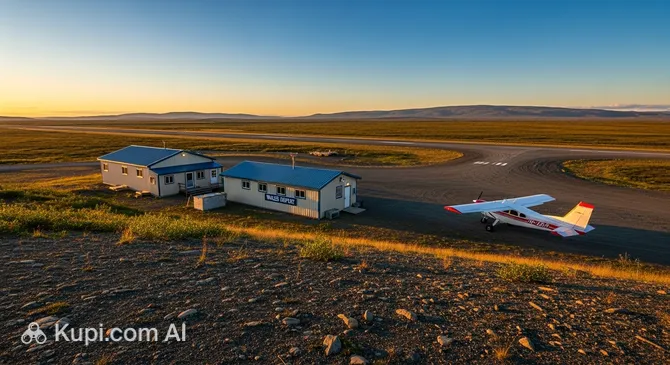
Wales Airport. Source: Kupi.com Binoculars

Wales Airport (WAA) is not merely a transport hub, but a true gateway to the "edge of the world," situated at the westernmost point of the North American mainland. This small airfield serves as a vital link for the local community and courageous travellers wishing to witness the rugged beauty of the Bering Strait with their own eyes. Here, where piercing winds often blow and the neighbouring continent is virtually within arm's reach, every landing marks the beginning of a unique Arctic adventure.

IATA Code WAA
ICAO Code PAIW
City Wales (Alaska)
Distance to centre ~2 km
Status Regional (Domestic)
Annual Passengers About 2,500
Schedule Dependent on weather conditions

Features and Advantages of the Airport:

Unique Geographical Location. The airport is located in immediate proximity to the Bering Strait coastline. In clear weather, passengers can observe a rare spectacle — a view of the Diomede Islands and, in the distance, the outlines of Cape Dezhnev.

Regional Lifeline. For the residents of the village of Wales, this airfield is the primary means of connection with the outside world. Since there are no roads connecting the village to other major Alaskan cities, mail, groceries, and cargo are delivered here.

Atmosphere of a True Expedition. The runway here is gravel, and the infrastructure is minimalist, highlighting the remoteness and wild nature of these places. Flights here often depend on capricious Arctic weather, adding the spirit of true polar exploration to the journey.

Contact Information

  • Official Airport Website: There is no dedicated website. Information about the facility is available on the Alaska Department of Transportation and Public Facilities portal (dot.alaska.gov).
  • Inquiry Service Phone: +1 907-451-2200 (Alaska Northern Region Airport Administration). Please note: there is no permanent staff within the airport building itself.
  • Airport Address: Wales Airport, Wales, AK 99783, USA.
  • Email: dot.ask@alaska.gov (General Department of Transportation email).
  • Airport Social Media: Official accounts are absent.
  • Lost Luggage Information: There is no baggage tracing service at the airport. Passengers must contact the airline operating the flight directly (most often Bering Air).
  • Passenger Support Contacts: +1 907-443-5464 (Phone of the main carrier — Bering Air, hub in the city of Nome).

How to Get to the Airport

Transport accessibility at Wales Airport (WAA) differs significantly from the standard expectations in major cities. Since Wales is a small, isolated settlement of Indigenous peoples (Inuit), typical urban infrastructure is absent here. Getting to the runway from the residential area of the village is a task solved differently depending on the season.

Public Transport

There is no public transport in Wales in the traditional sense. There are no bus routes, metro, or trains. The village is quite compact, and most facilities are within walking distance of each other. There are no roads connecting Wales to other cities in Alaska, so ground public transport does not travel here.

Taxis, Transfers, and Local Specifics

There are no official taxi services or ride-hailing apps (like Uber) here. However, local residents often assist tourists with luggage transport.

  • In Summer: The main means of transport are quad bikes (ATVs). You may be given a lift on an ATV or in a trailer attached to one.
  • In Winter: The only method for rapid movement is by snowmobile.
  • Transfer: Typically, a transfer to the airstrip is organised by the hosting party (if you are visiting by invitation) or airline representatives in the village. It is recommended to arrange this in advance before departing from the hub airport.

Car Rental

Car rental points are absent in Wales. It is impossible to bring a rented car here due to the lack of roads. Tourists move around the village on foot.

Airport Parking

There is no specialised guarded parking. Near the runway, there is an open area where locals leave their snowmobiles or ATVs while meeting the plane. This is free of charge, but vehicles are left unattended.

Travel Time and Cost

  • Travel Time: From the "centre" of the village (the school or administration building), you can walk to the runway in 15–20 minutes. By ATV or snowmobile, the journey takes no more than 5 minutes.
  • Cost: There are no official tariffs. If a local resident gives you a lift, it is customary to offer a small gratuity (tip) by agreement.

Features and Recommendations

The main feature is dependence on the weather. While waiting for departure, you may have to wait outside or in an unheated room, so dress as warmly and windproof as possible. Always check the flight status in advance, as pilots rely on actual visibility.

Nearest Airports and Air Connections

Wales is the final point of the route, and one can only get here by small aircraft. The main transfer hub for flights to Wales is Nome Airport. It is through here that the main flow of tourists and cargo passes.

Other small airports also function in this remote region of Alaska, providing links between settlements:

Terminals and Map

The infrastructure of Wales Airport (WAA) differs strikingly from huge international hubs. Here, you will not find confusing mazes of corridors, multi-level car parks, or numerous boarding gates. The airport's terminal complex is maximally compact and functional, corresponding to the harsh conditions of the Arctic and low passenger traffic.

Number of Terminals and Layout

Wales Airport operates just one small terminal, which is a modest single-storey structure. This building serves as the only shelter for passengers and a place for storing necessary equipment. There is no separation into international and domestic sectors here, as the airport receives exclusively local small aviation flights.

Terminal Features:

  • Minimalism: Inside the terminal, there is only a small waiting area. Amenities are minimal, so travellers should be prepared for spartan conditions.
  • Lack of Heating: It is important to remember that the room is often unheated or poorly heated. Given the region's climate, warm clothing is mandatory even inside the building.
  • Direct Exit: The exit from the terminal building leads directly onto the dirt ground towards the aircraft. Jet bridges and buses are not used here.

Departure and Arrival Zones

Zoning at Wales Airport is quite nominal. All operations take place in a single space:

  • Departure Zone: This is the area in front of the airport building or directly where the plane is parked. Passengers await the pilot's invitation to board either inside the building or outside if the weather permits.
  • Arrival Zone: Arriving passengers disembark from the plane directly onto the gravel strip. Luggage collection happens right there: the pilot unloads items from the cargo hold and hands them to passengers. Luggage belts are absent.

Navigation and Transfers

The airport layout is so simple that getting lost is impossible. The entire complex is visible from a single point. Transfers between terminals do not exist as they are unnecessary. The distance from the building entrance to the aircraft steps is just a few dozen metres.

Check-in and Screening Procedures

Checking in for a flight in Wales is much faster and more informal than at major airports. However, despite the simplicity, adherence to safety rules remains a priority.

  • Check-in: Usually conducted by an airline representative in the village or directly by the pilot before departure. You will need to present identification and weigh your luggage (sometimes passengers themselves are weighed to properly balance the small aircraft).
  • Screening: There are no classic metal detector frames or scanners (like in the TSA zones of major US airports) here. Visual inspection and luggage checks may be conducted by the pilot.
  • Time: The entire process takes 10–15 minutes. Nevertheless, it is recommended to arrive at the departure point in advance (30–40 minutes early) so the pilot can calmly prepare the aircraft and documents.

Recommendations for Passengers

The main advice when at Wales Airport is to follow the pilot's instructions carefully and not to wander far from the terminal building if the flight is delayed due to weather. Since there are no information screens, all communication happens in person. Be careful when moving around the airfield: the surface can be slippery or uneven, and strong gusts of wind require stable footwear and comfortable clothing.

Airport History

The history of Wales Airport (WAA) is a chronicle of human struggle against the harsh nature of the Arctic. Unlike metropolitan terminals built according to precise architectural plans, this facility developed evolutionarily, responding to the vital needs of one of North America's most isolated communities. Aviation here became not a luxury, but the only reliable bridge connecting the settlement with civilisation.

The Era of "Wild" Aviation and First Landings

Before the official appearance of the airport in the mid-20th century, air connection with Wales relied on the skill of legendary Alaskan bush pilots. In the 1920s and 1930s, planes landed directly on sea beaches or flat patches of tundra if the weather allowed. These were risky flights, most often aiming to deliver mail, medicine, or for the emergency evacuation of the sick. The lack of navigation equipment and a runway made every flight a true feat.

Official Establishment and Development

With the development of civil infrastructure in the state of Alaska, the need arose for a permanent and safe landing site for aircraft.

  • Mid-20th Century: The first permanent gravel strip was equipped. This allowed for regular mail and cargo flights, reducing the residents' dependence on marine navigation, which is only possible during the short summer.
  • Technical Equipment: An important stage was the installation of lighting equipment. In the conditions of the polar night, when darkness reigns for most of the day, the ability to illuminate the runway became a key safety factor.

Modernisation in Permafrost Conditions

Operating an airport in Wales is a constant battle with the elements. One of the main problems has always been soil erosion and the impact of permafrost, which can deform the surface.

In the early 2000s and subsequent decades, significant work was carried out to strengthen and level the runway. Engineers improved the drainage system to prevent the strip from washing away during the spring snowmelt. The aircraft turnaround area was also updated, which is critical during the strong crosswinds characteristic of the Bering Strait.

Interesting Facts and Achievements

Wales Airport holds a unique status due to its geographical position:

  • Westernmost on the Mainland: This is the westernmost airport on the continental part of North America. Further west lies only water and islands.
  • A Glimpse into Tomorrow: Due to the proximity to the International Date Line (less than 100 km), pilots and passengers taking off from Wales can see the Diomede Islands, where "tomorrow" has effectively already begun.
  • School of Mastery: Among Alaskan pilots, flights to Wales are considered a mark of high professionalism. Due to the complex wind patterns and sudden fogs from the sea, a successful landing here requires surgical precision.

Today, Wales Airport continues to be a modest but indispensable facility, the history of which is written with every successful landing in this harsh land.

Services and Amenities

Passengers planning a trip through Wales Airport (WAA) should prepare in advance for the fact that the level of service here differs radically from standard civil aviation norms. This is a remote airfield in the Arctic zone, where infrastructure is oriented exclusively towards basic transport functions, not traveller comfort. "Spartan conditions" is the best definition of what awaits you on-site.

Restaurants, Cafés, and Shops

On the airport territory and in the immediate vicinity of the runway, dining and retail outlets are completely absent.

  • Dining: There are no cafés, restaurants, coffee shops, or even vending machines with snacks here. Passengers are strongly advised to bring a supply of food (sandwiches, energy bars) and, most importantly, drinking water before departing from the hub airport (usually Nome).
  • Shops: Souvenir shops, newsstands, or pharmacies are absent. The nearest shop (Native Store) is located in the village of Wales itself, at a significant distance from the strip, and operates on a limited schedule.

Connectivity, Wi-Fi, and Electronics

Wales Airport can be described as a zone of "digital detox," often involuntary.

  • Wi-Fi: There is no public wireless internet network.
  • Mobile Network: Cellular signal may be unstable or absent altogether, depending on your operator (GCI works best in Alaska).
  • Charging Stations: There are no freely available sockets for charging phones or laptops. It is recommended to carry a fully charged portable battery (Power Bank).

Financial Services

ATMs, currency exchange points, and bank branches are absent at the airport. There is also no banking infrastructure in the traditional sense in the village. Travellers need to carry a sufficient supply of cash (US Dollars) in small denominations to pay for local services (e.g., transfers) or purchases at the village store.

Lounges and VIP Service

There are no business lounges, VIP rooms, or areas of enhanced comfort at the airport. The only available shelter is a small general room (if unlocked), where one can hide from the wind. Often, waiting for a flight happens in the fresh air.

Medical Services

There is no first aid station or medical point at the airport. The nearest clinic is in the village of Wales, but you must get there on your own. In emergencies, assistance may be provided by the pilot, who has a basic first aid kit on board.

Services for Passengers with Children

There is no specialised infrastructure for travellers with children (mother and child rooms, play areas, changing tables). Given the harsh weather conditions and lack of amenities, travelling with infants requires thorough preparation and carrying all necessary items (food, warm clothes, hygiene products) in hand luggage.

Services for Passengers with Reduced Mobility

Wales Airport presents a challenging environment for passengers with limited mobility.

  • Accessibility: There are no ramps, lifts, or specially equipped toilets here. The surface is gravel and soil, which makes moving in a wheelchair difficult.
  • Boarding the Plane: Carried out via small portable steps or a ladder. Assistance with boarding and disembarking is provided by the aircraft pilot. It is recommended to notify the airline of the need for assistance in advance, at the booking stage.

Accommodation (Hotels)

There are no hotels at the airport itself or nearby. Wales is a small community, and commercial-type hotels are absent here. Accommodation options are extremely limited (e.g., renting a room from locals or an arrangement with the school/administration) and must be booked long before arrival. Relying on finding accommodation "on the spot" in case of flight cancellation is extremely risky.

Business Services

Conference halls, printing services, fax, or meeting rooms are absent at the airport.
Where to Eat

The gastronomic map of Wales Airport (WAA) is as ascetic as the surrounding tundra landscape. It is important for travellers to understand: this is not a standard terminal with a food court, but a remote point in the Arctic. Infrastructure here is limited strictly to transport functions, so dining services at the airport are completely absent.

Below is detailed information on how to prepare for your flight so you do not go hungry.

Restaurants, Cafés, and Bars

In the single small terminal building, as well as in the departure and arrival zones (which are essentially a dirt area), there are no catering establishments. You will not find here:

  • Cafés or coffee shops;
  • Bars or pubs;
  • Vending machines with snacks or drinks;
  • Fast food kiosks.

Dining Options: The "Bring It With You" Strategy

Since it is impossible to buy food on-site, the only option for passengers remains self-preparation. Everything you plan to eat or drink while waiting for the flight must be brought with you.

Recommendations for a Full Meal and Snacks:

  • Where to buy food in advance: It is strongly recommended to purchase groceries at the departure airport (most often Nome) or in supermarkets in the city of Nome before departing for Wales. A wide selection of products is available there.
  • What to take with you: Prefer non-perishable products: packaged sandwiches, nuts, dried fruits, chocolate, jerky, and energy bars.
  • Water and Drinks: There are no drinking fountains at Wales Airport. Be sure to carry a supply of bottled drinking water or a thermos with hot tea/coffee, which is especially relevant in cold weather.

Dietary Requirements (Vegetarian, Halal, Gluten-Free)

Since there is no centralised catering, control over dietary adherence lies entirely with the passenger. If you have specific dietary needs or restrictions (such as Halal), please arrange for an appropriate lunchbox before arriving in Wales. Finding specialised products (e.g., gluten-free bread or certified Halal meals) in the village itself will be extremely difficult or impossible.

Local Cuisine and Shops in the Village

Although there is no food at the airport itself, the village of Wales has a single shop, the Native Store. However, relying on it as a dependable source of food before departure is not advisable for several reasons:

  • Location: The shop is located in the residential part of the village, approximately a 15–20 minute walk from the runway.
  • Assortment: The selection of products is limited to basic long-shelf-life goods (canned food, cereals, frozen items). Ready-made hot food is not sold there.
  • Opening Hours: The schedule can be unpredictable and limited, especially on weekends or during bad weather.
  • Prices: The cost of groceries in Arctic settlements is 2–3 times higher than on the "mainland" due to complex delivery logistics.

Local Cuisine Dishes

You cannot try traditional dishes of the Indigenous peoples of Alaska (fish, marine mammal meat, berries) in a commercial format in Wales — there are no restaurants here. Such an opportunity may only arise if you are a guest of a local family or visiting the village as part of an organised ethnographic tour with meals included.

Summary: Wales Airport is a place for true explorers ready for autonomy. Your "restaurant" is whatever you packed in your backpack before the flight.

Tips for Travellers

Travelling through Wales Airport (WAA) is an experience radically different from flying through standard international hubs. Here, the rules of "bush flying" apply, where weather and weight are decisive. To ensure your Arctic adventure goes smoothly, we have prepared a list of important recommendations considering the specifics of this remote region.

Arrival Time at the Airport

Despite the lack of security queues, you cannot arrive at the plane at the last minute. It is recommended to be on the runway 30–40 minutes before the scheduled departure. This time is necessary for the pilot to check the passenger list, weigh luggage, and properly distribute the cargo inside the small aircraft. Remember: the plane will not wait for latecomers, as the flight schedule is rigidly tied to daylight hours and weather "windows."

Check-in and Security Features

Forget about check-in counters, printing boarding passes, and passing through metal detector frames.

  • Weighing: Be prepared for the pilot to ask to weigh not only your luggage but also you (with hand luggage and wearing outerwear). This is a standard safety procedure for small aviation, necessary for calculating the aircraft's centre of gravity.
  • Documents: Always keep a photo ID handy to show the pilot before boarding.
  • Screening: Conducted visually. The pilot may ask you to open a bag if they have questions about the contents.

Seat Selection on the Plane

In aircraft like the Cessna or Piper flying to Wales, there is no familiar seat reservation system (1A, 12B, etc.).

  • Who Decides: Seating is directed exclusively by the pilot. They assign each passenger a specific seat based on the vessel's weight balance. You cannot argue with this decision — it is a matter of your safety.
  • Tip: If weight and balance allow, you can politely ask the pilot to seat you by a window or next to them (in the co-pilot's seat, if it is free and company rules allow), to enjoy the views of the Bering Strait.

Hand Luggage and Baggage

Small planes do not have overhead luggage bins.

  • Type of Bags: It is better to use soft sports bags or backpacks rather than rigid plastic suitcases. Soft luggage is easier to fit into the limited cargo hold.
  • In the Cabin: You can only take the bare essentials on your lap: a camera, documents, medication, and a hat/gloves. Everything else will be stowed in the cargo hold or under a net in the tail of the plane.
  • Dangerous Items: Rules for carrying liquids are less strict here, but the transport of weapons, fuel (for burners), and bear sprays is strictly regulated. Be sure to warn the pilot about the presence of such items in advance.

Recommendations for Connecting Flights

Wales is the endpoint of the route, and all flights go through a hub airport (usually Nome). Weather in Alaska is unpredictable, and flights are often cancelled or rescheduled.

  • Time Buffer: Never plan a connection "back-to-back." If you have a departure scheduled from Nome or Anchorage to the "mainland," allow for a minimum 24-hour buffer between the flight from Wales and the next departure.
  • Single Ticket: If possible, book the flight with one airline (e.g., Bering Air) so that in case of cancellation due to weather, they can assist with rebooking the next segment.

Customs Control

Flights to Wales are domestic (from other Alaskan cities), so there is no customs or border control upon arrival. However, given the border zone (proximity to the Russian Federation), carrying a passport or ID is mandatory. Attempts to cross the Bering Strait without special permits are strictly prohibited and constitute a border violation.

Tips for Saving Money and Comfort

  • Food and Water: Buy snacks and water in advance in the city of departure. In Wales, prices in the shop are very high, and there may be no selection.
  • Gear: Dress in layers. It can be cool in the aircraft cabin, and piercingly cold outside while waiting for boarding due to the wind. A windproof jacket is mandatory even in summer.
  • Cash: Have small bills with you to pay locals for transfers (ATV/snowmobile), as they may not have change, and cards are not accepted everywhere.

What to Do in Case of Flight Delay

This is the most frequent scenario in this region. Fog or strong wind can close the sky for several days.

  • Do Not Panic: This is part of life in Alaska. Pilots will not fly if it is unsafe.
  • Communication: Carry a fully charged power bank, as there are no sockets in the waiting area.
  • Plan "B": Find out the contacts of the local school or village administration in advance in case you have to stay overnight due to flight cancellation. There are no hotels here, so accommodation is found through arrangements with local residents.

Reached the end of the page?

That means the route is fully explored