Support

Grand Forks (AFB)

About the Airport

Grand Forks Air Force Base
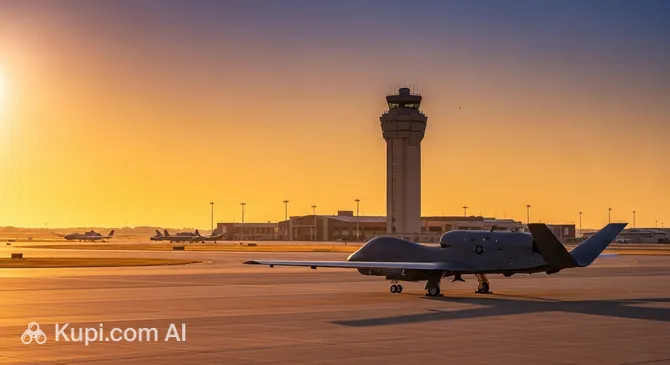
Grand Forks Air Force Base. Source: Kupi.com AI

Grand Forks Air Force Base (RDR) is not a typical passenger terminal with duty-free shops, but a serious strategic facility located amidst the plains of North Dakota. Known as the home of the "Warriors of the North," this airfield serves as a key hub for US unmanned aviation and plays a vital role in global security. While you cannot book a ticket here for a summer holiday, the scale and technological power of this base are of genuine interest to anyone passionate about aviation and military history.

AirportGrand Forks (AFB)
IATARDR
ICAOKRDR
CityGrand Forks
TimezoneAmerica/Chicago
ScheduleOnline board

Features and Significance of the Facility

The main distinguishing feature of Grand Forks AFB is its specialization in high-tech operations. Unlike the neighbouring Grand Forks International Airport (GFK), which handles commercial flights, RDR is the location of the 319th Reconnaissance Wing. Advanced unmanned aerial vehicles, such as the RQ-4 Global Hawk, capable of performing surveillance missions anywhere in the world, are based here. For the ordinary tourist, this place is interesting primarily as a symbol of modern aviation power.

Although access to the base territory is strictly limited and possible only for military personnel and their families, the presence of such a facility has a huge impact on the region. The base is one of the largest employers in the county and often hosts air shows or open days, during which civilians can personally see legendary equipment. Travellers should remember that to fly into this region, they should use the civilian airport located closer to the city.

Contact Information

As Grand Forks Air Force Base is an active military facility and not a civilian airport, usual tourist services are absent here. Nevertheless, for official enquiries, media, or emergency situations, you can use the following contacts:

  • Official Website: www.grandforks.af.mil
  • Base Operator: +1 701-747-3000
  • Public Affairs Office: +1 701-747-5023
  • Address: Grand Forks Air Force Base, ND 58205, USA
  • Email (for media and official enquiries): 319rw.pa@us.af.mil
  • Social Media: Official Facebook page — Grand Forks Air Force Base
  • Lost Luggage Information: Service not provided (the military airfield does not serve commercial flights).
  • Passenger Support Service: Absent (the facility is closed to civilian travellers).

How to Get to the Airport

Since Grand Forks Air Force Base is an active military facility with restricted access, getting to it is more difficult than to a standard civilian airport. There are no usual express trains or shuttles for tourists here. When planning a visit (if you have the appropriate permission or invitation), it is important to consider that the main mode of transport in North Dakota is the car.

By Car and Taxi

A personal or rented car is the most reliable way to get to the base's checkpoint. The journey from the centre of Grand Forks takes about 20–25 minutes (approximately 26 km). The main route runs west along Highway US-2 W. The road is straight and usually not congested, however, in winter, weather conditions and possible snowfalls should be taken into account.

Taxi and ridesharing services (Uber, Lyft) are available in the region. The cost of a trip from the city centre to the main gate of the base varies from 40 to 60 dollars depending on the time of day and demand. It is important to remember that taxi drivers without special clearance will not be able to enter the base territory itself; they will drop you off at the Visitor Control Center in front of the main gate.

Public Transport

Regular public transport (buses, trains, or metro) connecting the city of Grand Forks with the military base does not exist. Municipal CAT (Cities Area Transit) buses serve only the city limits and do not reach the military facility.

Parking and Car Rental

If you plan to rent a car, it is best to do so upon arrival at the region's civilian airport. Rental companies (Avis, Hertz, Enterprise) have counters at the GFK terminal. Located at the main gate of the Air Force Base is the Visitor Control Center, where there is a small parking lot for those arranging a pass. Entry into the base territory in a personal or rented vehicle is permitted only with a valid military ID or a temporary vehicle pass.

Nearest Civilian Airports

As the base itself does not accept commercial flights, travellers arrive via neighbouring civilian aviation hubs. The nearest is Grand Forks International Airport (GFK), located just 16 km east of the base. This is the most convenient option for arrival.

If tickets to Grand Forks are too expensive or convenient connections are unavailable, alternatives can be considered:

For travellers ready for long drives across scenic plains, more distant options are available, such as Bismarck Airport (285 km) or Minot International Airport (291 km), however, the transfer from there will take about 3–4 hours.

Terminals and Map

Since Grand Forks Air Force Base (RDR) is a military facility, its internal structure differs radically from familiar civilian airports. Here you will not find an extensive network of terminals with boarding gates, bright signs, and Duty-Free zones. The airfield infrastructure is subject to strict military logic, functionality, and security.

Terminals and Their Purpose

Instead of multiple passenger terminals, a single logistics and operations centre functions on the base. To serve personnel and cargo, the so-called Passenger Terminal is used, operating under the auspices of the US Air Force Air Mobility Command. This is a small, modestly equipped building designed exclusively for processing military flights (loading equipment, sending military personnel on missions, or flights under the Space-A programme).

The main zones of the airfield include:

  • Base Operations (Base Ops): The "heart" of the airfield, where flight planning and air traffic control take place.
  • Hangar Complexes: Huge structures for storing and servicing Global Hawk unmanned vehicles and tankers, which occupy most of the technical zone.
  • Cargo Processing Zone: A specialised sector for military logistics.

Map and Navigation

Navigation through the base territory for a civilian is impossible without an escort. There are no familiar information boards or signs pointing "To Gates". Movement is regulated by strict security protocols. The territory is divided into access zones: the residential zone, the administrative part, and the "Flight Line" (airfield), where entry is strictly limited even for many base employees.

Arrival and Departure Zones

The concepts of "arrival zone" and "departure zone" are conditional here. Passengers of military aircraft pass through a checkpoint inside the passenger terminal. There is no waiting hall with cafes and shops here — only basic amenities (toilets, water vending machines, a rest area). Greeters cannot walk directly to the aircraft stairs; meeting takes place either in the parking lot at the terminal (if the greeter has a pass to the base) or outside the main gates of the facility.

Check-in and Screening Procedures

If you are a service member or a family member entitled to fly, the procedures will be as follows:

  • Check-in Time: Regulated by a specific order or the aircraft schedule. Usually, you need to arrive 2–3 hours before departure to process luggage and documents.
  • Screening: Conducted by military police and security services. The procedure may be more thorough than at civilian airports, but queues are generally absent due to the small number of passengers.
  • Documents: A valid military ID and appropriate travel orders or leave forms are required.

Navigation Recommendations for Tourists

The main recommendation for the ordinary traveller is do not confuse this airfield with the civilian one. If your ticket states the city of Grand Forks, you need Grand Forks International Airport (GFK). Attempting to arrive with suitcases at the military base checkpoint will only lead to a loss of time and an interaction with security guards.

However, if you are heading to the base as an invited guest (for example, for an air show), watch closely for temporary road signs installed specifically for such events. They will direct you to designated guest parking areas, bypassing restricted zones.

Airport History

The history of Grand Forks Air Force Base is a mirror of the development of American military aviation over the last half-century. Founded during the Cold War era to ensure strategic deterrence, today it has transformed into a centre for high technology and unmanned systems. For the North Dakota region, the base has become not just a military facility, but also an important economic and social partner.

Birth of the "Warriors of the North"

The decision to build the airfield was made in 1954, when the government allocated funds to create a new Strategic Air Command base. The location was not chosen by chance: the flat terrain and northern location were ideal for the tasks of that time. The official activation of the base took place in 1957. By 1960, the first B-52 Stratofortress heavy bombers and KC-135 tanker aircraft appeared here, which defined the airfield's profile for years to come.

Era of Change and Modernisation

Over the decades, the base was constantly modernised for new types of equipment. A significant stage was the 1980s, when Grand Forks became one of the basing locations for the supersonic B-1B Lancer bombers. This required a large-scale reconstruction of runways and hangars. In the 1990s, after the end of the Cold War, the vector of development changed: missile silos (Minuteman III) controlled from the base were deactivated, and bombers were redeployed. The main focus shifted to aerial refuelling, and KC-135 tankers became the base's "workhorses".

Recent History: The Era of Drones

The most significant transformation occurred in the 21st century. In the 2010s, the base began transitioning to unmanned aviation. Today, Grand Forks is home to RQ-4 Global Hawk reconnaissance drones. This event marked a new era: instead of pilots in aircraft cockpits, operators controlling flights remotely began to play a key role. In parallel, the Grand Sky innovative technology park was created on the base territory — the first commercial park in the US for the development and testing of unmanned systems located at an active military airfield.

Heroism During the Flood

One of the brightest pages in the base's history was not military exercises, but a humanitarian mission. During the catastrophic Red River flood in 1997, when the city of Grand Forks was flooded and evacuated, the Air Force base became a temporary home for thousands of local residents. Hangars that usually sheltered aircraft turned into huge dormitories. The military provided the victims with food, water, and medical aid, demonstrating the unbreakable bond between the garrison and the civilian population.

Interesting Facts

  • In 1974, the base received a unique award — the Schriever Trophy for outstanding achievements in missile and space activity, when a missile wing was based here.
  • The airfield runway (RDR) is over 3,760 metres long, which allows it to accept any existing types of aircraft, including the heaviest transports.
  • The motto of the base units is "Warriors of the North", reflecting the harsh climatic conditions of the region, where in winter the temperature can drop to extreme values, testing both people and equipment.

Services and Amenities

Services and amenities at Grand Forks Air Force Base (RDR) differ radically from what travellers are used to seeing at commercial airports. Since this is a closed military facility, there is no Duty-Free zone, luxurious lounges, or a multitude of restaurants for the general public. All infrastructure is created to ensure the livelihood of military personnel, their families, and civilian staff of the base. It is a kind of "city within a city," where everything necessary for life exists, but access to these benefits is strictly regulated.

Restaurants, Cafes, and Shops

The centre of social life on the base is the Base Exchange (BX) — a large shopping complex resembling a civilian mall. Here you can purchase electronics, clothing, souvenirs with Air Force symbols, and basic necessities. It is important to remember that only holders of a military ID or privileged categories of citizens can make purchases at the BX. This complex usually houses a food court with popular American fast-food chains (for example, Burger King, Taco Bell, or Subway), where you can have a snack before a flight or shift.

For purchasing groceries, there is the Commissary — a military supermarket. Additionally, dining halls for personnel and club establishments (such as the enlisted club or officers' club) operate on the base territory, offering lunches and dinners in a more formal setting.

Waiting Halls and Terminals

Unlike civilian hubs with Priority Pass business lounges, here passengers of military flights (Space-A) use a modest waiting room in the Passenger Terminal. Amenities here are spartan: chairs for rest, vending machines with snacks and drinks, toilets, and a television. VIP service is provided only for senior command staff and government delegations, for whom separate protocol events are organised.

Communication and Finance

Wi-Fi is not available everywhere. Free internet access is often provided in the base library, family support centre, visitor lodging, and at the BX food court. However, it is worth considering that military networks may have restrictions on access to certain resources for cybersecurity purposes. Charging stations for gadgets can be found in the passenger terminal waiting area.

To resolve financial issues, branches of military credit unions and 24-hour ATMs operate on the base. There are no full-fledged currency exchange points oriented towards tourists here, as transactions are conducted in US dollars.

Medical Services and Accessibility

Medical provision on the base is at a high level thanks to its own clinic (Medical Group). It provides a full range of services — from emergency care to dentistry and a pharmacy — however, it exclusively serves the attached contingent. In the event of an emergency with a civilian visitor, they will most likely be directed to the nearest civilian hospital in the city of Grand Forks.

The base infrastructure complies with US federal standards, so all public buildings, including shops and the terminal, are equipped with ramps and parking spaces for passengers with disabilities. For families with children, playgrounds are equipped on the base territory, and there is a bowling centre and a cinema, which helps to pass the time during long waits.

Accommodation: Hotels on Base and Nearby

For the accommodation of business travellers and travelling military personnel, a hotel functions on the RDR territory, often called Base Lodging (e.g., Warrior Inn). These are comfortable rooms at affordable prices, but booking is possible only with the appropriate status.

If you do not have access to housing on the base, the nearest hotels are located in the city of Grand Forks, approximately a 20–25 minute drive away:

  • Major chain hotels (Hilton Garden Inn, Holiday Inn Express) offer transfers, but typically only to the civilian airport Grand Forks (GFK).
  • Several motels are located along Highway US-2, convenient for transit travellers by car.

Business Services

For work and study, the base has an Education Center and Library, where you can find quiet, computers, and printers. Conference rooms are used exclusively for official meetings and command briefings; renting them for civilian business meetings is impossible.
Where to Eat

It is important to understand that catering at Grand Forks Air Force Base (RDR) differs radically from what passengers are used to in civilian hubs. Here you will not find gourmet restaurants overlooking the runway or 24-hour coffee shops in the departure zone. The food system is oriented towards providing for military personnel and operates on strict schedules.

Passenger Terminal and Departure Zone

Directly in the Passenger Terminal building, from where Space-A flights depart, there are no full-fledged food outlets. Infrastructure here is limited to a basic set:

  • Vending Machines: The only way to have a snack right in the waiting area (both before and after screening). The assortment is standard: fizzy drinks, water, crisps, chocolate bars, and crackers.
  • Tip: If you face a long wait for a flight, it is strongly recommended to eat beforehand in other zones of the base or bring food with you.

Main Dining Zones on Base Territory

Since the concept of airside/landside is not applicable here in the civilian sense (the entire base is a restricted facility), the main establishments are located in the residential and administrative zones, accessible before arriving at the terminal.

1. Food Court at Base Exchange (BX)

The main attraction for a quick snack is located in the base shopping centre (Exchange). This is a classic American food court offering familiar chain brands. All base pass holders have access here.

  • Establishments: Usually, chains like Burger King (burgers), Subway (sandwiches), or Taco Bell (Mexican fast food) are represented here.
  • Menu: Standard fast food. This is the best option for a "quick bite" before heading to the terminal.
  • Average Bill: 8–12 dollars.
  • Opening Hours: Approximately from 10:30 to 18:00 (may change on weekends).

2. JR Rockers Sports Cafe

For those who have time and want a full lunch in a casual atmosphere, a sports bar and cafe operates on the base.

  • Atmosphere: A typical American sports bar with televisions broadcasting matches.
  • What to Try: Signature chicken wings, grilled burgers, and pizza. This place is more suitable for evening relaxation or a hearty lunch.
  • Location: Usually located in the club building (Collocated Club).

3. Airey Dining Facility (DFAC Mess Hall)

The main dining hall of the base, intended primarily for enlisted personnel living in dormitories. However, at certain hours and subject to rules (payment by cash or card, plus a surcharge for officers and civilians), other visitors may also be admitted.

  • Format: Buffet or serving line. The most budget-friendly and filling option.
  • Menu: Includes hot dishes, a salad bar, desserts, and drinks. The menu is cyclical and balanced.
  • Feature: Strictly regulated opening hours (breakfast: 06:00–08:00, lunch: 11:00–13:00, dinner: 17:00–19:00).

Dietary Requirements and Special Requests

The choice of specialised food on the base is limited. Military catering is utilitarian, so gourmets will have to compromise.

  • Vegetarians and Vegans: The best choice is Subway at the food court (vegetable sandwiches) or the salad bar at the DFAC dining hall. Hot vegan options are rare.
  • Gluten-Free Food: There is usually no special labelling on the menu. It is recommended to choose simple dishes without sauces and breading or check the composition with staff.
  • Halal and Kosher: In chain establishments, meat is not certified as Halal. Those strictly observing a diet are better off limiting themselves to vegetarian items or packaged products from the Commissary store.

Local Cuisine: What to Expect?

On the territory of RDR itself, you will not find restaurants serving local North Dakota cuisine. Federal standards and chain fast food reign here. To try local specialities, such as Knoephla soup (creamy soup with dumplings), bison steaks, or Scandinavian pastries, you need to travel outside the base to the city of Grand Forks.

We recommend visiting local diners in the city if your schedule allows you to leave the facility before departure.

Price Summary

Meals on the Air Force base are significantly cheaper than in US civilian airports, as many goods are sold tax-free or with minimal markup.

  • Coffee and Snack: $3–5.
  • Hearty Lunch (Fast Food): $10–15.
  • Lunch in the Dining Hall (DFAC): $6–8 (price depends on visitor status).

Traveller Tips

Travelling through a military airfield is a unique experience that requires special preparation and an understanding of Space-A (Space Available) flight specifics. Since Grand Forks Air Force Base is not a commercial hub, standard civil aviation rules work here with significant amendments. The main advice: be flexible and always have a backup plan.

Arrival Time and Check-in

In military aviation, the concept of time differs from civilian norms. You need to arrive at the passenger terminal not by the departure time, but by the so-called Show Time or the start of Roll Call. Usually, this happens 2–3 hours before the estimated departure. Being even 5 minutes late can lead to losing your seat, as passenger lists are closed strictly according to protocol. Ensure you have printed copies of all necessary documents: Leave forms, Orders, and valid military IDs for all family members.

Security and Screening Features

Screening at the Air Force base is conducted by military police. The procedure may seem stricter than at a regular airport. Any jokes about security are inappropriate here and can lead to immediate cancellation of flight privileges. Be prepared for your hand luggage to be searched manually.

Seat Selection and Comfort In-Flight

If you are flying not on a Patriot Express charter flight (which looks like a regular passenger plane), but on a military aircraft (for example, a KC-135 or C-17), forget about choosing a window seat at check-in. Boarding is often done on fold-down seats along the sides or on cargo pallets.

  • Dress in layers: It can often be very cold or, conversely, hot in the cargo holds of military aircraft.
  • Hearing Protection: Military aircraft have poor sound insulation. Be sure to bring quality earplugs or noise-cancelling headphones — they are issued on some flights, but it is better to have your own.
  • Sleep: For long flights on cargo aircraft, it is recommended to bring a sleeping bag or warm blanket and an inflatable pillow.

Hand Luggage and Prohibitions

Rules for carrying liquids and dangerous items are similar to civilian ones (TSA), but there are specific restrictions.

  • Photography: This is the most important rule. It is strictly prohibited to take photos or record videos on the Flight Line and when boarding the aircraft. Violation of this rule can lead to confiscation of the device and detention.
  • Electronics: On some types of aircraft, the use of personal electronic devices may be restricted. Check this with the crew (Loadmaster) before takeoff.

Recommendations for Transit Passengers

Grand Forks Air Force Base is not designed for transit in the usual sense. If your flight arrived here, but the final destination of your journey is another city, you will have to make your own way to Grand Forks International Airport (GFK) or rent a car. There are no shuttles between the military base and the civilian airport, so arrange a taxi or transfer through acquaintances with base access in advance.

Customs Control

If you arrive at the base on an international flight (for example, from Ramstein Air Base in Germany), customs control will take place directly in the base terminal. The procedure is mandatory for everyone, including high-ranking officers. Declare all goods purchased abroad. The import of food products (fruits, meat) is strictly regulated by US legislation, and this is monitored especially carefully on military bases.

Tips on Saving Money and Actions During Delays

Space-A flights offer huge monetary savings, but the cost is your time and nerves.

  • Financial Cushion: The main rule of a Space-A traveller is to always have funds to buy a commercial one-way ticket. The aircraft's mission can change at any moment, and the flight may be cancelled or redirected.
  • Food and Water: On board cargo aircraft, only dry rations (MRE) or water are often provided. Buy food in advance at the Base Exchange (BX) before going to the terminal.
  • Connectivity: There is not always stable Wi-Fi in the terminal. Download maps, films, and books to your devices in advance to brighten up a possible multi-hour wait.

Reached the end of the page?

That means the route is fully explored