Support

Grand Forks International Airport

Airports in the city

About the Airport

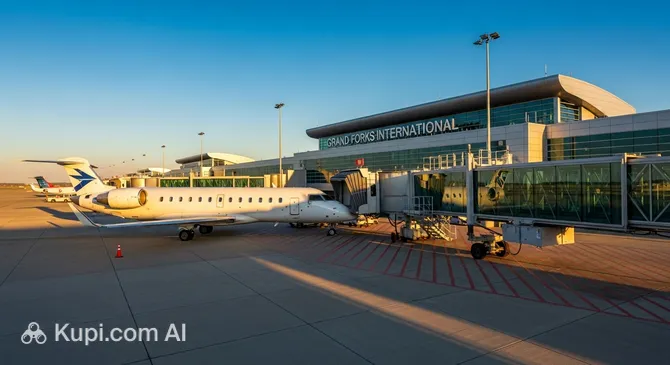
Grand Forks International Airport. Source: Kupi.com Binoculars

Grand Forks International Airport is not merely a transport hub, but a true gateway to North Dakota and the picturesque Red River Valley. Despite its comparatively small size, this airport possesses a unique energy: thanks to its proximity to a prestigious aviation school, life is constantly bustling here, and the sky is rarely empty. For travellers, it is an ideal starting point, combining the cosiness of a regional terminal with modern service technologies, allowing you to begin your journey without stress and endless queues.

IATA Code GFK
ICAO Code KGFK
City Grand Forks
Distance to Centre 8 km
Status International
Annual Passengers Approximately 230,000
Schedule Available on the official website

Features and Advantages of the Airport

The main advantage of Grand Forks Airport is its compactness and speed of service. Unlike massive hubs, the journey here from the terminal entrance to the boarding gate takes just a matter of minutes. Security screening queues are generally minimal, allowing passengers to manage their time more freely and arrive at the airport a little later than usual.

The airport boasts modern infrastructure. The terminal was completely renovated and rebuilt in 2011, so travellers are welcomed by spacious, bright halls, comfortable waiting areas with sockets for charging gadgets, and intuitive navigation. The aesthetics of the building and the cleanliness of the premises are often noted in guest reviews as some of the best in the region.

Another important feature is the unique aviation atmosphere. Since GFK serves as the base for one of the world's largest flight schools at the University of North Dakota, passengers can observe a large number of training aircraft. This gives the place a special local colour and makes waiting for a flight interesting for aviation enthusiasts.

Finally, the airport is distinguished by its strategically convenient location. It is situated just a few minutes' drive from Interstate I-29, making it a convenient transport hub not only for residents of Grand Forks but also for travellers heading to neighbouring regions or even the Canadian province of Manitoba.

Contact Information

If you have any questions or require additional information regarding the operation of Grand Forks Airport, you may use the following contact details:

  • Official Website: www.gfkairport.com – here you will find flight schedules, information about services, and the latest news.
  • Inquiry Service Phone: +1 (701) 795-6981
  • Airport Address: 2301 Airport Drive, Grand Forks, ND 58203, USA
  • Email: info@gfkairport.com
  • Social Media: The airport maintains an official page on Facebook where you can follow updates.
  • Lost Luggage Information: For items lost within the terminal, please contact the airport administration via the main phone number. If luggage was lost during a flight, it is necessary to contact your airline's representative office directly.
  • Passenger Support Service: For general enquiries and passenger assistance, it is recommended to use the airport's main inquiry service phone number.

How to Get to the Airport

Getting to Grand Forks International Airport (GFK) from the city centre of Grand Forks is quite simple, thanks to its close proximity. Travellers can choose from several convenient methods, depending on their budget and preferences. This airport is an important transport hub for residents and guests of the region in the northern USA.

The most popular and fastest way to reach the airport is by private or rented car. The journey from the central part of the city usually takes no more than 10–15 minutes in the absence of traffic. The airport provides both short-term and long-term parking, which is convenient for those leaving their car for the duration of their trip. Car rental is an excellent option for those planning to actively travel around the region.

For those who prefer not to drive, taxi and ride-hailing services such as Uber and Lyft are available. This is a convenient and fast option that will take you from door to door. The cost of the trip will be higher than public transport, but the comfort and speed often justify the expense. It is recommended to book a car in advance, especially if you have an early departure.

A more budget-friendly option may be public transport. The Cities Area Transit (CAT) bus system serves Grand Forks. However, direct routes to the airport may be limited or non-existent, so a transfer might be required. Before travelling, it is strongly recommended to check the current schedule and routes on the carrier's official website to plan your time.

Additionally, some hotels in Grand Forks offer their guests airport transfers. This service may be complimentary or provided for an additional fee. Be sure to clarify the availability and conditions of such a service when booking your accommodation — it may prove to be a very convenient solution.

Terminals and Map

International Airport Grand Forks (GFK) is a compact and modern aviation hub serving domestic flights across the USA. Its structure is extremely simple and intuitive, making travel through it as comfortable and fast as possible.

The airport consists of one passenger terminal, which handles all departures and arrivals. Thanks to this, you will not have to worry about transferring between different buildings — everything is located under one roof. The terminal building was completely rebuilt and opened in 2011, so it features a modern design and a convenient layout.

Navigation at GFK airport will not cause any difficulties. Check-in zones, security controls, and boarding gates are arranged in a logical sequence. Airline check-in counters and the baggage claim area are located on the ground floor. After check-in, you proceed to the first floor, where the single security checkpoint is located, leading to the secure area with the boarding gates.

Due to the small size of the airport, the time required for all formalities is minimal. Check-in and security screening usually take significantly less time than in major airports. Nevertheless, it is recommended to arrive at the airport approximately 90 minutes before departure to check in luggage and pass through control without rushing. For passengers travelling with hand luggage only, 60 minutes will be sufficient.

Airport History

The history of Grand Forks International Airport (GFK) is closely linked to the development of aviation in the region and educational activities. The airport was officially opened in 1964, replacing the old municipal airfield to meet the growing needs of the city of Grand Forks and its surroundings. From the very beginning, it served as an important hub for both commercial and private aviation.

A key stage in GFK's development was its partnership with the John D. Odegard School of Aerospace Sciences at the University of North Dakota. Thanks to this collaboration, the airport transformed into one of the busiest in the USA in terms of take-offs and landings, becoming a leading centre for pilot training. In 1982, following the opening of a customs post, the airport received international status and its modern name.

One of the landmark events in the airport's history was its role during the catastrophic Red River flood in 1997. While most of the city was flooded, the airport remained operational and served as a vital centre for evacuating residents and coordinating rescue operations.

Significant modernisation occurred in 2011 with the opening of the new Byron L. Dorgan passenger terminal. This modern building replaced the outdated 1964 structure, significantly improving comfort for passengers and increasing the airport's capacity. This project became the largest reconstruction in GFK's history and prepared it for future growth in air travel.

Interesting fact: despite its location in a relatively small city, Grand Forks International Airport regularly ranks among the lists of the busiest airports in the country by air traffic volume. This unique achievement is explained by the intensive flight training programme of the University of North Dakota, which generates hundreds of take-offs and landings daily.

Services and Facilities

Grand Forks International Airport (GFK), despite its compact size, offers passengers a set of key services for a comfortable wait for their flight. In the terminal, you will find a café where you can have a full meal or a quick snack, as well as enjoy a cup of coffee before departure. For those wishing to buy something as a keepsake or for the road, small shops selling souvenirs, press, and essential goods are available.

Staying connected is easy: free Wi-Fi is available throughout the airport. If your smartphone or laptop battery is low, you can use the charging stations for electronic devices, conveniently located in the waiting areas. The general waiting halls are comfortable enough for resting before a flight, although there are no specialised VIP lounges at the airport.

ATMs are installed in the terminal building for passenger convenience. The airport is designed taking into account the needs of all travellers: it is fully accessible for people with reduced mobility, and special baby care areas are equipped for families with small children. First aid assistance can be requested if necessary.

Although hotels are not located directly within the terminal building, there are many accommodation options to suit every taste and budget just a few minutes' drive from the airport. These can be reached by taxi or special shuttles. The airport does not have its own conference rooms or business centres, as it is primarily focused on serving passenger flights.

Where to Eat

Since International Airport Grand Forks (GFK) is a compact regional airport, dining options here are concentrated in one main establishment. It is conveniently located and designed to meet the needs of most passengers awaiting their flight. When planning a snack or lunch, look for the single restaurant in the terminal building.

The main and only place where you can have a full meal is the Red River Valley Tap House. This restaurant is located in the "airside" zone, meaning after passing through security screening. This means you can relax at a table without worrying about travel time to the boarding gate. The menu offers classic American dishes: burgers, sandwiches, salads, and appetisers. In the morning, you can order a hearty breakfast here. It is an ideal place both for a full lunch and for simply enjoying a beverage while waiting for a flight.

For those short on time, Red River Valley Tap House also offers quick snack options that can be taken away. Regarding special dietary needs, the choice may be limited. Vegetarian passengers will likely be offered a salad or another meat-free dish, but finding specialised vegan, halal, or gluten-free dishes may be challenging. It is recommended to check the ingredients with staff or, if you have strict restrictions, to bring snacks with you. The price range is average, typical for airport establishments in the USA. The restaurant's opening hours are usually synchronised with the flight schedule: it opens early in the morning and operates until the departure of the last flight.

Besides the restaurant, vending machines are also installed in the terminal, where you can purchase drinks, crisps, and other snacks. This is a convenient option if you arrive at the airport outside the restaurant's opening hours or simply want something light for the journey.

Travel Tips

Travelling through Grand Forks International Airport (GFK) usually proceeds smoothly, as it is a small and convenient regional airport. To ensure your trip from the city of Grand Forks is as comfortable as possible, use these tips.

Arrival Time and Check-in. For domestic flights within the USA, it is recommended to arrive at the airport approximately 1.5-2 hours before departure. This time is sufficient to check in luggage without rushing, pass through security control, and reach the boarding gate. Since the airport is small, queues here are generally shorter than in major hubs. You can save time by completing online check-in for your flight and saving the boarding pass on your phone.

Security Control and Hand Luggage. The screening procedure is standard for all American airports. Ensure that all liquids in your hand luggage comply with the TSA 3-1-1 rule: container volume no more than 100 ml (3.4 oz), and all must be packed in a single transparent bag with a volume of no more than 1 litre. Laptops and other large electronics must be placed in a separate tray. It is prohibited to carry sharp objects, weapons, and flammable substances in the cabin.

Seat Selection and Transfers. When choosing a seat on the plane, consider your preferences: a window seat offers beautiful views during take-off and landing, while an aisle seat allows you to stand up freely. If you have a connecting flight in another city, for example, in Minneapolis or Denver, study the terminal map of your transfer airport in advance and ensure you have enough time between flights — preferably at least 60-90 minutes for domestic transfers.

Customs Control. Despite the word "International" in the name, the airport primarily serves domestic flights, so most passengers do not need to pass through customs control. If you are arriving on one of the rare international flights, keep your passport and completed customs declaration ready for presentation to the border service officer.

Saving Money and Flight Delays. To save money, bring an empty reusable water bottle, which can be filled after passing through screening, as well as your own snacks. In the event of a flight delay, first contact a representative of your airline at the check-in counter or at the boarding gate. Clarify the reason for the delay, the estimated departure time, and ask about the possibility of providing vouchers for food or drinks during a long wait.

Reached the end of the page?

That means the route is fully explored