Support

Eureka! McConnell Science Museum

About

The EUREKA! McConnell Science Museum is a vibrant and dynamic space for discovery located in Grand Junction, USA. As an interactive STEM education center, the museum inspires guests of all ages to explore the world through science, technology, engineering, and art. It is a place where complex laws of nature become clear and accessible through play and experimentation.
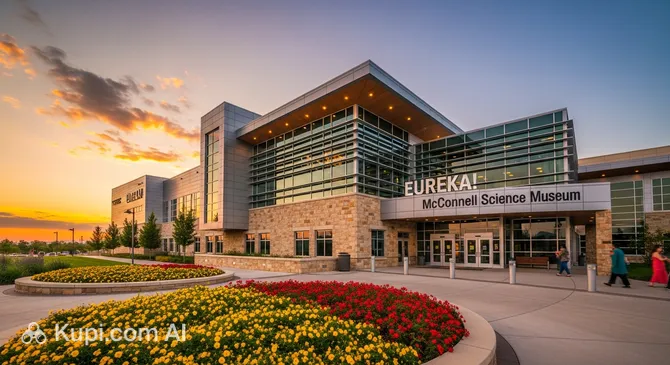
Eureka! McConnell Science Museum. Source: Kupi.com AI

The museum's collection features about 100 unique exhibits that allow you to literally get your hands on science. Here, you can operate pneumatic tubes, study the power of magnets, launch rockets, and observe the inhabitants of the large central aquarium. Special attention is paid to the region's geology and water resources, making the exhibits not only educational but also relevant to the state of Colorado.

The museum is closely integrated with the educational environment, being housed in the Engineering building of Colorado Mesa University. This proximity creates a unique atmosphere where professional research meets childhood curiosity. Thanks to its high ratings and popularity among locals, "Eureka!" is deservedly considered one of the most interesting educational venues in the city.

Contacts

To clarify visit details or obtain information about special educational programs at the EUREKA! McConnell Science Museum, you can use the following contact information.

Address 1400 N 7th St, Grand Junction, CO 81501, USA
Phone +1 970-254-1626
Official Website eurekasciencemuseum.org

What to Do

At this museum, every guest's main task is to experiment. You can launch plastic bottle rockets yourself, create giant shimmering soap bubbles, and study the curious behavior of magnetic fields. For the boldest explorers, there is access to an "underground mine" where you can feel like a real subterranean explorer, while the human body section reveals the secrets of how our organisms work.

In addition to physical experiments, you can observe wildlife: there are terrariums with snakes and lizards, and a large aquarium clearly demonstrates how rivers flow in the Grand Valley. Researchers have access to professional microscopes, wave machines, and even special optical instruments that allow you to see the world as sharks or insects do.

For those who want even more excitement, the museum often hosts special events: from alien mask painting classes to science shows where you can try real space ice cream. Cooperation with the university sometimes allows visitors to observe engineering students at work, making every visit a truly inspiring example of living science.

Getting There

Finding the science center is quite simple — it is located on the Colorado Mesa University campus in Grand Junction. If you are planning a trip by car, it is most convenient to travel along I-70 and head toward North 7th Street. Free parking is available for visitors directly on the university campus.

For those arriving in the city via Grand Junction Regional Airport (GJT), the journey by taxi or rental car will take no more than 10–15 minutes. The city is also served by the Mesa County transit system; the nearest stops are within walking distance of the engineering building where the museum is based.

The area around the university is well-suited for pedestrians and cyclists. Thanks to an extensive network of sidewalks and convenient city navigation, you can reach the museum from the central part of the city on a pleasant walk while taking in the architecture of Grand Junction.

History & Facts

The story of this amazing place began in the 1990s thanks to the enthusiasm of John McConnell, a retired physicist. After moving to Grand Junction with his wife, he planned a quiet retirement; however, a neighbor's request to help local schoolchildren with science changed everything. McConnell began carrying science demonstrations in the trunk of his car and a trailer, earning the affectionate nickname "Mr. Bubbles" from the children for his shows with giant soap bubbles.

In 1998, the first "Exploratorium" opened in an elementary school, and just a year later, the center moved to its own building — an old schoolhouse occupying about 6,000 square feet. Over the years, the organization, then known as the Math & Science Center, attracted thousands of volunteers and became an important educational hub, serving more than 120,000 children from across the region.

A landmark moment in its history came in 2018 when the museum officially changed its name to the EUREKA! McConnell Science Museum and moved into a specially designed building within the Colorado Mesa University engineering department. This allowed the museum's activities to be integrated into the academic environment and significantly expanded the collection of interactive exhibits, continuing to develop the "learning by doing" philosophy originally established by John McConnell.

Time Needed

To explore all the thematic zones at a leisurely pace and allow children plenty of time to play with each exhibit, visitors usually need 1 to 2 hours. This is the optimal amount of time to get acquainted with the basic principles of physics and biology presented in the halls and observe the aquarium inhabitants.

If you plan to attend a special show or workshop, you should set aside half a day for the visit. The museum's interactive format is so engaging that many families spend much more time here than originally planned, returning to the most interesting experiments multiple times.

Working Hours

The museum welcomes visitors according to the following schedule: from Tuesday to Saturday, the doors are open from 10:00 AM to 4:00 PM. On Sunday, you can explore the exhibits during reduced hours — from 12:00 PM to 4:00 PM.

Please note that the museum is closed on Mondays. Before planning your trip, it is recommended to check the official website, as opening hours may change slightly during holidays or university events.

Nearby

Exploring the surroundings of the science museum can significantly enrich your trip. The university quarter blends seamlessly into the city's historic districts, offering guests interesting architecture and cozy park areas.

After diving into the world of science, it will be pleasant to walk to local theaters, see monuments to prominent residents, or relax by the water in the riverside parks of Grand Junction.

Attraction Name Distance (km)
North Seventh Street Historic Residential District 0.9
Lincoln Park - Moyer Pool 1.1
The Historic Lowell School Building 1.2
The Avalon Theatre 1.5
Warren Barnes Memorial 1.5
James Dalton Trumbo Statue 1.5
Union Depot 2.0
Bananas Fun Park 3.1
River Park at Las Colonias 3.1
Potters field historical Cemetery 4.5

Reached the end of the page?

That means the route is fully explored