Support

Homestead (ARB)

About the Airport

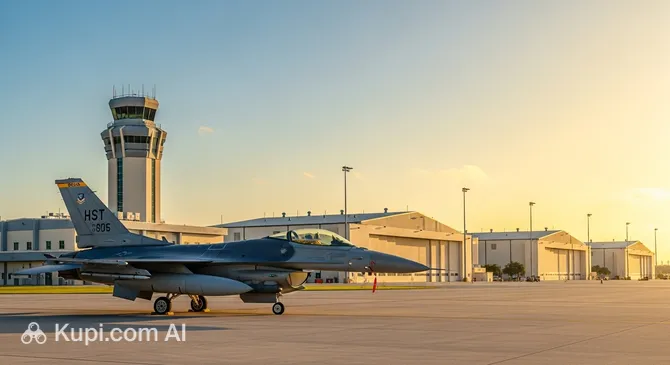
Homestead Air Reserve Base. Source: Kupi.com Binoculars

Homestead Air Reserve Base (HST) is not the typical airport where travellers leisurely stroll through duty-free shops while waiting for boarding. It is an active strategic facility of the US Air Force, located at the very gateway to the picturesque Florida Keys. Although the base is closed to regular passenger flights, it plays a key role in the life of the region and periodically opens its doors to tens of thousands of spectators during grand air shows.

IATA Code HST
ICAO Code KHST
City Homestead
Distance to Centre ~9 km
Status Military Air Base
Annual Passengers 0 (no civil flights)
Schedule Online board

Features and Regional Significance:

Since Homestead Air Reserve Base is a military facility, it does not serve commercial airlines. It is important for tourists not to confuse this airfield with the civil airports of Miami when planning their journey. Nevertheless, the location possesses its own unique attraction and history.

The main event attracting tourists here is the Wings Over Homestead air show. During the days of this festival, the base becomes a centre of attraction for aviation enthusiasts from all over the world. Spectators can witness breathtaking aerobatics, including performances by the famous Thunderbirds demonstration squadron, as well as inspect an exhibition of military hardware on the ground.

The history of the base is closely intertwined with the dramatic events of Hurricane Andrew in 1992, which practically wiped it off the face of the earth. The subsequent restoration became a symbol of the region's resilience. Geographically, the base is uniquely situated between two national parks: Everglades and Biscayne, making it a notable landmark for travellers heading to southern Florida by car.

Contact Information

  • Official Airport Website: www.homestead.afrc.af.mil
  • Help Desk Phone (Base Operator): +1 786-415-7000
  • Airport Address: 29050 Coral Sea Blvd, Homestead, FL 33039, USA
  • Email (Public Affairs): 482fw.pa@us.af.mil
  • Social Media: Official Facebook page — Homestead Air Reserve Base
  • Lost Luggage Information: Service unavailable. The base is a military facility and does not handle civil luggage transport.
  • Support Contacts (for Media and General Inquiries): +1 786-415-7330

How to Get to the Airport

It is important to remember that Homestead Air Reserve Base is a restricted military facility. Unlike civil airports, there is no free access to terminals, check-in counters, or a typical arrival zone here. Entry to the territory is possible only with a special pass or during mass events, such as the Wings Over Homestead air show. Nevertheless, if your goal is to visit the air show or you are heading to the base on official business, there are several ways to reach the destination.

By Car and Car Rental

A personal or rented car is the most reliable and common way to get to the base. The facility is located near the Florida’s Turnpike expressway (Exit 9 or Exit 6). The drive from the centre of Homestead city will take just 15–20 minutes (about 9–10 km). If you are driving from Miami, the journey will take about 40–50 minutes, excluding traffic jams.

In the city of Homestead itself and at major state airports, a wide selection of rental companies is available. Since you cannot rent a car at the base itself, it is recommended to arrange this in advance at your point of arrival (for example, in Miami).

Taxi and Transfers

Popular taxi services (Uber, Lyft) operate in this region and can take you to the checkpoint (Main Gate). The cost of a trip from central Homestead will be approximately 15–25 USD. Please note that taxi drivers without a military pass will not be able to enter the base territory itself, so drop-off takes place at the gates.

Public Transport

There is no direct rail link or metro line leading directly to the base gates. The nearest Metrorail station is in Miami (Dadeland South), from where buses depart towards Homestead via the dedicated South Miami-Dade Busway line.

Miami-Dade Transit bus routes (for example, route 38 Busway MAX) make stops in the area of SW 296th Street, but from the stop to the base entrance, you will have to walk a significant distance or take a taxi. This option is the least convenient for tourists, especially in the heat.

Parking

Parking rules depend on the purpose of the visit:

  • For personnel and visitors with a pass: There are designated parking zones on the premises near service buildings.
  • During the air show: Large-scale intercept parking lots are organised. Usually, on festival days, parking is free or costs a nominal amount, and special shuttles run from remote parking lots to the spectator zone. It is important to follow the instructions of traffic controllers, as the traffic scheme changes.

Nearest Civil Airports

Since Homestead Air Reserve Base does not accept regular passenger flights, tourists should plan their arrival at one of the neighbouring civil airports and then travel to Homestead by land:

If you are planning an exotic journey, you can also consider South Bimini Airport in the Bahamas or the small Naples Municipal Airport on the west coast of Florida, but these will require more complex logistics for transfer to Homestead.

Terminals and Map

Infrastructure Features and Lack of Civil Terminals

It is important for travellers to understand the fundamental difference between Homestead Air Reserve Base and familiar airports: there are no passenger terminals here in the classical sense. Since the base does not accept commercial flights (Delta, American Airlines, etc.), you will not find check-in counters, luggage belts, Duty-Free zones, or boarding gates with jet bridges here.

Instead of a single terminal building, the base infrastructure consists of a complex of functional buildings scattered along the runway:

  • Base Operations: Performs the function of a "terminal" for military crews and personnel. Flight planning, briefings, and processing of flight documentation take place here.
  • Hangars and Technical Zones: The main part of the built-up area is intended for the maintenance and storage of F-16 fighters and other military hardware.
  • Space-A Zone (if available): For military personnel and their family members travelling on military aircraft (Space-A programme), there is a small waiting area, however, its amenities are minimal and not comparable to civil business lounges.

Airport Map and Navigation

The territory of the base is a Restricted Area. Free movement between buildings for outsiders is strictly prohibited. Navigation is carried out exclusively along service routes accompanied by personnel or according to signs during public events.

During the Wings Over Homestead air show, the traffic scheme changes radically. Part of the apron (airfield) turns into a huge pedestrian zone for spectators. At this time, the following are installed:

  • Temporary sanitary zones.
  • Tents with food and souvenirs.
  • Static aircraft display zones.
  • First aid medical points.

Check-in and Screening Procedures

The concept of "check-in time" is not applicable here in the tourist sense. However, security control procedures at Homestead Air Reserve Base are much stricter and take more time than at civil airports:

Checkpoints (Gates):

Entry to the base is through fortified gates with armed guards. Document checks are mandatory for every person in the vehicle. A full inspection of the vehicle is possible, which can take from 5 to 20 minutes depending on the current threat level.

Screening During Events:

When visiting the air show, spectators pass through metal detector frames and personal bag checks. Queues for entry can stretch out, so it is recommended to arrive at least 1–1.5 hours before the start of the flights. The list of prohibited items is broader than in civil aviation (large backpacks, picnic coolers, drones, and any weapons, including pocket knives, are prohibited).

Recommendations for Navigation and Visiting

If you plan to visit an event or visit for official necessity, follow these rules:

  1. Documents always at hand: Have photo identification (passport or US driver's license) with you even before approaching the gates.
  2. Watch the signs: Strict speed limits and parking rules apply on the base territory. Violation can lead to serious fines and car towing.
  3. Do not look for "Arrivals": Meeting arrivals (if agreed) usually takes place in the parking lot outside the guarded perimeter or at the special Visitor Control Center near the main gate.

Airport History

The history of Homestead Air Reserve Base is a true script for a Hollywood movie about resilience and rebirth. Over the decades of its existence, this facility has repeatedly changed its purpose, survived complete destruction by the elements, and risen from the ruins to once again become an important defence hub and the pride of the region.

Foundation and War Years (1940s)

The origins of the base go back to the early 1940s. Initially, the field was used by Pan American Ferries to ferry aircraft, but with the US entry into World War II, the facility was handed over to the military. The official date of birth is considered to be 1942, when the airfield began functioning as Homestead Army Air Field. In those years, life was bustling here: transport aviation pilots trained before being sent to the front, preparing for transoceanic flights.

Cold War Era and Strategic Importance

After the war, in 1945, a powerful hurricane caused serious damage to the base, and it was temporarily mothballed. A second wind opened in 1955, when the facility was transferred to the Strategic Air Command (SAC). Thanks to its unique geographical position at the southernmost tip of the peninsula, Homestead became a key point for ensuring security in the region. In 1962, during the Cuban Missile Crisis, the base played a critically important logistical role, hosting dozens of aircraft and thousands of troops.

Hurricane Andrew: The Day the Base Disappeared

The most dramatic page in the airport's history was written on August 24, 1992. Category 5 Hurricane Andrew passed directly through Homestead. The consequences were catastrophic: 97% of the base's buildings and structures were destroyed or damaged so severely that they could not be restored. Aircraft, hangars, residential buildings — everything turned into a pile of debris. There was a real threat of the complete closure of the facility forever.

Rebirth and Modernity

However, the region and military leadership decided to restore it. In 1994, the facility was officially repurposed and reopened as an Air Reserve Base. Large-scale reconstruction turned Homestead into the modern, compact, and efficient military airfield we see today. Currently, the 482nd Fighter Wing, equipped with F-16 fighters, is based here.

Interesting Facts and Achievements:

  • Presidential Hub: In the past, the base was often used as an arrival point for "Air Force One" when US Presidents headed to their residences in Florida (for example, in Key Largo).
  • Unique Neighbourhood: This is arguably the only military airfield in the world that borders two national parks at once — Everglades and Biscayne. This imposes special obligations regarding environmental protection during flight operations.
  • Fighting Drug Trafficking: In addition to military tasks, the base has historically played an important role in Coast Guard and Customs operations to intercept contraband in South Florida.
  • Symbol of Resilience: After Hurricane Andrew, one of the few surviving structures remained standing on the base — the water tower, which became an unofficial symbol of the invincible spirit of the local garrison.

Services and Amenities

Since Homestead Air Reserve Base (HST) is an active military facility, the range of services here differs radically from what tourists are used to seeing at civil airports. You will not find familiar Duty-Free zones, airline alliance business lounges, or spas here. The entire infrastructure of the base is strictly functional and intended exclusively for supporting the life of military personnel, reservists, and civilian Pentagon staff.

It is important to understand: access to all the amenities listed below is available only to persons with a military ID card or a special pass. Ordinary tourists encounter service at the base only during public events, such as air shows.

Restaurants, Shops, and Dining

There is no commercial zone with familiar fast-food brands or fine dining for the general public on the base territory.

  • Base Exchange (BX) / Shoppette: Instead of Duty-Free, a military department store of the AAFES system operates here. The assortment includes electronics, clothing, cosmetics, and souvenirs with Air Force symbols, but purchases can only be made by authorised persons.
  • Dining for Personnel: Dining Facilities and the Falcon’s Nest club operate on the base, which is the centre of the garrison's social life. Lunches are served here, and events are held for officers and enlisted personnel.
  • During the Air Show: The situation changes on the days of the Wings Over Homestead festival. For tens of thousands of spectators, a huge open-air food court unfolds on the airfield: dozens of food trucks offer everything from classic American burgers and hot dogs to roasted corn and lemonade.

Financial Services and Communication

Communication and banking infrastructure here is also specific:

  • Banks and ATMs: ATMs and branches of credit unions oriented towards the military (e.g., Credit Unions) are usually present on the territory. Currency exchange for civilians is not performed.
  • Wi-Fi: There is no public open Wi-Fi network for visitors, as in civil terminals. Internet connection is provided through secure government networks for official use or through paid access points in residential buildings.

Accommodation: Hotels on Base and Nearby

The question of overnight stay depends on your status:

  • Homestead Inn (Air Force Inns): This is the official hotel on the base territory. It offers comfortable rooms at affordable prices, but only military personnel (active and retired) and their family members can stay here, subject to availability.
  • For Ordinary Tourists: Travellers should look for accommodation in the city of Homestead or Florida City, which are just a 10–15 minute drive from the base gates. Popular chain hotels (Hampton Inn, Courtyard by Marriott, TownePlace Suites) offering a high level of comfort and breakfast are represented here.

Medical Services and Assistance for Passengers with Reduced Mobility

  • Medicine: The 482nd Medical Squadron is stationed at the base, but it deals with the health of the flight crew and deployment readiness. Tourist insurance cannot be used here. During mass shows, ambulance crews are always on duty, and first aid tents are deployed for spectators.
  • Accessible Environment: As a US federal facility, the base complies with ADA (Americans with Disabilities Act) standards. Administrative buildings and air show zones are equipped with ramps and accessible toilets. For spectators with disabilities, special parking zones and seats in the front rows are allocated at the show.

Conference Rooms and VIP Services

The concept of a "business centre" is replaced here by a "briefing room". Meeting rooms are equipped with advanced communication technologies but are used exclusively for planning military operations and exercises. VIP service is provided only to senior command staff and Distinguished Visitors, for whom a separate meeting protocol is provided.

Where to Eat

Since Homestead Air Reserve Base is a closed military facility, you will not find the familiar picture with food courts, coffee shops, or fine dining restaurants distributed across terminals here. The dining situation here differs radically from civil airports: access to establishments is strictly regulated, and the choice depends on whether you are a military member or an air show visitor.

Dining Features on Base Territory

For a civilian tourist who accidentally ends up at the gates, there is no entry to the base restaurants. However, if you have access to the facility (official business trip, military ID, or guest status), the following options are available to you:

  • Falcon’s Nest: This is the heart of the base's social life. The establishment functions as a club and restaurant for personnel. Classic American lunches are served here: burgers, sandwiches, salads, and chicken wings. The atmosphere is relaxed, typical of American sports lounges.
    Location: Central part of the garrison, Building 402.
    Opening Hours: Usually from 11:00 to 13:00 (lunch) and in the evening on special occasions.
  • Shoppette / Express: A small shop at the gas station (similar to a civil convenience store), where you can buy quick snacks: grilled hot dogs, chips, energy drinks, coffee, and packaged sandwiches.
    Suitable for: A quick snack on the go.

Dining During the Air Show (For Tourists)

The only time the general public can taste the "local cuisine" at the airfield is during the Wings Over Homestead festival. During this period, the airfield turns into an open-air gastronomic festival.

  • Format: Dozens of food trucks and tents line up along the spectator zone.
  • Menu: Typical US Fair Food: deep-fried sweets like funnel cakes, corn dogs, giant turkey legs, pizza, tacos, and fresh lemonade.
  • Prices: Above average. Lunch will cost 15–25 USD per person.
  • Tip: Queues can be huge, so it is worth stocking up on food before the main aerobatic team flights begin.

Where to Eat Near the Base (Recommendations for Travellers)

Since an ordinary tourist will not be able to eat at the base itself, true gastronomic discoveries await you right outside the gates, in the city of Homestead. This is the agricultural centre of Florida, so the food here is fresh, authentic, and diverse.

1. Shiver's BBQ

A legendary establishment operating since the 1950s, located just a few minutes' drive from the base. This place is a must-visit for meat lovers.

  • What to try: Smoked ribs, pulled meat, and jalapeño cornbread.
  • Average bill: 20–30 USD.

2. Robert Is Here Fruit Stand

A fruit stand and farm market famous throughout Florida, located on the way to the Everglades. Ideal for vegetarians and lovers of exotic flavours.

  • What to try: The freshest milkshakes made from tropical fruits (soursop, passion fruit, key lime). This is the hallmark of the region.
  • Features: Huge selection of vegan options (fresh fruits).

3. Mexican Cuisine

Homestead is famous for its Mexican community. Within a 5 km radius of the airport, you can find dozens of authentic taquerias (for example, Taqueria Morelia), where they prepare real tacos, not their fast-food versions.

Dietary Features and Prices

Type of Food Availability and Comments
Vegetarian / Vegan On Base: Difficult to find (only salads in the club).
Nearby: Excellent selection at farm markets (Robert Is Here) and in Mexican restaurants (dishes with beans and vegetables).
Halal / Kosher Specialised certificates are usually absent in military canteens. It is recommended to look for specialised cafes towards Miami.
Gluten-Free Food In BBQ restaurants near the base, you can order meat without sauces and side dishes. At the air show, the choice is extremely limited.
Average Bill On Base (for military): $ (5–10 USD).
At Air Show: $$$ (expensive fast food).
In Homestead City: $$ (affordable prices, 15–25 USD for a full lunch).

Summary: If you are not military, do not count on lunch inside Homestead Air Reserve Base. Plan your time to visit one of the local restaurants in the city before or after your visit to the base perimeter or the air show. This will allow you to experience the true taste of South Florida.
Traveller Tips

Visiting Homestead Air Reserve Base differs radically from the experience of flying through ordinary civil hubs. Since this is an active military facility, strict rules and protocols apply here. Most of the tips below are oriented towards visitors of the Wings Over Homestead air show and the few who use the base for official necessity or the Space-A programme.

Arrival Time Recommendations

Forget the "2 hours before departure" rule. The logic here is different:

  • For Air Show Visitors: On days of mass events, traffic on the approach to the base (especially from Florida’s Turnpike) can be very dense. It is recommended to arrive by the opening of the gates (usually around 8:00–9:00 AM), even if the main flights start at noon. This guarantees you a convenient parking space and the absence of multi-kilometre traffic jams.
  • For Space-A Passengers (Military Flights): Military aircraft follow a mission schedule that can change. Arriving at the passenger terminal (Small Air Terminal) should be strictly by the time indicated in your flight list (Roll Call), usually 3–4 hours before departure for document processing.

Check-in and Security Features

Screening here is conducted not by TSA staff, but by Military Police (Security Forces). The procedure is more thorough and uncompromising.

  • Documents: Identification (passport or ID) must be ready for presentation even before you drive up to the checkpoint booth. All passengers in the car must have documents.
  • Vehicle Inspection: Be prepared to open the boot, bonnet, and all doors. Mirror inspection of the vehicle undercarriage is a standard procedure.
  • Dress Code: Avoid provocative clothing or "military-style" clothing that may mislead personnel.

Seat Selection on the Plane (for Space-A)

If you are lucky enough to fly on a military aircraft, forget about choosing between "window" and "aisle" during online check-in.
Seats are allocated on a residual principle. On C-130 or C-17 transports, seats often consist of canvas benches along the sides (jump seats). We recommend taking a warm jacket or blanket with you, as it can be very cold and noisy in military cargo planes.

What Can and Cannot Be Carried (Hand Luggage and Show Territory)

The list of prohibited items at Homestead Air Reserve Base is stricter than in civil aviation. This is especially true for open days:

  • Strictly Prohibited: Drones and quadcopters (their use in the base airspace is a federal crime), walkie-talkies and frequency scanners, weapons of any kind (even with a carrying license), large coolers, glass containers.
  • "Clear Bag Policy": At mass events, often only transparent vinyl or plastic bags of certain sizes are allowed to speed up screening.
  • Recommended to Take: Earplugs or noise-cancelling headphones (especially for children) — the sound of fighter jet engines here is deafening.

Tips for Transit Passengers

Homestead Air Reserve Base is not designed for connections. There is no transit zone here.

  • If you arrived here on a military aircraft and need to fly further by civil airlines, you will have to leave the base and get to Miami International Airport (MIA) on your own. Allow at least 3–4 hours for this transfer (taking into account exiting the base, finding a taxi, and the road).
  • There are no direct shuttles between the base and civil airports.

Saving Time and Money

  • Water and Food: At the air show, food prices at food trucks can be high ("festival" prices). Take an empty plastic bottle with you — there are usually stations with drinking water on the territory.
  • Sun Protection: The base is under the open Florida sun, and there is practically no shade on the airfield (except for the wings of aircraft on static display). Sunscreen, sunglasses, and a cap are a mandatory set that will save you money on treating burns.
  • Souvenirs: It is better to buy commemorative patches and T-shirts at the end of the show day — sometimes sellers give discounts so as not to take the goods back.

What to Do in Case of Flight Delay (or Show Delay)

Unlike civil airlines, there is no compensation for delays here.

  • Military Priorities: Departure may be postponed or cancelled due to a priority combat mission or technical malfunction. In this case, Space-A passengers are simply crossed off the list and must find alternative routes at their own expense.
  • Weather at the Show: Florida is known for its sudden thunderstorms. If flights are suspended due to lightning, follow the instructions of personnel to shelters (usually hangars or your personal car). Be patient: often after a short downpour, the show continues.

Reached the end of the page?

That means the route is fully explored