Support

Jose Marti International Airport

About the Airport

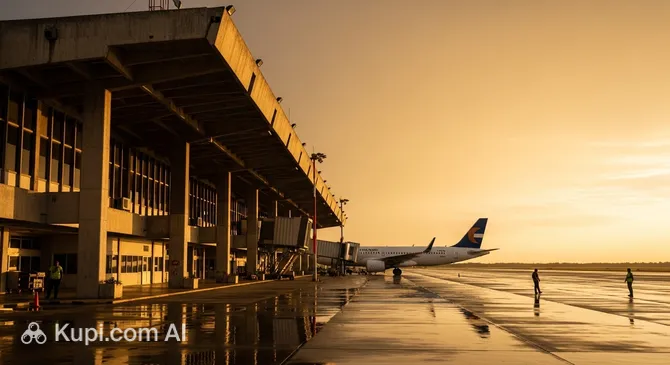
Jose Marti International Airport. Source: Kupi.com Binoculars

Named in honour of the great Cuban poet and national hero, Jose Marti International Airport is not just an airport, but the main aerial gateway to the Island of Freedom. It is from here that many travellers begin their acquaintance with colourful and sunny Cuba. Opened back in 1930, this airport has witnessed the country's rich history and is today the largest and busiest aviation hub in Cuba, receiving flights from all over the world.

IATA Code HAV
ICAO Code MUHA
City Havana
Distance to centre approx. 18 km
Status International
Passengers per year over 4 million
Popular Airlines Iberia, Turkish Airlines, Copa Airlines
Schedule online board "Jose Marti International Airport"

Jose Marti Airport consists of several terminals, the main one being Terminal 3. This is the most modern and largest terminal, handling the majority of international flights. Here, passengers will find all necessary services: CADECA currency exchange points, car rental desks, shops, restaurants, and VIP lounges for a comfortable wait before their flight. The other terminals handle domestic flights, charters from the USA, and flights by Caribbean airlines.

Although the airport is the key transport hub of Cuba, there are some specific features to consider. For instance, internet access here is paid, and cash is preferred in many establishments. There are no hotels within the airport itself, but the centre of Havana, where a wide selection of accommodation is available, can be reached by taxi in approximately 20-30 minutes. Jose Marti Airport is a convenient starting point for exploring not only the capital but the entire country, thanks to well-established domestic air connections.

Contact Information

If you need to contact representatives of Jose Marti International Airport (HAV), please use the official communication channels. This will help you obtain the most reliable and up-to-date information.

  • Official Website: Flight schedules, news, and general information about services can be found on the ECASA management company website: www.ecasa.cu.
  • Information Desk Phone: For general questions and enquiries, the following numbers are available: +53 7 649 5777 or +53 7 266 4133.
  • Airport Address: Avenida Van Troi, Boyeros, La Habana, Cuba.
  • Email: The airport does not provide a public email for general enquiries. It is recommended to use the feedback form on the official website or the telephone.
  • Social Media: You can follow airport updates and news on its official social media pages, for example, on Facebook.
  • Lost Luggage Information: For issues regarding lost or damaged luggage, you should contact your airline's representative office exclusively. Airport services do not handle luggage tracing directly.
  • Passenger Support Contacts: For assistance and advice at the airport, please contact the general information service at the numbers listed above.

How to Get to the Airport

There are several ways to get from the city of Bejucal to the main international airport of Cuba, Jose Marti (HAV). The choice depends on your budget, amount of time, and comfort preferences. Since the airport is located relatively close by, the trip will not take much time, usually within 30-45 minutes.

Taxi and Private Transfer

This is the simplest and most reliable way to get to the airport. You can use official state taxis or arrange a ride with a private driver, many of whom drive famous American vintage cars. A key tip is to always discuss and agree on the fare before the trip begins to avoid misunderstandings. A trip from Bejucal to the airport will cost approximately 20-30 US dollars (or equivalent). For maximum convenience, you can book a transfer in advance through your hotel or an online service — in this case, you will be met at the appointed time for a fixed price.

Public Transport

This is an option for the most budget-conscious and adventurous travellers. There is no direct bus route from Bejucal to the airport. You will first have to take a local bus ("guagua") or a shared taxi ("almendrón colectivo") to the outskirts of Havana, and then transfer to other transport heading towards the airport. This method is not recommended for tourists with large luggage or those limited by time, as it requires good orientation in the area and patience.

Car Rental and Parking

If you have rented a car to travel around the island, you can easily drive to the airport yourself. The roads in this area are generally of good quality. Jose Marti International Airport has several parking zones where you can leave your car for a short or long period. This is convenient if you are seeing off friends or returning a rental car right before departure. Most major rental agencies have their desks in the arrivals terminal.

Terminals and Map

Havana's Jose Marti International Airport consists of several separate terminals that are not connected by pedestrian walkways. It is important to check in advance which terminal your flight departs from, as the distance between them can be several kilometres.

Main Terminals and Their Purpose:

Terminal 3 (T3) — This is the main and most modern international terminal. It handles the majority of scheduled flights from Europe, Canada, Latin America, and Asia. If you are flying to Cuba with a standard airline, you will most likely arrive and depart from here. The departure zone is located on the upper floor, and the arrival zone is on the lower floor. T3 houses most Duty-Free shops, cafes, currency exchange points, and airline offices.

Terminal 2 (T2) is mainly used to handle charter flights from the USA and some flights from Caribbean countries. It is significantly smaller and more modest compared to T3, with a more limited range of services.

Terminal 1 (T1) handles domestic flights within Cuba. This is the oldest terminal at the airport, and its infrastructure is quite simple.

Moving Between Terminals is done by taxi or a special shuttle bus running between the buildings. Please note that the bus runs on a schedule, and the trip may take some time, so factor this into your plan if you require a transfer.

Procedures and Recommendations:

Check-in, passport control, and security screening processes at Havana airport can be quite slow. It is recommended to arrive at the airport at least 3-4 hours before an international flight. Queues can be long, especially during peak season. For navigation inside the terminals, follow the signs, which are mostly duplicated in English. Orienting yourself in Terminal 3 is the easiest thanks to its more modern and logical layout.

Airport History

The history of Jose Marti International Airport began on 24 February 1930, when it was officially opened, replacing the old Columbia airfield. Named after the national hero and poet, the airport became an important transport hub from the very beginning. The first flight received by the new air harbour was a domestic flight from the city of Santiago de Cuba, which marked the beginning of civil aviation development in the country.

In the following decades, the airport went through several stages of development. As early as 1936, the first international flight to Merida, Mexico, departed from here, and by 1943, the first control tower and runway were built. After 1959, the geography of flights changed significantly, and the airport became a key link with Eastern European countries. In the early 1960s, the airport became the departure point for thousands of children participating in the humanitarian programme known as "Operation Peter Pan".

Significant infrastructure modernisation took place at the end of the 20th century. In 1988, Terminal 2 was opened, designed mainly to handle charter flights from the USA. However, the real breakthrough was the construction and opening in 1998 of the modern Terminal 3, which remains the airport's main international terminal today. Its construction, carried out with the support of Canadian specialists, allowed for a significant increase in capacity and improved passenger service quality.

In the 21st century, Jose Marti Airport continued to play a central role in Cuba's transport system. One of the landmark events in recent history was the arrival of the first regular commercial flight from the USA in over 50 years in 2016, symbolising a new stage in international relations. Today, the airport continues to develop, remaining the main point of arrival for tourists wishing to experience the rich culture and nature of the island.

Services and Amenities

Jose Marti International Airport in Havana offers passengers a set of basic services for a comfortable wait for their flight. In the terminals, you will find several cafes and lounges where you can have a snack with sandwiches, drink famous Cuban coffee, or a refreshing beverage. For shopping, Duty Free shops are available, offering a classic assortment: local specialties, cigars, souvenirs, perfumes, and sweets.

For a more comfortable wait, the airport provides VIP lounges (Salón VIP). Access to them is usually paid or provided to business class passengers. Here you can relax in silence and enjoy complimentary drinks and snacks. Access to Wi-Fi at the airport is generally paid and requires the purchase of special ETECSA cards. The number of power outlets for charging devices is limited, so it is recommended to have a portable power bank with you.

Key financial services are available directly within the airport building. Here you will find CADECA exchange points (Casas de Cambio), where you can exchange foreign currency for Cuban pesos, as well as ATMs and several bank branches. For emergencies, a medical point is available on the airport territory, ready to provide first aid.

Families with children can use the mother and child rooms to care for little ones. For passengers with reduced mobility, special assistance is provided: airport staff will assist with movement through the terminal, boarding, and disembarking from the aircraft. It is recommended to notify the airline in advance of the need for such services. There are no hotels directly inside the airport, however, several accommodation options are located in the immediate vicinity. Specialised business centres or conference rooms are practically non-existent at the airport, so it is better to choose a hotel in Havana for business meetings.

Where to Eat

Planning your departure from Jose Marti International Airport, you will find several options for a snack or a full meal, although the choice may not be as wide as in major global hubs. Most establishments are concentrated in Terminal 3, which handles the bulk of international flights. Here you can find both cafes for a quick coffee and lounges where you can relax before your flight.

In the departure zone after passing passport control (airside), the choice of establishments is significantly better than in the public zone (landside). Passengers have access to several cafes and lounges. In the public zone before check-in, usually only a small cafe operates, offering basic beverages and snacks. The opening hours of most establishments are tied to the flight schedule, and some spots in Terminal 3 may operate around the clock or until the last departing flight.

Being in Cuba, even at the airport, it is worth trying something with local flair. Pay attention to Cuban coffee — strong and aromatic. In many lounges, you will be offered famous local beverages prepared according to traditional recipes. Regarding food, you can find simple but filling sandwiches (bocadillos) with ham and cheese or light snacks. This is a great way to prolong the holiday feeling.

For a quick bite, small cafes where you can order pastries, a sandwich, and coffee are ideal. If you have time for a more substantial meal, it is better to settle in one of the restaurants or lounges in the departure zone. Prices at the airport are generally higher than average in the city, and payment is most often accepted in convertible currency or by card.

It is important to note that options for passengers with strict dietary restrictions (vegan, gluten-free, halal dishes) are extremely limited. Vegetarians may find simple dishes, for example, rice with vegetables or salad, but there are no specialised menus here. If you have specific dietary needs, it is strongly recommended to bring food with you to avoid inconvenience.

Traveller Tips

To ensure your journey through Cuba's main airport goes smoothly, it is worth considering a few local features. A little preparation will help avoid stress and save time, leaving more pleasant impressions of your trip to Bejucal.

Arrival Time and Check-in: We strongly recommend arriving at the airport well in advance, especially for international flights — 3-4 hours before departure. Queues for check-in and passport control can be long, and the process itself moves at a leisurely Caribbean pace. Keep all documents at hand: passport, ticket, visa, or tourist card (Tarjeta del Turista).

Hand Luggage and Customs: Strict rules apply to the export of certain goods when leaving the country. Without receipts and special certificates, you may take up to 50 cigars and no more than two litres of strong beverages per adult passenger. Upon entry, all tourists are required to fill out the online D'Viajeros declaration in advance. Do this 48 hours before departure to speed up customs control upon arrival.

Transfer Passengers: If you have a connecting flight in Havana, be prepared for a possible repeat security check. Sometimes it is required to collect luggage and check it in again. Always check the transit procedure with your airline representatives.

Saving Time and Money: Exchange only a small amount at the airport for immediate expenses (taxi, water), as the exchange rate in the city is usually more favourable. Download offline maps and necessary information to your phone in advance — Wi-Fi access may be limited and paid. To avoid spending extra on food while waiting for your flight, bring a light snack with you.

In Case of Flight Delay: Waiting areas at the airport do not always offer a large selection of entertainment or establishments. In case of a delay, it is useful to have a book, a charged power bank, and headphones with you. Do not hesitate to contact airline representatives to clarify information about the flight status and the possibility of providing vouchers for food or drinks during a long wait.

Seat Selection on the Plane: When departing from Havana, if the takeoff direction allows, seats by the window on the left side often offer beautiful views of the coast. This is an excellent chance to take final panoramic photos as a keepsake.

Reached the end of the page?

That means the route is fully explored