Support

Geological Museum

About

Located in the picturesque college town of Laramie, this science center is a true treasure trove for anyone passionate about Earth's history. The University of Wyoming Geological Museum is one of the most significant places in the USA for studying the paleontology and mineralogy of the Rocky Mountain region.
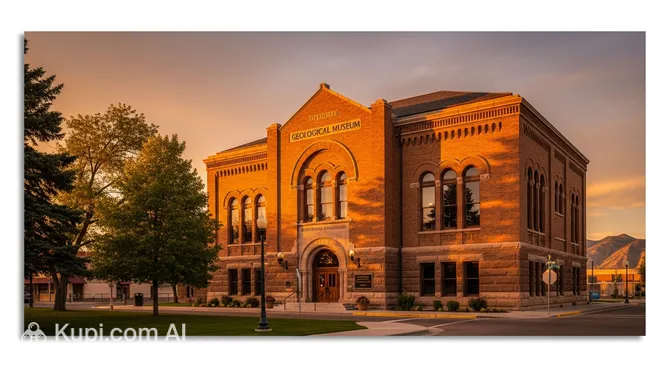
Geological Museum. Source: Kupi.com AI

Here, beneath the arches of a historic building, sits an impressive collection spanning billions of years of our planet's development. Visitors can see rare minerals, rocks, and, of course, the famous dinosaur skeletons found in the renowned local Morrison and Lance formations. Thanks to its high rating and free admission, the museum has become a must-see for tourists, families with children, and researchers alike.

The museum occupies part of a campus founded in the late 19th century and serves as a unique platform for popularizing science. Its halls display full skeletons of Diplodocus, Triceratops, and predatory Allosaurus, as well as the remains of Pleistocene-era mammals. The museum's atmosphere harmoniously combines academic rigor with modern interactive elements, making an immersion into natural history as engaging as possible.

Contacts

For your convenience, we have gathered key information to help you quickly find the museum and contact its staff. Before your visit, we recommend checking the university's official resources to stay informed about any possible changes to the operating schedule. Below are the main contact details for the institution.

Address 200 N 9th St, Laramie, WY 82072, USA
Phone +1 307-766-2646
Website http://www.uwyo.edu/geomuseum/

What to Do

The main magnet for visitors here is undoubtedly the giant inhabitants of the past. Don't miss the chance to see "Big Al"—one of the best-preserved Allosaurus skeletons in the world, which was discovered right here in Wyoming. In addition to him, the halls feature skeletons of Triceratops and Diplodocus, as well as unique fossils of ancient fish and marine reptiles, recalling the times when an ancient sea covered this area.

For those who prefer active participation over passive viewing, a special "Discovery Zone" is open. Here you can grab a microscope and independently study rock structures or touch real fossils in the tactile area. This spot is incredibly popular with families, as children can try their hand at assembling a dinosaur model or participate in educational games.

Aesthetics lovers will appreciate the collection of precious minerals and meteorites. The museum's bright halls with high windows are perfect for photography—the skeletons of prehistoric lizards look monumental against the backdrop of the university campus. Additionally, free lectures by paleontologists are often held on weekends, where they share the secrets of their latest field expeditions.

Getting There

Finding this science center in Laramie is easy, as it is conveniently located in the heart of the university campus at 200 N 9th St. If you are traveling by car, the city is situated at the intersection of major highways I-80 and US-287. The drive from Denver International Airport (DEN) takes about two hours along a scenic highway that winds through plains and foothills.

For those who prefer public transport, Greyhound buses serve Laramie. The station is located on Sheridan St, from where you can reach the museum building on foot in about 20–25 minutes or by taxi in just 5 minutes. Free shuttles circulate throughout the campus itself, making it much easier to move between buildings and attractions.

If your exploration of the city begins in the historic center, for example, near the Union Pacific Depot, a walk to the museum will be a pleasant addition to your tour. The route takes about 20 minutes through the quiet streets of the college town. Parking spaces for motorists are provided directly at the museum building or in designated campus parking lots.

History & Facts

The history of this place began at the dawn of the 20th century when the Geological Museum was founded as a scientific division of the young University of Wyoming. The first collections were formed literally "in the field"—professors and students collected mineral and fossil specimens during expeditions across the wild expanses of the Rocky Mountains. A major milestone was the discovery of rich dinosaur deposits in the Morrison Formation, which turned the museum into a site of global significance.

One of the most iconic events in the museum's annals was the donation of a massive Diplodocus skeleton in the 1930s by oil companies operating in the state. Later, in 1991, the paleontological community was stunned by the discovery of "Big Al"—one of the most complete Allosaurus skeletons in the world. Although the process of preparing the bones for display took years, today this exhibit is the pride of the collection.

The museum has undergone several stages of modernization, evolving from a simple storehouse into a modern educational center. In the 2000s, digital displays and updated showcases were introduced to help better illustrate Wyoming's geological record, which spans 2.5 billion years. Today, the holdings include more than 50,000 specimens, many of which serve as benchmarks for scientists from around the world.

Time Needed

To leisurely explore the main halls and meet the stars of the Mesozoic era, most visitors need about 1.5 to 2 hours. This time is quite sufficient to read the information boards, carefully examine the dinosaur skeletons, and even attend one of the short lectures or temporary exhibitions.

If you are planning a brief visit as part of a larger tour of Laramie or are traveling with small children, an express tour of the highlights will take about 45–60 minutes. Fans of detailed mineralogy and paleontology may need more time to thoughtfully engage with the interactive "Discovery Zone."

Working Hours

The museum is open to visitors from Monday to Saturday, 10:00 AM to 4:00 PM. Sunday is a closed day, so plan your trip in advance to see all the exhibits before closing.

Please note that the operating schedule may change during public holidays or extended university breaks. To avoid disappointment, we recommend checking the current opening hours on the official University of Wyoming website before your visit.

Nearby

After visiting the world of antiquity, it's worth taking some time to explore other interesting sites within walking distance. The university campus and downtown Laramie offer many opportunities for walking, discovering art, and enjoying a relaxing break at local establishments.

Name Type Distance (km)
Benjamin Franklin Statue Monument 0.1
Wyo Theater Theater 0.7
Laramie's Historic Carnegie Library Historic Building 0.8
Alibi Wood Fire Pizzaria & Bakery Restaurant 0.9
QDOBA Mexican Eats Cafe 0.9
Crowbar & Grill Restaurant/Bar 1.0
Born In A Barn Restaurant 1.1
Altitude Chophouse & Brewery Restaurant/Brewery 1.1
The Library Sports Grille & Brewery Sports Bar/Brewery 1.1
Chili's Grill & Bar Restaurant 2.0

Reached the end of the page?

That means the route is fully explored