Support

Museum of Texas Tech University

About

In the heart of Texas, in the dynamic city of Lubbock, lies one of the region's most impressive cultural institutions — the Museum of Texas Tech University. It is not just an academic department, but a multi-faceted research and education complex that introduces guests to a rich heritage spanning thousands of years of history.
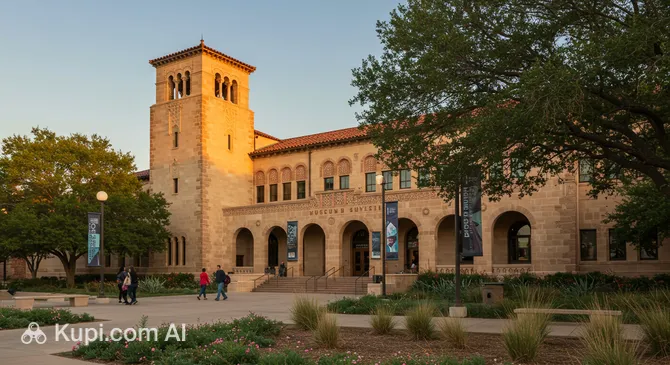
Museum of Texas Tech University. Source: Kupi.com AI

As part of one of the largest universities in the USA, this museum offers an amazing variety of collections: from natural history and archaeological finds to exquisite works of art and ethnographic rarities. Here, you can see how the nature of the Southern Plains evolved and how the culture of the people who inhabited these lands across different eras was shaped.

The site gains special significance through its connection to the Lubbock Lake Landmark—a unique archaeological monument of global importance. Thanks to the scale of its research, the museum is rightfully considered a key point on the state's tourist map for everyone who values science, art, and history.

Contacts

For more details before your visit or to organize a group tour, you can use the official communication channels. The museum is open to inquiries and always ready to help visitors navigate its programs.

Address 3301 4th St, Lubbock, TX 79415, USA
Phone +1 806-742-2490
Official Website www.depts.ttu.edu/museumttu
Email museum.texastech@ttu.edu
Google Maps Open map

What to Do

A visit to the museum promises to be a rich experience: guests can enjoy both permanent exhibitions and regularly updated temporary displays. You can study the flora and fauna of the Southern Plains in detail, examine ancient artifacts found during excavations, and admire works by international and local artists in the art galleries.

For those who prefer a more hands-on way of learning, the museum hosts interactive events, lectures, and workshops. It is especially popular with families; special educational programs are designed for children, allowing them to engage with science in a playful way.

A visit to the local planetarium is a must. Captivating shows about space and the stars make the visit feel truly out of this world, and the chance to peer into the mysteries of the universe attracts astronomy lovers of all ages.

Getting There

Reaching the cultural center at 3301 4th Street is straightforward. For those traveling by private or rental car, free parking is provided on-site, making your visit as convenient as possible.

If you are in the city center or the university campus area, a taxi or car ride will take only 10–15 minutes. The museum is ideally situated near major transport arteries, making it easy to find even for first-time visitors to the city.

The location is also accessible via public transport. City bus routes run through the surrounding areas, providing connections between central hotels and the educational cluster. Thanks to the well-developed infrastructure, your journey to the exhibits will be quick and pleasant.

History & Facts

The history of this institution began in 1929, when it was founded as the West Texas Museum. This occurred just a few years after the opening of Texas Technological College itself, highlighting the museum's deep roots in the region's educational traditions.

Originally, the collection was housed directly on campus. One of the most precious artistic features from that period is the massive fresco cycle by the renowned artist Peter Hurd, which adorns the rotunda of the museum building, capturing the spirit and history of the area.

Significant changes came in 1970 when the museum moved to a specially designed modern building at the intersection of 4th Street and Indiana Avenue. During this same period, the Lubbock Lake Landmark became part of the museum complex—a unique archaeological site where evidence of human presence dating back 12,000 years was discovered.

Today, the Museum of Texas Tech University is recognized as one of the leading scientific and cultural centers of the Southern Plains, bringing together decades of research and the careful preservation of Texas heritage.

Time Needed

To leisurely explore the main halls and get to know the key exhibits, most visitors need between 2 to 4 hours. This is enough time to appreciate both the natural science collections and the art galleries.

If you plan to attend a show at the planetarium, participate in one of the interactive workshops, or study the temporary exhibitions in detail, it is worth setting aside half a day for your visit. The museum's welcoming atmosphere encourages thoughtful exploration, so there is no need to rush.

Working Hours

When planning your visit, please note that the museum welcomes guests from Tuesday to Sunday. On Mondays, the institution is closed to the public. A significant advantage for tourists is that admission to the museum is free, making cultural leisure accessible to everyone.

The operating hours are as follows:

  • Tuesday – Saturday: 10:00 AM – 5:00 PM
  • Sunday: 1:00 PM – 5:00 PM
  • Monday: Closed

Nearby

Exploring the university surroundings is a great way to complement your museum experience. There are many interesting locations nearby that reflect the spirit of the campus and the history of the region.

You can admire the monuments and architectural landmarks of the campus or head a bit further to discover the legacy of the legendary Buddy Holly, whose name is forever linked to this city.

Name Type Distance (km)
Headwaters Fountain Plaza Square / Fountain 1.2
Texas Tech Dairy Barn Historical building 1.3
The Victory Bells Landmark 1.3
The Masked Rider Statue Monument 1.4
1970 First Responders Plaza Memorial complex 2.8
S. H. Kress and Co. Building Architectural landmark 3.6
Cactus Theater Theater / Cultural center 4
Buddy Holly Statue Monument 4.2
Buddy Holly House Museum / House 4.6
Buddy Holly Gravesite Historical site 7.2

Reached the end of the page?

That means the route is fully explored