Support

American Banjo Museum

About

Feel the rhythm of American history at a unique venue called the American Banjo Museum. This world-leading center, located in Oklahoma City, is dedicated to the evolution of one of the most recognizable instruments in the USA. The museum spans an impressive 2,000 m² and houses the world's most extensive banjo collection—more than 400 rare specimens.
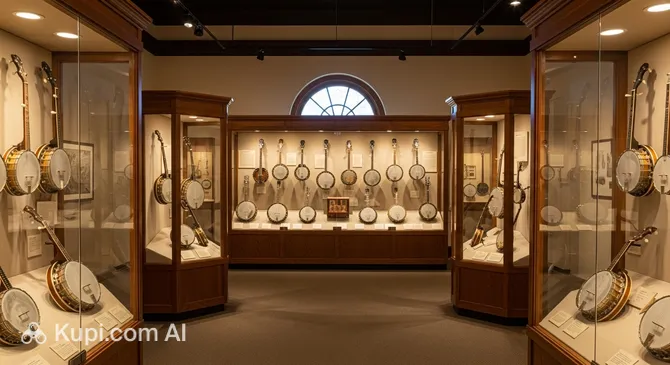
American Banjo Museum. Source: Kupi.com AI

The exhibition covers nearly 370 years of history: from primitive instruments created by enslaved Africans from gourds to the luxurious, richly decorated models of the 1920s Jazz Age. Here, you can see minstrel instruments, classic banjos from the early 20th century, and modern models for bluegrass and folk. The jewel of the collection is the assembly of Jazz Age instruments, valued at $3.5 million.

In addition to the instruments themselves, the museum serves as an important archive housing rare video recordings, sheet music, and personal belongings of great musicians. One of the most impressive installations is a three-dimensional reconstruction of Henry Ossawa Tanner's famous painting "The Banjo Lesson." It is not just an exhibition, but a living narrative of how the banjo became a symbol of American musical identity.

Contacts

For those who want to clarify visit details or book a group tour, the American Banjo Museum provides all the necessary contact information. The museum is located in the heart of the tourist district, making it easily accessible for visitors.

Address 9 E Sheridan Ave, Oklahoma City, OK 73104, USA
Phone +1 405-604-2793
Official Website americanbanjomuseum.com

What to Do

A visit to the museum is a fascinating journey through time. You will begin your path with the chronological exhibits, featuring amazing replicas of African gourd prototypes, and gradually move toward the shimmering gold and mother-of-pearl instruments of the Jazz Age. Be sure to find the rarest models from Gibson dating to the 1920s–1930s and the famous "Tree of Life" banjo from the 1870s, adorned with exquisite carvings.

For those who want more than just viewing, there are interactive elements. In a special cafe near the entrance, visitors can try playing the banjo themselves, even if they have never held one before. Here, you can also listen to rare historical recordings of great virtuosos and watch films about the instrument's role in bluegrass and ragtime culture.

Don't forget to pay attention to the details: display cases show vintage photographs of Civil War soldiers with banjos, old posters, and sheet music. And the 3D installation recreating the atmosphere of "The Banjo Lesson" will allow you to literally feel the spirit of a bygone era in the heart of modern Bricktown.

Getting There

The attraction is located at 9 E Sheridan Ave, in the heart of the lively Bricktown district. This is a pedestrian-friendly area filled with restaurants and canals, so a walk to the museum is a pleasure in itself. If you are staying downtown, it is most convenient to reach the building on foot.

An original way to get there is by taking a water taxi along the Bricktown Canal. The ride costs about $13 and allows you to enjoy views of city murals and architecture before disembarking near the museum. If you are coming from Will Rogers World Airport (OKC), a taxi or Uber/Lyft ride will take approximately 20–25 minutes.

For those who prefer public transport, EmX buses serve the central station, from which Bricktown is just a few minutes' walk away. For drivers, there are several paid parking lots in the vicinity, though it's best to look for a spot in advance on weekends.

History & Facts

The history of this unique place began in 1998 in the small town of Guthrie. The founders were attorney Brady Hunt and industrialist Jack Canine. As passionate fans of the instrument, they established the National Four-String Banjo Hall of Fame to preserve the heritage of the 1920s–1930s Jazz Age.

Over time, the collection grew, and in 2009, the museum moved to a modern building in Oklahoma City. Along with the move, the institution's mission expanded: it now showcases not only four-string but also five-string instruments, covering all styles from bluegrass to classic folk. The museum aims to present the banjo as a true "America’s adopted native instrument."

The earliest exhibits date back to the mid-17th century. The first American banjos were created by African Americans from gourds and animal skins, mimicking African prototypes. The museum's collection features rare replicas from those times, as well as instruments from the first commercial manufacturer, William Boucher, dating back to 1845. Today, the collection includes over 400 instruments, representing a priceless archive of musical culture.

Time Needed

To leisurely explore all the two-story galleries and get acquainted with the collection of over 300 displayed instruments, it usually takes 1.5 to 2 hours. This is enough time to walk through the chronological halls and study the main milestones of banjo development.

If you plan to take advantage of the interactive features—for example, trying to play the instrument in the designated area, listening to archival recordings, or watching documentaries—you should set aside 2.5–3 hours for your visit. For true music and history enthusiasts who wish to study every artifact in detail, the tour can last until midday.

Working Hours

The museum doors are open to visitors throughout the week, except for Mondays. The standard operating hours are:

  • Tuesday – Saturday: 11:00 AM to 6:00 PM;
  • Sunday: 12:00 PM to 5:00 PM;
  • Monday: Closed.

Please note that operating hours may change on public holidays, so it is recommended to check the latest information on the museum's official website before your visit.

Nearby

The museum's location in the Bricktown district offers tourists plenty of opportunities for further exploration. After immersing yourself in the world of music, you can visit scenic parks or entertainment centers located just a few minutes' drive away.

Name Distance (km)
Wiley Post Sprayground 2.3
McKinley Park Sprayground 2.7
Schilling Park Sprayground 3
Memorial Park Sprayground 4.8
Lost Lakes Adventure Park 5.9
Wake Zone Cable Park 6.1
Hurricane Harbor Oklahoma City 7
Celebration Station 7.9
Altitude 1291 8.8
Sellers Park Sprayground 10.2

Reached the end of the page?

That means the route is fully explored