Support

Black Wall Street

About

Black Wall Street is the legendary historic Greenwood District in the city of Tulsa, which in the early 20th century became the embodiment of the American Dream for the African American community. This place is unique for having established one of the most prosperous and self-sufficient economies in the USA at that time, bringing together hundreds of successful businesses, from banks to theaters.
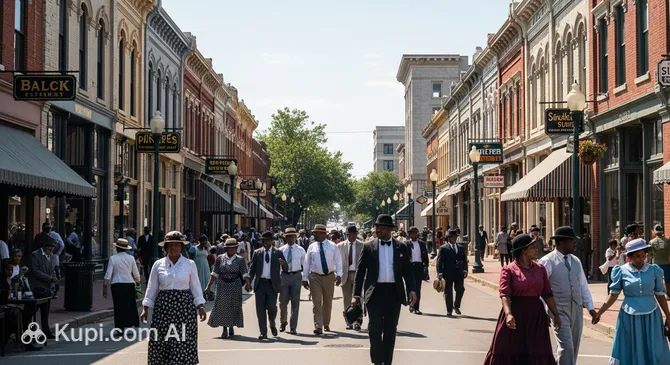
Black Wall Street. Source: Kupi.com AI

Today, Greenwood is not just a monument to the past, but a vibrant cultural hub and an important site for historical tourism. Visitors come here to see restored buildings, memorials, and modern museums such as Greenwood Rising. The district impresses with its atmosphere of resilience and entrepreneurial spirit, offering guests the chance to learn the inspiring success stories of community leaders.

Walking along Greenwood and Archer streets, you can feel the rhythm of life that once brought this place fame as the "golden standard" of Black business. It is a must-visit for anyone interested in social history, architecture, and America's economic development.

Contacts

For those planning a visit to this iconic historic district, current contact information for the main cultural centers located in the heart of Greenwood will be helpful.

Address 100 S Greenwood Ave, Tulsa, OK 74120, USA
Phone +1 918-829-4213
Official Website https://www.greenwoodrising.org/

What to Do

Your introduction to "Black Wall Street" should begin with a leisurely stroll down Greenwood Avenue. Here, you can see historical markers and restored building facades that recreate the look of the prosperous district from the 1910s–1920s. Be sure to stop by the Greenwood Rising history center—a state-of-the-art space with interactive exhibits where history comes to life through personal stories and rare archival photographs.

At the Greenwood Cultural Center, visitors can explore detailed reconstructions of shops, pharmacies, and hotels from the era of prosperity. For a deeper immersion, it is worth booking a guided tour, where you will learn about the lives of great entrepreneurs like J.B. Stradford and E.W. Williams, whose efforts turned this district into a symbol of independence.

In addition to museums, you can attend themed events, lectures, and music festivals regularly held in outdoor venues. Between walks, stop into a local cafe to try traditional Southern cuisine, and be sure to take a photo at the famous commemorative sign at the intersection of Greenwood and Archer streets.

Getting There

The attraction is conveniently located at 100 S Greenwood Ave, in the historic Greenwood District, just a few minutes from downtown Tulsa. If you are traveling by car, follow the interchanges for Interstate 244 or US-75 — there are visitor parking areas designated near the district.

For travelers arriving by air via Tulsa International Airport (TUL), the trip by taxi or rental car takes about 20–25 minutes. You can also use rideshare services like Uber or Lyft, which can bring you from the Amtrak station or downtown hotels in just 10–15 minutes.

Public transportation is provided by the Tulsa Transit bus system, with routes passing directly through the Greenwood Ave station. Due to the compact layout of the central blocks, many travelers prefer to reach Black Wall Street on foot or via city bikes, enjoying the city's architecture along the way.

History & Facts

The history of this area is inextricably linked to the massive oil boom of the early 20th century. Following the discovery of the Glenn Pool oil field in 1905, Tulsa transformed into a thriving metropolis. It was during this time, in 1906, that the enterprising African American O.W. Gurley purchased 40 acres of land to create a community where Black citizens could build independent businesses and develop their own infrastructure.

By the 1920s, the Greenwood District had become a symbol of success and self-sufficiency. It was home to over 11,000 people, and the local economy flourished on the principle of supporting "their own." The famous educator Booker T. Washington, impressed by the concentration of professionals—doctors, lawyers, and bankers—officially dubbed the area "Negro Wall Street," comparing its dynamism to the financial center of New York.

Even under the harsh segregation of the time, the district's residents managed to build a true "business empire." More than 190 different businesses operated on a small plot of land: from luxury hotels like the Stratford Hotel to their own newspapers, libraries, and private medical clinics. This resilience and entrepreneurial spirit continue to serve as an inspiration for visitors from all over the world today.

Time Needed

To leisurely immerse yourself in the atmosphere of the historic district, a typical tourist will need between 2 and 3 hours. This is enough time to walk the main streets and visit the primary memorial locations.

We recommend setting aside about 1 hour to explore the exhibits at the modern Greenwood Rising center, another hour for a walking tour along Greenwood Avenue, and the remaining time for visiting local souvenir shops or relaxing in one of the cozy coffee houses that preserve the spirit of historic entrepreneurship.

Working Hours

The Greenwood Historic District itself is open to visitors 24 hours a day, 7 days a week. You can freely walk the streets and view the exterior memorials and architectural landmarks at any time that is convenient for you.

However, keep in mind that museums such as Greenwood Rising or the Cultural Center have their own individual operating hours. Before your visit, it is highly recommended to check the current schedule on their official websites, as visiting hours may change depending on the season or special events.

Nearby

The Greenwood District is located in close proximity to many of the city's cultural and architectural landmarks, allowing you to create a full day's sightseeing itinerary.

A walk through the surrounding area will reveal Art Deco masterpieces and cozy park zones that will round out your experience of USA heritage in the state of Oklahoma.

Attraction Distance (km)
Philtower Building 0.9
Boston Avenue United Methodist Church 1.8
Ambassador Hotel Tulsa, Autograph Collection 1.9
Harwelden Mansion 3.1
Tulsa Garden Center at Woodward Park 3.5
Water Maze 3.9
Water Mountain 4.1
Pedestrian Bridge 4.2
Golden Driller Statue 5.7
Paradise Beach Waterpark 6.2

Reached the end of the page?

That means the route is fully explored