Support

Antelope Canyon

About

Antelope Canyon is one of the most photographed and mesmerizing natural wonders, located in the American Southwest in northern Arizona, near the city of Page. This incredible slot canyon earned its name from the unique reddish-orange walls, whose smooth curves and shades resemble the coat of an antelope illuminated by the sun.
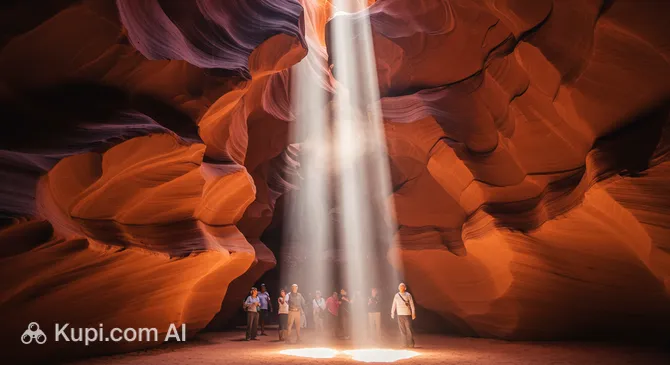
Antelope Canyon. Illustration.
Source: Kupi.com AI

Traveller photos:

This masterpiece of nature was created over millions of years by the relentless work of water and wind, which carved a giant crack into the Navajo Sandstone. Antelope Canyon consists of two main sections, each unique in its own way: Upper Antelope Canyon, also known as "The Crack," famous for its iconic light beams penetrating from above; and Lower Antelope Canyon, or "The Corkscrew," which offers a narrower and more winding route.

It is important to note that Antelope Canyon is not a national park. It is located on and belongs to the lands of the Navajo Nation. For this reason, visiting the canyon is only possible as part of a guided tour with a Navajo guide, which helps preserve this fragile natural wonder for future generations and ensures the safety of visitors, as the canyon is prone to flash floods.

A journey through Antelope Canyon is an immersion into a world of surreal shapes, textures, and constantly shifting light. The play of sunlight on the orange-red walls creates a truly magical atmosphere, making this place a paradise for photographers and anyone who appreciates the pristine beauty of nature. A trip here will undoubtedly be one of the highlights of any journey through Arizona.

Contacts

Since Antelope Canyon is located on Navajo land and visiting is only possible as part of an organized guided tour, it is recommended to check official Navajo Nation tourism resources or contact accredited tour operators directly for the most up-to-date information on tours, pricing, and booking details. Most of these operators are based in the nearby city of Page or offer online booking, where you can find all the necessary contacts and terms for planning your visit to this natural wonder.

How to contactContact
AddressHighway 98, Milepost, 299, Page, AZ 86040, USA
Phone+1 928-691-0244
Websitewww.navajotours.com

What to Do

Visiting Antelope Canyon is, above all, a visual delight and a unique opportunity for photographers. The main activity here is admiring and capturing the incredible, whimsical rock formations illuminated by magical light. Each section of the canyon offers its own unique views, curves, and sandstone textures. Especially prized are the moments when sunlight penetrates through the narrow cracks at the top, creating the famous light beams—this time is considered "prime time" for photoshoots and yields truly fairytale-like shots.

You can only explore Antelope Canyon accompanied by a Navajo guide, which is an authentic experience in itself. Independent visits are prohibited, and a permit fee for entering Navajo territory must be paid before entry. During a tour, for example, of Upper Antelope Canyon—which the local Navajo call "Tse' bighanilini" (The place where water runs through rocks)—you can get a close look at the elegant relief lines inside the rocks. These smooth curves were shaped over many years by rainwater, which slowly flowed through and carried away sand particles, creating these natural sculptures approximately 200 meters long and up to 37 meters deep.

Getting There

Antelope Canyon is located in close proximity to the city of Page, Arizona, USA. To reach this amazing destination, most travelers choose to fly into one of the region's major international airports. The closest are Phoenix Sky Harbor International Airport (PHX) and McCarran International Airport in Las Vegas (LAS). From either airport, the drive to Antelope Canyon will take approximately 4-5 hours, so this travel time should be considered when planning your itinerary.

For those who prefer more organized trips or are staying in Las Vegas, it is possible to book a day trip directly to Antelope Canyon. This is a convenient option that allows you to see this natural wonder without having to rent a car or plan the logistics of a long drive from a major city yourself.

A key feature of visiting Antelope Canyon is that it is located on the lands of the indigenous Navajo Nation. Because of this, access to the canyon is only possible as part of an official tour group accompanied by a licensed Navajo guide. Independent walks through the canyon are strictly prohibited, which helps preserve its pristine beauty and ensure the safety of visitors.

Generally, most tours to Antelope Canyon start from the city of Page, where the offices of accredited tour operators are concentrated. Once you book a tour, you can expect the organizers to handle the transfer from Page to the canyon entrance. Thus, your main task is to get to Page, and the remaining logistics of the visit will be managed by your chosen tour operator.

Nearest city: Page

History & Facts

The fascinating history of Antelope Canyon dates back centuries, to when the tireless forces of nature—water and wind—began creating this masterpiece. Over millions of years, they carved winding corridors and smooth walls into the yielding red sandstone that today capture the imagination. Flash floods played a key role in shaping its unique appearance. Once every few years, the usually dry canyon beds would fill with rushing torrents of water carrying sand and rocks, acting like a sculptor to chip away the excess and give the walls their famous flowing, almost musical outlines.

Although nature worked on the canyon for millennia, it remained a hidden treasure to the wider world. According to legend, it was "discovered" in 1931 by a twelve-year-old Navajo girl who was looking for a lost goat. However, the true tourism boom began much later—only in 1997 did Antelope Canyon open its arms to travelers. Since then, it has become a true mecca for photographers and nature lovers, becoming one of the most photographed—though perhaps less widely known than the Grand Canyon—wonders of the USA.

One of the most notable features of Antelope Canyon is its ownership. This incredible land is entirely owned and managed by the Navajo people. This fact gives the canyon not only natural but also deep cultural value, making it a living testament to the heritage and traditions of Native Americans. Visiting the canyon is not just an encounter with a geological miracle, but also an opportunity to connect with the culture of a people who have carefully preserved this territory, sacred to them, in Page for centuries.

Time Needed

A typical visitor should set aside 1.5 to 2 hours to see Antelope Canyon if visiting one of its main sections—either the Upper or Lower Canyon. This time usually includes not only the walk through the winding and breathtaking corridors themselves but also a safety briefing and the transfer to the canyon entrance, which is often organized by tour operators from the nearby city of Page.

If you plan to explore both famous sections—both Upper Antelope Canyon, known for its incredible light beams, and the more winding and physically demanding Lower Antelope Canyon—then you will need significantly more time. Given that separate tours are organized for each part and you will need to travel between them, you should allow at least half a day for a full experience of both canyons. It is important to remember that the duration of each tour is strictly regulated, as visiting these unique natural formations is only possible as part of an organized group with a Navajo guide.

It is also worth mentioning that specialized photography tours may be offered for photographers, which typically last longer than standard tours. This is to ensure that those passionate about shooting have enough time to capture impressive shots in the canyon's unique and ever-changing light. In any case, when planning your visit to this iconic site in the USA, it is recommended to check the schedule, available tour types, and their duration with accredited tour operators in advance.

Working Hours

Antelope Canyon is accessible exclusively through organized tours led by accredited Navajo guides. Consequently, the canyon does not have standard "working hours" in the traditional sense; visiting times depend entirely on the tour schedule. Tours are usually conducted daily, but their exact timing and frequency can vary depending on the season, weather conditions, and the specific section of the canyon (Upper or Lower). Generally, Antelope Canyon is open to tourists year-round, though the number and duration of tours may change across different seasons.

It is highly recommended to book tour tickets well in advance, especially if your trip falls during peak tourist season or if you wish to visit Upper Antelope Canyon during the hours when the famous light beams are most spectacular (typically from late spring to early autumn, around midday). For the most up-to-date information on available tours, their schedules, and to make a booking, please consult the official websites of tour operators authorized by the Navajo Nation or visit tourist centers in the city of Page. Advance planning is the key to an unforgettable experience at this unique natural wonder.

7:00 – 16:00

Nearby

Visiting Antelope Canyon is, without a doubt, an unforgettable experience. However, to make your trip to Page even more rewarding and complete, it is worth taking some time to explore its surroundings. Often, it is the small discoveries and unexpected finds near the main destination that provide the most vivid emotions and allow for a deeper immersion into the atmosphere of the place.

The city of Page and its picturesque surroundings offer travelers more than just an encounter with the world-famous Antelope Canyon. There are other interesting sites here capable of surprising and delighting visitors. Below is a list of some of them, located at various distances from the canyon, which can complement your travel experience.

NameDistance
Lower Antelope Canyon0.7 km
Mongolian BBQ Grill4.9 km
BirdHouse5.1 km
Antelope Canyon5.1 km
Red Heritage Native American Dinner Show5.1 km
Lake Powell Paddleboarding and Kayaking5.4 km
Glen Canyon Dam Overlook6.9 km

Reached the bottom of the page?

Looks like you know this route inside out