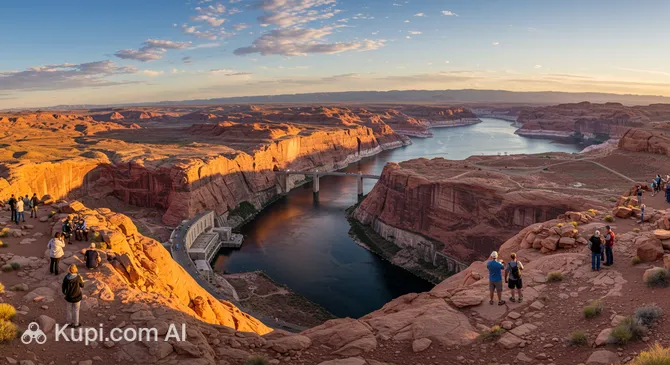
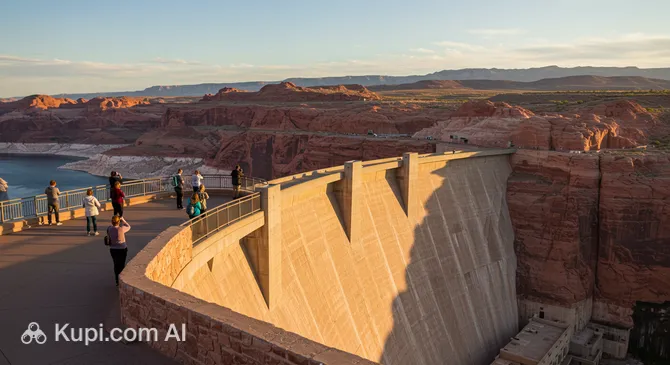
Nestled in the high desert of northern Arizona, Page is a small city that serves as a major gateway to some of the most spectacular natural wonders in the American Southwest. Although it has a modest population of approximately 7,800 residents, this community attracts millions of visitors annually due to its strategic location near the Utah border. It is a vital hub for tourism in this part of the United States, offering breathtaking landscapes and endless outdoor activities.
Page. Illustration.
Source: Kupi.com AI
The city sits atop Manson Mesa at an elevation of over 4,000 feet, providing panoramic views of the surrounding red rock terrain. Unlike many older settlements in the region, the history of Page is relatively recent; the town was founded in 1957 as a housing community for workers building the colossal Glen Canyon Dam. Today, it has transformed from a temporary work camp into a thriving destination known for its warm, arid climate and friendly atmosphere.
Travelers flock to Page to witness the surreal beauty of Antelope Canyon, a world-famous slot canyon known for its wave-like walls and light beams. Another must-see landmark is Horseshoe Bend, where the Colorado River makes a dramatic 270-degree turn in a deep canyon. Additionally, the city borders Lake Powell, a vast reservoir that offers exceptional opportunities for boating, fishing, and water sports against a backdrop of stunning sandstone cliffs.
Whether you are looking to explore geological marvels or simply relax by the water, Page offers an unforgettable experience. It is the perfect base camp for adventurers seeking to discover the raw beauty of the Arizona desert.
Weather Overview
Page experiences a semi-arid desert climate, characterized by distinct seasonal changes that shape the landscape. The region is known for its clear skies and abundant sunshine, making it a year-round destination for outdoor enthusiasts. For a more detailed forecast and seasonal breakdown, you can consult the guide to the weather in Page.
Summers in the city are hot and dry, with July typically being the warmest month. During this time, the average temperature is around 29.0°C, while daily highs frequently reach 35.8°C. Rainfall is scarce during the summer season, although late summer can occasionally bring brief afternoon clouds.
Winters provide a sharp contrast, bringing colder air to the high desert. January is usually the coldest month, with an average temperature of 2.2°C. Nights can be frosty, with lows dropping to approximately -2.7°C, though significant precipitation remains rare, keeping the winter days relatively crisp and dry.
The transition seasons of spring and autumn offer some of the most comfortable conditions for exploring. May and September are particularly pleasant, with average temperatures sitting between 19.6°C and 23.3°C. Overall, you should expect hot, dry summers and cold winters with very little rainfall throughout the year.
Average monthly temperature
Average monthly precipitation
Interesting Facts
Beyond its role as a gateway to major natural landmarks, Page possesses a fascinating history and unique geographical quirks that often go unnoticed.
Unlike most cities in the region with deep pioneer roots, Page is incredibly young. It was established in 1957 solely as a temporary housing camp for workers constructing the Glen Canyon Dam. Originally referred to as "Government Camp," it was later named after John C. Page, a former Commissioner of the Bureau of Reclamation.
The city exists on land that was obtained through a rare land exchange with the Navajo Nation. This makes Page a "municipal island" completely surrounded by tribal lands, yet it operates independently as part of Coconino County.
The surreal, otherworldly landscape surrounding the city has made it a favorite location for Hollywood filmmakers. The iconic crash-landing scene in the original 1968 Planet of the Apes was filmed on the shores of Lake Powell, as the stark red rocks perfectly mimicked an alien planet.
Paleontology enthusiasts might be surprised to learn that the area is rich in Jurassic-era history. At a location known as The Chains, visitors can find real dinosaur tracks preserved in the sandstone, offering a glimpse into the prehistoric creatures that once roamed this high desert.
Glen Canyon Dam. Illustration.
Source: Kupi.com AI
Traveler photos:
How to Get There
Reaching the remote city of Page requires a bit of planning, as it is tucked away in the high desert of Northern Arizona. Most visitors arrive by road, often as part of a larger road trip through the American Southwest. For a detailed breakdown of all travel options, you can read more about how to get to Page to help plan your journey.
The city of Page does not have its own major commercial airport listed for direct international arrivals, but you can fly into Flagstaff Pulliam Airport (FLG) in the city of Flagstaff, which is approximately 198 km from Page. This regional hub offers a convenient entry point, and the drive north on US-89 takes about 2 to 2.5 hours, offering scenic views along the way. Another viable option is Saint George Municipal Airport (SGU) located in St. George, Utah. Situated about 191 km away, the travel time by car is roughly 2.5 to 3 hours. Both airports serve as excellent gateways for travelers intending to rent a car and explore the region at their own pace.
For those visiting the nearby national parks, the closest option is the Grand Canyon National Park Airport (GCN) in Flagstaff (Tusayan), located just 123.5 km from Page. While smaller, it places you right at the doorstep of the Grand Canyon, with a drive to Page taking under 2 hours. Travelers should note that public transport in this vast region is limited, so arranging a rental car or shuttle service from these airports is highly recommended.
For clarity, here is a summary of the main airports:
Since there are no direct railway services to Page, the final leg of your journey will almost certainly be on the road. The drive to the city is renowned for its beauty, passing through painted deserts and dramatic rock formations. Whether you land in Flagstaff, St. George, or even further afield, the road trip to Page is considered part of the adventure.
Main Attractions
Page is a destination defined by its dramatic geology, offering some of the most photographed natural landmarks in the American Southwest. The attractions here are primarily focused on the stunning interplay of red sandstone, deep canyons, and the waters of the Colorado River. Whether you are hiking to a scenic overlook or exploring the narrow depths of a slot canyon, the city provides access to truly unique landscapes.
Antelope Canyon. Illustration.
Source: Kupi.com AI
Traveler photos:
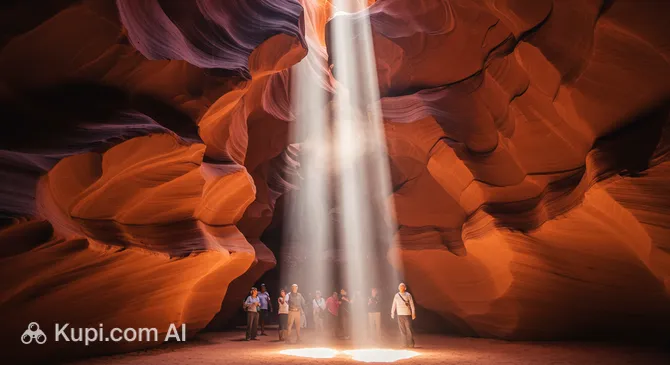
One of the most famous sites in the region is Antelope Canyon, a mesmerizing slot canyon located on Navajo land. Known for its wave-like walls and the ethereal beams of light that penetrate the narrow openings, it is a dream location for photographers and nature lovers alike. Visitors must join a guided tour to explore the canyon, where they can walk through the winding sandstone corridors sculpted by water and wind over millions of years.
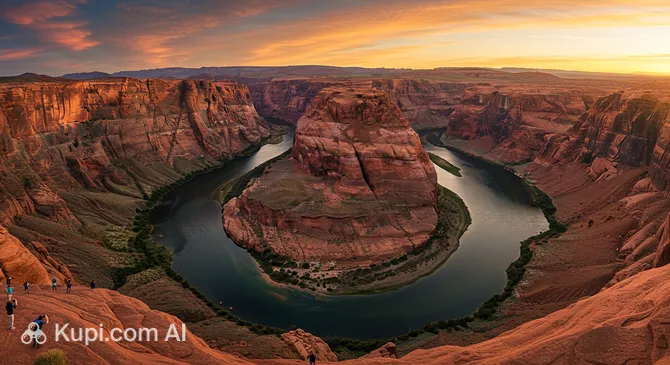
Just a short drive from the city center lies Horseshoe Bend, an iconic natural marvel where the Colorado River makes a sharp 270-degree turn. A relatively easy hike leads you to the edge of a steep cliff, offering a breathtaking drop of roughly 1,000 feet down to the emerald waters below. It is arguably one of the most spectacular viewpoints in Arizona, particularly at sunset when the canyon walls glow in vibrant shades of orange and red.
Horseshoe Bend. Illustration.
Source: Kupi.com AI
Traveler photos:
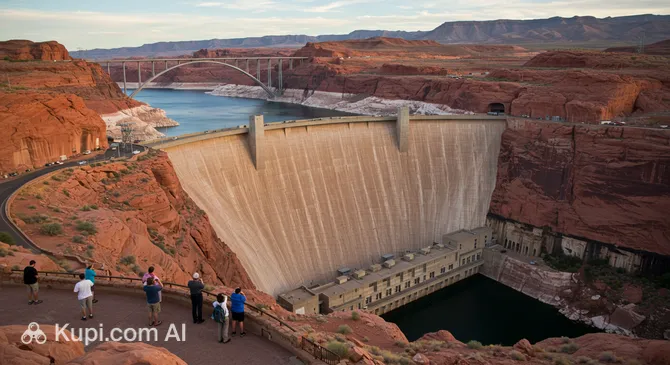
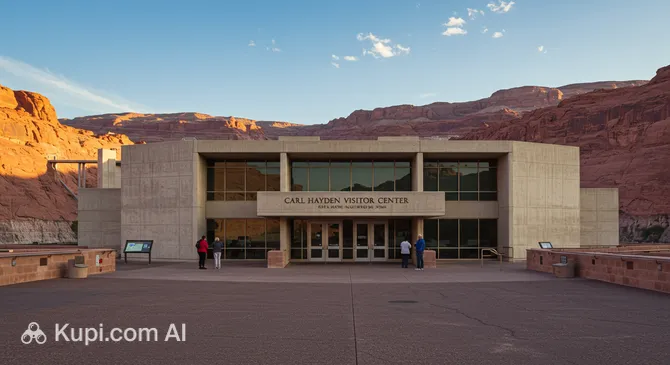
For those interested in the engineering feat that created Lake Powell, the Carl Hayden Visitor Center is an essential stop. Perched 710 feet above the Colorado River next to the Glen Canyon Dam, this facility offers panoramic views of the dam and the bridge. Inside, you can explore exhibits detailing the construction of the dam and the natural history of the area, making it a great educational experience for visitors of all ages.
Carl Hayden Visitor Center. Illustration.
Source: Kupi.com AI
Traveler photos:
To experience the waters firsthand, Lake Powell Paddleboarding and Kayaking offers a unique perspective of the submerged canyons. Gliding silently over the water allows you to access narrow side canyons that are unreachable by larger boats. It is a peaceful and immersive way to appreciate the sheer scale of the sandstone cliffs rising from the lake's surface.
If you are looking for a stunning vista without the crowds, the Wahweap Overlook provides a sweeping panorama of Lake Powell, the marina, and the distant towering buttes. It is an excellent spot for a quiet moment to take in the vastness of the high desert landscape, offering a different angle on the scenery that makes Page such a memorable destination.
Local Cuisine
The culinary landscape of Page reflects its unique location at the crossroads of the American Southwest and the Navajo Nation. While the city is small, it offers a surprising variety of hearty, flavorful options designed to satisfy travelers returning from long days of hiking and exploration. The food scene here is defined by a blend of classic American comfort food, spicy Southwestern accents, and authentic Native American traditions.
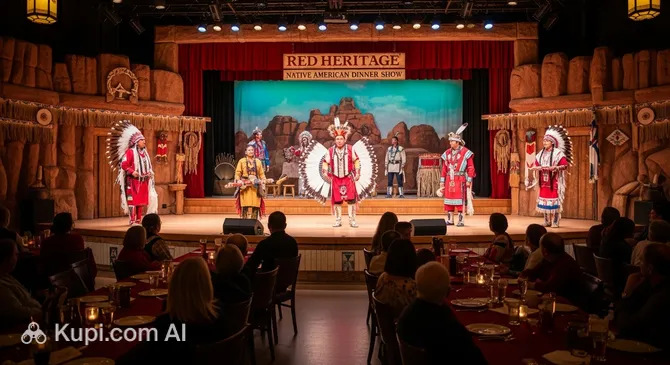
A visit to Page would be incomplete without tasting the region's most iconic staple: Navajo Fry Bread. This pillowy, deep-fried dough is served in two distinct ways. As a sweet treat, it is dusted with powdered sugar or drizzled with honey. However, it is most famous as the base for the "Navajo Taco," where it is piled high with savory toppings like chili beans, ground beef, lettuce, cheese, and salsa. For a truly immersive experience that combines this local delicacy with cultural storytelling, the Red Heritage Native American Dinner Show is an excellent choice. Here, guests can enjoy authentic cuisine while watching traditional hoop dancing and learning about Navajo history.
Red Heritage Native American Dinner Show. Illustration.
Source: Kupi.com AI
Traveler photos:
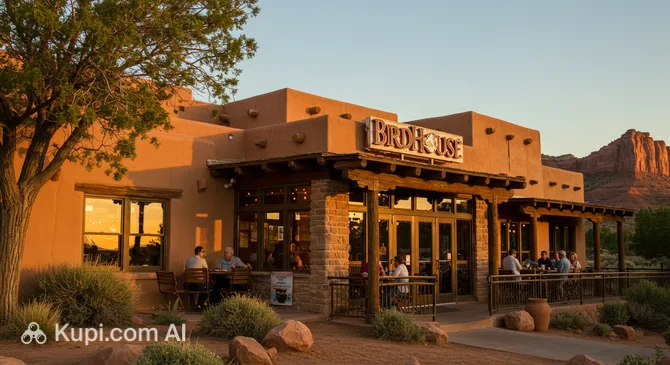
Beyond traditional fare, the city excels at providing satisfying comfort food. Fried chicken and barbecue are particularly popular, offering the caloric boost needed after exploring Antelope Canyon. BirdHouse is a local favorite known for its crispy, perfectly seasoned fried chicken and relaxed, rustic atmosphere. It is the kind of place where locals and tourists mingle over generous portions and cold drinks. If you prefer a customizable dining experience, the Mongolian BBQ Grill allows you to select your own fresh ingredients and sauces, which are then cooked to order on a large iron griddle.
To wash down these hearty meals, look for beverages featuring the prickly pear cactus. This bright pink fruit is harvested locally and used to make refreshing lemonades, iced teas, and signature margaritas found in many local establishments. While Page is close to tribal lands where alcohol is often restricted, the city itself has a lively selection of bars and restaurants serving Arizona craft beers and cocktails. The overall dining atmosphere in Page is casual and unpretentious, welcoming visitors in hiking boots and activewear to relax and enjoy the bold flavors of the high desert.
Travel Tips
Welcome to Page, the gateway to the American Southwest's most dramatic landscapes. To ensure your adventure through the red rocks and canyons is as smooth as it is memorable, here are some essential practical tips to help you prepare for the unique conditions of the high desert.
Clothing and Gear: The desert climate fluctuates significantly, so packing layers is essential. In summer, lightweight, breathable fabrics and a wide-brimmed hat are crucial for protection against the intense sun, while winters require warm jackets and gloves. Sturdy hiking boots with good grip are a must for navigating sandstone trails, and since the fine red dust gets everywhere, avoid wearing your best white clothes.
Transportation: Renting a car is practically mandatory in Page. Public transportation is very limited and does not serve the major scenic viewpoints or trailheads scattered around the city. While ride-sharing apps exist, availability can be sporadic, especially early in the morning or late at night, so having your own vehicle gives you the freedom to explore at your own pace.
Finances: The local currency is the US Dollar (USD). Credit and debit cards are widely accepted at hotels, restaurants, and tour operators. However, it is wise to carry some cash, particularly small bills, for tipping tour guides or purchasing handmade jewelry and Navajo tacos from roadside vendors where card machines may not be available. Standard American tipping etiquette applies: 15–20% is customary for good service.
Health and Safety: The combination of high altitude and dry heat can lead to dehydration quickly, even if you do not feel thirsty. Carry more water than you think you need—at least one gallon per person per day if you are active. Page has a hospital and several pharmacies, but if you are venturing into remote areas, bring a basic first-aid kit. Be aware of flash flood warnings; never enter a slot canyon if rain is in the forecast anywhere in the region.
Communication: English is the primary language spoken throughout Page and the surrounding areas. Mobile reception is generally good within the city limits but can be spotty or non-existent once you drive out toward Lake Powell or remote trailheads. It is highly recommended to download offline maps (like Google Maps) before setting out, as GPS signals can be unreliable in deep canyons.
Local Etiquette: Much of the land surrounding Page belongs to the Navajo Nation. It is important to be respectful: always stay on marked trails and do not climb on rock formations unless permitted. If you encounter local residents, a polite greeting is appreciated, but always ask for permission before taking photographs of people or their private property.
What to Avoid: Do not enter restricted tribal lands without a valid permit or a designated guide. Many popular sites, like Antelope Canyon, are strictly accessible only via guided tours. Trespassing on Navajo land is considered disrespectful and can result in fines. Additionally, avoid stepping on "cryptobiotic soil"—a dark, crusty soil surface that is vital for the desert ecosystem; one step can destroy decades of growth.
Time Zone Awareness: This is a unique quirk of the area. Page is in Arizona, which does not observe Daylight Saving Time. However, the Navajo Nation (including Antelope Canyon) does observe it. During the summer months, this can create a one-hour time difference between your hotel in Page and your tour just a few miles away. Always double-check which time zone your tour operator follows to avoid missing your slot.
By keeping these tips in mind, you will be well-equipped to navigate the desert environment and respect the local culture. Enjoy the breathtaking vistas and the warm hospitality that make Page a truly special destination!
Entertainment & Nightlife
Entertainment in Page is defined by its small-town charm and its proximity to vast, open wilderness. Unlike bustling metropolises with all-night clubs and neon-lit districts, the nightlife here is low-key, relaxed, and centered around unwinding after a day of adventure. The primary hub for evening activity is Lake Powell Boulevard, where you will find a concentration of restaurants, casual bars, and venues that welcome travelers with warm hospitality and a laid-back atmosphere.
The "party" scene in Page is more about sharing stories over a cold drink than dancing until dawn. Most venues cater to the hiking and boating crowd, meaning the dress code is almost exclusively casual—jeans, t-shirts, and hiking boots are the norm. Visitors should be aware that the city tends to sleep early; many kitchens close by 9:00 PM or 10:00 PM, even on weekends, so it is wise to start your evening early to make the most of the local offerings.
For a lively atmosphere and a taste of local culture, the BirdHouse is a standout spot. While famous for its food, it also serves as a vibrant social hub in the evening, offering a solid selection of craft beers and a rustic, welcoming environment perfect for groups. It is the ideal place to relax with a cold pint and mingle with fellow travelers from around the world.
BirdHouse. Illustration.
Source: Kupi.com AI
Traveler photos:
If you are looking for a more immersive evening experience, the Red Heritage Native American Dinner Show provides world-class entertainment. This venue transforms a standard evening out into a cultural journey, featuring talented hoop dancers, flute playing, and traditional storytelling. It is one of the few places in the city that offers a structured evening program, making it a top choice for families and those interested in the rich history of the Navajo people.
Because the region surrounding Page is remote and relatively free of light pollution, one of the best forms of nightlife takes place outdoors. The area offers excellent conditions for stargazing, and just a short drive from the center, the Glen Canyon Dam Overlook offers a spectacular setting for observing the night sky. On clear nights, the darkness allows for breathtaking views of the Milky Way, providing a serene and majestic alternative to a traditional night out.
When it comes to safety, Page is generally a very secure place for night walks, specifically along the main lit thoroughfares like Lake Powell Boulevard. However, as the town is spread out and street lighting is intentionally kept minimal to preserve the night sky, visibility can be low on side streets. Taxis and ride-sharing services can be limited, especially late at night, so if your accommodation is far from the center, arranging transportation in advance or having a designated driver is highly recommended.
During the daylight hours, entertainment shifts towards more active pursuits. Aside from the famous natural attractions, visitors can enjoy a round of golf at the Lake Powell National Golf Course, which sits on the rim of the mesa offering stunning views of the dam and bridge. Alternatively, the Rim View Trail offers a scenic loop around the city, perfect for a morning run or a leisurely bike ride to appreciate the high desert landscape.
Parks & Museums
Page offers a unique interpretation of public green spaces, where traditional manicured lawns are replaced by the raw, majestic wilderness of the Glen Canyon National Recreation Area. The region's natural landscapes serve as the primary attraction for outdoor enthusiasts, inviting visitors to explore hanging gardens hidden in sandstone alcoves and rugged trails that lead to prehistoric discoveries.
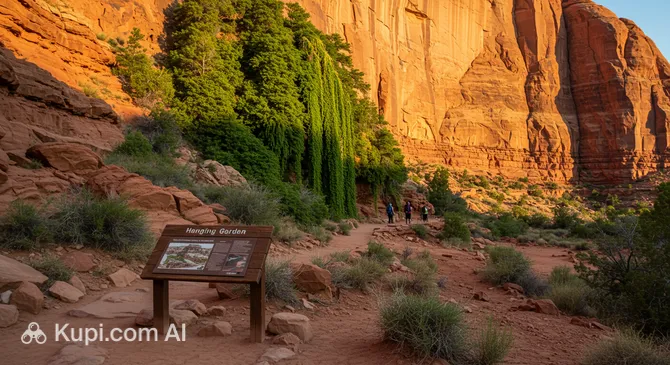
One of the most surprising natural gems in the area is the Hanging Garden Trailhead. This short, easy hike leads you to a lush oasis tucked away in the red rocks, where natural springs seep from the sandstone walls to support ferns and wild orchids. It offers a rare splash of vibrant green against the desert's orange palette and provides a cool, shaded retreat during the hotter months.
Hanging Garden Trailhead. Illustration.
Source: Kupi.com AI
Traveler photos:
For those who want to combine hiking with a refreshing dip, The Chains is a unique area located near the dam. Named for the chain that guided workers during the dam's construction, this site features expansive slickrock formations that are perfect for scrambling and exploring. It is also one of the few places where you can hike down to the water's edge of Lake Powell for swimming or fishing, and sharp-eyed visitors might even spot dinosaur tracks preserved in the rock surface.
When it comes to museums and cultural history, the city's offerings are deeply intertwined with the monumental engineering projects that shaped the region. The Carl Hayden Visitor Center serves as the premier educational facility in Page. Located at the dam, its interior functions as a museum featuring interactive exhibits on water management, local geology, and the history of the Colorado River storage project. It also houses a relief map of the entire Glen Canyon area, helping tourists grasp the sheer scale of the landscape.
Architecturally, the region is dominated by the massive Glen Canyon Dam, but for a perspective that highlights both the structure and the canyon's natural beauty, the Glen Canyon Dam Overlook is the place to go. A short walk down uneven sandstone steps leads to a viewpoint on the canyon rim, offering a dizzying look down at the river and the dam's curved concrete face. It is a stunning spot to appreciate the contrast between human engineering and nature's power.
Glen Canyon Dam Overlook. Illustration.
Source: Kupi.com AI
Traveler photos:
For a quieter experience away from the main tourist hubs, drive out to the Wahweap Overlook at sunset. This high vantage point provides a 360-degree panorama of Lake Powell, the marina, and the distant towering buttes of Utah. It is a favorite spot for locals to watch the colors of the desert shift from gold to purple as the sun dips below the horizon.
Getting Around
Because Page is a small, remote community with a population of under 8,000 residents, it does not possess a comprehensive public transport system found in larger metropolitan areas. There are no metros, trams, trolleybuses, or scheduled city bus networks designed for general commuter or tourist use. The city is built with the assumption that residents and visitors will rely primarily on private vehicles to get around.
For the vast majority of tourists, renting a car is not just an alternative; it is the primary and most practical necessity. The major attractions, such as Horseshoe Bend, the various marinas of Lake Powell, and the hiking trailheads, are spread out over distances that are not walkable from the city center. Without a vehicle, accessing these iconic sites becomes significantly more difficult, as there are no public shuttle routes connecting the hotels to these landmarks.
If you do not have a rental car, your main alternatives are taxis and ride-sharing services. Local taxi companies operate within the city and can transport you to nearby trailheads or the airport. Ride-sharing apps like Uber and Lyft are available, but visitors should be aware that the number of active drivers can be very low, especially early in the morning or late at night. It is highly advisable to schedule rides in advance if you have a strict timeline, such as a tour reservation.
Regarding payment for these alternative services, cash and credit cards are generally accepted by local taxi operators, though carrying some cash is always a good backup in this rural region. Ride-sharing services work through their respective apps as usual. Since there is no public transit network, there are no travel passes, smart cards, or validation machines to worry about.
A unique form of "transport" you will encounter here is the specialized tour shuttle. Since private vehicles are prohibited from entering the Antelope Canyon sites, visitors must book guided tours that include transportation. These often take the form of modified 4x4 pickup trucks or open-air safari vehicles designed to navigate the sandy washes leading to the canyon entrances. These are booked as part of your tour package, and the cost is included in your ticket price.
For short trips within the town center proper—along Lake Powell Boulevard where many restaurants and hotels are clustered—walking is a feasible option. The terrain is relatively flat, though the summer heat can make even short walks challenging. Bike rentals are also available at a few local outfitters, offering a scenic way to explore the Rim View Trail, though cycling to distant attractions like Horseshoe Bend on the highway is recommended only for experienced cyclists due to traffic speeds.
Accommodation
Where to Stay:
Accommodation in Page is designed primarily for utility and convenience, catering to the steady stream of road-trippers and outdoor adventurers passing through the region. The city offers a solid range of lodging options, from classic American roadside motels and reliable mid-range chain hotels to RV parks and campgrounds. While you will not find an abundance of ultra-luxury 5-star resorts within the city limits, there are several comfortable, modern establishments that provide a welcome rest after a dusty day in the canyons.
The majority of hotels and motels are clustered along Lake Powell Boulevard, the city's main thoroughfare. Staying in this area is highly practical, as it places you within walking distance of local restaurants, grocery stores, and tour operators. This central location is ideal for travelers who want easy access to services without navigating winding back roads at night. For those seeking a more scenic experience, there are lodging options located near the marinas on the shores of Lake Powell, offering stunning views of the water and immediate access to boat rentals, though these tend to be priced higher than the in-town motels.
A crucial tip for visiting Page is to book your accommodation well in advance. Despite the number of hotels, the city is a bottleneck for tourism in the Southwest, and rooms can sell out months ahead of time, particularly during the peak season from late spring to early autumn. If you plan to visit between May and September, do not rely on finding a room upon arrival; securing a reservation is essential to avoid being forced to drive hours to the next town.
Price ranges fluctuate significantly depending on the season. During the busy summer months, rates for even basic motels can soar due to high demand. Conversely, winter travelers can often find excellent deals and a quieter atmosphere. Booking is most commonly done through major online travel platforms, which allow you to easily compare amenities like pool access—a highly desirable feature during the scorching Arizona summers.
Nearby Cities
Nearby Cities:
Due to its location in the remote high desert of Northern Arizona, Page is relatively isolated from other major urban centers. The city serves as a solitary outpost amidst the vast wilderness of the Colorado Plateau, meaning that the "nearby" cities are generally a few hours' drive away. However, these neighboring towns are well worth visiting, as they act as gateways to other national parks and offer their own unique cultural and historical attractions.
The closest major hubs are Flagstaff to the south and St. George to the west. Both cities provide expanded dining, shopping, and service options that complement the offerings in Page. The drive to any of these destinations is scenic in its own right, passing through painted deserts, pine forests, or towering red rock formations.
Here is a guide to the closest cities and their distances from Page:
City
Population
Distance
Marble Canyon
—
20 km
Tuba City
8 748
89 km
Kanab
5 300
96 km
Bryce Canyon City
250
105 km
Kayenta
5 000
109 km
Flagstaff is a popular stop for travelers heading south toward Phoenix or the Grand Canyon's South Rim. Nestled at the base of the San Francisco Peaks, it offers a distinct alpine environment with ponderosa pine forests and a cooler climate. It is also a historic Route 66 town with a vibrant downtown area and the famous Lowell Observatory.
To the west in Utah lies St. George, a rapidly growing city known for its red rock landscapes and proximity to Zion National Park. It has a warmer climate than Page and features extensive golf courses, outdoor theaters, and a rich pioneer history. Further north, Cedar City is known as "Festival City USA," hosting the renowned Utah Shakespeare Festival every summer.
For those interested in classic Americana, Winslow offers a nostalgic glimpse into the past. Located on historic Route 66, it is famous for the "Standin' on the Corner" park, which pays homage to the Eagles' hit song "Take It Easy." It serves as a charming detour for history buffs exploring the region.
Shopping & Souvenirs
Shopping in Page is a reflection of its unique position as a hub for outdoor adventure and a neighbor to the Navajo Nation. While you will not find sprawling luxury malls or high-end fashion districts here, the city offers a practical and culturally rich shopping experience. The retail scene is primarily focused on two things: equipping travelers with necessary gear for exploring the canyons and lake, and showcasing the incredible artistic heritage of the local Native American communities.
The main commercial activity is concentrated along Lake Powell Boulevard, the city's central artery. This street is lined with a variety of stores, ranging from large supermarkets where you can stock up on water and hiking snacks to specialized outfitters selling swimwear, water shoes, and camping equipment. It is a convenient strip that caters to the immediate needs of visitors preparing for days spent at Antelope Canyon or on the water.
Instead of traditional enclosed shopping malls, Page features several open-air shopping plazas and strip malls. These centers typically house a mix of grocery stores, pharmacies, and casual clothing shops. They are functional and easy to navigate, designed for quick stops to resupply before heading out into the wilderness. For those interested in educational souvenirs, the gift shop at the Carl Hayden Visitor Center is an excellent stop. It offers a curated selection of books on local geology and history, as well as maps and educational toys that make for meaningful keepsakes.
While there are no large bustling street markets in the European sense, the "trading post" culture is alive and well in the region. You may encounter local vendors and roadside stands, particularly near the boundaries of tribal lands or popular viewpoints. These informal markets are often the best places to interact directly with local artisans and find one-of-a-kind items that you won't see in standard souvenir shops.
When it comes to souvenirs, the most prized items to bring back from Page are authentic Native American arts and crafts. The region is famous for exquisite Navajo jewelry, particularly pieces featuring silver and turquoise, as well as intricate hand-woven rugs, sand paintings, and pottery. Purchasing these items supports local artists and provides you with a tangible piece of the Southwest's cultural heritage. Be sure to look for certificates of authenticity when buying higher-end art pieces to ensure they are genuine handmade works.
Most stores in Page operate on standard business hours, typically opening around 9:00 AM and closing between 8:00 PM and 9:00 PM, though major supermarkets may stay open later. Credit and debit cards are widely accepted at established businesses and hotels. However, if you plan to buy from roadside vendors or smaller independent stalls, it is highly recommended to carry cash (USD), as they may not always have card readers available.
In terms of taxes, the United States does not have a Value Added Tax (VAT) refund system for international tourists like many other countries. The price you see on the shelf usually does not include the sales tax, which will be added at the register. The combined sales tax rate in Page is roughly around 10%, so it is wise to factor this small addition into your budget when shopping.