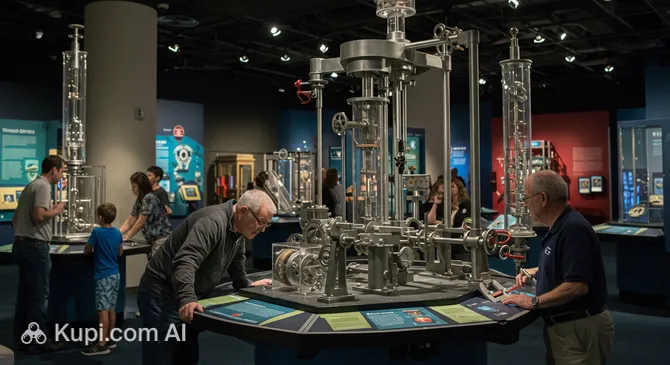
The St. George Children's Museum, located in the city of the same name in the USA, is a vibrant example of an educational and entertainment space created specifically for young visitors and their families. While the exact founding date and specific historical details of its creation may not be as widely known as some older institutions, its mission aligns with the general philosophy of children's museums—to stimulate curiosity, creativity, and a love of learning through interactive experiences.
The history of children's museums in the USA is quite rich, dating back to the late 19th and early 20th centuries. This was when the concept of museum spaces focused on active interaction and learning through play, rather than just passive observation of exhibits, first emerged. These museums quickly gained popularity, offering children a unique opportunity to explore the world in a safe and engaging environment. Like other children's museums, the St. George Children's Museum was likely conceived as a place where children could learn by playing and discover new things in various fields—from science and art to history and culture.
The uniqueness of places like the St. George Children's Museum lies in their approach to exhibits. Instead of "Hands off!" signs, active participation is encouraged here. Children can touch, experiment, build, and try on different roles. This helps not only in absorbing new information but also in developing important skills such as critical thinking, problem-solving, and communication. The museum becomes not just a repository of artifacts, but a real laboratory of discovery for little ones.
Although the specific historical milestones of this particular museum may be modest compared to national giants, its importance to the local community in St. George is invaluable. It provides children and their parents with a precious resource for spending time together, learning, and developing, contributing to the formation of a curious and creative younger generation.