Support

Pioneer Park

About

Pioneer Park is a stunning natural area sprawling across approximately 21 hectares (52 acres) in St. George, Utah, USA. The park is part of the picturesque Red Cliffs Desert Reserve and is a true find for fans of outdoor activities and natural beauty. Its uniqueness lies in the natural sandstone formations that create a one-of-a-kind landscape.
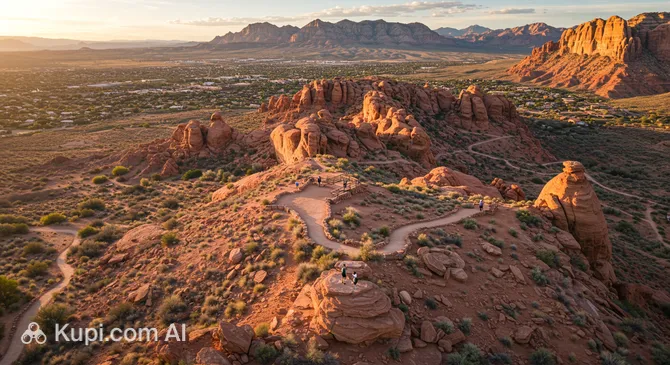
Pioneer Park. Illustration.
Source: Kupi.com AI

Traveler photos:

Imagine a giant natural playground: here, majestic red rocks, whimsical arches, narrow canyons that beckon explorers, and mysterious caves await you. Pioneer Park offers countless opportunities for walking, rock climbing, and simply enjoying the wilderness. The red rocks rise spectacularly above the city, offering breathtaking panoramic views of the St. George area.

One of the park's main gems is the historic Dixie Rock, also known as the Dixie Sugarloaf. This prominent sandstone formation is not just a beautiful natural object but a symbol of the heritage of the pioneers who settled these lands. On this impressive dome-shaped rock, located atop Red Hills Parkway, the word "Dixie" is written in large white letters, becoming an integral part of the landscape.

A visit to Pioneer Park will give you an unforgettable experience and the opportunity to touch the unique nature of the southwestern USA. This is a place where you can wander for hours, discovering new trails and admiring the Martian-like landscapes created by nature itself.

Contacts

Since Pioneer Park is primarily a vast natural area intended for walking and outdoor activities, specific contact phone numbers for visitors may be unavailable. To find up-to-date information on access hours, potential restrictions, and precise directions, we recommend visiting the official tourism websites of the city of St. George or checking local visitor information centers once you arrive. The park is well-known in the region and generally has signs for tourist convenience; it is located near the Red Hills Parkway.

How to contactContact
Address375 Red Hills Pkwy, St. George, UT 84770, USA
Phone number+1 435-627-4530
Websitesgcityutah.gov

What to Do

At Pioneer Park, visitors will find a wealth of exciting activities to satisfy various interests. The park is literally made for outdoor activities and exploration: you can go hiking along numerous trails, each of which reveals new views and corners. Fans of geology and beautiful landscapes will be delighted by the opportunity to explore unique sandstone formations, whimsical arches, and mysterious caves. Many points in the park offer stunning panoramic views of St. George, allowing you to appreciate its location among the red rocks.

One of the iconic activities is climbing the famous Dixie Rock. The route to its summit includes a trail that becomes quite steep in places, especially near the end. An interesting feature is a small bridge over a gap in the rocks, leading directly to the top of Dixie Rock. Your efforts will be rewarded – from here, you'll find perhaps some of the best views of St. George and the surrounding landscapes.

Another popular and exciting place to explore is the so-called "Narrows" or "the Crack" (known locally as the Narrows or the Crack), located northeast of the upper parking lot. This is a truly narrow space between rocks where most visitors have to squeeze through sideways, adding a special flair to the adventure. About halfway up, "the Crack" widens, revealing a small space to explore. The upper part of this passage leads to a vast sandstone plateau, from where you can also enjoy magnificent views of St. George.

Getting There

Pioneer Park is located in St. George, Utah, USA, in the southern part of the picturesque Red Cliffs Desert Reserve. The park is most conveniently reached by car, as this provides flexibility and allows for easy exploration of the surrounding area. Two parking zones are available for visitors with cars: a small upper lot and a more spacious lower lot. Rising between these two parking areas is the famous Dixie Rock, one of the park's main attractions.

If you are traveling without a personal vehicle, you can reach Pioneer Park from downtown St. George by taxi or by using rideshare apps. The trip usually doesn't take long, as the park is within city limits. It is recommended to check the availability of a return taxi in advance, especially if you plan to spend several hours at the park.

Regarding public transport, routes may not always directly cover natural parks like Pioneer Park. It is worth checking the current routes and schedules for local buses in St. George; however, be prepared for the nearest stop to be some distance from the park entrance, requiring an additional walk. Therefore, for maximum convenience, a car or taxi remains the preferred option.

Nearest city: St. George

History & Facts

The history of Pioneer Park in St. George is inextricably linked to the legacy of the region's first European settlers in the USA. The park was named in honor of the brave pioneers who laid the foundations of life on these once-wild lands. One of the most prominent symbols of this pioneer spirit and history is the famous Dixie Rock, located within the park. This rock serves as an important reminder of the St. George pioneers and their contribution to the development of the territory.

Interestingly, the name "Dixie," which can be seen on the rock in the park, has deep historical roots. This region of Utah, including St. George, historically received the nickname "Utah’s Dixie" because of its warmer climate compared to northern parts of the state. Thus, the inscription on Dixie Rock is not just a landscape element, but a tribute to the unique identity and history of this part of the USA. This nickname reflects the cultural and climatic characteristics of the region.

Although a detailed chronicle of the founding of this specific Pioneer Park in St. George may not be as widely documented as some other historical sites, its existence clearly highlights the immense value placed on pioneer heritage throughout Utah. The fact that parks with this name exist in other cities in the state—such as the famous Pioneer Park in Salt Lake City, opened back in 1898—testifies to the deep respect for those who settled these lands. Thus, Pioneer Park in St. George serves as an important reminder of the spirit of the early settlers and is part of the broader history of the American West.

Time Needed

For a full tour of Pioneer Park in St. George, a typical visitor might need 2 to 4 hours. This time is usually sufficient to walk the main trails, enjoy the views from key observation points—including the climb to the famous Dixie Rock—and explore some of the more accessible rock formations and small caves.

However, if you plan a more in-depth exploration, such as completing longer or more difficult trails, studying geological features like "the Narrows" in detail, or simply wanting to spend more time enjoying nature and taking photos, you should set aside half a day or even more. Climbing enthusiasts or those planning a picnic may also spend significantly more time here.

Ultimately, the length of your visit to Pioneer Park will depend on your interests, physical fitness, and how deeply you want to immerse yourself in exploring this unique natural corner of the USA. A couple of hours is enough for a short introductory visit and to see the main attractions, but the park offers enough activities to keep you busy for a much longer time.

Working Hours

The exact opening hours of Pioneer Park in St. George can vary, and generally, natural parks of this type are open during daylight hours. Since the park is a vast natural area, there may not be strict operating hours like those of a museum. To get the most up-to-date information on access hours, possible seasonal changes, or temporary restrictions, it is highly recommended to check the official St. George city website or Utah tourism resources before your visit. Usually, these parks are open year-round, but access to some trails may depend on weather conditions.

Regarding ticket bookings or advance reservations, these are unlikely to be required for general access to Pioneer Park, as it is a public space for recreation and walking. However, if you plan to participate in any organized tours or special events that may be held on the park grounds, conditions may vary. It is always a good idea to verify this information on official resources or at local tourist information centers.

6:00 – 22:00

Nearby

After an exciting exploration of Pioneer Park, don't be in a hurry to leave the area! The city of St. George and its surroundings offer many other interesting places that can enrich your travel experience in the USA. Getting to know the nearby attractions will allow you to dive deeper into the atmosphere of this unique region, learning more about its history, culture, and natural beauty.

Near Pioneer Park, you will find both natural landmarks and historical sites that deserve attention. Below is a list of some of them, along with approximate distances from the park, to help you plan your itinerary more easily.

NameDistance
Red Hills Desert Garden0.2 km
Brigham Young Winter Home0.8 km
Ancestor Square0.8 km
Painted Pony0.8 km
Wood Ash Rye0.9 km
Hive 435 Taphouse0.9 km
St. George Tabernacle1 km

Have you reached the end of the page?

So the route has been studied inside and out