Support

Saint Cloud Regional

About the Airport

Saint Cloud Regional Airport (St. Cloud Regional Airport) is more than just a point on the map; it is your personal gateway to the very heart of central Minnesota. Imagine an air harbour free from the long queues and stress typical of major transport hubs. It is here that a calm and comfortable journey through the region's picturesque lakes and charming towns begins, whether you are travelling for business or a long-awaited holiday.
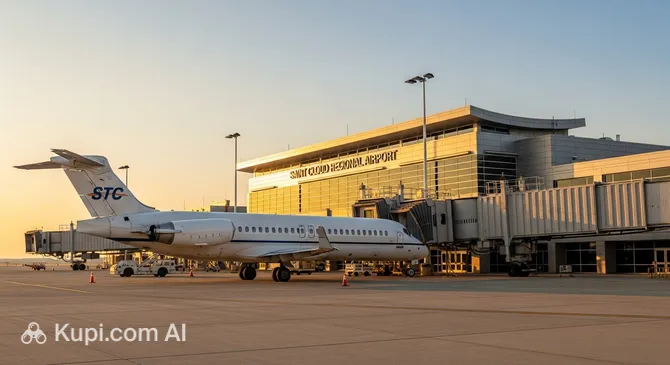
Saint Cloud Regional. Source: Kupi.com Binoculars
IATA Code STC
ICAO Code KSTC
City Saint Cloud
Distance to centre approx. 6 km
Status Domestic
Passengers per year over 12,000
Popular Airlines Allegiant Air, Sun Country Airlines

The main advantage of Saint Cloud Airport is its exceptional convenience. Thanks to its compact size, all procedures from check-in to boarding are completed quickly and without unnecessary fuss, allowing you to save precious time. One of the most pleasant bonuses for travellers is free parking — a rare benefit for airports in the USA. This makes travelling by private car particularly cost-effective.

Despite its regional focus, the airport offers all necessary services. Car rental desks operate here, allowing you to set off and explore the surroundings immediately after landing. The air gateway serves seasonal flights to popular warm destinations and plays a significant role in the region's business and private aviation, providing convenient connections to other cities in the country.

Contact Information

For your convenience, we have compiled the main contact information for Saint Cloud Regional Airport (STC). We recommend always checking the accuracy of the data on official resources before your trip.

  • Official Website: You can find the most complete and up-to-date information on flight schedules, services, and airport regulations on the official website: www.stcloudairport.com.
  • Information Desk Phone: For general enquiries, you can call the main airport administration number: +1 (320) 255-7292.
  • Airport Address: 1550 45th Ave SE, St. Cloud, Minnesota 56304, USA.
  • Email: For contact via email, it is recommended to use the contact form on the airport's official website.
  • Social Media: Follow airport news and updates on its official pages on social networks, such as Facebook.
  • Lost Luggage Information: If your luggage has been lost or damaged during the flight, you should contact your airline's representative immediately. For items left in the airport terminal, please contact the main administration phone number.
  • Passenger Support Contacts: For all questions related to booking, ticket changes, check-in, and other flight information, you must contact the airline you are flying with directly.

How to Get to the Airport

Saint Cloud Regional Airport (STC) is located just 10 kilometres east of the city centre of Saint Cloud in the USA, making the journey there quick and convenient. A car trip from the centre usually takes about 15-20 minutes depending on traffic conditions. You can reach the terminal in several ways, each with its own features.

The simplest and fastest way to get to the airport is by taxi or ridesharing services, such as Uber and Lyft. The trip from the city centre will take about 15-20 minutes and cost approximately 25-35 dollars. This option is especially convenient if you are travelling with luggage or value comfort and speed. You can also book a private transfer in advance, guaranteeing a car at the required time.

Regarding public transport, it is worth noting that there are currently no direct regular bus routes to Saint Cloud Airport. The St. Cloud Metro Bus system does not serve the terminal on a permanent basis, so you should not plan to travel by city bus. There is also no rail or metro service to the airport.

For those who prefer independence in their movements, an excellent solution would be car rental. Several rental companies have representatives at Saint Cloud Airport. You can either return a rented car before departure or pick one up upon arrival. This is particularly convenient if you plan to explore not only the city but also its picturesque surroundings.

If you are travelling to the airport in your own vehicle, a pleasant surprise awaits you — free parking. It is located right next to the terminal and is available for both short-term and long-term stays. This is one of the key advantages of Saint Cloud Airport, making it especially attractive for local residents and travellers who value savings and convenience.

Terminals and Map

Saint Cloud Regional Airport (STC) is a compact and convenient aviation hub distinguished by a simple and clear structure. Travellers do not need to worry about complex navigation, as there is just one passenger terminal serving all flights — both arrivals and departures.

The terminal layout is extremely simple. Everything is located in one building, making movement through the airport quick and easy. Airline check-in counters are located immediately at the entrance. After checking in, passengers proceed to pre-flight security screening, which is located nearby. Since the airport is small, the departure and arrival zones are situated in close proximity to each other. The arrivals area with the baggage claim belt is on the first level, and the departure waiting area with the boarding gate is immediately after the security checkpoint.

The main feature and advantage of the terminal is its compactness. There is no need for long walks between gates or shuttle rides. All key points — from the entrance to the boarding gate — are within a few minutes' walk. This significantly reduces the time needed to complete all formalities. The check-in and security process usually takes much less time than in major airports, but it is still recommended to arrive approximately 60–90 minutes before the departure of a domestic flight.

For navigation, simply follow the few signs available. It is practically impossible to get lost here, making Saint Cloud Airport an ideal choice for those who value peace of mind and dislike the hustle of large aviation hubs. The entire path from the check-in counter to the gate is intuitive and will not cause difficulties even for inexperienced travellers.

Airport History

The history of Saint Cloud Regional Airport (STC) is a tale of development and transformation, reflecting the growth of the city of Saint Cloud and its surroundings. The airport was founded in the 1920s and originally bore the name Whitney Memorial Airport. From the very beginning, it played an important role in the aviation life of central Minnesota, serving as a site for private pilots and the first commercial flights.

A key moment in the airport's history was the Second World War. During this period, it was transferred to the jurisdiction of the Army Air Forces of the USA and used as a pilot training base. Thousands of pilots were trained here, making a significant contribution to the country's military efforts. After the war ended, the airport returned to civil use, but its infrastructure was significantly improved thanks to military investments.

In the post-war years, the airport continued to develop. In 1969, construction began on a new passenger terminal, which opened in 1970 to meet the region's growing need for air travel. At that time, the airport received a new name — St. Cloud Municipal Airport. Over the following decades, numerous modernisations were carried out, including the extension of runways to accommodate larger aircraft.

In 1995, the airport was renamed St. Cloud Regional Airport, highlighting its increased importance for the entire region. Subsequent renovations of the terminal and runways in the 2000s allowed for the accommodation of modern jet liners and the attraction of new airlines. One notable achievement was the establishment of regular flights by budget carriers, making air travel more accessible for residents of central Minnesota.

Services and Amenities

Saint Cloud Regional Airport (STC) is a compact and convenient aviation hub offering passengers all necessary services for a comfortable wait for their flight. Despite its small size, the airport is thought out to the smallest detail to make your journey as pleasant as possible.

In the terminal, you will find free Wi-Fi available throughout the premises, as well as numerous charging stations for electronic devices so you can always stay connected. If you get hungry, the The Hangar Bar & Grill restaurant is at your service, located directly in the airport building. Here you can have a full lunch or simply enjoy a coffee before your flight. There are few specialised shops at the airport, so major purchases are best planned in the city itself.

Comfortable halls are equipped for waiting for flights. Although there are no separate VIP lounges at the airport, the general rest area is quite spacious and comfortable. Passengers with reduced mobility can count on full terminal accessibility in accordance with ADA standards, including ramps and specially equipped restrooms. For travellers with small children, changing tables are provided in the washrooms.

If you need to attend to work matters, the airport offers a conference room for rent. regarding financial services, there are no currency exchange points or bank branches in the terminal — it is recommended to arrange money exchange in advance in Saint Cloud. Specialised medical points are also not provided, but in emergencies, airport staff will provide first aid and call emergency services. There are no hotels on the airport territory, but many accommodation options are located just a few minutes' drive away.

Dining

When planning a trip through Saint Cloud Regional Airport (STC), it is important to remember that this is a small regional aviation hub, and the choice of dining establishments here is quite limited. Unlike major hubs, there isn't a multitude of restaurants and cafes scattered across different terminals — everything is concentrated in one compact building.

The main and, typically, the only place where you can have a proper meal is a small restaurant or grill. It is located before the security checkpoint (landside), in the general area of the airport accessible to both departing passengers and those meeting them. Classic American dishes are usually served here: burgers, sandwiches, salads, and breakfasts. Local delicacies are unlikely to be on the menu, but it is a good option for a hearty lunch or dinner before your flight. Prices are generally moderate for an airport.

Critically important point: after passing security control (airside), the choice will likely be limited only to vending machines with drinks and snacks. Therefore, if you wish to have a substantial snack, do so before heading into the sterile area. The restaurant's operating hours are usually tied to the flight schedule, so it may be closed during quiet periods.

Passengers with specific dietary needs (vegetarians, vegans, gluten-free diets) may find it difficult to find suitable dishes. Although a simple salad might be on the menu, one should not count on a wide selection. In such cases, it is most reliable to bring food with you. Snacks from vending machines are suitable for a quick bite, but for a full meal, plan to visit the establishment in the general zone, allowing extra time for this before passing through security.

Travel Tips

When planning a trip through Saint Cloud Regional Airport, use our tips to ensure your journey goes smoothly and without unnecessary hassle. This regional airport is convenient and rarely overcrowded, making it an excellent starting point for your adventure in the USA.

Arrival Time and Check-in: For domestic flights departing from Saint Cloud airport, it is recommended to arrive approximately 90 minutes before departure. This time will be sufficient to calmly check in luggage, pass security control, and reach the boarding gate. To save time, complete online check-in on your airline's website, which usually opens 24 hours before the flight.

Security Control and Hand Luggage: The screening procedure here typically proceeds faster than in major hubs. Remember the general rules: all liquids in hand luggage must be in containers of no more than 100 ml and packed in a single transparent bag. Laptops and other large electronics must be placed in a separate tray for scanning. It is prohibited to carry weapons, explosives, and sharp objects in the cabin.

Seat Selection and Savings: When choosing a seat on the plane, consider your preferences: a window seat will offer you beautiful views during take-off and landing, while an aisle seat allows you to stand up and stretch your legs freely. To save money, book tickets in advance and travel light to avoid fees for excess baggage. Also, consider bringing an empty water bottle and filling it after passing security control to avoid spending on drinks.

Connections and Flight Delays: If you have a connecting flight, ensure you have enough time between flights (usually at least 60-90 minutes). In case of a delay or cancellation of your flight, contact an airline representative immediately. They will provide up-to-date information and explain possible options, such as rebooking onto another flight or providing meal vouchers.

Customs Control: It is important to note that Saint Cloud Regional Airport primarily serves domestic flights. This means that most passengers will not need to pass through customs or passport control. Such procedures are provided only for travellers arriving from abroad at international airports.

Reached the end of the page?

That means the route is fully explored