Support

St. Michael Airport

About the Airport

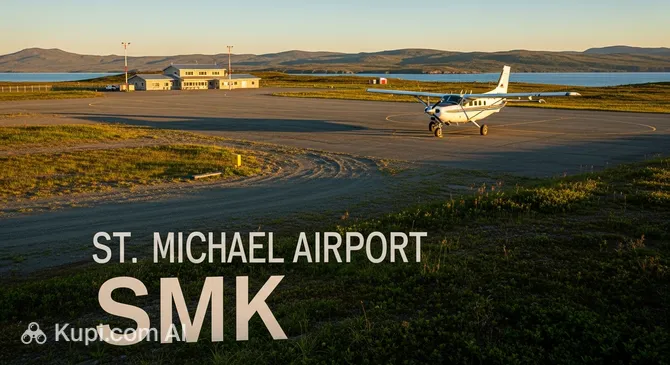
St. Michael Airport. Source: Kupi.com Binoculars

St. Michael Airport (SMK) is not merely a point on a map, but a true "lifeline" for a remote settlement on the rugged coast of Alaska. Here, where the waters of Norton Sound meet the boundless tundra, aviation remains the only reliable link to the outside world all year round. The modest gravel strip welcomes small aircraft, and every arrival here is imbued with the atmosphere of genuine northern adventures. For travellers, this small airport becomes the first gateway to a world of authentic indigenous culture and wild, untouched nature.

AirportSt. Michael Airport
IATASMK
ICAOPAMK
CitySt Michael
TimezoneAmerica/Nome
ScheduleOnline board

Airport Features and Highlights

The main feature of the St. Michael air harbour is its key role in sustaining the region. The airport services regular flights from larger hubs, such as Nome and Unalakleet, delivering mail, medicine, and provisions. The infrastructure here is minimalist: instead of massive terminals, you will be greeted by a small building and a dirt runway approximately 1,200 metres long. Due to the nature of the surface and the changeable weather of the Bering Sea, flight schedules may change, which is worth considering when planning your journey.

Despite its simplicity, the airport offers travellers a unique experience. The approach for landing is often accompanied by picturesque views of the coast and the Yukon Delta. This place is ideal for those seeking the real Alaska without the gloss of major tourist centres. The proximity to the village allows you to reach your destination in just a few minutes, which is an undoubted plus after a flight on a small plane.

Contact Information

  • Official Airport Website: dot.alaska.gov (the airport is managed by the Alaska Department of Transportation and does not have its own separate page).
  • Information Desk Phone: There is no unified information service in the airport building. For airfield maintenance questions, you can contact the regional DOT&PF office at +1 907 443-3411. Flight information must be checked directly with the airlines.
  • Airport Address: St. Michael Airport, St. Michael, Alaska 99659, USA (located west of the main part of the settlement).
  • Email: No direct email available.
  • Airport Social Media: No dedicated accounts.
  • Lost Luggage Information: Airlines handle the search and return of items. It is recommended to contact the office of the company you flew with (for example, Bering Air or Ryan Air).
  • Passenger Support Contacts: All questions regarding tickets, check-in, and schedules are resolved through airline support services. The main carrier in the region is Bering Air (phone in Nome: +1 907-443-5464).

How to Get to the Airport

Transport logistics in the settlement of St. Michael have their own unique specifics, characteristic of remote corners of Alaska. There are no familiar city buses, metro systems, or car-sharing services here. The airport is located approximately 3 kilometres from the main residential area of the village, and ways to get there depend directly on the season and arrangements with local residents.

Public Transport

There is a complete absence of public transport in St. Michael. No route buses or trains operate here. Since the settlement is small and the road network is isolated from the rest of the continent, the need for regular passenger transport is eliminated. Travellers should plan their movement logistics in advance.

Transfers and Taxis

There are no conventional taxi services (like Uber or official taxi fleets) here. However, this does not mean you will be left without transport:

  • Private Rides: Local residents often earn extra money by giving lifts to visitors in their pickup trucks or SUVs. It is better to agree on the price in advance; usually, this is a symbolic amount or a fixed fee in the region of 10–20 US Dollars.
  • Host Transfer: If you are flying for a visit, for work, or as part of an organized group, you will most likely be met. Be sure to clarify this point before departure.
  • Winter Transport: In the cold season, snowmobiles become the main means of transport. A ride to the airport on a snowmobile is not just a transfer, but a colourful adventure.

Car Rental

Chain car rental agencies are not represented in St. Michael. It is impossible to rent a car officially here. In the summer period, All-Terrain Vehicles (ATVs) are a popular means of transport, which can sometimes be borrowed or rented privately from locals. This is the most convenient way to move along the village's gravel roads.

Airport Parking

The parking zone in front of the airport building is an open dirt area. It is free of charge and unguarded. Local residents leave their vehicles (cars, ATVs, or snowmobiles) here during short trips. Given the low crime rate and small population, this is considered safe, but leaving valuable items inside the cabin is not recommended.

Travel Time

The journey from the centre of the settlement to the runway takes:

  • By car or ATV: 5–10 minutes.
  • On foot (in good weather): about 30–40 minutes. It is worth noting that in winter or windy weather, walking can be extreme.

Neighbouring Airports and Alternative Routes

Since St. Michael is a hard-to-reach point, travellers often build routes through other regional nodes of Alaska. The most important hub in this area is Nome Airport, located almost 200 km to the northwest; the main flow of cargo and passengers passes through it.

Also within the flight range of small aviation are:

Terminals and Map

St. Michael Airport (SMK) is the quintessence of small-form aviation. You will not find multi-level walkways, travelators, or confusing gate maps here. The entire airport complex is designed taking into account the harsh climate and functional necessity: to ensure quick and safe boarding onto small aircraft.

Terminal Structure

The airport features one small passenger terminal. It is a compact single-storey building fulfilling all functions simultaneously: from check-in to waiting for departure. Inside, a cosy, almost homely atmosphere prevails, where staff often know regular passengers by face.

Main zones of the terminal:

  • Check-in Counter: Usually, this is one or two small counters where airline employees (most often Bering Air or Ryan Air) check documents and accept luggage.
  • Waiting Hall: A general heated space with seats where passengers await the arrival of the aircraft. Given the Alaskan climate, the presence of a warm room is the main comfort option.
  • Baggage Claim Area: There is no baggage belt as such here. Luggage is unloaded manually by staff and handed to passengers either directly at the aircraft or brought into the terminal building.

Navigation and Boarding Features

It is impossible to get lost at St. Michael Airport. The navigation scheme is intuitively clear: the entrance from the street leads directly to the check-in counter, and the exit to the airfield is located on the opposite side or nearby.

Departure and Arrival Zones

Unlike large hubs, there is no strict separation of flows here:

  • Departure: After processing documents, passengers wait for the boarding call in the general hall. Walking to the aircraft is done on foot across the apron. Jet bridges and buses are not provided.
  • Arrival: Arriving passengers descend the aircraft stairs onto the ground and walk independently to the terminal building or directly to the meeting transport if luggage is handed out at the plane.

Check-in and Security Procedures

Processes at SMK are much faster and more informal than at large international airports, but they have their own specifics:

  • Arrival Time: It is recommended to arrive at the airport 30–45 minutes before departure. This time is quite sufficient for all formalities.
  • Weighing: This is a critically important stage for small aviation. Be prepared for the fact that not only your luggage will be weighed, but you yourself (along with your hand luggage). This is necessary for the correct balancing of a small aircraft.
  • Security Screening: Classic strict TSA screening (as in major airports) is often absent here or takes place in a simplified format, as flights are operated on small turboprop vessels. However, safety rules are strictly observed.

Recommendations for Passengers

The main advice when visiting St. Michael Airport is to dress according to the weather. Since boarding and disembarking take place in the open air, and you will have to walk from the building to the plane across a windy apron, a warm jacket and comfortable footwear (preferably waterproof) will be your best helpers. Also, keep your documents close at hand: despite the simplicity of the airport, identity checks are mandatory.

Airport History

The history of air travel in St. Michael is a chronicle of the transition from the "golden era" of steamboats to the age of modern small aviation. While in the late 19th century this settlement was a thriving trading port and gateway to the gold mines of the Yukon, with the development of air transport in the 20th century, the focus shifted. The airport became the link that prevented the settlement from ending up in total isolation following the decline of river shipping.

Origins and Establishment

The exact date of the first aircraft landing in St. Michael is lost in the archives of early polar pilots, however, the establishment of regular air communication here began in the mid-20th century. In those times, when the famous sternwheelers ceased to cope with the region's logistics, an acute need arose for year-round transport. The first landing sites were primitive: essentially, they were levelled patches of tundra or the frozen surface of the bay during the winter period.

The airfield received official status and permanent infrastructure later, when the State of Alaska began a systematic programme to ensure accessibility for remote villages. Unlike large cities, there were no grand openings with ribbon-cutting here; development proceeded via an evolutionary path — from a dirt track to an engineering structure.

Stages of Development and Modernisation

The history of St. Michael Airport (SMK) is a history of constant struggle with nature to preserve the runway.

  • Surface Improvement: Initially, the strip was simply levelled soil. A key stage was the creation of an embankment and covering it with special gravel resistant to erosion and permafrost. This allowed for the reception of heavier aircraft with cargo.
  • Navigation Equipment: An important milestone was the installation of lighting equipment and simple navigation systems. This radically increased flight safety in conditions of polar night and frequent fogs characteristic of the Bering Sea coast.
  • 21st Century Reconstructions: In recent decades, the airport regularly receives grants from the Federal Aviation Administration (FAA) as part of the Airport Improvement Program (AIP). These funds go towards grading the strip, repairing fencing, and updating lighting technology.

Interesting Historical Facts

Several curious details are connected with the past and present of St. Michael Airport:

  • Shift in Priorities: Historically, St. Michael was known for its fort and port. The airport was built west of the historic part of the settlement, and its appearance finally shifted the centre of logistical activity from water to land.
  • "Ice Runway": In the village's history, there were periods when, during the harshest winters, planes landed not on the ground but on specially prepared ice platforms, which allowed aircraft to be received closer to residential houses.
  • Rescue Role: During epidemic outbreaks in the 20th century (for example, diphtheria or influenza), it was small aviation and the presence of a landing site in St. Michael that allowed vaccines and serums to be delivered to this region when maritime navigation was impossible.

Today, the airport does not set world records for passenger traffic, but it holds its main achievement — it remains a reliable bridge connecting the history of Russian America and the modern life of the state.

Services and Facilities

One should not expect the service level of international hubs from St. Michael Airport (SMK). There are no duty-free shops, food courts, or spa zones here. Services and amenities in the terminal are reduced to the basic minimum necessary to ensure safety and a short stay for passengers before departure in harsh climatic conditions.

Dining and Shopping

There are no cafes, restaurants, or shops in the airport building. You cannot even buy a bottle of water or snacks here. Travellers are strongly advised to:

  • Bring a supply of food (sandwiches, energy bars) and a thermos with tea, especially if a transfer is ahead or a flight delay due to weather is possible.
  • Purchase everything necessary in advance at the village's only store (Alaska Commercial Company), located in the residential zone, as there will be no such opportunity at the airport.

Communication and Finances

Infrastructure for business communications and banking operations is not provided here:

  • Wi-Fi and Internet: Public Wi-Fi networks are generally absent in the terminal. Mobile coverage may work unstably, depending on the operator (GCI usually has the best coverage in the region).
  • Charging Devices: There are no special stands with USB ports. In the waiting hall, you can find a few standard power outlets, but their number is limited. It is recommended to carry a fully charged power bank.
  • ATMs and Currency Exchange: There are no ATMs in the airport building. Be sure to carry cash (US Dollars) in small bills to pay for taxis or purchases in the village. Cards are not accepted everywhere.

Comfort and Waiting

The only waiting hall is a small heated room with seats. There is no separation into business lounge and economy class — all passengers wait for departure together. Amenities are limited to the availability of a restroom (check functionality on-site, as disruptions to water supply are possible in winter) and heating, which is the most important service in Alaska.

Medical Assistance and Accessibility

There is no medical centre or pharmacy at the airport. The nearest clinic is located in the settlement of St. Michael itself. For passengers with reduced mobility, barrier-free access to the single-storey terminal is provided, however, boarding the aircraft is carried out from the ground via stairs. Airline staff are always ready to assist with boarding and disembarking, but it is better to notify the carrier of the need for such assistance when booking the ticket.

Accommodation (Hotels)

There are no hotels on the airport territory or in its immediate vicinity. Accommodation options are located in the settlement itself (about 3 km from the strip):

  • Travellers usually stay at the local lodge or rent rooms from residents.
  • Housing stock is extremely limited, so booking accommodation must be done well in advance. Arriving "on luck" and finding a free room can be problematic.

Where to Eat

When planning a trip through St. Michael Airport (SMK), it is important to consider the stark reality of the local infrastructure. Gastronomic possibilities here fully correspond to the ascetic spirit of northern aviation: there are no public catering establishments in the terminal.

Restaurants and Cafes

There are absolutely no cafes, restaurants, lounges, or coffee shops in the terminal building. There is no separation into "clean" and "dirty" zones with food courts typical of large airports. Passengers will not even find vending machines with chocolates or soda here.

Dining Recommendations

To avoid going hungry while waiting for a flight or during the flight (meals are also usually not provided on board small aircraft), it is strongly recommended to take care of food in advance:

  • Full Meal: Try to have a substantial meal in the settlement itself before leaving for the airport.
  • Buying Groceries: The only place where you can buy food is the general store Alaska Commercial Company (AC Store), located in the residential part of St. Michael. There you can find a basic set of products: bread, canned goods, snacks, drinks, and ready-to-eat bites. Do this before you order a transfer to the airstrip.
  • Takeaway for the Road: The optimal option is to take a lunch box with sandwiches, nuts, or dried fruits with you.

Dietary and Special Nutrition

Since points of sale are absent, questions of vegetarian, vegan, gluten-free, or Halal nutrition fall entirely on the shoulders of the travellers themselves. If you follow a strict diet, be sure to bring the necessary products with you from larger cities (for example, from Nome or Anchorage), as the assortment of the village store may be limited.

Drinks

Access to drinking water in the terminal is not guaranteed (drinking fountains are absent). Travellers are strongly advised to carry a supply of bottled water. It is also an excellent idea to bring a thermos with hot tea or coffee: in the cool waiting hall, a warming drink will be a true salvation, as it is impossible to buy one on the spot.

Traveller Tips

Travelling through St. Michael Airport (SMK) is an experience radically different from the usual flights between metropolises. An atmosphere of polar aviation reigns here, where rules are dictated not so much by corporate standards as by safety and common sense in Arctic conditions. To ensure your visit goes smoothly, we have collected the most important tips.

Arrival Time and Planning

Unlike large hubs, there is no sense in arriving 2–3 hours before departure here. The airport is small, and processes move quickly. However, being late is also not an option.

  • Optimal Time: Arrive at the airport 45–60 minutes before departure. Small aviation pilots value punctuality and may close the load manifest early.
  • Weather Consideration: If there is a blizzard or strong wind outside, do not leave for the airport without a prior call to the air carrier. The flight may be delayed or cancelled, and it is better to learn about this while staying in the warmth.

Check-in and Safety: Alaska Specifics

The check-in procedure here has its own unique features which are worth being prepared for:

  • Total Weighing: The most important stage of check-in is weighing. The staff member will ask you to step on the scales not only with your suitcase but also yourself along with your hand luggage. Do not be surprised or offended: for small aircraft (like a Cessna or Piper), precise calculation of balance is vital for flight safety.
  • Screening: There are no metal detector frames or shoe scanners familiar to the TSA here. Screening is conducted visually. However, the ban on carrying weapons and dangerous substances is strictly enforced.
  • Documents: Despite the intimate setting, keep your ID or passport close at hand.

Seat Selection and Conduct on Board

In small aviation aircraft, there is no system for pre-booking a specific seat via the internet. Seating occurs based on facts:

  • Distribution by Weight: Often the pilot themselves will indicate to passengers where to sit to balance the aircraft. If the pilot asks you to change seats, comply with the request without question.
  • Best Views: If you are allowed to choose a seat freely, sit by the window. The flight over the Yukon Delta and the Bering Sea coast offers stunning views. A seat directly behind the pilot will allow you to observe the instrument panel, which adds excitement to the journey.
  • Noise: Small turboprop planes are quite noisy. If you have sensitive hearing, bring earplugs or noise-cancelling headphones.

Hand Luggage and Baggage

Forget about standard cabin-size suitcases on wheels — there is simply no room for them in the cabin of a small plane.

  • Soft Bags: The best choice for Alaska is soft backpacks or duffel bags. They are easier to place in the limited luggage compartment. Hard plastic suitcases may not fit or could be damaged.
  • In the Cabin: Take only the bare essentials into the cabin: documents, a camera, medication, and a wallet. Everything else, including large backpacks, will go to the luggage compartment (often this is a "belly pod" or the tail of the plane).
  • What is Prohibited: Gas canisters (including bear spray) are categorically prohibited for transport on board.

Recommendations for Transit Passengers

Most travellers fly through St. Michael with a transfer in Nome or Unalakleet. Note an important nuance: through-check of luggage often does not work if you change airlines (for example, transferring from Bering Air to Alaska Airlines).

  • Allow a minimum of 2–3 hours for the connection, especially in the winter period. You will have to collect your luggage yourself and check it in again.
  • If your first flight is delayed, inform the airline representative immediately — sometimes the next aircraft can wait a little for transit passengers.

Customs Control and Souvenir Export

The airport services only domestic flights, so there is no customs here. However, strict rules of the US Fish and Wildlife Service apply:

  • If you are carrying items made of walrus ivory, whalebone, or fur, you must have certificates of authenticity (Silver Hand), confirming that the souvenir was made by indigenous people of Alaska. The export of raw marine mammal materials by non-indigenous residents is illegal.

Tips for Saving Money

  • Food with You: Since there is no cafe at the airport, and the flight and waiting time can drag on, having your own snacks and water will save your nerves and money. There are no meals on the planes either.
  • Transfer Cooperation: Taxis in the settlement are expensive. Try to find fellow travellers among local residents on the flight to split the cost of the trip from the airport to the village.

What to Do in Case of Flight Delay

In Alaska, the weather changes instantly, and delays are a common occurrence. The main rule: stay calm.

  • Do not wander far from the terminal building, even if the flight is delayed for an hour. A "window" in the weather may open suddenly, and the pilot may decide to fly sooner.
  • Have the contact details of your accommodation in St. Michael at hand. If the flight is cancelled until morning (which happens often), you will need to promptly return to the village, as spending the night in an unguarded terminal is uncomfortable and cold.
Reached the end of the page?

That means the route is fully explored