Support

Whidbey Island

Attractions

About

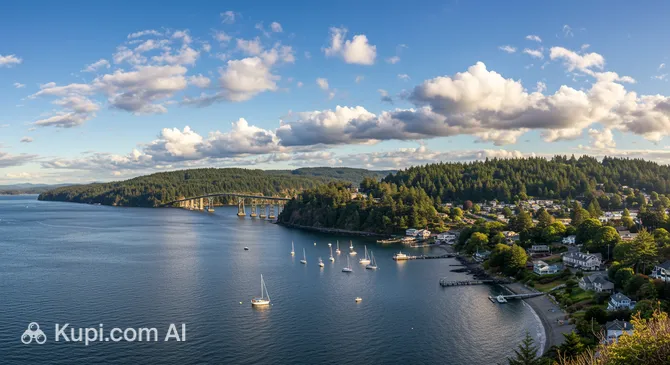
Whidbey Island is a picturesque destination that feels as if it were created for those seeking harmony between wild nature and the charm of small towns. Located in the northwest of Washington State and surrounded by the waters of Puget Sound, it is one of the largest islands in the contiguous USA. Stretching nearly 90 kilometers, it offers travelers vast opportunities for exploration.

Whidbey Island. Illustration.
Source: Kupi.com AI

With a population of around 78,000, Whidbey Island remains vibrant yet surprisingly quiet and intimate. A special creative atmosphere prevails here: contemporary art galleries sit harmoniously alongside cozy seaports and historic farming settlements. The rich history of Whidbey Island is felt in every town, giving the island a unique character and a spirit of adventure.

The main draw for tourists is undoubtedly its diverse landscapes. Dense coniferous forests give way to expansive beaches, while majestic rocky cliffs drop straight into the ocean. This is an ideal destination for those who want to have a picnic on the shore, enjoy local cuisine, and witness sunsets that turn the sky into an artist's palette. Whidbey Island awaits guests ready to appreciate its natural beauty and sincere hospitality.

Weather Overview

The climate on the island is mild and temperate, typical of the Pacific Northwest, without extreme heat or severe frosts. Travelers should expect warm summers with occasional rain and cool, damp winters, when precipitation becomes frequent.

The summer months, especially July and August, are considered the best time to visit: the average temperature stays around +18... +19°C, and during the day, the air warms up to a comfortable +22.5°C. This is the driest period of the year, when the number of rainy days drops to 6–7 per month. In winter, the picture changes: in January and December, temperatures drop to +4... +8°C, and it rains about 20 days a month.

Spring and autumn bring a gradual change in weather. In spring, the air gradually warms from +7°C in March to +13°C in May. If you are planning a trip in the shoulder season, it is useful to know what weather on Whidbey Island is expected in a specific month, as rainfall begins to increase again in autumn, peaking by November.

Average monthly temperature

Average monthly precipitation

Interesting Facts

Beyond the main attractions, Whidbey Island holds many fascinating secrets and traditions revealed only to the most curious travelers.

  • The island is considered one of the oldest continuously inhabited places on the West Coast of the USA. It is home to Ebey’s Landing National Historical Reserve, where 19th-century farms and houses are preserved, offering a glimpse into the lives of the first settlers.

  • The famous Deception Pass and its bridge are among the most photographed locations in Washington State. The dramatic landscapes and unique nature of this area are so impressive that they are often chosen as backdrops for films and commercials.

  • Whidbey Island is famous for its lavender farms. A colorful festival takes place here in July, and local producers offer unique delicacies such as lavender-infused chocolate. Additionally, on some farms, you can encounter friendly alpacas grazing near the purple fields.

  • The island is steeped in a creative atmosphere that inspires artists and musicians. Bright examples of local culture include the Bayview Corner Street Dances and numerous open-air art exhibitions.

How to Get There

When planning your trip, it's important to think through the logistics, as the island's location has its own specific characteristics. You can learn more about all the routes and nuances on the how to get to Whidbey Island page. Most tourists arrive here via major Washington State transportation hubs, combining flights with car or ferry travel.

The most popular way to reach the region is by air. There is no airport on Whidbey Island itself, but you can fly into Seattle-Tacoma International Airport (IATA: SEA) in Seattle, located approximately 61.8 km from Whidbey Island. This is a major international hub receiving flights from all over the world. The journey from there by taxi or rental car takes roughly 1 hour and 50 minutes, though you should account for potential wait times at ferry crossings.

Another convenient option is Paine Field (IATA: PAE), also located in the Seattle area (Everett). It is significantly closer, just 15.5 km from Whidbey Island. This is an excellent alternative for domestic flights, allowing you to save significant travel time. The trip from the terminal to the island takes about 45 minutes by car.

For your convenience, here is a summary of the main airports:

AirportPassenger trafficDistance
Paine Field580 00016 km
Seattle-Tacoma International Airport52.6 mln62 km
Friday Harbor Airport23 00073 km
Victoria Inner Harbour Airport200 00084 km
Bellingham International Airport641 00089 km

Rail travel is not the primary way to get directly to the island. There is no train station on Whidbey Island itself, but you can travel to Vancouver Station (IATA: XEA) in Vancouver. It is located about 149.9 km from Whidbey Island. Given the distance and the need to cross the border (if coming from Canada), the trip by taxi or bus will take over 4 hours.

Below is information about the nearest train stations:

StationPassenger trafficDistance
Esbjerg Railway Station753 060127 km
Vancouver Railway Station265 626150 km

Main Attractions

Whidbey Island offers travelers a unique blend of natural beauty and historical landmarks. The island is dotted with picturesque parks and cozy corners that allow you to escape the city bustle and immerse yourself in the atmosphere of the Pacific Northwest.

One of the most famous locations is Deception Pass State Park. While the iconic bridge is often cited as the island's symbol, the park itself deserves special attention for its magnificent beaches, forest trails, and freshwater lakes. It is an ideal spot for hiking, kayaking, or simply observing the powerful currents rushing through the narrow strait. Tourists come here to capture breathtaking photos of the rocky shores and enjoy the sunset over the ocean.

For history buffs and maritime enthusiasts, a visit to Fort Casey State Park is a must. This former military site, built in the late 19th century, features massive artillery batteries that are open for exploration today. The park's crowning jewel is the picturesque Admiralty Head Lighthouse. Climbing to the top offers a panoramic view of Admiralty Inlet and the Olympic Mountains. The fort's large open lawns are also popular among kite-flying enthusiasts.

For those seeking cultural experiences, the town of Langley is an excellent choice. Often called the "Village by the Sea," it is home to numerous art galleries, boutiques, and cafes. A stroll along the Langley waterfront offers a chance to see gray whales, which come close to the shore in the spring. The town’s atmosphere is steeped in creativity and tranquility, making it a perfect spot for a relaxed getaway.

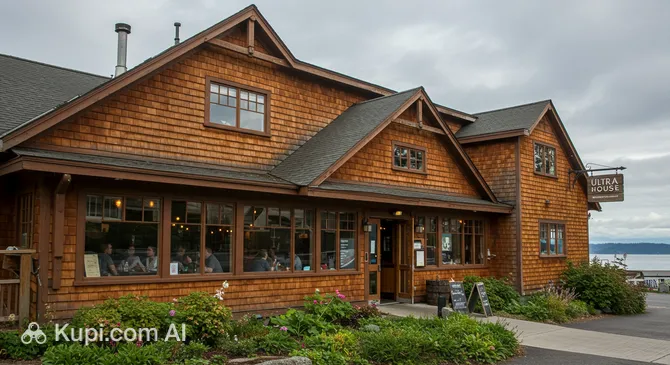
Ultra House. Illustration.
Source: Kupi.com AI

Traveler photos:

After long walks in the fresh air, travelers will want to refuel. One notable gastronomic stop is Ultra House. This colorful establishment attracts guests with its cozy atmosphere and a menu inspired by Asian traditions, particularly its excellent ramen. It is a great place to warm up with a hot soup after a windy day on the coast and discuss your impressions of the trip.

Local Cuisine

Culinary life on Whidbey Island is inextricably linked to the sea and the fertile land. The island's gastronomic scene is built on the farm-to-table concept, where the freshness of ingredients plays a decisive role. Travelers should first try the famous local seafood: oysters, mussels, and scallops. A true delicacy is the Dungeness crab, which is served in many coastal restaurants, often turning a sunset dinner into an unforgettable event.

The region's farming culture is equally important. Many small family farms operate on the island, producing excellent cheeses, organic vegetables, and berries. Lavender is particularly popular, added to unexpected products ranging from jams to gourmet chocolate. To immerse yourself in the local atmosphere, visit farmers' markets like the Oak Harbor Farmers Market, where you can chat with producers and taste the freshest offerings.

For connoisseurs of quality beverages, Whidbey Island offers interesting routes through wineries and distilleries. Excellent wines are made here from local grapes, with tastings held right among the picturesque vineyards. It is also worth trying craft spirits: local artisans create original liqueurs and gin, which make excellent souvenirs or dinner accompaniments. In the summer, gastronomic life bustles at harvest festivals and street picnics that bring together top chefs and foodies.

Travel Tips

A trip to Whidbey Island promises to be relaxing and full of discoveries, but island life has its own unique characteristics. To make your vacation as comfortable as possible and free of surprises, we have prepared a list of practical recommendations to help you feel confident in any situation.

  1. Clothing and Gear. Weather in the Pacific Northwest is changeable, so the best principle here is layering. Even in summer, evenings can be cool, so be sure to bring a fleece jacket and a waterproof windbreaker. For exploring parks, you’ll need comfortable, broken-in shoes with non-slip soles, as trails can be damp.

  2. Transport Nuances. For a full tour of the island, it’s best to rent a car. However, Whidbey Island is famous for its unique Island Transit system—these are buses that are absolutely free for all passengers. They run along the main roads and can be a great alternative for moving between towns. Ride-sharing apps (Uber, Lyft) work, but wait times in remote areas can be long.

  3. Finances and Payment. The official currency is the US Dollar. Credit cards are accepted almost everywhere: in hotels, restaurants, and supermarkets. However, it is recommended to carry a small amount of cash (1-5 dollar bills) if you plan to buy fresh produce from self-service roadside farm stands. Tipping is standard practice; it is customary to leave 15–20% of the bill.

  4. Health and Safety. The island is very calm and safe for tourists. The main medical center, WhidbeyHealth, is located in Coupeville. Pharmacies are available in larger towns (Oak Harbor, Freeland), but 24-hour ones are hard to find, so it’s best to pack a personal first-aid kit in advance. Be careful at the edges of steep cliffs, especially in windy weather.

  5. Communication and Internet. The primary language is English. There are no problems with mobile connection in towns and villages, and Wi-Fi is available in many cafes. However, in dense forests or on wild beaches, the signal may disappear completely. We suggest downloading offline maps of the area to your smartphone in advance.

  6. Local Etiquette. The island has a relaxed atmosphere known as "island time." There is no need to rush here. Local residents are very friendly: it is considered normal to say hello to people you meet on walking trails. Respect for nature is also highly valued—it is expected that you carry your trash out with you.

  7. What to Avoid. Do not enter areas marked with "Private Property" or "No Trespassing" signs, especially on the coast. In Washington State, many beaches are privately owned (down to the low-tide line), and owners strictly monitor their boundaries. Also, avoid loud noise in the evening in residential areas—peace and quiet are highly valued here.

  8. Ferry Tip. If you plan to arrive by ferry (especially on the Mukilteo–Clinton route) during the summer season or on weekends, try not to arrive during peak hours without preparation. Lines can stretch for several hours. The best hack is to monitor the ferry wait times via the official state department of transportation app.

Following these simple rules will help you avoid minor inconveniences and focus on the main thing—the incredible nature and cozy charm of Whidbey Island. We wish you a smooth journey and only pleasant impressions from your visit to this wonderful corner!

Entertainment & Nightlife

Nightlife on Whidbey Island has its own unique character: you won't find massive multi-story clubs with techno music here, but you will discover a world of cozy pubs, atmospheric taverns, and elegant tasting rooms. Evening entertainment on the island is imbued with the spirit of "Pacific Hygge"—a time for live acoustic music, craft drinks, and leisurely conversations in warm company.

Most activity is concentrated in two key towns. Oak Harbor, particularly the Pioneer Way area, offers a more casual and lively atmosphere. There are many bars and pubs here where locals and naval personnel often relax, play billiards, and sing karaoke. The crowd is down-to-earth and friendly, and the dress code is completely relaxed—jeans and comfortable shoes are appropriate everywhere. The other pole of nightlife is the town of Langley. This is the place for a more refined evening: wine bars, small bistros, and venues hosting jazz or blues.

Ultra House. Illustration.
Source: Kupi.com AI

Traveler photos:

If you are looking for a place to enjoy a great meal and spend the evening in an unusual setting, look no further than Ultra House. This Asian-inspired venue has become a magnet for fans of Japanese ramen and quality drinks. The laid-back atmosphere is perfect for warming up after a walk by the ocean and trying something new from the menu.

A unique feature of the island is the famous Blue Fox Drive-In. This iconic spot operates year-round and offers a classic American pastime: watching movies right from your car under the open sky. In addition to movies, there is an arcade and go-karting, making it a great choice for a fun evening. Tickets are affordable, and the atmosphere harks back to the golden era of the 1950s.

In terms of safety, Whidbey Island is one of the most peaceful places in the region. Night walks through town centers pose no threat, though you should be careful on the roads. Street lighting outside of the towns is minimal, and forest roads can be foggy. Important transport tip: calling a taxi or Uber at night can be extremely difficult, with wait times sometimes exceeding 40 minutes. If you plan on tasting alcohol, it is highly recommended to designate a driver in advance or choose accommodation within walking distance of the venues.

During the day, the island's entertainment program shifts toward art and culture. Theater lovers should check the schedule at the Whidbey Island Center for the Arts (WICA) in Langley, which regularly hosts plays, concerts, and lectures. The island is also famous for its art galleries and small museums, which often host openings and artist meet-and-greets that transition smoothly into evening receptions.

Parks & Museums

Whidbey Island harmoniously combines wild nature and a respectful approach to the heritage of the past, offering tourists not only walks along windy beaches but also immersion in botany, aviation history, and local art. Green zones here transition seamlessly into historical landscapes, creating a unified space for relaxation and education.

Among the natural attractions, Meerkerk Gardens holds a special place. It is a true botanical oasis hidden in a forest, which differs strikingly from the rugged coastal landscapes. The gardens are famous for their rich collection of rhododendrons and ornamental trees. It is an ideal spot for those seeking silence, the scent of flowers, and peaceful walks along well-kept paths away from ocean winds.

Another important natural area is Fort Ebey State Park. Although, like many of the island's parks, it is located on the site of former defensive structures, tourists are drawn here today by stunning views rather than bunkers. The park is known for its high cliffs, popular with paragliders, and an extensive network of trails for hiking and mountain biking. It also features the picturesque Lake Pondilla, surrounded by dense forest, making the location a great choice for a family picnic.

To dive into the region's cultural context, visit the Island County Historical Museum located in the historic town of Coupeville. The museum's exhibits are surprisingly diverse: from Ice Age mammoth remains and indigenous artifacts to the everyday items of the first pioneer settlers. This place provides a full picture of how life on the island has been shaped over centuries.

In the northern part of the island, in the city of Oak Harbor, is the unique PBY-Naval Air Museum. It is dedicated to the history of the famous PBY Catalina flying boats and the role of naval aviation in the region's development. The museum will be of interest not only to tech enthusiasts but to the general public as well, thanks to interactive exhibits and the chance to try a flight simulator. This is an important part of the island's identity, closely tied to the sea and sky.

Insider Tip: If you want to see something truly unusual, head to the Price Sculpture Forest. It is a free open-air gallery where contemporary art pieces are hidden right among ancient trees and ferns. The walk turns into a fun quest to find art in its natural habitat.

Getting Around

The public transport system on Whidbey Island can be a pleasant surprise for travelers used to the complex fares of major cities. The main artery for passenger transport here is the Island Transit bus network. A unique feature of this system is that travel on all routes within the island is absolutely free. This makes traveling between major settlements not only convenient but also budget-friendly.

The bus network covers key points of the island, connecting the Clinton ferry terminal in the south with Oak Harbor in the north. Routes pass through popular tourist spots, including Langley, Greenbank, and Coupeville. You don't need to worry about buying tickets, transit cards, or validation—you simply board the bus at a stop and get off at your destination. This is an ideal option for seeing the main towns located along the highway.

An integral part of the transport system is the Washington State Ferries, which connect the island to the mainland. Unlike the buses, this service is paid. Ferries run between Mukilteo and Clinton, and between Coupeville and Port Townsend. You can pay by credit card at the terminal ticket booths or in advance online. For foot passengers, tickets are significantly cheaper than for vehicles, and payment is only collected when traveling to the island (from Mukilteo); the return trip for pedestrians is usually free.

For those arriving in the region by plane, there is the convenient Whidbey SeaTac Shuttle service. These comfortable minibuses provide a direct link between the island and major airports, including Seattle-Tacoma. Unlike local transport, this requires advance reservation and a paid ticket. It is a reliable way to get to your accommodation without transfers, especially if you have a lot of luggage.

Despite the convenience of free buses, they do have limitations. They run on a schedule that may not be very frequent on weekends, and on Sundays and public holidays, Island Transit buses do not run at all. Therefore, travelers are strongly advised to check the current schedule on the official website or via navigation apps before planning their trip.

If you want to explore remote beaches, parks, or viewpoints not served by the bus, the best alternative is renting a car. Taxi services and ride-sharing apps like Uber or Lyft are present on the island, but cars are few and wait times can stretch to 30–40 minutes, especially in the southern and central parts of the island. Car-sharing is practically non-existent here.

For fans of active recreation, cycling is an option. Island Transit buses are equipped with special bike racks, allowing you to combine trips: ride the bus for part of the way and cycle through the scenic sections. However, keep in mind that road shoulders on the island can be narrow and the terrain hilly, so this method is best suited for physically fit travelers.
Accommodation

The choice of accommodation on Whidbey Island is as diverse as its nature. You won't find massive chain skyscrapers or noisy "all-inclusive" resorts here. Instead, the island offers cozy formats that allow you to feel the local flavor: from historic Bed & Breakfasts (B&Bs) and boutique hotels to classic motels and forest campgrounds. Renting private homes and cottages with ocean views is extremely popular and ideal for families or large groups.

When choosing a home base, you should consider the island's geography and the purpose of your visit, as the atmosphere in different parts of Whidbey varies significantly:

  • Oak Harbor (North). This is the island's largest city, where most affordable accommodation options are concentrated, including familiar hotel chains and budget motels. This area is convenient for its proximity to the main natural attraction, Deception Pass Park. Staying here is a practical solution for those planning active recreation on a budget.

  • Coupeville (Central). The historic heart of the island. This is where you should look for accommodation if you appreciate an old-world atmosphere. Coupeville is home to many charming Victorian-style inns and B&Bs set in restored 19th-century sea captains' homes. It is an excellent starting point for exploring the entire island.

  • Langley (South). If you are looking for romance, seclusion, and luxury, this is the place to be. Langley offers upscale boutique hotels, spa resorts, and guest houses with panoramic views of Saratoga Passage. This is a zone for relaxation, art, and fine dining, also convenient for its proximity to the ferry to the mainland.

Booking Tip: Whidbey Island is a very popular destination for Seattle residents and tourists, especially during the summer season (June to September) and during local festivals. During this period, the best accommodation options are booked several months in advance. If your trip falls in the summer or on a holiday weekend, it is strongly recommended to book your room or house at least 2–3 months ahead.

Price ranges on the island vary from budget (mostly in the north) to high-end (in the south and at unique scenic locations). For accommodation searches, it is convenient to use major international booking platforms; however, many small family-run inns and B&Bs have their own websites. Often, direct booking can offer better terms or pleasant bonuses, such as a home-cooked breakfast included in the price.

Nearby Cities

For those who want to explore the surrounding area, Whidbey Island serves as an excellent starting point for day trips to several interesting nearby locations:

Just a few kilometers away (via the Mukilteo ferry) is Everett. This is a major industrial and cultural center, world-renowned for aircraft manufacturing. Tourists often visit for aviation-related tours and to stroll through one of the largest marinas on the West Coast, which features numerous restaurants with bay views.

Another wonderful option for a visit is Edmonds. This picturesque coastal town is famous for its creative atmosphere and cozy historic center. It’s a pleasant place to spend a day browsing art galleries, small boutiques, and cafes, or simply walking along the beach with magnificent views of the Olympic Mountains.

Below is a list of nearby cities that are convenient to visit during your stay in the region:

CityPopulationDistance
Mukilteo21 40912 km
Everett110 43817 km
Picnic Point9 75517 km
North Lynnwood24 56220 km
Lake Stickney14 73320 km

These nearby destinations offer a glimpse into the diverse culture and landscapes of the region.

Shopping & Souvenirs

Overview: Shopping on Whidbey Island is the complete opposite of the hustle and bustle of massive metropolises. Here you won't find endless rows of mass-market stores; instead, you'll discover a world of unique boutiques, art galleries, and antique shops. The island is famous for its creative atmosphere, so special attention should be paid to the work of local artisans, artists, and farmers. Shopping here becomes a leisurely exploration, often accompanied by a conversation with the creator of the item itself.

Main Shopping Districts/Streets: The primary magnet for atmospheric shopping is the town of Langley. First Street and Second Street are literally lined with independent bookstores, natural fiber clothing boutiques, and galleries showcasing the work of local glassblowers and painters. Another important location is the historic Front Street waterfront in Coupeville. Here, in 19th-century buildings, you'll find souvenir shops and gift stores offering everything from maritime paraphernalia to rare books.

Shopping Centers: If you need standard supermarkets or electronics stores, head to Oak Harbor in the north. There are no massive indoor malls in the traditional sense, but there are large commercial areas (strip malls) along the highway featuring well-known American retail chains. This is the only place on the island suitable for large-scale utilitarian shopping.

Markets: Farmers' markets are the soul of Whidbey Island. The most popular is the Bayview Farmers Market, which runs on Saturdays from spring through fall. It’s more than just a place to trade; it’s a festival where you can buy the freshest vegetables, homemade cheese, flowers, and craft items to the sound of live music. Also worth visiting are the Sunday market at Tilmans Corner and the summer market in Coupeville.

Souvenirs: Tourists most often bring home lavender products from Whidbey Island: essential oils, sachets, cosmetics, and even culinary additives. The island is also famous for its glass artists, so a small vase or ornament makes a great memento. Don't forget gastronomic souvenirs: local wine, island-roasted coffee, or loganberry jams (a raspberry-blackberry hybrid) are in high demand.

Hours and Payment: Life on the island moves at a measured pace, which is reflected in shop hours. Most boutiques and shops open around 10:00 or 11:00 AM and close as early as 5:00 or 6:00 PM. On Sundays, many small shops may have reduced hours or be closed. Credit cards are accepted almost everywhere, but at farmers' markets or when buying from small roadside stands, cash (small bills) will come in very handy.

Taxes: Washington State has a Sales Tax that is not included in the price tag and is added at the register. The amount can vary by city but is typically around 9%. There is no traditional Tax-Free refund system for foreign tourists here, so you should plan your budget with this surcharge in mind.

Reached the end of the page?

That means the route is fully explored