Support

Sana'a International Airport

About the Airport

Sana'a International Airport (SAH) is the main aerial gateway into the heart of Yemen and its amazing capital, one of the oldest cities in the world. Arriving here feels like taking the first step into an Arabian fairytale, where modern infrastructure meets thousand-year-old traditions. The airport serves as the country's key transport hub and a starting point for travellers wishing to explore the unique architecture and rich cultural heritage of this region.
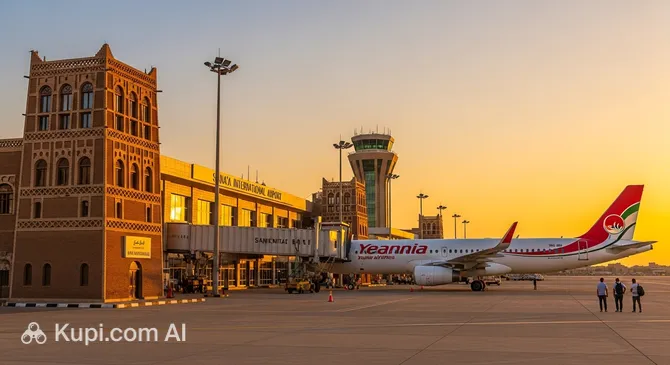
Sana'a International Airport. Source: Kupi.com Binoculars
IATA Code SAH
ICAO Code OYSN
City Sana'a
Distance to Centre 13 km
Status International
Annual Passengers n/a
Popular Airlines Yemenia, Felix Airways, Turkish Airlines

One of the airport's main features is its strategic location. It is situated just 13 kilometres north of the historic centre of Sana'a, making it convenient for tourists eager to immerse themselves as quickly as possible in the atmosphere of the Old City, a UNESCO World Heritage Site. The airport infrastructure includes one main passenger terminal, which simplifies navigation for arriving and departing passengers.

Although the airport cannot boast the scale of major global hubs, its value lies in its functionality and its role as a link to one of the most authentic cities on the Arabian Peninsula. Here, travellers can find basic services necessary to start their journey: currency exchange points, car rental desks, and information centres where advice on further routes can be obtained.

Contact Information

Attention! Due to the complex situation in the region, operations at Sana'a International Airport (SAH) are extremely unstable, and flights are irregular. Obtaining up-to-date contact information from official sources is difficult.

  • Official Website: Currently, there is no stable, functioning official website for the airport.
  • Information Desk Phone: There are no publicly available and working phone numbers for the airport inquiry service. To obtain information about flight status, you must contact your airline directly.
  • Address: Airport Rd, Sana'a, Yemen.
  • Email and Social Media: Official communication channels, including email and social media pages, are not maintained or are unavailable.
  • Lost Luggage and Passenger Support: These services are provided directly by the airlines. Standard support services at the airport may be unavailable or operating with severe restrictions.

How to Get to the Airport

There are several ways to get to Sana'a International Airport (SAH), located approximately 15 kilometres north of the centre of Sana'a. The choice of the best option depends on your budget, time, and comfort preferences. generally, the trip from the city centre to the airport takes about 30-45 minutes, although this time may vary depending on traffic conditions.

Taxi and Private Transfer

The most convenient and popular way for tourists to reach the airport is by taxi. You can find a car on the street or, which is more reliable, order one through your hotel. The estimated cost of a trip from the city centre to the airport is about 15-25 USD. It is extremely important to remember that taximeters are rarely used, so always negotiate the price with the driver before starting the trip. A private transfer booked in advance guarantees you a fixed price and a meeting at the appointed time, which is particularly convenient if you have a lot of luggage.

Public Transport

The public transport system in Yemen is represented mainly by route taxis (minibuses known as "dabbab"). This is the most budget-friendly option — the trip will cost only 1-2 USD in the local currency equivalent. However, it may be inconvenient for tourists with luggage, as the minibuses do not have a clear schedule and are often overcrowded. This method is more suitable for experienced travellers who speak the local language and want to immerse themselves deeper into local life.

Car Rental and Parking

Car rental agencies operate in the city, but this option is recommended only for drivers confident in their driving skills in conditions of an unfamiliar city with chaotic traffic. Rental costs vary greatly depending on the agency and the class of the car. If you decide to drive a rented or personal car, parking spaces are provided at the airport. It is better to check parking conditions and costs on-site, as rates may change.

Terminals and Map

International Airport Sana'a (SAH), the main air hub of Yemen, is designed to handle both international and domestic flights. Its infrastructure is concentrated in one main passenger terminal, which significantly simplifies navigation for travellers.

The terminal structure is quite standard for airports of this size. It is a multi-level building where arrival and departure zones are functionally separated. Typically, the departure zone with check-in halls and airline counters is located on the upper floor, while the arrival zone, including passport control for arrivals and the baggage claim area, is on the lower floor. Since all operations are concentrated in one building, passengers do not need to worry about transferring between terminals.

Navigation inside the terminal is intuitive and guided by signs. After checking in for the flight and dropping off baggage, passengers go through passport control and security screening, after which they enter the departure lounge with boarding gates. For arriving passengers, the route is also linear: from the aircraft exit through immigration control to the baggage claim belts and customs inspection.

The time required to complete all pre-flight formalities can vary greatly. It is strongly recommended to arrive at the airport well in advance — at least 3-4 hours before the departure of an international flight. This will allow you to check in, drop off baggage, and comply with all border and customs control requirements without haste, as they may take longer than expected. Simply follow the signs, and you will easily find the sector or boarding gate you need.

Airport History

The history of Sana'a International Airport (SAH) is closely linked to the development of Yemen as a modern state striving to strengthen international ties. The airport was built and opened in the 1970s with the assistance of foreign partners. Its creation was an important step in modernising the country's transport infrastructure, as prior to this, air travel was conducted through a small and outdated airfield.

From the moment of its opening, the airport was conceived as the country's main air hub, capable of receiving international flights. Initially, it had one runway and a modest terminal, but it quickly became obvious that expansion was necessary to meet the growing demand for air travel. In subsequent decades, work was carried out to modernise the runway and increase the capacity of the passenger terminal. This allowed the airport to service larger aircraft and establish direct connections with cities in the Middle East, Asia, and Europe.

The primary role of Sana'a Airport has always been to serve as the main aerial gateway to Yemen's unique cultural and historical heritage. For thousands of tourists and researchers, it became the starting point for exploring the famous Old City of Sana'a, a UNESCO World Heritage Site, and other treasures of the country. Thus, the history of the airport is, above all, the history of opening one of the most distinctive and ancient civilisations of the Arabian Peninsula to the world.

Services and Amenities

Important: Due to the complex humanitarian and political situation in Yemen, passenger infrastructure at Sana'a International Airport (SAH) functions in an extremely limited mode. Most standard services familiar to travellers are not provided or their operation is not guaranteed. Passengers should be prepared for a complete lack of service.

Travellers should categorically not count on the presence of working cafes, restaurants, or shops. The Duty Free zone is also not functioning. It is recommended to carry a sufficient supply of drinking water and food for the entire duration of your stay at the airport. Similarly, access to public Wi-Fi is absent, and charging stations for electronic devices may not work, so having a portable battery (power bank) is critically important.

Financial services, such as bank branches and currency exchange points, are unavailable within the terminal building. All necessary financial operations should be conducted well in advance of arriving at the airport. The presence of a medical point is not guaranteed, and its resources, if functioning, are extremely limited. Travellers must have their own first aid kit with all necessary medications.

Standard amenities for passengers, such as VIP lounges, business centres, or conference rooms, are absent. Services for passengers with children and travellers with reduced mobility, including mother and child rooms or specially equipped zones, are also likely unavailable. There are no operating hotels oriented towards tourists on the airport territory or in its vicinity.

Where to Eat

At Sana'a International Airport (SAH), the choice of dining establishments is quite modest, which is typical for small regional air hubs. Passengers should not expect large chain restaurants or extensive food courts here. The infrastructure is focused on satisfying the basic needs of travellers for drinks and light snacks before their flight.

The main part of the food outlets consists of small cafeterias and kiosks. They are located both in the public zone (before security control) and in the "clean" departure zone (airside). Here you can purchase hot and cold drinks, fresh pastries, sandwiches, and packaged snacks (biscuits, chocolate, crisps). For a full meal, it is recommended to visit restaurants in the city before leaving for the airport, as the menu in the terminal itself is limited more to a "quick bite" format.

Particular attention should be paid to local drinks. Even at the airport, you can find excellent Yemeni coffee (the famous Mocha) or traditional tea with mint and spices. Freshly squeezed juices, for example, from mango or guava, which are very popular in the region, are also often offered. This is a great opportunity to taste the "flavour of Yemen" one last time before departure.

Regarding dietary requirements:

  • Halal: Since Yemen is a Muslim country, all food and drinks offered at the airport are Halal by default.
  • Vegetarians and Vegans: There are usually no specialised menus, but you can find meat-free pastries, nuts, dried fruits (especially delicious local dates), or fresh fruits.
  • Gluten-free: Finding specialised gluten-free products can be difficult, so travellers with a strict diet are recommended to bring food with them.

Opening hours of establishments are usually tied to the flight schedule. Cafes open in advance before check-in begins and operate until the departure of the last flight. The price range at Sana'a Airport can be described as average, although prices may be slightly higher than in the city. Cash (local currency) is accepted for payment, so it is recommended to have small bills with you.

Travel Tips

Arrival Time and Check-in. Given the specific nature of the airport's operations and the thoroughness of checks, passengers are recommended to arrive at Sana'a International Airport at least 3–4 hours before the scheduled departure time. This will allow you to calmly go through all control stages, which may take longer than in major European hubs. Keep printed tickets and itinerary receipts with you, as they may be requested for verification even at the entrance to the terminal building.

Security Features and Etiquette. Be prepared for multi-stage screening. Strict security measures are in place at the airport, including luggage scanning and personal searches. It is important to remember the cultural features of the country: security lines may be separated for men and women. Behave with restraint, follow the instructions of security staff, and respect local traditions regarding dress and conduct.

Hand Luggage and Prohibited Items. In addition to standard international rules (liquids in containers no larger than 100 ml), pay special attention to specific prohibitions. It is categorically forbidden to transport alcohol and products containing pork into and out of Yemen. Also, do not carry any items simulating weapons or sharp objects in your hand luggage. If you have purchased local souvenirs, ensure they are securely packed in your checked luggage.

Seat Selection on the Plane. Sana'a is located in a mountainous area at an altitude of over 2000 metres. If you want to enjoy breathtaking views of mountain ranges and the city panorama during takeoff or landing, choose a Window Seat. However, if you prefer to leave the plane faster upon arrival or have more legroom, it is better to choose an aisle seat.

Customs Control and Souvenirs. Upon departure, customs services closely monitor the export of cultural valuables. If you have purchased a traditional dagger (Jambiya) or antiques, be sure to have permits and receipts from the shop confirming that it is a souvenir product and not a historical treasure. Also, declare large amounts of cash currency.

Tips for Transit Passengers. Sana'a Airport is not a major transit hub, and infrastructure for long layovers is limited here. If you have a connecting flight, it is recommended not to leave the transit zone, as a visa may be required to enter the city. Ensure in advance that your luggage is checked through to your final destination.

In Case of Flight Delay. Since the choice of entertainment and shops in the terminal is small, travellers are recommended to be autonomous. Take a good book, a fully charged power bank (access to sockets may be limited), and a light snack in your hand luggage. Listen carefully to voice announcements, as information boards may be updated with a delay.

Reached the end of the page?

That means the route is fully explored