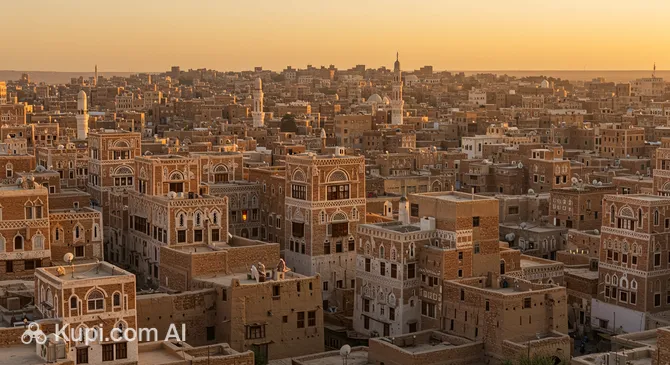
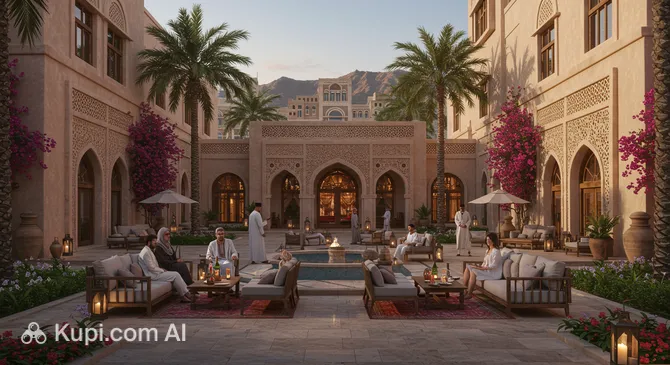
Sanaa is a city of immense beauty and historical depth, often described as an open-air museum that captivates visitors with its unique atmosphere. As the capital of Yemen, Republic Of, it stands as a testament to ancient Arabian civilization and culture. The city is renowned worldwide for its distinct architectural character, defined by towering multi-story houses built from rammed earth and intricately decorated with geometric white patterns that resemble gingerbread houses.
Geographically, the city is situated in a mountain valley at an elevation of over 2,200 meters, which grants it a surprisingly mild and temperate climate throughout the year, distinct from the heat of the coastal regions. With a population of approximately 2.9 million people, it serves as a bustling cultural and economic hub, blending the rhythms of modern life with deep-rooted traditions.
Sanaa. Illustration.
Source: Kupi.com AI
The history of Sanaa spans more than 2,500 years, making it one of the oldest continuously inhabited cities in the world. Visitors are drawn to the Old City, a UNESCO World Heritage site surrounded by ancient clay walls. Key landmarks include the iconic Bab al-Yemen gate, which serves as the majestic entry point to the historic district, and the Great Mosque of Sanaa, considered one of the earliest mosques in Islamic history.
Walking through the winding streets of the city's ancient souks offers a sensory journey filled with the scents of spices and the vibrant colors of local textiles. Sanaa is a destination that promises an unforgettable glimpse into a rich heritage, inviting travelers to discover its timeless charm and the warm hospitality of its people.
Weather Overview
Due to its high elevation, the city enjoys a moderate and temperate climate that is quite distinct from the intense heat often found in the surrounding region. The weather in Sanaa is generally pleasant year-round, characterized by cool mornings and warm, sunny afternoons.
Temperatures remain relatively stable, with June being the warmest month, averaging around 21.1°C and seeing highs of up to 26.8°C. The winter months, particularly December and January, are cooler and drier, with average temperatures dipping to approximately 14°C and nighttime lows reaching 7.8°C. Visitors should be prepared for this variation by packing layers, especially for the chilly evenings.
Precipitation patterns are distinct, with a dry season during the winter and a wetter period in the late summer. August is historically the month with the most frequent rainfall, recording up to 28 wet days, while months like November through February see almost no rain. Overall, you can expect warm summers with frequent showers and cool, dry winters.
Average monthly temperature
Average monthly precipitation
Interesting Facts
Beyond the well-known architectural marvels, Sanaa holds many fascinating secrets that add to its mystique. Uncover some of the lesser-known aspects of this ancient highland capital.
According to local legend, the city was founded by Shem, the son of Noah, shortly after the Great Flood. This mythical origin has earned it the nickname "Sam City," making it a place deeply rooted in folklore and tradition.
Sanaa is often referred to as the world's first "skyscraper city." Its iconic tower houses, some rising up to nine stories, are built entirely from rammed earth and straw. Despite the lack of modern steel or concrete, these architectural wonders have survived for centuries, creating a skyline unlike any other.
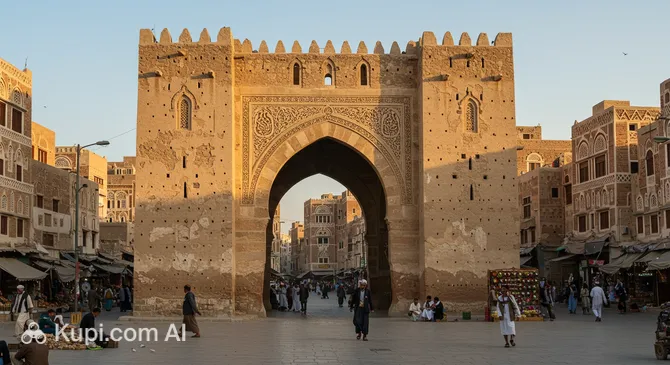
The magnificent Bab al-Yemen is the only survivor of the seven ancient gates that once fortified the city. Historically, this massive wooden gate was closed every evening at sundown, effectively sealing the residents inside and protecting them from the outside world until dawn.
A unique feature of the city's architecture is the qamariya, a semi-circular window found above rectangular ones. These intricate windows are made from gypsum and filled with colored glass, designed to flood the interiors with vibrant, multi-colored light while keeping out the cool mountain air.
Bab al-Yemen. Illustration.
Source: Kupi.com AI
Traveler photos:
How to Get There
Reaching the historic capital requires careful planning, as the journey typically involves arriving at regional hubs before continuing by road. You can find detailed information and all ways to reach the city on our dedicated transport page.
Travelers looking for the nearest geographical entry points often consider airports in the wider region. Jazan Regional Airport (GIZ) in Jazan is located approximately 244 km away. Another nearby option is Najran Airport (EAM) in Najran, situated about 251 km from the capital. Additionally, Aden International Airport (ADE) in Aden serves as a key regional hub, located roughly 293 km from Sanaa. Arranging ground transport from these airports to the city requires specific advance preparation.
For clarity, here is a summary of the main airports:
Sanaa does not have a railway station, and there are no train connections available in the immediate region. Visitors typically complete their journey using road transport. Given the nature of the terrain and logistics, it is highly advisable to check local transport availability and road conditions well in advance.
Main Attractions
Sanaa offers a captivating mix of historical depth and local culture, where ancient traditions meet the daily life of the capital. While the Old City itself is the primary draw for many, there are several specific landmarks and recreational spots that provide a deeper understanding of Yemen's rich heritage and contemporary lifestyle.
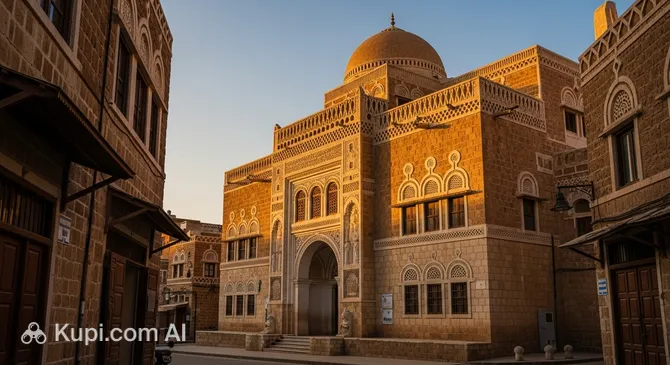
One of the most significant cultural institutions is the National Museum of Yemen. Located in the impressive Dar al-Sada (Palace of Happiness), this museum is a must-visit for history enthusiasts. It houses a vast collection of artifacts that trace the region's history from the ancient South Arabian kingdoms of Saba and Himyar to the Islamic era. Visitors can admire intricate bronze statues, ancient inscriptions, and traditional handicrafts that tell the story of Yemen's civilization.
National Museum of Yemen. Illustration.
Source: Kupi.com AI
Traveler photos:
For those interested in the nation's defense history, the National Military Museum offers a unique perspective. Situated in a historic building near the central area, the museum displays a wide array of weaponry, uniforms, and historical documents. It provides a comprehensive look at the evolution of the military in the region, making it an educational stop for tourists looking to learn more about the country's past.
A prominent landmark in the modern part of the city is Al-Sabeen Square. This vast public space is often the focal point for major national celebrations and events. It is flanked by important government buildings and the magnificent Al-Saleh Mosque, which, although a separate entity, dominates the skyline near the square. Walking here gives visitors a sense of the city's scale and its importance as a political and social hub.
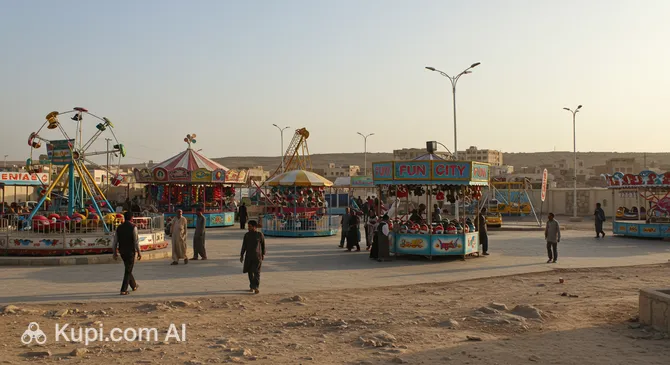
Travelers traveling with family or looking for leisure activities can visit Fun City. As one of the popular amusement parks in the capital, it offers a variety of rides, games, and entertainment options suitable for all ages. It serves as a lively gathering place for locals, providing a relaxed atmosphere where tourists can enjoy a break and observe the joyful side of daily life in Sanaa.
Fun City. Illustration.
Source: Kupi.com AI
Traveler photos:
Local Cuisine
The culinary scene in Sanaa is a reflection of the city's rich history, offering a flavorful journey that is as memorable as its architecture. Yemeni cuisine is known for its distinct use of spices, slow-cooked meats, and communal dining traditions. Lunch is typically the main meal of the day, where families and friends gather to share large platters of food, often sitting on the floor in traditional style.
No visit to the capital is complete without trying Saltah, widely considered the national dish. This bubbling, hearty stew is served in a sizzling stone pot called a madra. It consists of a meat broth base, vegetables, and a dollop of hulba (whipped fenugreek dip) on top. It is traditionally eaten with warm, fresh flatbreads like Malooga or Khobz, which serve as utensils to scoop up the savory mixture.
For meat lovers, dishes like Mandi and Haneeth are essential experiences. These involve lamb or chicken that is slow-roasted, often in underground ovens, until the meat is incredibly tender and falls off the bone, served over a bed of fragrant spiced rice. Another delicacy to look out for is Bint Al-Sahn, a sweet honey cake made of flaky layers of dough topped with nigella seeds and drenched in high-quality local honey. It is often served as a starter or a dessert during special occasions.
When it comes to beverages, the local culture is deeply rooted in coffee and tea traditions rather than alcohol, which is not part of the dining scene in Sanaa. A unique local favorite is Qishr, a hot drink made from coffee husks spiced with ginger, cardamom, and cinnamon. It is lighter than coffee and is consumed socially throughout the day. You will also find excellent Adeni tea, a rich, sweet milk tea infused with cloves and cardamom.
To experience authentic local flavors, visitors can explore various dining establishments scattered across the city. Al Shaibani Restaurant is a well-known name where you can immerse yourself in the traditional atmosphere and enjoy generous portions of classic Yemeni dishes. For those craving grilled specialties, Al Kindi Kebab Restaurant offers succulent skewers and meats prepared with local spices, making it a popular spot for a satisfying evening meal.
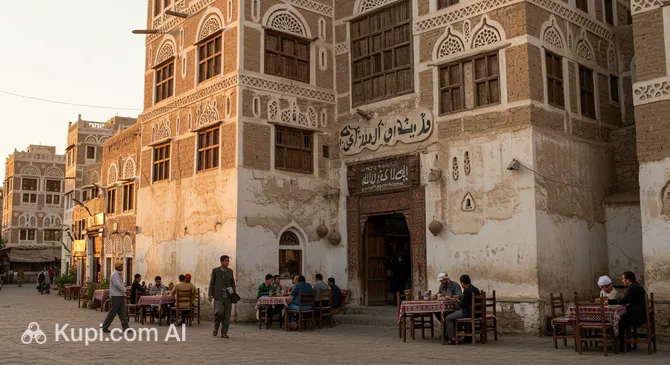
Al Shaibani Restaurant. Illustration.
Source: Kupi.com AI
Traveler photos:
Travel Tips
Visiting Sanaa is a journey into a world of ancient traditions and architectural wonders, but navigating this unique highland capital requires a bit of local know-how. To help you make the most of your trip and respect the local culture, here are some essential practical tips for your stay.
Clothing and Gear: Since Sanaa is located at a high altitude (over 2,200 meters), the weather can be surprisingly cool, especially at night. Bring layers, such as a light jacket or sweater, even in summer. The city is culturally conservative, so modest dress is essential. Men should wear long trousers and avoid shorts, while women should wear loose-fitting clothing that covers the arms and legs, and carrying a headscarf is highly recommended. Comfortable walking shoes are a must for navigating the uneven stone streets of the Old City.
Transportation: There is no modern metro or rail system in the city. The most common way to get around is by dabab (minibuses), which follow specific routes, but these can be confusing for first-time visitors. Taxis are a more convenient option; they are widely available, but you must negotiate and agree on the fare before starting your journey. For a stress-free experience, hiring a car with a local driver for the day is often the best choice.
Finances: Yemen is primarily a cash-based economy. The local currency is the Yemeni Rial (YER). Credit cards are rarely accepted, and international ATMs may not be reliable or available. It is best to bring hard currency (such as USD or EUR) in cash and exchange it at official money exchange bureaus or banks upon arrival. Always carry smaller denominations for small purchases in the souks.
Health and Safety: Due to the high elevation, stay hydrated to avoid altitude sickness and take it easy for the first day. Strictly drink bottled water and avoid tap water or ice in drinks. Pharmacies are available in the city, but it is wise to bring a sufficient supply of any prescription medications you need, along with a basic first-aid kit. Always travel with a reputable local guide who knows the safe routes and areas.
Communication: The official language is Arabic. While some people in the tourism industry may speak English, it is not widely spoken by the general public. Learning a few basic Arabic phrases like "As-salamu alaykum" (Peace be upon you) and "Shukran" (Thank you) will be greatly appreciated. You can purchase a local SIM card (e.g., from Yemen Mobile) at the airport or city shops with your passport to stay connected, though internet speeds can vary.
Local Etiquette: Yemenis are known for their hospitality. If you are invited for tea or a meal, it is polite to accept. Always use your right hand for eating, shaking hands, or giving and receiving money, as the left hand is considered unclean. When greeting locals, a handshake is common among men, but men should not offer to shake hands with a woman unless she initiates it. Remove your shoes before entering a home or a mosque.
What to Avoid: Strictly avoid taking photographs of government buildings, military installations, or security checkpoints. Additionally, never take photos of local women without explicit permission, and always ask men before photographing them. Public displays of affection are culturally inappropriate and should be avoided entirely.
Afternoon Rhythm: Be aware of the daily schedule regarding Qat chewing. Life in the city tends to slow down significantly in the early afternoon (around 2:00 PM) as locals gather for this social tradition. Many shops and businesses may close or operate with reduced staff during these hours, so plan your shopping and errands for the morning or evening.
By keeping these tips in mind, you will be well-prepared to embrace the magic of Sanaa. Respecting local customs will open doors to genuine interactions and ensure your experience in this historic city is both comfortable and unforgettable.
Entertainment & Nightlife
Entertainment and Nightlife:
The concept of nightlife in Sanaa differs significantly from what many international travelers might expect. As a deeply traditional and conservative city, you will not find Western-style nightclubs, bars, or discos here, and the sale and consumption of alcohol are prohibited. Instead, the "nightlife" is centered around vibrant social gatherings, bustling markets, late-night shopping, and the warmth of communal dining. The city comes alive after sunset in its own unique way, offering an atmosphere that is both lively and culturally rich.
The most modern and active district for evening entertainment is the Hadda area. This neighborhood is lined with upscale cafes, restaurants, and shopping centers where locals gather to socialize until late hours. The streets here are illuminated and busy, filled with families and groups of friends enjoying coffee, tea, and sweets. It is the perfect place to experience the contemporary side of the capital, observing the local fashion and enjoying a relaxed, friendly vibe.
Shopping is a major part of the evening culture. Large modern complexes like Sama Mall attract crowds looking for a mix of retail therapy and entertainment. These malls often stay open late and serve as safe, comfortable social hubs where people stroll, eat, and shop. They provide a stark contrast to the ancient souks, offering modern amenities and a variety of international and local brands.
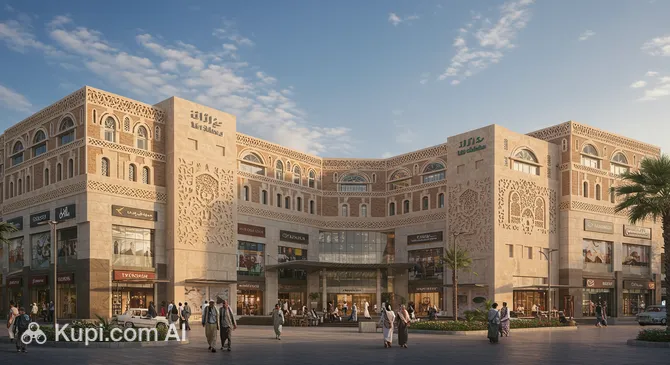
Sama Mall. Illustration.
Source: Kupi.com AI
Traveler photos:
For those seeking activity and fun, particularly if traveling with family or friends, the Magical City Family Entertainment Center is a popular destination. Venues like this are bustling in the evenings, offering rides, arcade games, and a festive environment. It is common to see the city's residents enjoying these spaces well into the night, making it a great spot to mingle and witness the joyful spirit of the local community.
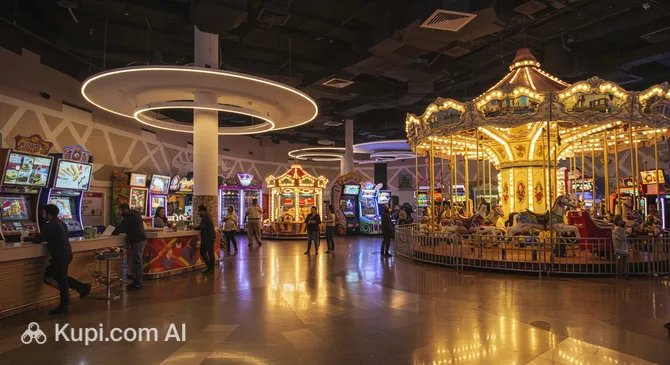
Magical City Family Entertainment Center. Illustration.
Source: Kupi.com AI
Traveler photos:
While there are no dance clubs, the true "party" scene in Sanaa is found in its wedding celebrations, which are elaborate and joyous affairs. Venues such as the Dhu Ridan Hall for Weddings and Events are often illuminated and filled with music and dancing during festivities. While these are private events, the festive atmosphere spills out onto the streets, and the sounds of celebration are a staple of the city's nightscape. If you are fortunate enough to be invited to a local wedding, it is an unparalleled cultural experience.
Practical Advice for the Evening: The best time to head out is after the evening prayer, around 7:00 PM or 8:00 PM. Shops and cafes usually remain open until midnight or later.
Dress Code: Modesty is non-negotiable. Men should wear long trousers, and women must dress conservatively, covering arms, legs, and hair.
Safety and Transport: It is recommended to stick to well-lit, busy areas like Hadda or the main streets of the Old City. Avoid walking alone in dark or deserted alleys. The safest and most convenient way to get around at night is by calling a reputable taxi service or arranging a private driver through your hotel. Avoid hailing random cabs off the street late at night.
During the daytime, entertainment options focus on cultural enrichment. Visitors can explore the city's rich history through its museums or enjoy leisurely walks in public parks. While the nightlife may be quiet by global standards, the evening charm of Sanaa lies in its hospitality, the aroma of spices and coffee in the air, and the illuminated beauty of its gingerbread-style architecture against the night sky.
Parks & Museums
While the architectural grandeur of the Old City often takes center stage, Sanaa also offers refreshing pockets of greenery and vibrant cultural spaces where visitors can unwind. Beyond the major historical institutions, the city's parks and art centers provide a unique window into the local lifestyle, serving as communal hubs for families, artists, and nature lovers.
Hadda Park is a favorite natural escape located in the southwestern district of the capital. Historically a village famous for its fertile orchards, this area has retained its lush character, offering a cool retreat shaded by ancient walnut and almond trees. It is particularly popular on Fridays, when local families gather for picnics to enjoy the fresh air and the scenic contrast between the verdant canopies and the rugged mountain backdrop. It is an ideal spot for a relaxing afternoon walk away from the city's busier streets.
For a more active recreational experience, Al-Thawra Park serves as one of the city's modern green lungs. This expansive public space is designed with paved walking paths, fountains, and open play areas for children, making it a bustling center of activity. It offers a glimpse into the daily rhythm of the residents, who come here to exercise, socialize, and enjoy the outdoors. The park blends traditional landscaping elements with modern amenities, providing a comfortable environment for visitors to observe local life.
Deep within the winding streets of the Old City lies a hidden gem for culture enthusiasts: Samsarat al-Mansurah. This beautifully restored caravanserai has been transformed into a thriving art center and gallery. Unlike a static museum, it offers a "living" cultural experience where you can often see local artists at work, painting or crafting traditional items. The venue itself, with its historic stone arches and courtyard, has hosted travelers for centuries and now serves as a bridge between Yemen's artistic past and present.
While the National Museum of Yemen and the National Military Museum remain the definitive stops for deep historical dives, these parks and artistic venues offer a lighter, more intimate connection to the city's spirit. They provide a perfect counterbalance to a day of sightseeing, allowing travelers to experience the warmth and creativity of Sanaa's people in a relaxed setting.
Getting Around
Navigating the public transport system in Sanaa is an experience that differs significantly from many other capital cities. There is no metro, tram, or railway network available. Instead, the city relies entirely on a road-based system that is informal, bustling, and deeply integrated into the daily life of the locals. For a visitor, understanding how this system works is key to getting around, although it often requires a sense of adventure and a bit of local knowledge.
The backbone of the city's transport is the dhabab, which are small minibuses or vans that ply specific routes throughout the capital. These serve as the primary mode of transit for residents. They do not have official, marked stops in the Western sense; instead, passengers simply wave one down from the side of the road and shout their destination to the driver. If the bus is going that way, it will stop. While they are an incredibly affordable way to travel, they can be crowded and confusing for those who do not speak Arabic or know the city's landmarks.
For tourists, taxis are the most practical and convenient alternative. You will find them in abundance, easily recognizable by their yellow color or taxi signs. Unlike the minibuses, taxis offer a private and direct way to reach your destination. However, they rarely use meters. It is standard practice—and absolutely essential—to negotiate and agree on the fare with the driver before you get into the car. If you are unsure of the correct price, asking a hotel receptionist or a local shopkeeper for an estimate beforehand is a good strategy.
The payment system across all modes of transport in Sanaa is strictly cash-based. There are no travel cards, mobile apps, or electronic passes. You must pay in the local currency, the Yemeni Rial. When taking a dhabab, money is usually passed forward to the driver during the ride or upon exiting. In taxis, payment is made at the end of the journey. It is highly advisable to carry small denominations, as drivers often do not have change for large bills.
Operating hours are generally from early morning until late evening, but public transport frequency drops significantly after dark. For travelers, it is recommended to complete major journeys during daylight hours. Additionally, there are cultural norms to observe: on public transport, it is customary for men to give up their seats to women if the vehicle is full, and unrelated men and women typically do not sit directly next to each other if it can be avoided.
Given the chaotic nature of the traffic and the lack of formal schedules, many visitors find that hiring a private car with a local driver for the day is the most stress-free option. This allows for flexibility and eliminates the language barrier issues associated with hailing street transport. Within the historic Old City, the streets are too narrow for cars, so walking is not only the best alternative but the only way to explore its ancient, winding alleys.
Accommodation
Finding a place to stay in Sanaa is an opportunity to choose between the charm of ancient history and the conveniences of modern living. The accommodation landscape ranges from unique, traditional guesthouses converted from centuries-old tower houses to contemporary hotels offering standard amenities. Whether you prefer the atmospheric immersion of the historic quarters or the comfort of a modern suite, the city provides options to suit different travel styles.
For those seeking an authentic experience, staying within or near the Old City is highly recommended. Here, visitors can sometimes find accommodation in traditional multi-story homes, allowing them to sleep within the UNESCO World Heritage site and wake up to the sound of the call to prayer echoing over the ancient rooftops. Conversely, the Hadda district in the southern part of the city is known for its modern infrastructure. This area is home to many of the capital's larger hotels and resorts, making it a convenient base for those who prioritize modern facilities and easy access to shopping and dining.
Among the notable options in the modern districts is the Narcissus Hotel & Resort Sanaa. This establishment caters to travelers looking for comfort and a range of facilities typical of international standards, offering a relaxing environment after a day of exploration.
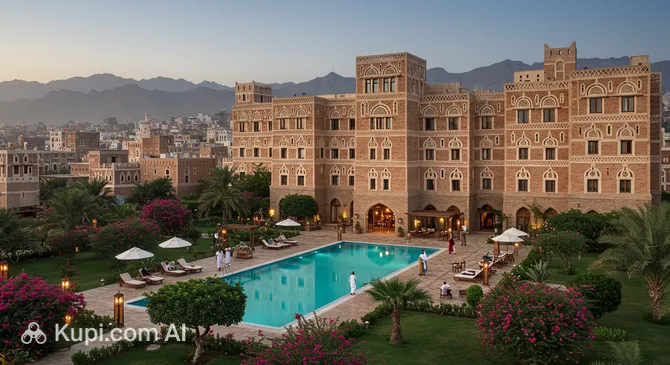
Narcissus Hotel & Resort Sanaa. Illustration.
Source: Kupi.com AI
Traveler photos:
Another prominent choice is the Luluat Haddah Hotel, situated in the vibrant Hadda area. Its location makes it a strategic spot for visitors who wish to explore the nearby shopping centers and enjoy the lively evening atmosphere of the district.
Luluat Haddah Hotel. Illustration.
Source: Kupi.com AI
Traveler photos:
Booking Tip: It is strongly advisable to arrange your accommodation well in advance. Due to the specific local context, relying solely on instant online bookings can sometimes be less reliable than in other destinations. Contacting the hotel directly via phone or email to confirm your reservation and check for current availability is often the best approach.
Price Range and Payment: The city offers options across the budget spectrum, though "luxury" here is defined by local standards. Prices are generally reasonable compared to global capitals. While some mid-range and higher-end hotels may be listed on booking platforms, be prepared to pay in cash (Yemeni Rial or major foreign currencies like USD) upon arrival, as credit card acceptance is very limited throughout the country.
Nearby Cities
For those looking to explore the surroundings, Sanaa serves as an excellent base for day trips to several interesting nearby locations. The central highlands offer a mix of ancient history and stunning natural beauty, allowing travelers to experience the diversity of the country within a short distance of the capital.
Dhamar, located south of Sanaa, is one of the most culturally significant cities in the region. Known for its distinct architecture and long-standing educational heritage, it is home to a historic university and the ancient Great Mosque. A visit here provides a quieter, yet equally enriching, perspective on traditional Yemeni urban life.
For a complete change of scenery, Ibb is a must-visit destination. Often referred to as the "Green City," it is famous for its lush, terraced landscapes and fertile mountains that receive abundant rainfall. The sight of stone villages perched amidst vibrant greenery makes it one of the most photogenic spots in the country.
Another fascinating stop is Amran to the north. This ancient city is enclosed by impressive clay walls and features a well-preserved old town. It offers visitors a chance to see a traditional fortified settlement that has stood the test of time, complete with bustling markets and historic charm.
City
Population
Distance
Rawdah
—
8 km
Raydah
13 971
54 km
Mabar
24 707
63 km
Al Mahwit
10 593
72 km
Hajjah
46 568
75 km
These nearby destinations offer a glimpse into the diverse culture and landscapes of the region. From the green mountains of Ibb to the historic walls of Amran, each location tells a unique part of Yemen's story.
Shopping & Souvenirs
Shopping:
Shopping in Sanaa is a vibrant experience that perfectly illustrates the city's blend of ancient traditions and modern development. Visitors can transition from wandering through centuries-old marketplaces, where the air is thick with the scent of spices, to browsing contemporary boutiques in air-conditioned malls. Whether you are looking for unique handicrafts or standard international goods, the city offers a diverse retail landscape that caters to various tastes and needs.
For those seeking a modern shopping environment, the Hadda district is the place to be. This upscale area is lined with fashionable clothing stores, electronics shops, and supermarkets. It serves as the commercial heart of the modern city, where you can find everything from designer brands to daily necessities. In contrast, the Old City offers a completely different atmosphere, characterized by narrow, bustling alleyways filled with small, specialized shops that have been operating in the same manner for generations.
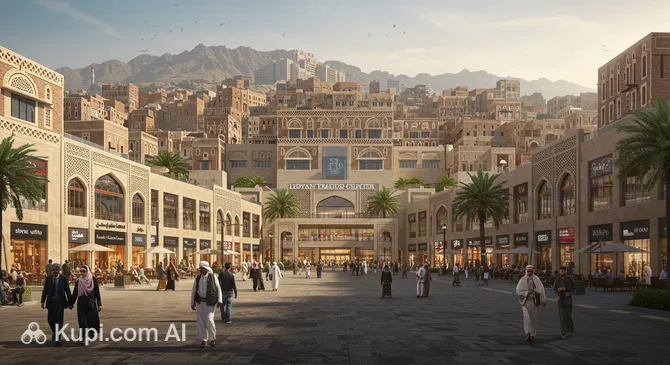
Among the prominent modern shopping destinations is the Libyan Trade Center. This complex is well-known among locals and offers a variety of retail outlets, making it a convenient stop for travelers looking for clothing, accessories, or household items in a comfortable setting. Another major venue is Sama Mall, which combines shopping with entertainment options, providing a comprehensive leisure experience for families and tourists alike.
Libyan Trade Center. Illustration.
Source: Kupi.com AI
Traveler photos:
The true soul of shopping in Sanaa, however, lies in its traditional markets, or souks. The most famous entry point to this historic commercial zone is the iconic Bab al-Yemen. Passing through this gate, you enter Souk Al-Milh (Salt Market), a labyrinth of stalls that is arguably one of the most atmospheric markets in the Arabian Peninsula. Here, the market is divided into specialized sections for different goods, including spices, grains, raisins, and textiles. It is a sensory overload in the best possible way, offering a glimpse into the timeless commerce of the region.
When it comes to souvenirs, Sanaa offers high-quality local craftsmanship. Yemeni silver jewelry is world-renowned, particularly the intricate Bedouin designs and pieces featuring agate stones. Another popular purchase is Sidr honey, considered some of the finest in the world. For a taste of the local culture, visitors often buy bags of aromatic Yemeni coffee or mixed spices (hawaij). The traditional curved dagger, known as the Jambiya, is also a famous symbol of the culture; while authentic antique ones are expensive, high-quality replicas make for striking decorative pieces.
Store opening hours in the city can be unique. Shops typically open around 8:00 AM or 9:00 AM, but many close for a long break in the afternoon, roughly from 1:00 PM to 4:00 PM, for lunch and the daily qat chew. They reopen in the late afternoon and stay open until 9:00 PM or later. Cash is the primary method of payment everywhere. While some large hotels or modern malls might accept credit cards, it is rare. You should always carry sufficient local currency (Yemeni Rial) for your purchases, especially in the souks where bargaining is part of the experience. Tax-free shopping schemes for tourists are not generally available, so the price you negotiate or see is the final price.