Khasab

About

Khasab is a picturesque administrative center of the Musandam province and a true oasis of adventure in the north of the Arabian Peninsula. This city is often called the "Norway of Arabia" due to its unique landscape, where rugged mountains meet the turquoise waters of the Persian Gulf, forming winding fjords of incredible beauty.

The uniqueness of Khasab lies in its geographical position: it is located in an exclave of the Sultanate of Oman, which is separated from the main part of the country by the territory of the United Arab Emirates. With a population of about 17,777 people, the city maintains a cozy, intimate atmosphere, free from the noise and bustle of major metropolises. Although the climate here is hot and desert-like, the sea breeze and mountain terrain create comfortable conditions for relaxing by the water.
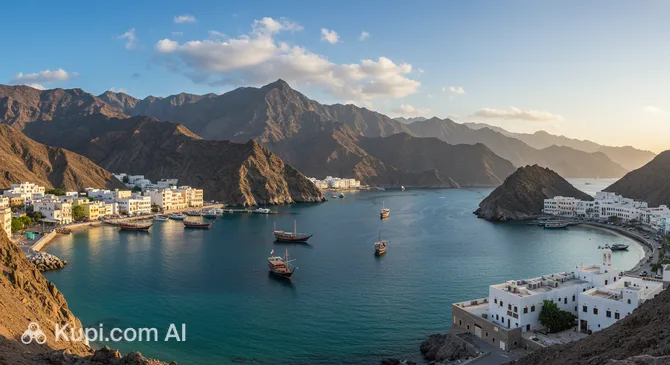
Khasab. Illustration.
Source: Kupi.com AI

Despite its compact size, the city has deep roots. Its strategic location at the Strait of Hormuz has attracted seafarers and traders for centuries, shaping the rich history of Khasab. The main evidence of the past is the old fortress, now converted into a museum, where you can get acquainted with the culture and traditions of the region.

However, the main point of attraction for travelers remains nature. Khasab serves as a starting point for exciting sea cruises on traditional dhow boats. People come here to explore secluded bays, go snorkeling in crystal clear waters, and watch dolphins, which often accompany tourist vessels. It is an ideal place for those looking for tranquility, Oriental hospitality, and spectacular natural panoramas.
Weather Overview

Khasab's climate is characterized as hot and arid, which is typical for this region of the Arabian Peninsula. Summer here is truly sweltering: from June to September, the average temperature stays around +32…+33°C, and maximum values often reach +35°C. During this period, rains are completely absent, and the sun shines almost constantly, making the summer months a challenge for unprepared tourists.

The winter season, in contrast, offers ideal conditions for relaxation and excursions. From December to February, the air warms up to a comfortable +20…+22°C, and nights bring pleasant freshness with temperatures around +18°C. Precipitation falls extremely rarely, mainly in January and December, when 3 to 4 wet days are recorded with a minimum amount of moisture.

Expect a very hot sunny summer without precipitation and a mild, warm winter with rare short rains. To plan the ideal time for a fjord cruise or city walks, we recommend checking the weather in Khasab by month in advance. Transitional seasons, such as November (+25°C) and March (+22.7°C), are also considered favorable times for a visit.

Average monthly temperature

Average monthly precipitation

Interesting Facts

Beyond its famous landscapes, Khasab hides surprising details that make it unique even by the standards of colorful Oman. Here are a few facts that reveal the character of this unusual city:
  • Cultural Crossroads. Unlike most Omani cities, Khasab has experienced strong influence from neighboring countries for centuries due to its location near the strait. Arabic, Iranian, and Indian traditions are wonderfully intertwined here, which is clearly reflected in the local architecture, cuisine, and way of life, creating a unique atmosphere of a multicultural port.

  • Tropical "Norway". The city is often called the "gateway to Musandam" and compared to Scandinavia due to its majestic bays. However, an amazing contrast awaits travelers here: instead of northern pines, date palms adorn the cliffs, and instead of cold waters, there is a warm ocean that can be enjoyed during an excursion through the Musandam fjords.

  • Guardian of Trade Routes. The historical Khasab Fort was built by the Portuguese in the 17th century not for beauty, but for strict control over strategically important trade routes in the Persian Gulf. Today, the former military bastion has turned into a peaceful museum with a collection of antique weapons and boats.

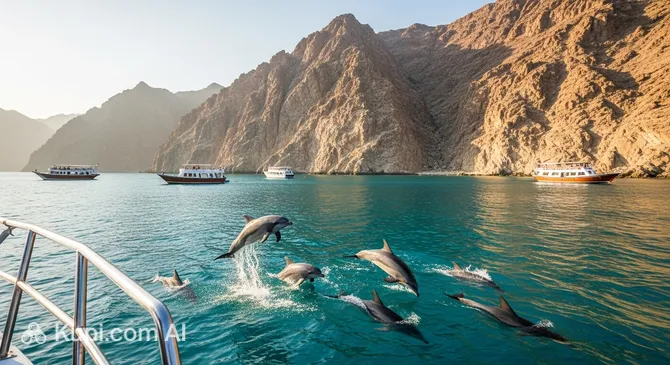
  • Dolphin Escort. The local waters are unique in that the dolphins living here show extraordinary curiosity toward vessels. Often, dolphin watching in Khasab turns into a real show: pods of animals accompany tourist boats, jumping out of the water in sync right along the course.

Khasab Dolphin Watching. Illustration.
Source: Kupi.com AI

Traveller photos:

How to Get There

When planning a trip to this picturesque Omani exclave, it is important to consider its unique geographical location. Since the city is separated from the main territory of the country, logistics can be an interesting adventure. You can explore all possible routes and nuances on the page: more on how to get to Khasab.

Many travelers choose to fly into the neighboring United Arab Emirates, from where they reach Khasab by land. One of the nearest hubs is Ras Al Khaimah International Airport (IATA: RKT). It is located not in Khasab itself, but in the neighboring emirate of Ras Al Khaimah (UAE), about 70 km from the city. A car trip from there will take about 1.5–2 hours, including border crossing. This is a convenient option for those who want to enjoy the scenic road along the coast.

Another popular option is flying into Sharjah International Airport (IATA: SHJ). This is a large aviation hub with high passenger traffic, located in the city of Sharjah (UAE), approximately 120 km from Khasab. The journey by taxi or rental car will take about 2–2.5 hours. This route also requires crossing the state border between the UAE and Oman, so check visa rules in advance.

For clarity, here is a summary of the main airports located in relative proximity to the region:

AirportPassenger trafficDistance
Khasab Airport50,0002 km
Ras Al Khaimah International Airport661,76570 km
Dayrestan Airport517,09772 km
Bandar Abbas International Airport1.3 m115 km
Al-Fujairah International175,000119 km
Sharjah International Airport17.1 m120 km

There is no rail connection to Khasab, so trains are not an option for traveling to this region. The main alternative to the road route from the UAE is internal Omani transport. The fastest way is a direct flight by Oman Air from the country's capital, Muscat, to the local Khasab Airport (KHS). The flight takes about an hour and offers stunning views of the fjords from the air.

Sea travel is also popular. High-speed ferries from the National Ferry Company (NFC) regularly run between the ports of Shinas (on the border with the UAE) or Muscat and the port of Khasab. This journey allows you not only to reach your destination but also to enjoy the seascapes, avoiding the need for transit visas through the Emirates if you are already in Oman.

Main Attractions

Khasab's greatest wealth is its incredible nature and distinctive history. The city is not overloaded with typical tourist attractions, but those that are here leave an indelible impression with their authenticity and beauty. A trip here is a chance to see a "different" Oman, where mountains meet the sea.

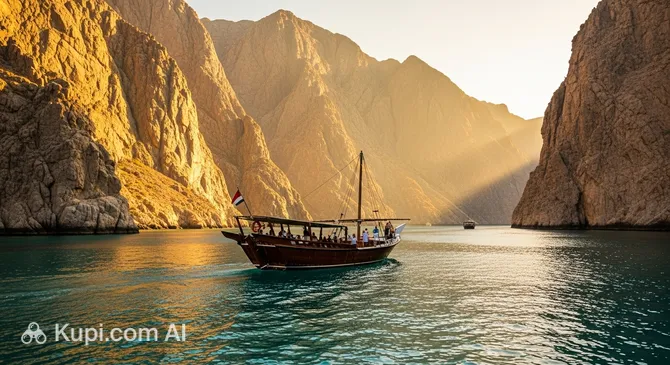
The absolute hallmark of the region is the famous "Arabian fjords." Excursions through the Musandam fjords attract thousands of tourists from all over the world. A journey on a traditional wooden dhow boat through winding bays with turquoise water allows you to enjoy the silence and majestic landscapes of steep cliffs. During such trips, stops are often made for swimming and snorkeling, as the underwater world here is rich and diverse.

Musandam Fjord Tours. Illustration.
Source: Kupi.com AI

Traveller photos:

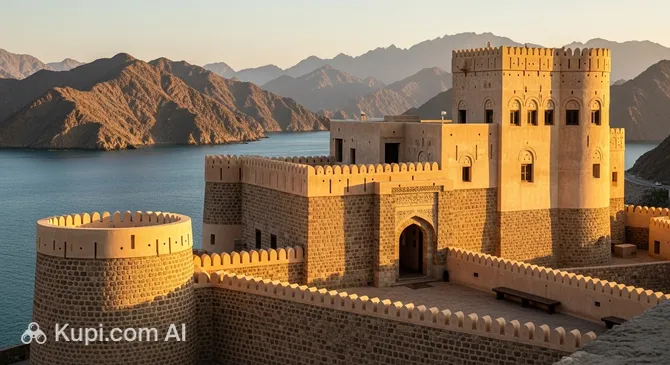
For an immersion into the historical context, it is worth visiting Khasab Fort. This fort, built by the Portuguese in the 17th century on the site of an even older structure, has been turned into an excellent local history museum today. Inside the fortress walls, you will find an exhibition telling about the life of Omanis: from traditional jewelry and clothing to a collection of antique weapons and boat models. The central tower of the fortress serves as a wonderful observation deck with a view of the harbor.

Khasab Castle. Illustration.
Source: Kupi.com AI

Traveller photos:

Wildlife lovers should definitely go dolphin watching in Khasab. The waters of Musandam are home to humpback dolphins, known for their playful nature and love for accompanying tourist vessels. Unlike in aquariums, here you see animals in their natural habitat, where they frolic freely in the waves, which causes genuine delight in both adults and children.

Local Cuisine

Khasab's gastronomic scene is inextricably linked to the sea, and it is here that you can try perhaps the freshest seafood in all of Oman. The hallmark of the local cuisine is fish caught in the morning in the waters of the Persian Gulf and grilled with traditional Oriental spices. Be sure to order a seafood platter: king prawns, squid, and local crabs here are distinguished by their delicate taste and affordable price.

Besides marine delicacies, the region's cuisine is rich in hearty meat dishes. Popular options include meat baked in a tandoor or over an open fire, served with a large portion of aromatic rice. For dessert, try "muhallabia" — a delicate milk pudding generously flavored with rose water and sprinkled with crushed nuts. This light sweet dish is a perfect end to a meal on a hot day.

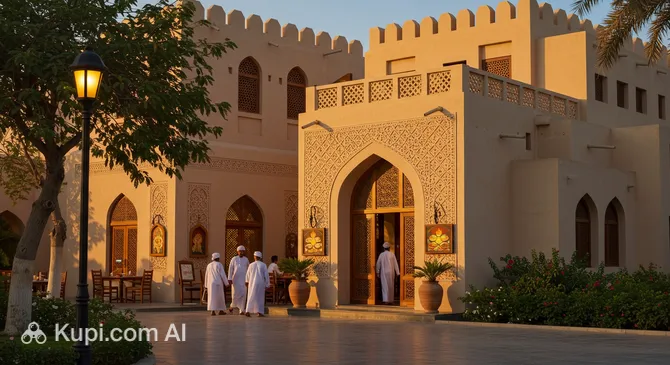
Aroos Musandam Restaurant. Illustration.
Source: Kupi.com AI

Traveller photos:

As for drinks, the main symbol of hospitality remains "kahwa" — strong Omani coffee with cardamom, which is usually drunk with dates or halwa. Sweet "karak" tea with milk and spices is also popular. It is important for tourists to remember that this is a Muslim country with strict rules regarding alcohol. Spirits are not sold in regular stores or city cafes; they can only be found in bars at major international hotels.

The food culture in Khasab is characterized by simplicity and authenticity. There are no pretentious fine-dining establishments, but there are many cozy places that cook delicious home-style food. Locals often dine in small cafes or buy snacks directly at the market. If you are looking for a reliable place for dinner, we recommend checking out Arus Musandam Restaurant, known for its seafood selection, or visiting Amjad Restaurant, where you can appreciate the local culinary flavor in a calm setting.

Travel Tips

Traveling to Khasab is an immersion into a world of rugged fjords and Oriental hospitality, which will be much more comfortable if you know the local nuances in advance. To ensure your holiday in the "Norway of Arabia" leaves only pleasant memories, we have prepared a list of useful recommendations relevant specifically to this secluded region.

  1. Clothing and Dress Code. Oman is a country with conservative traditions. Even in the heat, tourists are recommended to wear clothing that covers shoulders and knees, especially when visiting the city and markets. Prefer light natural fabrics (cotton, linen). Important: swimwear is appropriate only on hotel premises or during boat trips, but not on public beaches.

  2. Transport Nuances. In Khasab, there is no usual public transport (buses or minibuses) at all. To get around, you will have to use taxis, which often don't have meters — always agree on the price before the start of the trip. If you want to explore mountain routes, the best solution would be to rent an SUV.

  3. Finances and Currency. The official currency is the Omani Rial (OMR), but due to its proximity to the border, many merchants and taxi drivers unofficially accept UAE Dirhams (though the exchange rate may be unfavorable). Bank cards work in supermarkets and hotels, but at the market and in small shops, cash is mandatory. Tips are not included in the bill but are welcome (about 10%).

  4. Health and Safety. Khasab is a very safe city with a low crime rate. The main threat here is the sun: be sure to wear a hat, use cream with high SPF, and drink plenty of water. Pharmacies are available in the city center, but it's better to bring specific medications with you.

  5. Communication. The official language is Arabic, but thanks to tourism, English is understood almost everywhere: in hotels, restaurants, and the port. For mobile internet, it is most profitable to buy a local SIM card (Omantel or Ooredoo) immediately upon arrival at the airport or at the border, as roaming can be expensive.

  6. Etiquette Rules. When greeting locals, you can use the phrase "As-salamu alaykum." If you are invited to a home or offered coffee, accept the cup and food with your right hand only. It is strictly forbidden to photograph local women without permission, and men should be politely asked before filming.

  7. What to Avoid. Strictly avoid consuming alcohol in public places (street, beach, waterfront) — this is a violation of the law. Alcohol is only available in bars at licensed hotels. Also, refrain from public displays of affection (kissing and hugging) so as not to offend the feelings of locals.

  8. Planning Tip. Note that Friday and Saturday are official weekends in Oman. On Friday until noon (the time of the main prayer), many shops and the market may be closed, and life in the city comes to a standstill. Plan your shopping and bank visits for other days or for the evening.

Following these simple rules will help you easily find a common language with the locals and avoid awkward situations. Khasab is an incredibly welcoming city, and by showing respect for its way of life, you will receive sincere hospitality and unforgettable impressions from your trip in return.

Entertainment & Nightlife

Entertainment in Khasab is not about noisy parties, neon signs, and nightclubs. This city offers a completely different format of leisure, based on union with nature, silence, and active exploration of the unique landscapes of the Arabian Peninsula. The main "stage" here is the majestic fjords and rocky mountains, and the best shows are put on by the inhabitants of the deep sea in their natural environment.

The primary adventure for any guest is going out to sea. Traditional Omani dhow boats, decorated with carpets and cushions, depart daily for excursions through the Musandam fjords. This is a relaxing journey where you can snorkel in crystal clear waters, see coral reefs, and simply enjoy the majestic views of steep cliffs. An integral part of such a trip is dolphin watching. These intelligent animals often swim alongside the boat, playing in the waves, which delights both children and adults.

Musandam Fjord Tours. Illustration.
Source: Kupi.com AI

Traveller photos:

For those who prefer solid ground under their feet, the region offers exciting jeep safaris. A trip in an SUV to the top of Jebel Harim ("Mountain of Women"), the highest point in Musandam (2,087 m), provides incredible panoramic views. Along the way, travelers can see ancient fossils of marine life dating back millions of years and mysterious petroglyphs in the village of Tawi. Romance and adventure seekers often choose camping on wild beaches to watch the sunrise far from civilization.

Evening life in the city flows in a measured and calm pace. There are no discos here, and alcohol is only available in bars at several large hotels, for example, at Musandam Resort. Locals and tourists love to spend time walking along the waterfront or dining in colorful establishments. Try fresh seafood at Arus Musandam Restaurant or visit Amjad Restaurant to appreciate the local hospitality. The nights in Khasab are dark and clear, making them ideal for gazing at the starry sky in complete silence.

Parks & Museums

Although Khasab is a city surrounded by rugged cliffs and the sea, it offers travelers unique opportunities to get acquainted with local nature and rich historical heritage. You won't find the usual European gardens with lawns here, but urban natural areas and museums located in ancient forts allow for a deep immersion into the atmosphere of the "Norway of Arabia."

Natural Parks and Recreation Areas

Instead of traditional city parks, Khasab is proud of its natural recreational zones, which come to life in the cooler months.

Al Khalidiya Park. This is not an ordinary park, but a picturesque natural valley located about 20 kilometers from the city center. It is known for its sprawling acacia trees and green meadows that appear after the winter rains. It is a favorite spot for locals for family picnics and barbecues on weekends. Silence reigns here, broken only by the singing of birds, and the surrounding mountains create a cozy, sheltered atmosphere.

Bassa Beach. This coastal strip serves as the main city "park" by the water. The beach is within walking distance of the center and is equipped with shelters, toilets, and changing areas. It is one of the few places in the city with a sandy entry into the sea. Tourists and locals come here to camp, swim in the warm waters of the bay, or simply walk along the shore at sunset, enjoying the view of the dhow boats.

Museums and Cultural Centers

The cultural heart of the city beats in its historical fortifications, which have been carefully restored and turned into educational museums.

The main cultural attraction is Khasab Fort. This majestic fort, built by the Portuguese in the 17th century, is now a full-fledged open-air ethnographic museum. Inside the powerful walls are exhibitions that detail the daily life of the inhabitants of the Musandam Peninsula in past centuries. You can see a traditional "summer kitchen" (Arish), built from palm leaves, which is surprisingly cool even in the heat, as well as visit the Wali's (governor's) tower and rooms for studying the Quran.

Khasab Castle. Illustration.
Source: Kupi.com AI

Traveller photos:

Bukha Fort Museum. Although this site is located in the neighboring town of Bukha (about 30 km from Khasab), it is an integral part of the region's cultural route. The fort is situated on a picturesque cape and also functions as a museum. Its exhibition is smaller than the one in Khasab, but the building itself and the views of the sea and mountains from the fortress walls make it an important point for history and architecture enthusiasts.

Insider tip: If you want to see real history not limited by museum display cases, head to the Old Souq area early in the morning. The atmosphere of a trading port has been preserved here, where merchants from Iran and Oman have exchanged goods for centuries. And on the way to Al Khalidiya Park, pay attention to the ancient petroglyphs on the rocks in the village of Tawi — this is a real open-air museum created by history itself.

Getting Around

The public transport system in Khasab differs significantly from what residents of metropolises are used to. Since it is a small and compact city, there are no metros, trams, trolleybuses, or even regular city bus routes. Tourists won't have to figure out complex route maps or buy travel cards — all logistics here are arranged much more simply.

The main and practically only form of public transport is taxis. They are easily recognizable by their characteristic colors: usually white cars with orange fenders or stripes. Taxis can be found at special ranks near the port, airport, and major hotels, or simply hailed on the street. This is a reliable way to get to any point in the city or nearby attractions.

Important to know that in local taxis, meters are often absent or not used. The cost of a trip is fixed for certain routes or negotiable. Therefore, the main rule for a tourist: always agree on the price with the driver before getting into the car. Bargaining is appropriate, but within reasonable limits.

The payment system is as conservative as possible. Contactless transport cards or mobile apps for payment do not work here. Payment is made only in cash in the local currency (Omani Rials). Drivers rarely have change for large bills, so it is highly recommended to exchange money in advance and carry small banknotes and coins.

Given the region's specifics, the most popular alternative to public transport is renting a car. This is the most convenient option for those who want to explore the surroundings, go to the mountains, or remote beaches without depending on taxi drivers. Rental points are available at the airport and in the city center. The roads in Khasab and the surrounding area are of excellent quality, and the traffic is calm.

To travel between the hotel and the port, where fjord cruises depart, many tourists use transfers provided by the hotels themselves or tour companies. The city center, where the market and fortress are located, can easily be explored on foot, but weather conditions should be considered: in hot months, long walks can be tiring.

Accommodation

The choice of accommodation in Khasab, despite its status as the tourism center of Musandam, is quite limited, which is explained by the compact size of the city. You won't find an endless succession of skyscrapers or dozens of global chains here; however, the available options cover the basic needs of travelers. Tourists can choose from comfortable resorts with pools and sea views, as well as more budget-friendly city hotels or apartments suitable for large groups and independent travelers.

The most prestigious and convenient area for staying is the coastal zone near the port and the old part of the city. By staying here, you will be within walking distance of the dhow cruise departure points and main historical attractions. This is especially relevant for those who came for sea trips through the fjords.

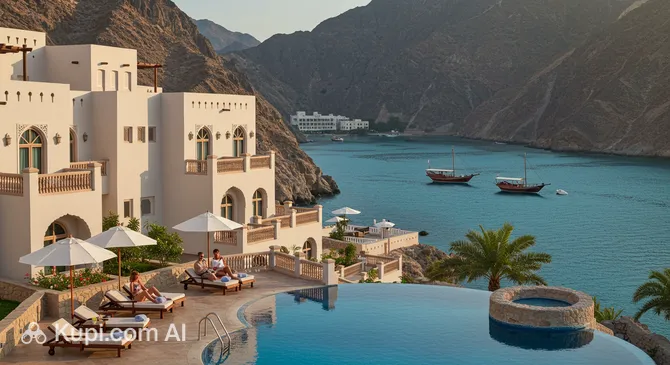
Musandam Resort. Illustration.
Source: Kupi.com AI

Traveller photos:

If you are looking for comfort and a high level of service, you should pay attention to Musandam Resort. This is one of the flagship hotels in the region, offering guests not only cozy rooms but also developed infrastructure with restaurants and relaxation areas. Such places are ideal for relaxing after a busy day in nature, enjoying the panorama of rocky mountains and the bay.

Booking tip: Khasab is a popular weekend destination for residents of the neighboring UAE and Oman itself. Therefore, on Friday and Saturday, as well as during public holidays and the winter season (from October to April), rooms in good hotels run out very quickly. It is highly recommended to book accommodation in advance, at least a couple of weeks before the trip.

The price range varies from medium to high, especially in resort hotels. Budget options are more often represented by simple city hotels without frills or apartment rentals. Booking is available through popular international online platforms; however, some small apartments may require direct contact or searching on the spot, although for peace of mind it is better to arrange accommodation remotely.

Nearby Cities

For those who want to explore the surroundings, Khasab serves as an excellent starting point for day trips to several interesting nearby places:

Bukha. This charming coastal town is located about 30 km west of Khasab. The road to it runs along one of the most scenic routes in the region, winding along the coastline between the sea and the cliffs. The main attraction here is the historical Bukha Fort, which offers a panoramic view of the bay. It is an ideal place for a peaceful walk and a picnic on the beach.

Kumzar. A unique isolated village at the northernmost tip of the Musandam Peninsula, which can only be reached by boat. The journey by water takes about an hour and is an adventure in itself with views of the majestic fjords. Kumzar is interesting for its distinctive culture and its own language, which is a mix of Arabic, Farsi, and other dialects. This place allows you to see the life of a fishing community, virtually untouched by modernity.

Jebel Harim. Although it is not a city but the "Mountain of Women," a trip here is a popular one-day route. It is the highest point in Musandam (2,087 m). A journey by SUV along mountain serpentines will lead you to observation decks with breathtaking views, and along the way, you can see ancient petroglyphs and fossils.

CityPopulationDistance
Ras Al Khaimah115,94950 km
Dibba Al Fujairah26,40065 km
Al Jazirah Al Hamra10,19069 km
Qeshm40,67878 km
Dargahan14,52588 km

These nearby destinations provide insight into the diverse culture and landscapes of the region. While a trip to distant major cities in Oman would require flight planning or a long transfer, exploring the local settlements of Musandam will provide vivid emotions in just one day.

Shopping & Souvenirs

Shopping in Khasab is fundamentally different from what the neighboring UAE metropolises offer. Here, you won't find huge shopping malls with luxury brands and endless fashion boutiques. Instead, the city offers an immersion into the atmosphere of traditional Arabic trade, where the focus is on authenticity, local crafts, and household items. This is an ideal place for those looking for unique souvenirs with a history, rather than mass-market goods.

The main shopping areas are concentrated in the central part of the city. The main shops and stalls are located along the central streets, near the port and administrative buildings. A walk through these blocks allows you to see the daily life of Omanis: they sell everything here, from fabrics and spices to electronics and household goods. The atmosphere here is calm and measured, without the pushiness typical of many tourist markets in the East.

If you need familiar groceries, cosmetics, or essentials, you should head to Lulu Hypermarket. This is the largest and most popular shopping center in the city, which essentially replaces classic malls for the locals. Here you can buy fresh fruit, Omani sweets in factory packaging, clothing, and even electronics at fixed prices. It is also a great place to restock before a trip to the mountains or the beach.

The true flavor of Khasab is revealed in its markets. Be sure to visit the Old Souq, where time seems to have stopped. It sells handicrafts, ceramics, and traditional goods. Near the harbor is the famous Fish Market. Even if you don't plan to buy fish, it's worth coming here in the morning to see the catch of the day and watch the lively bidding, which is an important part of the local culture.

As souvenirs from Khasab, it is worth bringing back items that reflect the spirit of Musandam province. The main symbol of the region is the "jerz" (Jerz), a small traditional axe on a long handle that local men still use as a walking stick and accessory. Local pottery and palm leaf products are also popular. Don't forget about culinary gifts: Omani dates, halwa, and spices, which can be found both in the market and in shops near historical sites, such as near Khasab Fort.

When planning your shopping, consider the opening hours. Most small shops and market stalls close for a midday break (siesta) from approximately 1:00 PM to 4:00 PM or 5:00 PM, but stay open late — until 10:00 PM or 11:00 PM. Large supermarkets like Lulu usually operate without breaks from morning until night. On Friday, the holy day for Muslims, many shops open only after the afternoon prayer, around 2:00 PM or 4:00 PM.

As for payment, international bank cards are readily accepted in large supermarkets and hotels. However, at the market, in souvenir shops, and small stores, it is preferable to pay in cash Omani Rials (OMR). UAE Dirhams are also often accepted for payment, but the exchange rate may not be the most favorable. The Tax Free system (VAT refund) exists in Oman, but in small shops in Khasab, it can be problematic to process, so it's better not to count on a tax refund for small purchases.

Reached the bottom of the page?

Looks like you know this route inside out

We use cookies and services to collect user information. This is essential for the functioning of the site and for marketing purposes. You can find out more in .