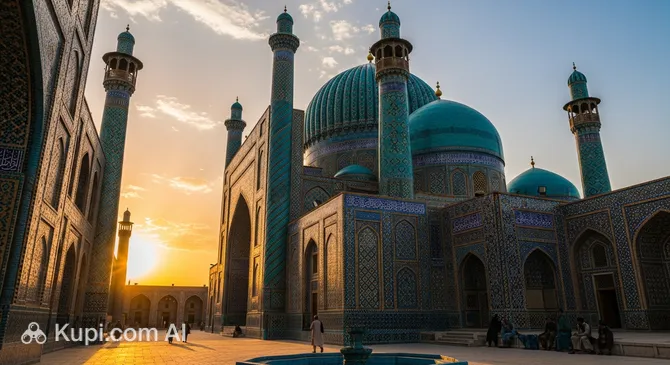
The majestic Great Mosque of Herat, often called the Jami Masjid or the Blue Mosque, is one of the most significant architectural treasures that Afghanistan is proud of. This masterpiece of Islamic architecture, located in the ancient city of Herat, represents a unique blend of spiritual harmony and flawless artistic execution.
Friday Mosque of Herat. Illustration.
Source: Kupi.com AI
Traveller photos:
The main feature of the mosque is its walls, lined with glazed tiles of a rich azure-blue color. Intricate geometric and floral patterns cover almost every centimeter of the surface, creating the effect of a precious jewel box under the open sky. Turquoise domes and soaring minarets make the building's silhouette recognizable and majestic.
Beyond its religious role, the complex serves as an important cultural center. The mosque's courtyards and shaded gardens create an atmosphere of peace, attracting both pilgrims and travelers wishing to touch the centuries-old heritage of Central Asia.
Contacts
To plan a visit to this grand architectural ensemble, it is useful to familiarize yourself with its location beforehand. The Great Mosque of Herat is located in the central part of the city, and it is easy to find by its distinctive appearance and bright domes. Below is the essential contact information for orientation on-site.
The main reason to come here is to contemplate the stunning Islamic architecture. You can spend considerable time examining the endless patterns on the walls and arched vaults, which symbolize infinity and divine harmony. A stroll through the spacious courtyards will allow you to fully experience the scale of this structure and enjoy its symmetry.
The mosque is a living center of spiritual life, where you can meet local scholars, students, and Sufis. Observing daily rituals and immersing yourself in the atmosphere of sincere devotion provides a unique cultural experience. The complex's inner gardens are the perfect place for quiet reflection and a break from the city bustle.
It is important for visitors to respect local traditions: shoes must be removed before entering, and women should wear a headscarf. Photography is permitted here, and the azure walls of the mosque, combined with the play of sunlight, provide a magnificent backdrop for photos capturing the spirit of the ancient East.
Getting There
The Great Mosque is located in the very heart of the city's historic center on Sherafat Rd. Thanks to its monumental forms and bright azure domes, it serves as an excellent landmark and is visible from many points in the city. If you are in the central area, the mosque can be easily reached on foot, allowing you to enjoy the atmosphere of the old streets.
For those traveling from other areas, the most convenient and fastest way is by taxi. A trip from Herat Airport to the mosque will take only about 10–15 minutes. Local drivers know the place perfectly, so there will be no problems finding the way.
You can also use local public transport, but tourists are more often recommended to take a taxi for comfort and ease of navigation in the dense layout of the old city. It is recommended to use navigation apps to orient yourself more accurately among the colorful but sometimes confusing alleys.
Nearest city: Herat
History & Facts
The history of this sacred place is full of dramatic events and periods of great revival. The original mosque building was almost completely destroyed in 1220 during the devastating Mongol invasion. After that, the shrine remained in the shadows for centuries, waiting for its hour to regain its former glory.
A new era for the mosque began in the 15th century when Sultan Husayn Mirza Bayqara, a ruler from the Timurid dynasty, decided to restore the complex. He invited outstanding masters from Herat, Samarkand, and Bukhara. It was during this period that the unique architectural style, dominated by turquoise and azure hues, was formed, becoming a symbol of the flowering of Islamic art in Central Asia.
The great poet and statesman Alisher Navoi played a special role in the mosque's destiny. At the very end of the 15th century, he personally participated in the restoration and decoration of the site, striving to bring its appearance to perfection. Thanks to the work of many generations of architects and the support of patrons, the mosque has preserved its harmonious proportions and exquisite decor to this day.
Time Needed
To fully appreciate the grandeur of the architecture and leisurely examine all the mosaic details, most visitors need 1 to 2 hours. This time is quite sufficient for walking through the courtyards, inspecting the minarets, and contemplating the interiors of the main hall.
If you plan on taking photographs or want to linger longer in the complex's shaded gardens, enjoying the atmosphere of tranquility, it is worth dedicating half a day to the visit. The morning hours are particularly good for a visit, as the light highlights the brilliance of the azure tiles most advantageously.
Working Hours
The mosque is usually open to visitors daily, from early morning until sunset. According to available data, most days the operating schedule is set from 06:00 to 18:00. However, it should be noted that on Friday and Saturday, access may be restricted due to festive services and weekend days.
Since the exact schedule may change depending on the religious calendar and time of year, visitors are advised to check current information on the official website or with local guides immediately before their visit.
Day
Opening hours
Monday
06:00–18:00
Tuesday
06:30–17:30
Wednesday
06:00–18:00
Thursday
06:00–17:00
Friday
Закрыто
Saturday
Закрыто
Sunday
06:00–18:00
Nearby
The location of the main mosque in the heart of the city allows travelers to easily combine their visit with a tour of other historical monuments. Exploring the surrounding area significantly enriches the overall impression of the trip, revealing different facets of ancient Herat.
Nearby are both ancient fortifications and modern recreational areas, creating an interesting contrast between the city's past and present.