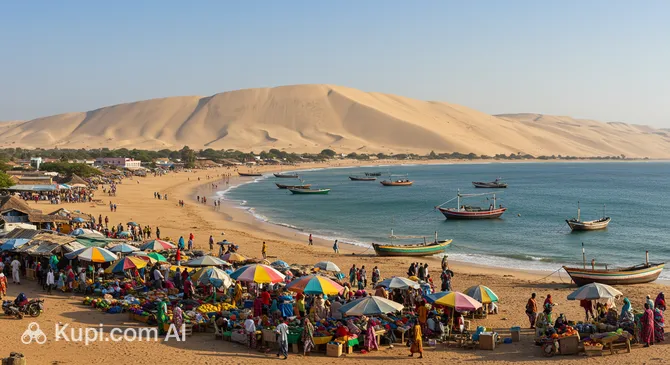
Shopping in Namibe offers a distinctively local experience that contrasts sharply with the high-end commercial hubs found in larger capital cities. Rather than sprawling luxury malls, the city provides a mix of practical modern supermarkets, small street-side boutiques, and vibrant open-air markets that are the true heart of local commerce. For tourists, the appeal lies not in international fashion brands, but in discovering authentic Angolan products, fresh produce from the fertile oases, and unique handicrafts that reflect the rich cultural heritage of the surrounding desert tribes.
The main commercial activity is concentrated in the city center (Baixa), particularly along the avenues that run parallel to the waterfront and the streets radiating from the central municipal buildings. Here, you will find a variety of small shops selling clothing, electronics, and household goods. These streets are pleasant to walk, offering a laid-back atmosphere where you can browse for essentials or beach gear while admiring the colonial-era architecture that defines the downtown area.
While Namibe does not host massive shopping malls comparable to those in Luanda, it is well-served by several modern retail centers and supermarkets that cater to all daily needs. Chains like Shoprite and Nosso Super are present in the city, providing a reliable spot for travelers to purchase groceries, toiletries, and camping supplies if heading out to the desert. these establishments offer a familiar, air-conditioned shopping environment with fixed prices and a wide selection of goods.
To truly understand the local rhythm of life, a visit to the city's markets is essential. The Mercado 5 de Abril is the largest and most bustling market in the area. It is a sensory maze of stalls selling everything from colorful textiles and shoes to fresh fruits and vegetables grown in the nearby farms. For a more specialized experience, the Fish Market (Mercado do Peixe) near the coast is a must-visit in the early morning. Here, you can watch the daily catch being sold and see the incredible variety of seafood that the cold Benguela Current provides.
When it comes to souvenirs, Namibe offers unique treasures that are hard to find elsewhere. The region is home to the Mucubal and Himba people, and you can often find their traditional handicrafts, such as intricately woven baskets, pottery, and handmade jewelry. Another distinct souvenir from this region is the desert rose, a crystal-like stone formation found in the arid landscapes of the Namib Desert. These natural geological curiosities make for beautiful and enduring keepsakes of your trip.
Store opening hours in Namibe generally follow a standard schedule, with most shops opening around 8:00 AM and closing by 6:00 PM or 7:00 PM on weekdays. Many smaller businesses may close for a lunch break between 1:00 PM and 2:00 PM. On Saturdays, shops typically close earlier, often around 1:00 PM, and Sundays are quiet with most non-essential retail closed. Cash is the preferred method of payment in markets and smaller stores. While major supermarkets may accept local debit cards (Multicaixa), international credit cards are rarely accepted, so it is crucial to carry sufficient Angolan Kwanza.
Tax-free shopping or VAT refund schemes for tourists are not currently available in Namibe. Visitors should expect the price displayed on items to be the final price payable, inclusive of all local taxes. Bargaining is not common in supermarkets or fixed-price shops, but it is an expected and friendly part of the transaction process when buying handicrafts or goods in the open-air markets.