Support

Soyo

About

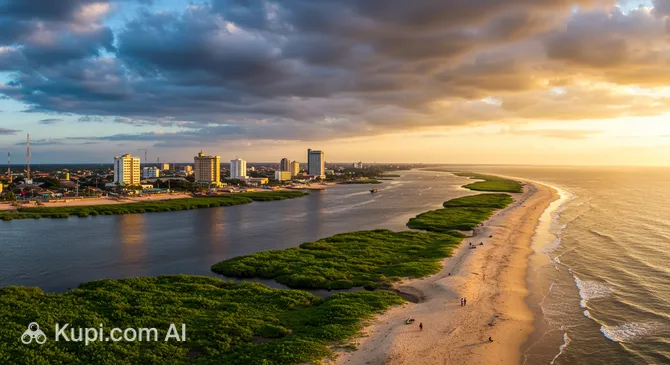
Soyo is a unique destination situated at the very northern tip of Angola, right where the mighty Congo River meets the Atlantic Ocean. Located in the Zaire Province, this city is home to approximately 200,920 inhabitants and serves as a vital economic hub while offering intriguing sights for adventurous travelers.

Soyo. Source: Kupi.Binoculars

The city holds a significant place in the region's past. Formerly known as Santo António do Zaire, it was one of the earliest European settlements in the area. Exploring the history of Soyo reveals a rich tapestry of cultural exchanges and maritime heritage that dates back to the 15th century, making it a fascinating spot for history enthusiasts.

For visitors, the natural surroundings are a major draw. The convergence of the river and the ocean creates a spectacular landscape, often marked by the historic Ponta do Padrão, where early explorers erected stone pillars. The region is also characterized by extensive mangroves and winding river channels, which are perfect for boat excursions and observing the local biodiversity.

Whether you are interested in the industrial dynamics of the country or the serene beauty of the river delta, Soyo offers a distinct experience. It is a compelling stop for those looking to understand the diverse geography and culture of this northern region.

Weather Overview

Soyo experiences a warm tropical climate year-round, making it a welcoming destination for travelers at almost any time. The weather in Soyo is defined by two main seasons: a warmer, more humid period and a cooler, drier stretch. Average monthly temperatures typically fluctuate between 22.5°C and 27.3°C, ensuring that the atmosphere remains comfortable for exploration.

The warmest months are usually February through April, where daytime highs can reach nearly 29°C. This time of year coincides with the region's wet season; from November to April, you can expect frequent moisture, with some months recording up to 22 wet days. In contrast, the period from June to August offers a distinct change, bringing cooler air with average lows around 21°C and very dry conditions, often with zero wet days recorded.

Interesting Facts

Beyond the industrial landscape dominated by oil and gas, Soyo holds many fascinating secrets that trace back to the very roots of the nation's history. This city is not just a modern economic hub; it is the site of pivotal encounters that shaped the cultural destiny of the region.

  • The First Stone Pillar: The tip of the peninsula, known as Ponta do Padrão, is one of the most historically significant spots in Central Africa. In 1482, the Portuguese explorer Diogo Cão erected the first stone pillar (padrão) here to mark his arrival, designating the mouth of the Congo River long before the colonial era fully began.

  • A Royal Conversion: Soyo was the stage for a major cultural shift in 1491 when the local ruler, the Mwene Soyo, became the first noble of the Kingdom of Kongo to be baptized. This event predated the conversion of the King of Kongo himself, making the city the earliest entry point for Christianity in Angola.

  • The Rock of Spells: One of the municipality's communes bears the intriguing name Pedra de Feitiço (Witchcraft Stone). Local legends suggest that this area, characterized by unique rock formations along the river, was historically considered a place of spiritual power and ancient rituals used to protect the river mouth.

  • Freshwater Ocean: The city sits exactly where the mighty Congo River meets the Atlantic Ocean. The river's flow is so powerful at this point—the second strongest in the world—that it pushes fresh water dozens of kilometers out into the sea, allowing sailors to drink from the ocean surface far from the shore.

How to Get There

The most direct and common way to reach the city is via Soyo Airport (SZA). Located within the municipality, this domestic hub connects the region primarily with the capital, Luanda, and serves as the main entry point for business and leisure travelers. Flying directly here avoids long overland journeys and logistical challenges. For a detailed breakdown of routes and travel advice, you can read more about how to get to Soyo.

Travelers considering alternative routes in the wider region might look at airports in neighboring areas, though these options come with significant logistical hurdles. Cabinda Airport (CAB) is geographically widely used but is located in the Cabinda exclave, approximately 62.8 km away. Reaching Soyo from there requires crossing the Congo River estuary, which can be complex. Another possibility is Pointe Noire Airport (PNR) in the Republic of the Congo, situated about 155.3 km away. Choosing this arrival point involves crossing an international border and a longer road transfer.

Below is a summary of these regional airport alternatives:

Airport Name City Annual Traffic Distance from Soyo
Pointe Noire Airport Pointe-Noire 550,000 155.3 km
Cabinda Airport Cabinda 307,200 62.8 km

Regarding other modes of transport, Soyo is not currently connected to a national railway network. There are no train stations in the vicinity, so visitors generally rely on air travel or road transport to navigate the area.

Main Attractions

One of the most significant landmarks in the region is Ponta do Padrão. Located on a peninsula at the mouth of the Congo River, this site is historically renowned as the place where the Portuguese explorer Diogo Cão erected a stone pillar (padrão) in 1482. Today, visitors can see the lighthouse and the modern replica of the pillar while enjoying the unique geographical setting where the river's fresh water clashes with the Atlantic Ocean. It is a place that perfectly blends history with dramatic natural scenery.

For nature lovers, a boat tour through the Congo River Estuary is an unmissable experience. The river mouth is lined with dense mangrove forests that serve as a sanctuary for diverse bird species and marine life. Navigating these winding channels offers a peaceful escape and a chance to observe the rich biodiversity of the Zaire Province. The sheer power of the river here is awe-inspiring, creating a distinct environment that differs greatly from the rest of the Angolan coastline.

Another intriguing spot is the Pedra de Feitiço (Witchcraft Stone), located further inland along the riverbanks. Steeped in local folklore, this rock formation was historically believed to possess spiritual powers and was used in ancient rituals to protect the entrance to the river. It remains a site of cultural importance and offers a fascinating glimpse into the traditional beliefs and oral histories of the local communities.

Those seeking relaxation should head to the city's coastal beaches, such as Santo António Beach. These stretches of sand offer a quiet retreat with views of the Atlantic. They are popular spots for both locals and tourists to unwind, watch the sunset, or simply enjoy the warm tropical breeze. The beaches here are generally less crowded than those in the capital, providing a more serene atmosphere for leisure.

Local Cuisine

The local cuisine in Soyo is heavily influenced by its privileged geographic position where the Congo River meets the Atlantic Ocean. Consequently, fresh fish and seafood form the backbone of the city's gastronomy. Visitors can expect a rich variety of river fish, such as catfish (bagre) and tilapia (cacusso), as well as ocean catches, prepared in hearty, flavorful stews or simply grilled to perfection.

One of the must-try dishes is Calulu de Peixe, a traditional Angolan stew made with dried or fresh fish, okra, sweet potato leaves, and palm oil. It is almost always served with funge, a thick porridge made from cassava flour that serves as the staple starch for soaking up the rich sauces. Another favorite is Mufete, a feast-like meal consisting of grilled fish seasoned with onion and spices, accompanied by beans in palm oil, boiled plantains, sweet potatoes, and cassava flour (farofa).

When it comes to beverages, the region offers unique local flavors. Maruvo, or palm wine, is a traditional alcoholic drink tapped directly from palm trees; it is widely consumed in the Zaire Province and plays a significant role in local social gatherings. For a non-alcoholic option, travelers should try Kissangua, a refreshing homemade drink typically crafted from corn flour or pineapple skins, offering a sweet and slightly tangy taste.

The food culture in Soyo ranges from casual street stalls to more formal dining establishments catering to the city's business travelers. For an authentic experience, look for local "quintais" (backyard restaurants) or riverside eateries where the catch of the day is cooked fresh over charcoal. The local markets are also vibrant hubs where you can see the day's fresh bounty and snack on roasted plantains or peanuts while exploring.

Travel Tips

Visiting Soyo offers a fascinating glimpse into a region where major industrial activity meets the raw beauty of the Congo River delta, but navigating this unique city requires a bit of preparation. To help you make the most of your trip and ensure a smooth experience, we have compiled a list of essential practical tips for travelers.

  1. Clothing and Gear: Due to the tropical climate, lightweight and breathable fabrics like cotton or linen are your best friends here. However, since Soyo is located in a malaria-endemic region, it is wise to pack long-sleeved shirts and trousers for the evenings to protect against mosquito bites. If you are visiting during the rainy season (November to April), a sturdy raincoat is indispensable. Don't forget a universal travel adapter (Type C and F plugs are standard) and comfortable, closed-toe shoes for walking.

  2. Transportation: Public transport in Soyo consists mainly of "candongueiros" (blue and white shared taxis). While they are an authentic local experience, they can be crowded and confusing for newcomers. For safety and convenience, it is highly recommended to hire a private driver or arrange transfers through your hotel. Ride-hailing apps are not widely available here, so planning your transport in advance is key.

  3. Finances: The local currency is the Angolan Kwanza (AOA). While some high-end hotels may accept international Visa cards, cash is king in Soyo. ATMs can occasionally be out of service or run out of cash, so it is crucial to carry enough local currency for daily expenses like meals and transport. Exchange your foreign currency (USD or EUR) only at official exchange bureaus or banks to avoid scams.

  4. Health and Safety: Malaria prophylaxis is strongly advised before traveling to this part of Angola. always drink bottled water and avoid ice in drinks unless you are sure it was made from purified water. Pharmacies are available in the city center, but 24-hour services are rare, so bring a personal medical kit with essentials. As in any busy city, keep your valuables secure and avoid walking alone in poorly lit areas at night.

  5. Communication: Portuguese is the official language and is used for almost all interactions. English is not widely spoken outside of the oil industry circles and major hotels. Learning a few basic phrases like "Bom dia" (Good morning) and "Obrigado" (Thank you) will go a long way. Buying a local SIM card (Unitel or Africell) is easy and affordable, providing you with reliable mobile data for maps and translation apps.

  6. Local Etiquette: Angolans are generally warm and polite. Greetings are taken seriously; it is customary to shake hands and ask about a person's well-being before launching into business or questions. When interacting with elders or officials, maintaining a respectful and patient demeanor is important. Rushing a conversation can be seen as rude.

  7. What to Avoid: Be extremely cautious with photography. Never take photos of government buildings, police stations, military personnel, or airport facilities. In Soyo, this rule also extends to oil and gas infrastructure. Security personnel are strict about this, and unauthorized photography can lead to the confiscation of your camera or legal trouble.

  8. Power Supply: Occasional power outages can occur. It is a smart "life hack" to carry a high-capacity power bank to keep your phone charged while you are out exploring. Additionally, keeping a small flashlight handy is useful if you are navigating streets after dark during a power cut.

By keeping these practicalities in mind, you can focus on enjoying the vibrant culture and stunning river views that Soyo has to offer. With a little preparation and a respectful attitude, you will find the locals welcoming and your journey through Zaire Province truly memorable.

Entertainment & Nightlife

Nightlife in Soyo is characterized by a relaxed and social atmosphere rather than high-energy clubbing. As a key industrial hub, the city's evening entertainment largely revolves around expatriates and locals unwinding after work in sophisticated hotel bars, riverside restaurants, and open-air lounges. The vibe is generally laid-back, offering a perfect setting for conversation, networking, and enjoying the warm tropical breeze.

The most popular spots for an evening out are often located within the city's major hospitality establishments or along the waterfront. Bela Vista River Club is a standout venue, well-regarded for its trendy yet casual environment. It is an excellent place to enjoy draft beers, cocktails, and a mix of international and local dishes while overlooking the river. For a more resort-style experience, the bars at the Kinwica Resort Hotel offer a serene setting where visitors can enjoy poolside drinks and a safe, comfortable atmosphere.

For those seeking a more authentic local experience, the city is dotted with "quintais" (backyard restaurants/bars). These venues are bustling with local energy, often playing popular Angolan music genres like Kizomba and Semba. Unlike the hotel bars, these spots offer a chance to mingle with residents and enjoy freshly grilled snacks in a vibrant, unpretentious setting. The dress code in Soyo is typically smart casual; while the weather is warm, long trousers are recommended for men in the evenings, both for style and protection against mosquitoes.

When planning a night out, safety and logistics should be your top priority. Public transport is not reliable at night, so it is essential to arrange a private driver or use a taxi service recommended by your hotel. Avoid walking in unlit or unfamiliar areas after dark. Prices in Soyo can be higher than in other parts of Angola due to the industrial economy; expect to pay premium prices for imported drinks and western-style meals. The best time to head out is around 8:00 PM, when the air cools down and the venues start to fill up.

Parks & Museums

While Soyo may not be renowned for manicured botanical gardens or grand national museums, the city offers a wealth of open-air heritage and raw natural beauty that serves as a living exhibition of its past and geography. The true "parks" here are the expansive riverbanks and beaches, while the "museums" are the historical landmarks that trace the early contact between the Kingdom of Kongo and European explorers.

The Congo River Delta and Mangroves act as the region's primary natural sanctuary. Instead of walking through paved park paths, visitors can explore the intricate network of waterways by boat. This vast green expanse is a haven for birdwatchers and nature enthusiasts, offering a serene escape where the dense vegetation meets the water. It is a pristine environment that allows travelers to witness the ecological diversity of the Zaire Province firsthand.

For those seeking a relaxing atmosphere similar to a city park, the city's coastal beaches serve as the main local gathering spots. These sandy stretches along the Atlantic coast offer a natural playground where families picnic, children play football, and visitors can enjoy the cool ocean breeze. They function as vital communal spaces, providing a tranquil counterpoint to the industrial bustle of the city center.

In terms of cultural heritage, the city preserves a deep connection to its religious roots. As one of the earliest entry points for Christianity in Angola, the area is home to historic churches and sacred sites that commemorate this centuries-old legacy. The grounds where these early missions were established offer a quiet place for reflection, providing insight into the spiritual traditions that have played a central role in shaping the identity of the local community.

Although it is an open-air site rather than a building, the Ponta do Padrão is arguably the city's most important historical "gallery." The modern replica of the stone pillar erected by Diogo Cão in 1482 marks a pivotal moment in navigation history. Visiting this site allows tourists to physically stand where the age of exploration left its mark, effectively walking through a chapter of history that changed the course of the region.

For a truly authentic experience, try to visit one of the small fishing villages located on the islands within the river estuary. These communities live in rhythm with the tides, and a respectful visit offers a rare glimpse into traditional river life that has remained largely unchanged for generations. It is a cultural immersion that no formal museum display can replicate.

Getting Around

Navigating Soyo is an experience that differs significantly from many major international cities. The public transport system here is not characterized by subways, trams, or large municipal bus networks. Instead, the city relies heavily on an informal network of privately operated vehicles that serve the daily needs of the local population. For a visitor, understanding how this system works is key to getting around efficiently.

The backbone of local transit is the candongueiro. These are typically blue and white minibuses that operate on roughly fixed routes throughout the city and its outskirts. They are the most visible and affordable means of transport, constantly crisscrossing the main roads. While they do not have official stops marked with signs, they generally pick up and drop off passengers at popular landmarks, markets, and busy intersections. To catch one, you simply wait by the roadside and flag it down as it approaches.

For shorter distances or to reach areas where minibuses do not venture, motorbike taxis, locally known as kupapatas, are a popular alternative. They are agile and can navigate traffic quickly, making them a favorite for quick trips. However, safety standards can vary, so it is advisable to ensure the driver has a spare helmet for you and to agree on the fare before starting the journey. This mode of transport offers a breezy, open-air way to see the streets, though it is best suited for adventurous solo travelers.

The payment system across all forms of public transport in the city is strictly cash-based. There are no travel cards, mobile apps, or electronic ticketing machines. You will need to carry local currency in small denominations. In a candongueiro, you typically pay the conductor or the driver directly after boarding. Fares are generally fixed for specific distances or zones, but for motorbike taxis, negotiation is often required. It is helpful to ask a local or hotel staff member about the standard rates beforehand to avoid being overcharged.

For tourists who prioritize comfort and security, relying on private taxis or arranging a car with a driver is often the best advice. Unlike in some capitals, you will not find metered taxis cruising the streets looking for passengers. Instead, transport should be booked through your hotel or a reputable local contact. Renting a car is possible, but given the driving style and road conditions, hiring a car that comes with a local driver is highly recommended for a stress-free experience.

Operating hours for public transport are not set in stone. Candongueiros and kupapatas are most active from early morning until sunset. Service frequency drops significantly after dark, and it can be difficult to find a ride late at night. If you plan to be out in the evening, it is essential to arrange a private transfer in advance to ensure you have a safe and reliable way to return to your accommodation.

Accommodation

Accommodation in Soyo is largely shaped by its status as a major hub for the oil and gas industry. Consequently, the hospitality sector is primarily geared towards business travelers and expatriates rather than typical leisure tourism. Visitors will find a selection of mid-range to upscale business hotels that offer reliable amenities such as air conditioning, Wi-Fi, and secure parking. For those on a tighter budget, there are smaller guesthouses and "pensões" (inns), though these may offer more basic facilities compared to the larger establishments.

The most desirable area to stay is undoubtedly along the banks of the Congo River. Hotels in this vicinity not only offer a cooler, breezier climate but also provide scenic views of the water and the distant mangroves. Staying near the river often feels more like a resort experience, offering a peaceful respite from the industrial activity of the city center. The central district is another option, providing convenient access to shops, administrative buildings, and local markets, though it lacks the tranquility of the waterfront properties.

A notable example of the local accommodation style is the Kinwica Resort Hotel. Often serving as a social hub for the city, this establishment reflects the typical high-end offering in Soyo, featuring bungalow-style rooms, a swimming pool, and on-site dining that caters to international tastes. Properties like this are designed to be self-contained oases, ensuring guests have everything they need within the compound.

Travelers should be aware that accommodation prices in Soyo can be significantly higher than in other Angolan provinces, reflecting the "oil city" premium. It is highly recommended to book your room in advance, as good quality hotels can fill up quickly with corporate delegations. While larger hotels may accept online bookings and credit cards, it is prudent to confirm your reservation directly by phone and carry sufficient local currency (Kwanza), as smaller guesthouses often operate on a cash-only basis.

Nearby Cities

Soyo is situated in the far northwest of Angola, separated from the rest of the country's major urban centers by vast distances and distinct geographical features. While the city serves as a crucial industrial base in the Zaire Province, travelers often look to nearby regions for further exploration. The location presents a unique dynamic: the geographically closest city is actually separated by the mighty Congo River, while the capital and other metropolitan hubs lie hundreds of kilometers to the south along the coast.

The nearest significant urban center is Cabinda, located approximately 65 km away. However, this proximity is deceptive; Cabinda is an exclave of Angola situated across the Congo River estuary, meaning travel between the two typically involves a flight or a boat crossing rather than a simple road trip. To the south lies the nation's bustling capital, Luanda, which serves as the primary gateway for international visitors. Although it is over 300 km away, it remains the most important connection for logistics and transport.

For those planning a wider itinerary through the region, here is a list of the closest major cities, along with their distances from Soyo:

City Distance Population
Cabinda 65 km 739,182
Luanda 311 km 9,051,000
Cacuaco 314 km 1,279,488
Talatona 321 km 500,000
Belas 336 km 500,000

Shopping & Souvenirs

Shopping in Soyo is primarily functional and geared towards the daily needs of its residents and the expatriate community working in the oil industry. Unlike the bustling commercial hubs of the capital, the retail scene here is more modest, characterized by practical supermarkets, small local boutiques, and vibrant open-air markets. Visitors should not expect sprawling luxury malls or high-end fashion districts; instead, the city offers a mix of modern convenience stores and traditional trading spots where the local culture is on full display.

The main commercial activity is concentrated in the city center, particularly along the streets surrounding the municipal administrative buildings and major hotels. In this area, travelers can find a variety of smaller shops selling clothing, electronics, and household goods. It is a relatively compact district, making it easy to explore on foot or with a quick taxi ride. This is where the blend of modern development and local commerce is most visible, offering a convenient stop for travelers needing to restock on essentials.

For a more modern retail experience, the Kero Soyo hypermarket stands out as the closest equivalent to a shopping mall in the city. As part of a major national chain, it serves as a one-stop shop for groceries, electronics, appliances, and basic clothing. It is a popular destination for both locals and expats who are looking for imported goods, reliable quality, and a comfortable, air-conditioned environment. While it is technically a large supermarket, it functions as a central retail hub for the community.

To truly experience the local flavor, visiting the municipal markets is a must. These bustling centers of trade are where the city comes alive. Given Soyo's location at the mouth of the Congo River, the fish markets are particularly impressive, offering a fresh catch that ranges from river species to ocean delights. Beyond food, these markets often feature stalls selling colorful fabrics, casual footwear, and general merchandise. It is a sensory experience filled with the sights and sounds of daily Angolan life.

When searching for souvenirs, the options in Soyo are authentic rather than mass-produced. The best items to look for include traditional wood carvings, which are a hallmark of Angolan craftsmanship. You may find intricate statues or masks that reflect the cultural heritage of the Zaire Province. Additionally, brightly colored African wax print fabrics (often used to make local attire) make for excellent, lightweight gifts that carry the vibrancy of the region back home.

Most shops and supermarkets typically open around 8:00 AM or 9:00 AM and close between 7:00 PM and 8:00 PM. Markets often start much earlier, at sunrise, and wind down in the late afternoon. While major supermarkets like Kero accept debit cards (Multicaixa), international credit cards are rarely accepted in smaller shops and markets. Therefore, it is essential to carry sufficient cash in Angolan Kwanza for most of your purchases.

Tax-free shopping or VAT refund schemes for tourists are not currently available in Soyo. The prices displayed on goods are final, and visitors should not expect to claim any taxes back upon departure. In informal markets, however, polite bargaining is a common practice and can sometimes result in a better price for handicrafts or bulk purchases.
Nearby cities

Reached the end of the page?

That means the route is fully explored