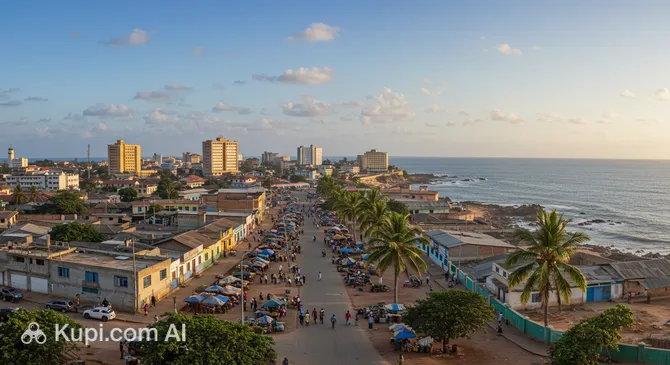
While Cabinda is primarily known for its industrial significance, the city and its surrounding province offer a surprising wealth of green spaces and cultural institutions that reflect its unique identity. Visitors can expect a journey that transitions from the dense, ancient canopies of tropical rainforests to intimate museum halls that preserve the region's distinct history and ethnographic traditions.
Key Parks and Green Spaces
The most significant natural treasure in the region is the Mayombe Forest. Often considered one of the most important biospheres in Central Africa, this vast rainforest serves as a "green lung" for the area. For tourists, it offers a rare opportunity to step into an ancient ecosystem teeming with biodiversity. Guided tours into the reserve allow visitors to see towering mahogany trees and potentially spot rare wildlife, such as chimpanzees and the Western Lowland Gorilla. It is an immersive experience for nature lovers seeking to disconnect from the city and reconnect with the wild.
Closer to the coast, Futila Beach acts as a natural recreational park for both locals and visitors. Unlike a standard city park, this area combines the relaxation of a seaside retreat with the vibrancy of local social life. The beach is lined with palm trees and offers calm waters protected from strong Atlantic swells, making it an ideal spot for swimming and picnics. It functions as the city's main outdoor gathering space, where families come to enjoy the fresh ocean breeze and the scenic beauty of the coastline.
Museums and Galleries
The cultural heart of the city is the Cabinda Regional Museum (Museu Regional de Cabinda). Located in a well-preserved colonial-era building, this institution is essential for anyone wishing to understand the province's specific heritage. The collection focuses on ethnographic artifacts, including traditional tools, musical instruments, and hunting gear used by the local tribes. A highlight for many is the display of items related to the Bakama secret society, offering a rare glimpse into the spiritual and judicial traditions that have governed the region for centuries.
While formal art galleries are scarce, the Centro Cultural Chiloango often serves as a hub for artistic expression and community events. This venue frequently hosts exhibitions of local art, dance performances, and theater productions that narrate the stories of the Cabinda people. It is a dynamic space where the living culture of the city is practiced and displayed, providing a more contemporary counterpoint to the historical focus of the regional museum.
Historical and Architectural Sites
A short distance north of the city stands the Simulambuco Monument, a site of immense historical weight. Erected to commemorate the 1885 Treaty of Simulambuco, this landmark is more than just a statue; it is a symbol of the region's political identity and its historical protectorate status with Portugal. The site is well-maintained and features plaques and structures that explain the significance of the event, making it a must-visit for history buffs interested in the colonial dynamics of Southern Africa.
In the city center, the Cabinda Cathedral (Sé Catedral de Cabinda) serves as a major architectural landmark. Built during the colonial period, its design is simple yet elegant, standing as a testament to the religious history of the area. Nearby, the M'Buco-M'Buadi Cemetery offers a profound cultural experience. Known as the resting place of the Cabinda kings, the cemetery features unique funerary art and statues that honor the royal lineage, providing a quiet and respectful place to reflect on the region's ancestral leadership.
Authentic Experiences
For a truly authentic insight, try to visit the local craft markets near the waterfront. Here, you can often find artisans carving wood or creating traditional basketry that isn't found in museums. Additionally, asking a local guide about the Bakama appearances can be rewarding; while their ceremonies are secretive, knowing the folklore and seeing the places associated with these "Guardians of the Forest" adds a layer of mystique to your visit.