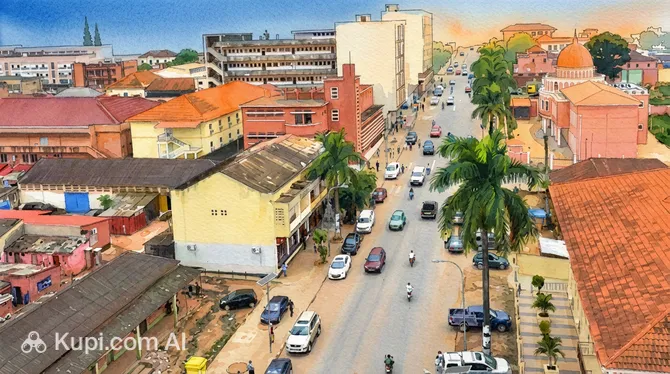
Uíge is a peaceful and distinctive city in northern Angola, serving as the administrative center of the province of the same name. Situated in a picturesque mountainous area at an altitude of about 829 meters above sea level, it offers travelers an atmosphere of authentic provincial life, far from the noise of major metropolises. The city was founded by Portuguese colonizers and was known as Carmona for a long time until 1975.
Modern Uíge is a hub for regional administration and agriculture, home to over 320,000 people. The city's architectural style combines functional modern buildings with charming colonial-era structures concentrated in the historical center. Getting to know the local historical heritage allows for a better understanding of the development of this region, which is inextricably linked with indigenous traditions and European influence.
Uige. Illustration.
Source: Kupi.com AI
Although the city is not a typical tourist hub, it attracts visitors with its authenticity and proximity to the region's natural wealth, such as the Cuango River basin. Visiting Uíge is an excellent opportunity to see a "different" Angola: hospitable, unhurried, and surrounded by lush tropical greenery. We recommend this city to those seeking off-the-beaten-path routes and wanting to immerse themselves in the daily rhythm of Central African life.
Weather Overview
Uíge is influenced by a tropical climate due to its proximity to the equator. It almost never gets cold here: the average annual temperature remains stable within 23–25°C. However, this region is characterized by a clear division into two seasons, which significantly affect climatic conditions and the comfort of travel.
The rainy season in Uíge lasts from October to May. During this period, heavy precipitation occurs, especially in November and April, when rainfall can exceed 300 mm per month. From June to September, the dry period arrives: the rain practically stops, and humidity decreases. January and February can also be quite humid, with daytime temperatures up to 27–28°C and a pleasant evening coolness around 19°C.
Thanks to the mountainous terrain, air circulates well in the city, which helps to better tolerate the tropical heat. Nevertheless, when planning a visit, one should consider the high probability of precipitation in the winter and spring months. The dry season (June–August) is considered the most favorable time to visit, as the risk of travel delays due to washed-out roads is minimal, and the weather remains sunny and moderately warm.
Average monthly temperature
Average monthly precipitation
Interesting Facts
The city of Uíge hides many interesting details that will help a traveler better understand this region.
From 1955 to 1975, the city was officially named Carmona—in honor of the Portuguese president Óscar Carmona.
The local airport (UGO) is located at a unique altitude—over 800 meters above sea level—and is situated just a couple of kilometers from the central districts.
Uíge is an important educational center for the north of the country: the Higher Institute of Educational Sciences (ISCED-Uíge) has been operating here since 2009.
The province, of which the city is the capital, holds a strategic position, bordering the Democratic Republic of the Congo.
The region around the city is considered one of the most densely populated in Angola, and the Cuango River, flowing nearby, is one of the country's largest waterways.
How to Get There
The transport accessibility of Uíge can be a real adventure for a tourist, as the city is located deep within the country. The primary and most comfortable way to arrive is via domestic flights from Luanda. The small local airport accepts regular flights, with a flight time of about one hour, which is significantly faster and more convenient than the overland route.
For those who prefer traveling by land, a road of about 200 kilometers leads from the capital of Angola. The car journey can take from 4 to 6 hours due to the challenging terrain and road conditions. When planning such a trip, it is important to consider seasonality: during the rainy season, some sections of the road may be difficult to pass. Intercity communication is also supported by buses and traditional shuttle taxis known as "candongueiros."
Railway communication in this direction is currently poorly developed, so the main focus should be on aviation or road transport. If you are planning a visit to this region, we recommend familiarizing yourself in advance with the nuances of trip organization to choose the most suitable mode of transport depending on your preferences and the current season.
Station
Passenger traffic
Distance
Bungo station
4
240 km
Main Attractions
Uíge is not one of those cities with a classic list of guidebook attractions; however, it is interesting for its authentic atmosphere. The heart of the city is its central part, where administrative buildings and residential quarters from the colonial period have been preserved. A walk through these streets allows you to see the architectural footprint left by the Portuguese and feel the rhythm of life in a provincial capital.
The main points of attraction for locals and visitors alike are the lively markets. These are not just trading spots but true cultural centers where daily activity is concentrated. Here, you can observe the traditional way of life, purchase local goods, and get acquainted with the lifestyle of the residents of northern Angola. The city's central square is also noteworthy, serving as the primary venue for public gatherings and strolls.
For those ready to venture beyond the urban area, the beauty of Uíge Province unfolds. The natural landscapes surrounding the Cuango River are of particular interest. The river and its surrounding tropical forests create a picturesque backdrop for a journey, offering views of untouched African nature, which is the main wealth of this region.
Local Cuisine
The gastronomy of Uíge is a true feast of flavors for lovers of hearty and original African cuisine. The diet here is based on cassava and corn, used to prepare the famous porridge known as funge. It serves as a universal side dish for almost all hot meals. In this region, fish caught in the Cuango River is particularly popular, as well as chicken and goat meat, cooked over an open fire or stewed with vegetables.
Be sure to try the local version of muamba—a thick and aromatic meat stew simmered in a palm oil sauce with the addition of shrimp, vegetables, and spices. This dish is considered a signature of Angolan cuisine, and in Uíge, it is prepared according to special home recipes. Among drinks, palm wine known as udji holds the lead with its specific taste, alongside the popular national beer, Cuca.
The city's restaurant culture is mainly represented by simple family establishments where food is prepared from the freshest ingredients bought at the market in the morning. Uíge's culinary scene lacks pretense: naturalness and heartiness are valued here. A walk through local markets will also be a gastronomic discovery—you can find exotic fruits and unique regional vegetables that are rarely seen outside the province.
Travel Tips
Planning a trip to Uíge requires attention to detail to ensure your stay in this unique corner of Angola is as comfortable as possible. We have prepared several tips to help you settle in more quickly.
Clothing and items: Choose light clothing made from natural fabrics, as the region has high humidity. Be sure to bring comfortable closed shoes for walking around the city and its surroundings, as well as insect repellents.
Health: A yellow fever vaccination certificate is mandatory for entry. Drink only bottled water and always carry a basic first-aid kit with you.
Transport: Within the city, it is most convenient to move by taxi. If you plan to go outside Uíge, it is best to rent a 4x4 vehicle with an experienced driver who knows the local roads.
Finances: The main currency is the Angolan kwanza. Exchange money only at official banks or legal exchange points in the center. Cards are accepted very rarely, so cash should always be on hand.
Safety: Avoid walking in remote neighborhoods after sunset. Keep valuables in the hotel safe and do not display large sums of money or expensive equipment in markets.
Connectivity: For stable internet, purchase a SIM card from a local operator (such as Unitel), as Wi-Fi in guesthouses can be slow or non-existent.
Etiquette: Angolans are very polite. Always greet your interlocutor before asking a question. Before taking photos of locals or administrative buildings, be sure to ask for permission.
Weather: Keep in mind that the rainy season lasts from October to May. During this time, humidity is at its peak, and roads can become difficult to pass.
Following these simple rules will help you focus on exploring the culture and nature of this amazing region, making your trip safe and pleasant.
Entertainment & Nightlife
Nightlife in Uíge has a pronounced provincial character and is primarily oriented toward local residents. You won't find large entertainment complexes or neon-lit discos typical of the capital here. The main venues for evening relaxation are small local bars and cafes located in the city center. On weekends, many of these establishments feature live music in styles like kizomba or semba, creating a very warm and sincere atmosphere.
Daytime entertainment in the city is focused on socializing and observing the local culture. A popular way to spend time is visiting the city markets or participating in community events in the central square. There are no cinemas or large concert halls in the city, so leisure here is more about immersion in the daily social environment and attending church events, which play an important role in the lives of the citizens.
For those looking for a more active nightlife with clubs and large-scale events, a trip to Luanda is usually recommended; however, it's worth noting that the journey to the capital takes several hours. In Uíge itself, evening safety is maintained at a basic level: it is recommended to stick to central, well-lit streets and use taxi services for moving between venues after dark.
Parks & Museums
In Uíge itself, organized park zones and classic museums are virtually absent, as the city developed for a long time purely as an administrative center. However, this does not mean a lack of cultural interest: the streets themselves, with their old colonial buildings, serve the role of museums. The architectural details of buildings from the last century can tell as much about the city's history as indoor exhibits.
The main "green" asset of the city is its surroundings. The province's lush vegetation and forest tracts that come right up to the city limits serve as natural recreation areas. Local residents often use the city's central squares as places for social meetings and walks, which, in the absence of official parks, become centers of public life.
Those interested in nature should pay attention to the landscapes of Uíge Province. Although there are no botanical gardens in the city itself, the region's rich biodiversity is evident in the fruit orchards and agricultural lands surrounding the city. The lack of formal museums is compensated for by the living culture seen in local markets and during religious or folk festivities.
Getting Around
The public transport system in Uíge is mainly represented by private carriers that ensure the mobility of the citizens. The leading role is played by the famous candongueiros—blue and white minivans that run along specific routes, connecting the city center with the outskirts and neighboring settlements. This is the cheapest, but also the most crowded way to get around, requiring a certain amount of skill from a tourist.
In addition to minivans, motor-rickshaws and taxis actively move around the city. They are convenient for short-distance trips, such as from the airport to a hotel. It is always worth negotiating the price of the trip in advance, as meters in cars are very rare. During peak hours, especially in the morning and evening when residents head to markets or return home, traffic jams can occur, and transport can be overcrowded.
For more comfortable and safer trips within Uíge and beyond, tourists are recommended to rent a car, preferably with a local driver. The road surface in the city requires repair in places, and unpaved sections are common outside the center. Renting a car provides the necessary flexibility that public transport lacks, with its irregular schedule and high passenger density.
Accommodation
The hotel infrastructure in Uíge is currently in a formative stage, so travelers should prepare for a basic level of comfort. The mainstay of accommodation options consists of small pensions and guesthouses, which are most often used by official delegations or specialists visiting the region on business. There are currently no luxury five-star international chain hotels in the city.
Most available lodging facilities are concentrated in the central part of the city, which is convenient for accessing administrative offices and markets. Housing prices may be higher than one might expect for a provincial city due to limited supply. It is recommended to book rooms in advance, especially if your visit coincides with major regional holidays or official events.
When choosing a place to stay, look for the presence of backup generators and water reserves, as utility interruptions can occur in the region. For longer stays, some travelers prefer to rent private apartments through local intermediaries, which can be a more budget-friendly and authentic way to live in the heart of the city.
Nearby Cities
The city of Uíge is an excellent starting point for those who want to explore the northern provinces of Angola and see their hidden gems. The city's surroundings offer an immersion into the region's agrarian life and the opportunity to visit small settlements that have preserved their traditional way of life. Exploring these places allows you to see the real life of the country outside the major administrative centers.
One of the most accessible destinations for a trip is the city of Negage, located just a few dozen kilometers away. A trip to Songo—a small town reached via a road through picturesque hilly landscapes—may also be of interest. For those ready for longer journeys, routes are open to the settlements of Casanga and Mucaba.
City
Population
Distance
Negage
137 559
29 km
Cazanga
171 743
35 km
Songo
10 579
37 km
Mucaba
43 974
52 km
Camabatela
61 769
73 km
Each of these directions is unique in its own way: in some, you will find colorful village markets, and in others, amazing natural views. Traveling around the Uíge area requires some preparation and preferably the rental of a reliable vehicle, but the impressions this region provides are well worth the effort.
Shopping & Souvenirs
Shopping in Uíge is primarily about visiting the colorful local markets, which are the heart of the city's trade. There are no huge shopping malls with global brands here, but there is an abundance of locally produced goods. The main object of interest for tourists is traditional Angolan kitenge fabrics, which are striking for their bright colors and intricate patterns.
In the central districts of the city, there are several shops offering imported goods and basic clothing, but their assortment is quite limited. If you are looking for something unique, look for folk crafts made of wood and ceramics brought from surrounding villages. Such handmade souvenirs will be an excellent reminder of your trip to northern Angola.
Regarding payment, cash in the local currency (Kwanza) prevails in Uíge. ATMs are present in the city center, but they do not always work with international cards, so it is better to have a supply of cash. Shops usually operate from morning until early evening, while markets are most active in the first half of the day, when you can purchase the freshest products and unique artisanal goods.