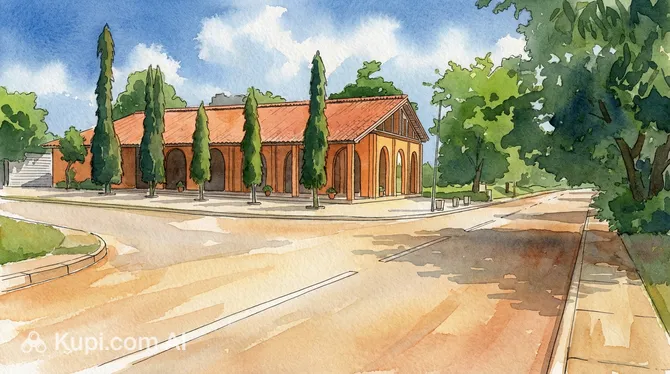
Barra do Dande is a charming coastal town and an important commune located in the Bengo Province of sunny Angola. The town is nestled in a picturesque spot where the Dande River meets the waters of the Atlantic Ocean. This location boasts a peaceful, provincial atmosphere that contrasts with the energetic rhythm of the nearby capital.
The town's geographical position makes it a significant agricultural and fishing hub. Estimates of its population range from 75,000 to 222,528 people, primarily engaged in traditional crafts and the cultivation of various crops. Barra do Dande has not yet turned into a bustling tourist hub, which allows it to preserve an authentic way of life and the untouched charm of the Angolan coast.
Barra do Dande. Illustration.
Source: Kupi.com AI
The town's status as a promising transport node plays a special role in the history of development of the region. The government plans to transform Barra do Dande into a strategic logistics center with a deep-water port. Today, travelers are drawn here by the opportunities for peaceful walks along the river mouth and the chance to get acquainted with the daily lives of local artisans.
If you are looking for a place to see the real Angola without filters, enjoy the freshest seafood, and the silence of the ocean shore, Barra do Dande will be an excellent addition to your itinerary through the country.
Weather Overview
Barra do Dande enjoys a typical tropical climate characterized by high humidity and consistently warm temperatures throughout the year. Average figures usually range from 26 to 33°C, creating an atmosphere of eternal summer. March is traditionally considered the hottest month, when the sun is most active, while July is the coolest, bringing long-awaited relief from the heat.
This region is characterized by a clear division into seasons. Expect a hot and humid period from November to April, when intense tropical downpours are possible, especially in March and April. The winter months (from June to August) are distinguished by drier and milder weather, making this time ideal for walks along the coast. To better plan your visit, check the detailed forecast and the city climate before your trip.
The coastal location at the mouth of the river tempers the heat thanks to the ocean breeze, although humidity remains high. Air quality here is generally higher than in densely populated Luanda, thanks to the absence of large industrial zones and the constant influx of fresh air from the Atlantic. Overall, the weather in Barra do Dande favors beach holidays and nature exploration almost any time of year.
Average monthly temperature
Average monthly precipitation
Interesting Facts
The town is located at the unique confluence of the Dande River and the Atlantic Ocean, which historically made it an important lookout point on the coast.
In the near future, Barra do Dande could become a key maritime hub for Africa thanks to the project to build a new deep-water port.
In the 2020s, one of the region's largest oceanic fuel storage terminals was opened here, with a capacity of over 580,000 cubic meters.
Despite its rural status, Barra do Dande is located just 45–90 minutes away from the metropolis of Luanda, making it a popular weekend getaway for capital residents.
The area's ecology is notable for its preserved mangroves in the river delta, which serve as home to many bird species.
How to Get There
The transport accessibility of Barra do Dande is largely tied to its proximity to the capital. The town is an important transit point, and the main flow of travelers arrives here by land. Before planning your trip, it is worth studying general information on how to get there in this region to choose the most comfortable option.
The nearest and largest aviation hub is Luanda's Quatro de Fevereiro International Airport (LAD). From there, you can reach Barra do Dande by taxi or rental car in 1–1.5 hours, depending on traffic leaving the metropolis. There is no direct air service to the town itself due to its small size.
For trips from Luanda, many use local minivans known as candongueiros. This is a budget-friendly but often overcrowded mode of transport without a fixed schedule. A more comfortable way would be to book a transfer or use private taxi services. Railway communication in this direction is currently poorly developed and primarily oriented towards freight transport.
Station
Passenger traffic
Distance
Bungo station
4
39 km
Main Attractions
Barra do Dande is a place where nature itself is the main attraction. While there are no grand architectural monuments, you can witness a unique spectacle: the powerful mouth of the Dande River flowing into the Atlantic Ocean. This is an ideal spot for those who appreciate natural landscapes and want to observe coastal ecosystems in their pristine form.
For fans of industrial aesthetics, the Barra do Dande Oceanic Terminal may be of interest. This modern energy infrastructure facility highlights the town's growing role in the country's economy. Although access to the grounds is restricted, the scale of the structure and its impact on regional development are impressive.
In the surrounding areas, you can also find excellent spots for observing traditional fishing. The Atlantic coast here is perfect for long walks, during which you can meet local fishermen and learn about their artisanal fishing methods, which have been preserved for decades. If you wish to see Africa's wild nature, the famous Kissama National Park is just a couple of hours' drive away.
Local Cuisine
The gastronomic scene in Barra do Dande is a paradise for lovers of the freshest seafood. Thanks to its location by the ocean and the river, the foundation of the local diet consists of fish, shrimp, and squid, which reach the table almost immediately after being caught. A traditional preparation method is charcoal grilling with local spices, which gives the dishes a unique aroma.
Be sure to try funge—a thick porridge made from cassava or corn flour, which serves as a side dish for many meat and fish recipes. Bean-based dishes and banana bread are also popular. Street food is represented at local markets, where you can find simple but hearty snacks that reflect the authentic taste of Angolan cuisine.
Among drinks, the favorite is the local beer brand Cuca, which has become something of a national symbol. It is also worth trying palm wine or refreshing tropical fruit juices. There are few full-service restaurants in the town, so most gastronomic discoveries await you in small cafes by the port or at market stalls, where a truly homey atmosphere prevails.
Travel Tips
A trip to Barra do Dande is a chance to see the real life of the Angolan coast. To make your journey as comfortable and safe as possible, use these practical tips.
Clothing and Gear: Choose light clothing made from natural fabrics, as the region has a humid and hot tropical climate. Be sure to bring sunscreen, a hat, and comfortable shoes for walking along the sandy coast. Don't forget a universal power adapter (usually Type C).
Transport: The best option for a tourist is to rent a car with a driver or order a taxi from Luanda. Public candongueiros are colorful but not always safe or comfortable for long trips.
Finance: You should bring dollars or euros and exchange them for Angolan Kwanzas (AOA) at banks in Luanda. Credit cards are rarely accepted in Barra do Dande, and ATMs are very scarce, so always carry an adequate supply of cash.
Health and Safety: A yellow fever vaccination and a consultation regarding malaria prophylaxis are mandatory before the trip. Drink only bottled water and avoid night trips alone in unfamiliar areas.
Communication: The official language is Portuguese. English is rarely understood, so learn basic phrases: "Bom dia" (good day) and "Obrigado" (thank you). It is best to buy a Unitel or Movicel SIM card at Luanda airport.
Local Etiquette: Angolans are friendly but value politeness. Always greet people when entering a shop or cafe. Ask for permission before taking photos of local residents or their homes.
What to Avoid: Do not photograph government buildings, bridges, or port infrastructure—this may cause issues with the police. Also, avoid walking after dark on the outskirts of the town.
Important Tip: Be sure to try the grilled fish at one of the coastal cafes—it is the most authentic gastronomic experience in Barra do Dande.
Following these simple rules will help you focus on the beauty of the ocean and the unique atmosphere of this corner of Angola. Have a great trip!
Entertainment & Nightlife
Nightlife in Barra do Dande is virtually non-existent, as the town maintains its status as a quiet residential and agricultural area. You won't find bustling nightclubs or conceptual bars with signature cocktails here. Evening activities for locals usually center around informal meetings in small coastal cafes or market squares, where people can socialize in a calm setting.
For those seeking vibrant entertainment, dancing to the rhythms of kuduro or semba, the best solution is to head to Luanda. The capital is only 30–50 kilometers away, and that is where the real nightlife thrives with a multitude of venues for every taste. In Barra do Dande itself, evening time is best spent contemplating the sunset over the ocean or enjoying a quiet dinner with fresh seafood.
Daytime entertainment in the town is also of a relaxed nature. This could include walks by the river, visiting the local market, or relaxing on wild beaches. Safety in the town during the day is at a good level, however, for nighttime travel, it is always recommended to call a trusted taxi, as lighting on the outskirts may be insufficient.
Parks & Museums
The cultural infrastructure of Barra do Dande is still in the development stage, so there are no classical museums with rich exhibitions here yet. The role of the main cultural and natural space is played by the mangroves and the shoreline of the Dande River mouth. These are natural recreational areas where you can enjoy the silence and observe local flora and fauna in their natural habitat.
Urban parks with alleys and benches are also absent in Barra do Dande, emphasizing its rural and industrial character. However, the abundance of greenery along the river creates a pleasant atmosphere for those who enjoy walks in the fresh air. The lack of organized parks is more than compensated for by the vast wild beaches where you can spend time away from the city bustle.
For those interested in history and art, it is recommended to combine a trip to Barra do Dande with a visit to Luanda, home to the National Museum of Anthropology and the Fortress of São Miguel. For lovers of large-scale natural areas, the best choice in the region is Kissama National Park, famous for its biodiversity and the opportunity to see wild animals in their natural environment.
Getting Around
The public transport system in Barra do Dande is modestly developed and primarily represented by private carriers. The most popular way to get around is by candongueiros—blue and white minibuses that connect the town with Luanda and neighboring settlements. There is no fixed schedule; vehicles depart as they fill up, which requires some patience from the traveler.
Within the town itself, locals and visitors often use mototaxis for short trips. This is a fast and relatively inexpensive way to reach your destination, though you should agree on the price with the driver in advance. For those who prefer greater safety and comfort, the only option remains calling a private taxi via phone or mobile apps operating in the capital region.
Payment in public transport is made only in cash in the local currency (Kwanza). There are no tickets or transit cards; money is handed to the driver or conductor directly inside the vehicle. Given the small size of central Barra do Dande, many prefer to get around on foot or by bicycle, which allows for a better look at town life and avoids trips in overcrowded vans during peak hours.
Accommodation
Accommodation options in Barra do Dande itself are quite limited and consist mostly of simple guesthouses and budget apartments. These properties are geared more toward transit travelers or specialists working at the port, so do not expect luxury service. Housing prices here start at affordable rates, but amenities may be basic.
For those seeking more comfortable conditions or a full resort experience, it is worth looking at the surrounding areas. For example, Kwanza Lodge is located nearby, offering a higher level of service and access to river activities. Many tourists prefer to stay in Luanda hotels and visit Barra do Dande as a day trip, returning to the capital by evening.
If you decide to stay in the town, it is recommended to book your accommodation in advance through trusted services, as the number of rooms in quality guesthouses is small. Having cash (Angolan Kwanzas) is essential, as international cards are very rarely accepted in the small hotels of Barra do Dande.
Nearby Cities
Barra do Dande serves as an excellent starting point for exploring the northern coast of Angola and adjacent provinces. Its proximity to the capital and other historical centers makes it easy to plan interesting one-day itineraries.
The most popular destination is Luanda, located just 41 km to the south. The capital offers endless opportunities for shopping, visiting museums, and exploring colonial architecture. It is also worth visiting Caxito, the administrative center of Bengo Province, to see life in the interior of the country, or Cacuaco, which lies on the way to the capital and is known for its local flavor.
Exploring the surroundings of Barra do Dande will allow you to see the contrast between quiet coastal life and the dynamically developing cities of Angola. Each of these destinations reveals the unique character of this African region in its own way.
Shopping & Souvenirs
Shopping in Barra do Dande is primarily practical and focused on local markets. There are no large shopping malls with global brands here, but you can find authentic goods. The main shopping points are the coastal markets, where locals sell freshly caught fish, seafood, and agricultural products from nearby farms.
As souvenirs from Barra do Dande, it is worth bringing back folk crafts. These could be woven baskets, mats, or simple jewelry made from shells collected on the ocean shore. Such items are handmade by local artisans and carry a piece of the authentic atmosphere of this region. Shops usually operate from morning until sunset, and payment is accepted exclusively in cash.
If your goals include buying clothes, electronics, or high-quality gifts, it is best to head to Luanda. The capital's shopping complexes offer a wide range of goods and accept bank cards. Barra do Dande remains a place for colorful market shopping, where the purchasing process is always accompanied by lively interaction with the sellers.