Support

Valle Del Conlara

About the Airport

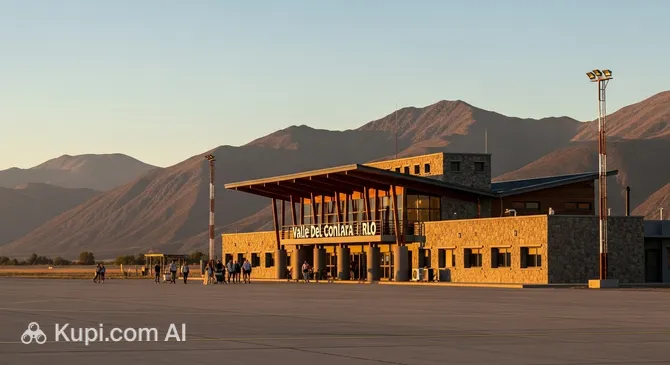
Valle Del Conlara. Source: Kupi.com Binoculars

Valle del Conlara Airport is not merely a transport hub, but a picturesque prologue to your journey into a region of Argentina known for its unique microclimate. Located at the foot of the Sierra de los Comechingones mountain range, this modern air harbour allows tourists to find themselves in the very heart of the resort zone after just a couple of hours of flight, bypassing long overland journeys. The landing approach here offers an unforgettable experience: the aircraft descends smoothly against the backdrop of majestic mountain slopes, setting the mood for a calm and inspiring holiday from the very first minutes of arrival.

IATA CodeRLO
ICAO Code SAOS
City Santa Rosa de Conlara (serves the city of Merlo)
Distance to centre ~18 km to Merlo
Status International
Passengers per year Over 13,000 (from December 2022 to July 2023)
ScheduleOnline board

Despite its compact size, Valle del Conlara Airport offers travellers a high level of service and convenience:

  • Ideal Location: The terminal is just a 20-minute drive from the centre of the popular resort of Merlo, making it the fastest way to reach your holiday destination.
  • Breathtaking Views: Thanks to its location in the valley, take-off and landing turn into a genuine excursion with panoramic views of the mountain ranges — keep your camera ready.
  • Comfort and Speed: The small passenger flow guarantees quick completion of all formalities without the queues and bustle typical of large hubs.
  • Accessible Transport: Upon exiting the terminal, you can use taxi services, transfers, or rent a car to explore the San Luis province on your own.
  • Convenient Parking: An open parking area is provided for those meeting or seeing off passengers in the immediate vicinity of the terminal building.

Contact Information

  • Official Airport Website: eda.sanluis.gov.ar (resource of the management company Ente de Desarrollo Aeronáutico)
  • Information Desk Phone: +54 2656 48-1180 (airport administration) or +54 266 445-2000 (San Luis government switchboard, extension for the airport)
  • Airport Address: Ruta Nacional 148, Km 920, Santa Rosa de Conlara, San Luis, Argentina (approximately 18 km from the city of Merlo)
  • Email: eda@sanluis.gov.ar (general enquiries to the administration)
  • Airport Social Media: Official news and flight schedules are published on the Ente de Desarrollo Aeronáutico (EDA) pages on Instagram and Facebook.
  • Lost Luggage Information: There is no separate lost and found office in the terminal; in case of lost items, you must contact the airline representative (e.g., Aerolíneas Argentinas) or the duty administrator in the arrival hall.
  • Passenger Support Contacts: The information desk is located in the main hall of the terminal and operates during flight hours; operational questions can also be asked via the official EDA social networks.

How to Get to the Airport

Valle del Conlara Airport is located in a strategically convenient place — in the town of Santa Rosa de Conlara, just 18–20 kilometres from the centre of the popular tourist city of Merlo. Due to the proximity to the resort and the lack of traffic jams on regional highways, the journey usually takes no more than 20–25 minutes. The region's infrastructure is sufficiently developed for a comfortable transfer, however, it is worth noting that public transport here has its own specific features.

Below are the main ways to get to the airport or travel from it to the city.

Taxis and Private Transfers (Remis)

This is the most popular and convenient method of transport for tourists with luggage. In Argentina, and in the San Luis province in particular, the "remis" system is widely used — these are private taxis that operate on fixed fares depending on the distance, rather than the time on the road.

  • Where to find: Cars usually await passengers at the terminal exit during flight arrivals. Taxis can also be booked in advance through your hotel or by phoning local dispatch services in Merlo.
  • Cost: A trip to the centre of Merlo will cost a reasonable amount (prices may change due to inflation but remain affordable for tourists). It is best to pay in Pesos using cash, as not all drivers have card terminals.
  • Tip: Confirm the trip cost (precio) before boarding. Drivers here are polite and rarely overcharge, but a prior agreement guarantees peace of mind.

Public Transport

It is important to note that there is no metro or railway service in this region. The main mode of public transport is buses and minibuses.

  • Shuttles (Combis): Private minibuses often adjust their schedules to match Aerolíneas Argentinas flights, collecting passengers and taking them to hotels in Merlo and the surrounding areas. This is a budget-friendly and comfortable option. It is better to book a seat in such a shuttle in advance through tourist agencies in the city.
  • Regular Buses: Intercity buses run along the Ruta Nacional 148 highway. However, the stop is not at the terminal itself, but on the highway, which will require a walk with your luggage. This option is suitable only for experienced travellers travelling light and is not recommended as the primary method.

Car Rental

For those planning to independently explore the scenic surroundings of the Sierra de los Comechingones, renting a car is the ideal solution. Counters for local or international rental companies may operate in the arrivals hall, but due to the small size of the airport, the fleet is limited.

  • Recommendation: It is strongly recommended to book a vehicle online in advance to guarantee availability upon arrival.
  • The Road: The route to Merlo lies along the RP5 highway. The road is of excellent quality, with picturesque views of the mountains.

Parking at the Airport

An open parking zone is equipped in front of the terminal building.

  • Features: Parking is generally free and is not strictly guarded around the clock, as the airport is small and safe. There are usually enough spaces for everyone meeting and seeing off passengers.
  • Rules: The zone is intended mainly for short-term parking (picking up/dropping off passengers).

Alternative Routes via Neighbouring Airports

Since direct flights to Valle del Conlara may not operate every day, many tourists choose to fly to larger neighbouring hubs and then reach Merlo by rented car or intercity bus. The nearest alternative is San Luis Airport, located approximately 147 km away, which is about a 2–2.5 hour drive.

For international flights or a wider range of departures, the major hub in Córdoba is often used — Ingeniero Aeronáutico Ambrosio L.V. Taravella International Airport (about 150 km from Merlo, but the road through the mountains can take up to 3 hours).

Other airports in the region are at a significant distance but can also be considered as entry points when travelling through western Argentina:

  • San Juan Airport (318 km) — convenient for those combining the trip with visiting the vineyards of the San Juan region.
  • El Plumerillo Airport in Mendoza (342 km) — the largest hub of the Cuyo region, receiving many international flights.
  • La Rioja Airport (366 km) — an option for extensive road trips across the north of the country.
Terminals and Map

The infrastructure of Valle del Conlara Airport (RLO) is a model of compactness and functionality. Unlike huge international hubs where navigation can become a real quest, everything here is arranged intuitively and aimed at maximum passenger comfort. The airport complex consists of a single passenger terminal serving both domestic and rare international flights. Thanks to the small size of the building, the journey from the entrance to your seat on the plane takes minimal time.

Terminal Map and Navigation

The terminal consists of a single floor where all necessary services are located. It is practically impossible to get lost here, as the layout is linear and very simple:

  • Public Zone (Hall): Upon entering the building, you find yourself in the main hall. Here you will find airline check-in counters, a small waiting area for those seeing off passengers, an information desk, and restrooms.
  • Departure Zone (Pre-embarque): After passing security control, passengers enter the "sterile area". This is a small room with seats from where boarding takes place.
  • Arrival Zone: Located in the same building but has a separate entrance from the apron. It is equipped with a baggage claim belt.

Check-in and Security Features

The main advantage of Valle del Conlara Airport is the absence of long queues and bustle. Procedures here take place in a relaxed rhythm.

  • Arrival Time: Since the airport serves a small number of flights (often just one or two a day), you do not need to arrive 3 hours early. Usually, arriving 1–1.5 hours before departure is sufficient to calmly check in luggage and pass security.
  • Check-in: Counters generally open 2 hours before the flight. Staff work quickly and amicably.
  • Security Check: Security control (PSA) is located immediately behind the check-in counters. The procedure is standard, but thanks to the low flow of people, it takes only a few minutes.

Boarding and Disembarking

The airport does not have airbridges ("sleeves"). This adds a special charm to the journey:

  • Walking: Passengers walk to the aircraft across the apron (a distance of only 20–50 metres). This is an excellent opportunity to take final photos against the backdrop of the Sierra de los Comechingones mountains and the aircraft.
  • Accessibility: For passengers with reduced mobility, staff assistance and special boarding equipment (ambulift or ramps) are provided, as the aircraft stairs can be steep.

Services in the Terminal

Despite the modest size, the terminal has a basic set of amenities to make the wait more pleasant:

  • Café-Bar: A buffet (confitería) operates in the public zone, where you can drink coffee with medialunas (traditional Argentine croissants) or buy sandwiches.
  • Shop: A kiosk often operates selling local souvenirs and products from the San Luis region (olive oil, sweets), which is convenient for last-minute gift shopping.
  • Wi-Fi: A free Wi-Fi network is generally available in the building, provided by the San Luis provincial government (San Luis 3.0), which is famous for its wide internet coverage.

Airport History

The history of Valle del Conlara Airport (RLO) is a chronicle of a bold and ambitious project that went from a futuristic idea to a vital transport hub for the region. Unlike many old aerodromes in Argentina that grew from dirt strips of the early 20th century, this airport is a creation of the modern era. It is located in the municipality of Santa Rosa de Conlara and was designed with international standards in mind to open air gates to the popular resort of Merlo.

Opening and High Start

The official opening of the airport took place in 2001. The government of the San Luis province invested significant funds in creating an air harbour capable of serving not only the growing tourist flow to the Conlara Valley but also becoming a cargo hub for the central part of the country. From the very beginning, the complex received international status, which was backed by impressive infrastructure atypical for regional airports of that time.

Technical Achievements and Significant Flights

The pride of the builders was the runway, 2550 metres long and 45 metres wide. Such characteristics allowed the airport to receive large aircraft, which was confirmed in practice. Significant milestones in operational history were the successful receptions of jet liners such as the Boeing 737-700 of the state airline LADE and modern Embraer 190s of the national carrier. These events proved that the airport in Santa Rosa de Conlara is technically ready to work with serious aviation, ensuring reliable connection with Buenos Aires.

Development Stages: From Quiet to Revival

The fate of the airport was not always cloudless. During the first decade of the 21st century, regular air service was unstable, and the facility was often called a "sleeping giant". It received private flights, charters, and government planes, but major commercial airlines came and went due to fluctuations in demand.

The turning point came in recent years. The provincial administration carried out large-scale work to update navigation equipment and the terminal. The culmination of these efforts was the event in December 2022, when the airline Aerolíneas Argentinas launched regular flights from the capital's Jorge Newbery Airpark. This event marked the end of the isolation period and the beginning of a new era of stable tourism for the entire Merlo region.

Interesting Facts from Airport Life

  • Training Base: Thanks to excellent weather, low air traffic, and a quality runway, Valle del Conlara has become a popular base for flight schools. Training flights for future civil aviation pilots often take place here.
  • Guardian of the Forests: The airport plays a strategic role in environmental safety. It serves as a key base for firefighting aviation, which protects the unique forests and reserves of the Sierra de los Comechingones mountain range from seasonal fires.
  • Connection via LADE: An important role in the airport's history was played by the state airline LADE (Líneas Aéreas del Estado), which periodically connected this region with other cities in Argentina, fulfilling an important social function before the arrival of major commercial players.
  • Multimodality: Initially, the project envisaged integration with cargo transport, so the aprons were designed with a large safety margin, allowing the handling of heavy cargo aircraft.

Services and Amenities

Valle del Conlara Airport (RLO) differs from large international hubs with its intimate atmosphere and compactness. Here you will not find endless rows of Duty Free shops or multi-level lounges, however, a basic set of services necessary for a comfortable wait for a flight is provided to passengers. Thanks to the small size of the terminal, all services are within walking distance, eliminating unnecessary hustle before departure.

Dining and Shops

The gastronomic zone and retail points are concentrated in the public hall of the terminal:

  • Café-Bar (Confitería): Here you can have a snack before your flight. The menu usually includes hot and cold beverages, sandwiches, as well as traditional Argentine pastries — medialunas and alfajores. This is a great place to drink coffee with a view of the airfield.
  • Souvenirs and Local Products: A small retail point offers regionally produced goods. Travellers often purchase olive oil from local groves, homemade sweets, jams, or artisanal crafts of the San Luis province here as gifts.

Communication and Finance

Staying connected at the airport is easy thanks to the region's digital policy, but financial matters are best sorted out in advance:

  • Wi-Fi: Free wireless internet is available to passengers. The San Luis province is known for its universal digitisation programme, so the connection quality in the terminal is generally good and stable.
  • Charging Stations: There are few specialised stands for charging gadgets, so it is recommended to have fully charged devices or a portable battery (power bank) with you. A free socket can sometimes be found in the café area.
  • ATMs and Currency Exchange: There are no currency exchange points or full-service bank branches in the terminal itself. It is strongly recommended to carry cash in Argentine Pesos (to pay for taxis or snacks), having withdrawn them in advance from ATMs in the city of Merlo or Santa Rosa de Conlara.

Comfort and Business Services

The airport infrastructure is oriented towards rapid transit, so there are no VIP halls (business lounges) or conference rooms. The waiting hall is common for all classes of service, but due to the small passenger flow, it is usually quiet and there are always free seats. For urgent work matters, you can use the café area and free Wi-Fi.

Services for Passengers with Special Needs

The airport is designed taking into account accessibility requirements:

  • Passengers with Reduced Mobility: The terminal is located on one level, facilitating movement in wheelchairs. Entrances are equipped with ramps, and there are specially equipped restrooms. Since there are no airbridges, boarding the aircraft is carried out using an ambulift or via a ramp with the assistance of airline staff. It is recommended to notify the carrier of the need for assistance at least 48 hours before departure.
  • Passengers with Children: There is no special playroom in the building, but the compactness of the hall allows parents to easily keep an eye on children. Basic amenities for changing nappies are provided in the restrooms.
  • Medical Assistance: Staff trained in first aid are on duty at the airport. In case of serious health problems, an ambulance team is called from the nearest hospital in Santa Rosa de Conlara (just a 10–15 minute drive away).

Accommodation (Hotels)

There are no hotels on the territory of the airport itself, as it is not a transit hub for long layovers. The nearest accommodation options are located in neighbouring settlements:

  • Santa Rosa de Conlara: The nearest town (about 18 km), where you can find simple and affordable overnight options if a flight is significantly delayed or cancelled.
  • Merlo (Villa de Merlo): The main tourist centre (about 20 km), offering a wide choice of accommodation — from cosy hostels and cabañas (mountain cabins) to high-level spa hotels. Most tourists head directly here.

Where to Eat

The gastronomic map of Valle del Conlara Airport (RLO) fully corresponds to its intimate format. Here you will not find fast-food chains, food courts, or fine dining establishments. Catering in the terminal is organised on the principle of "necessary and sufficient" so that passengers can comfortably have a snack before a short flight to Buenos Aires.

Main Establishment: Café-Bar (Confitería)

The airport has a single catering point, which is a classic Argentine buffet or cafeteria. This is a cosy place with a basic set of dishes and drinks typical of small provincial airports.

  • Location: The café is located in the Public Zone (Landside), in the main hall of the terminal, before passing security control. This means that both departing passengers and those seeing them off can have coffee.
  • Menu: The assortment focuses on snacks and pastries. The basis of the menu is fresh sandwiches (often with ham and cheese), tostados (toasted sandwiches), empanadas, as well as sweet pastries. Drinks available include coffee from a machine, tea, bottled water, sodas, and juices.
  • Prices: The price range is average. The cost of coffee and a sandwich will be slightly higher than in the city of Merlo but remains quite affordable and does not reach the price levels of capital international hubs.

Opening Hours

The cafeteria's schedule is strictly tied to the flight schedule. The establishment opens approximately 2 hours before departure and closes shortly after the aircraft departs. On days when there are no flights, the café generally does not operate.

Local Flavour: What to Try

Even in such a small buffet, you can taste the San Luis region. Be sure to pay attention to:

  • Alfajores: Local versions of this popular dessert go perfectly with a cup of coffee. In the San Luis province, they are often made with the addition of fruit jams or classic dulce de leche.
  • Medialunas: Traditional Argentine croissants here are usually fresh and serve as an excellent option for a light breakfast.

Special Dietary Needs

Given the limited assortment, passengers with strict dietary restrictions should prepare in advance:

  • Vegetarians: Will easily find snack options — cheese sandwiches, toast, and sweet pastries are available.
  • Vegans: The choice is extremely limited. At best, this will be fruit (if available), crisps, or black coffee. It is recommended to bring food with you.
  • Gluten-Free (Sin TACC): There are usually no specialised fresh dishes for coeliacs on the menu. However, packaged snacks with the Sin TACC symbol (rice cakes, some types of chocolate or biscuits) are widely common in Argentina and may be on sale at the checkout.
  • Halal and Kosher: Special meals complying with religious norms are not represented at the airport.

Departure Zone (Airside)

It is important to remember: after passing security control and entering the "sterile zone" (boarding waiting hall), there are no full-fledged food points. The waiting space is small, and there may only be a vending machine with drinks or a small water kiosk. Therefore, it is strongly recommended to have a snack in the general hall before passing inspection.

Recommendations for Passengers

  • For a quick snack: The ideal option is to order a café con leche (coffee with milk) and a couple of medialunas in the café before check-in. It is quick, tasty, and typically Argentine.
  • For a full meal: Since only snacks are served at the airport, for a substantial lunch or dinner, it is better to visit restaurants in the city of Merlo or Santa Rosa de Conlara before leaving for the airport. There you can enjoy the famous Argentine asado (grilled meat) or goat kid (chivito), for which the region is famous.

Traveller Tips

Travelling through a small regional airport like Valle del Conlara has its undeniable advantages but requires knowledge of local specifics. To ensure your departure goes as smoothly as possible and your impressions of Argentina remain solely positive, we have compiled a number of practical tips.

Optimal Arrival Time

Unlike overloaded capital hubs, processes here move much faster.

  • Domestic Flights: Arriving at the airport more than 1.5 hours before departure makes little sense. Check-in counters usually open 2 hours prior, and queues, if any, move quickly.
  • Time Buffer: If you are arriving by rental car, allow an additional 15–20 minutes for the car return procedure, as the rental agency employee may not be at the counter constantly.

Check-in and Security Control

Procedures here are standard for Argentina but have a "home-like" touch.

  • Electronic Boarding Pass: It is strongly recommended to check in online on the airline's website or app (usually Aerolíneas Argentinas) in advance. This will allow you, if flying without luggage, to go straight to security, bypassing the counter.
  • Documents: Keep your passport or DNI (for residents) handy. Sometimes documents may be checked twice: at the counter and before entering the security zone.
  • Shoes and Belts: Requirements to remove shoes are rarely applied here, but it is better to remove belts and massive jewellery in advance and place them in the tray.

Seat Selection: Best Views

The flight to or from Merlo is a genuine excursion over the mountains.

  • Aircraft Type: Flights are most often operated by Embraer 190 aircraft. Their seat layout is 2+2. This is excellent news for travellers: there is no hated "middle seat" here; you will sit either by the window or by the aisle.
  • Where to Look: When departing from Merlo towards Buenos Aires, choose seats on the left side (window) to enjoy a farewell view of the Sierra de los Comechingones range. When landing in Merlo, conversely, the right side often opens up the best panoramas of the valley.

Hand Luggage and Baggage

  • Souvenirs: If you bought local specialities — olive oil or craft beer — be sure to put them in your checked luggage. Containers with a volume of more than 100 ml will not be allowed in hand luggage.
  • Dimensions: Overhead bins in the Embraer 190 are quite spacious, but a full cabin-size suitcase may not fit if the flight is fully booked. Be prepared that large hand luggage may be requested to be placed in the cargo hold at the stairs (free of charge).
  • Food Products: Argentina has strict phytosanitary rules, but they mainly concern entry into the Patagonia or Mendoza zones. When flying from San Luis to Buenos Aires, there are usually no strict restrictions on carrying fruit or cheese in hand luggage, but it is better to clarify this at the counter.

Tips for Transit Passengers

Valle del Conlara Airport is usually the starting or ending point of a route. However, if you are flying with a connection:

  • Changing Airports in Buenos Aires: Flights from Merlo usually arrive at the city airport Jorge Newbery (AEP). If your next departure (international) is scheduled from Ezeiza Airport (EZE), allow at least 4–5 hours for the connection. The transfer between airports across the city can take from 1 to 2 hours depending on traffic.
  • Single Ticket: If both flight segments are booked on one reservation, your luggage can be checked through to the final destination (confirm this when dropping off your suitcase), which will save significant effort.

Saving Time and Money

  • Cash (Efectivo): This is the most important tip. There are no ATMs at the airport, and taxi drivers and the café may not accept cards or may have connection interruptions. Always have a supply of small denomination notes in Pesos with you.
  • Water and Snacks: Prices in the airport's only café are higher than in the city. Buy water and sandwiches at a supermarket in Merlo before leaving — it will be significantly cheaper. An empty bottle can be taken through security, but there may not be drinking water fountains in the sterile zone, so it is better to buy water after security or wait until you are on the plane.
  • Transfer: Arrange a transfer ("remis") in advance by phone or through your hotel. Catching a car "on the spot" at the airport may be more expensive, and the number of available cars is limited.

What to Do in Case of Flight Delay

Weather in the mountainous area is changeable, and fog can make adjustments to the schedule.

  • Monitor Status: Use the Aeropuertos Argentina 2000 app or the airline's website to track the flight. Information there is updated faster than on the board in the small hall.
  • Charging Gadgets: Since there are few power sockets in the waiting hall, be sure to take a fully charged power bank with you. This will save your nerves if the wait drags on.
  • Don't Go Far: Given the airport's distance from the city (18 km), if a flight is delayed for 1–2 hours, returning to Merlo makes no sense. It is better to wait in the café with a view of the runway.

Reached the end of the page?

That means the route is fully explored