Support

Sevan

About

Sevan is not just a city, but the gateway to one of the most impressive natural wonders for which Armenia is famous. Located in the heart of the Gegharkunik province at an altitude of nearly 2,000 meters above sea level, this cozy corner attracts travelers with its unique mountain freshness and stunning panoramas. Here, far from the hustle and bustle of major metropolises, time seems to slow down, allowing you to savor the moment.
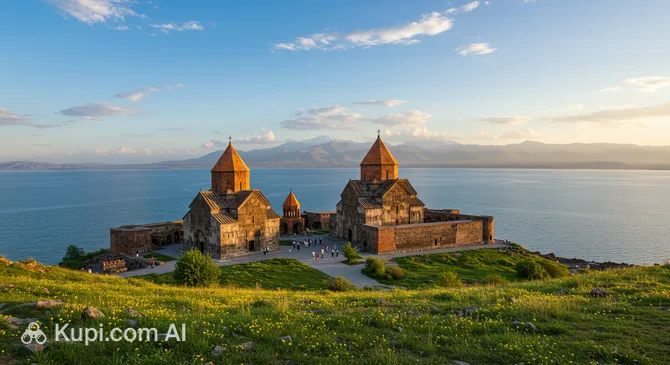
Sevan. Illustration.
Source: Kupi.com AI

The life of the city is inextricably linked to the lake of the same name—the true "blue pearl" of the region. The water's surface, reflecting the sky and clouds like a mirror, creates picturesque landscapes in any season. Despite its compact size and population of about 23,200 people, the city is an important transport hub and a popular resort center. The ancient history of Sevan and its surroundings is harmoniously interwoven with modernity: cozy restaurants and comfortable guesthouses stand alongside ancient architectural monuments.

The main point of attraction here is, undoubtedly, the opportunities for both active and relaxed recreation by the water. In summer, the coast comes alive: tourists flock here for the beaches, boat trips, and the famous local cuisine. Visiting the monastery on the peninsula, which offers the best view of Lake Sevan, and tasting fresh fish are mandatory items on any guest's itinerary.

Sevan is ideal for those seeking inspiration and harmony with nature. The warm hospitality of the locals, the purest air, and the grandeur of the mountain ranges make a trip here unforgettable. This is a city you'll want to return to for the fantastic sunsets and the atmosphere of genuine comfort.

Weather Overview

The climate of this region is largely determined by its high-altitude location: it is always cooler and fresher here than in the lowlands of Armenia. When planning your trip, keep in mind that the weather in Sevan can be quite changeable and windy, so warm clothing will be useful even during the tourist season.

Winters here are real, invigorating, and quite cold. In January, the average temperature drops to -4.6°C, and at night, the mercury often falls to -8.0°C. Spring arrives with increased humidity: May is considered particularly rainy, with precipitation possible for up to 24 days a month, so a reliable raincoat or umbrella will be essential companions for the traveler.

Summer is a time of mild warmth without exhausting heat. In July and August, the air warms up to an average of +16...+20°C, creating ideal conditions for relaxing by the water, although short rains are possible even during this period. Expect a fresh summer with comfortable temperatures and frosty, snowy winters.

Average monthly temperature

Average monthly precipitation

Interesting Facts

In addition to picturesque landscapes and famous monuments, Sevan holds many fascinating secrets and legends. Here are some amazing facts that will help you look at this city and its surroundings from a new perspective.

  • An island that became a peninsula. The famous Sevanavank Monastery, founded in the 9th century, was originally built on an isolated island. It was only in the 20th century, due to the artificial lowering of the lake's water level, that the land joined the shore. Today, this once hard-to-reach place has become a hallmark of Armenia and one of its most beautiful viewpoints.

  • A drink for the stars. There is a poetic legend about the purity of the local water. Ancient lore says that the water in the lake was so transparent and sacred that only the stars and gods could drink it. Today, the lake remains the main strategic reservoir of fresh water for the entire region.

  • "The King of Fish." Sevan is home to a unique trout that locals call "Ishkhan," which translates to "prince." This fish is a symbol of the lake, and the secrets of catching and preparing it have been carefully preserved and passed down by local fishermen for generations.

  • Mysteries of the depths. Stories about ancient cities and treasures hidden at the bottom of the lake are popular among residents. This mysticism has a real basis: during fluctuations in the water level, archaeologists have indeed found Bronze Age artifacts on the newly exposed land, confirming the ancient history of settlement in these areas.

How to Get There

When planning a trip to the lake, it is important to think through the logistics in advance, as the city is located in a high-altitude area. You can find out more about how to get to Sevan by studying various routes, but the main way for international tourists to arrive remains a flight followed by a transfer.

The city does not have its own airport, so travelers usually fly into the country's capital. The most convenient and popular option is Zvartnots International Airport (EVN), located in Yerevan. It is approximately 64.8 km from the resort. The journey by taxi or transfer will take about an hour to an hour and a half, allowing you to enjoy the views of the Armenian Highlands along the way. This is the country's main air gateway with a high passenger flow and developed infrastructure.

An alternative option is Leninakan Airport (LWN), located in the city of Gyumri, about 95.9 km from Sevan. This is Armenia's second-largest city, and the trip from there will take a bit longer. This route is often chosen by those who want to combine a trip to the lake with a visit to the country's cultural capital.

Some tourists also use Tbilisi International Airport (TBS), located in neighboring Georgia (124.5 km from Sevan). Despite its relative geographical proximity, you should allow extra time for crossing the state border, so the journey by car may take more than 3–4 hours.

For planning convenience, here is a summary of the available airports:

AirportPassenger trafficDistance
Zvartnots International Airport5.2 mln65 km
Leninakan Airport220 00096 km
Igdir383 239112 km
Ganja Airport220 000117 km
Tbilisi International Airport4.8 mln124 km

Railway communication in this direction is highly seasonal. Sevan has a station that accepts summer electric trains from Yerevan. This is a very picturesque and budget-friendly way to reach the lake, passing through gorges and mountain valleys. However, keep in mind that at other times of the year, the main modes of transport are buses, minibuses (marshrutkas), and taxis traveling from the capital via the highway.

Main Attractions

The main treasure of the city and its surroundings is undoubtedly its historical heritage, harmoniously integrated into the natural landscape. A journey here is inconceivable without visiting the ancient shrines that preserve the memory of centuries and create the unique silhouette of the coast.

Sevanavank Monastery is the region's most recognizable landmark, situated at the top of the peninsula. The complex, founded in the 9th century, is often called the "Black Monastery" because of the dark volcanic tuff used for its walls. Tourists must climb more than two hundred steps to reach the churches of Surb Arakelots and Surb Astvatsatsin. The effort will be fully rewarded: from the top, you get perhaps the best panorama of the lake's azure expanse and the surrounding mountain ranges.

A bit further from the city, on a rocky cape over the water, stands Hayravank Monastery. Unlike the always bustling Sevanavank, an atmosphere of deep peace and silence prevails here. This architectural monument from the 9th–12th centuries seems like a natural extension of the coastal cliffs. Of particular interest is the play of light inside the temple and the ancient khachkars (cross-stones) preserved on the grounds. It is worth coming here to feel the powerful energy of the ancient walls in solitude, away from large tourist groups.

Just a few kilometers from Sevan lies a unique open-air museum—Noratus Cemetery. This place is famous for having the world's largest collection of ancient Armenian khachkars. There are about a thousand steles here dating from the 9th to the 17th centuries, each with a unique, non-repeating pattern. Walking among these stone masterpieces covered in multi-colored moss is like reading a stone chronicle of Armenia's history.

For those looking to diversify their cultural program, Sevan National Park is of great interest. This is not just a conservation area but also an excellent spot for birdwatching, as the lake is an important stopover for migratory flocks. The park's walking trails allow you to enjoy the pristine mountain air and see rare species of high-altitude plants in their natural habitat.

Local Cuisine

Sevan's cuisine is a true mirror of its geography: the city's gastronomic life revolves around the lake's generous bounties. The main culinary attraction of the region, for which many tourists specifically visit Armenia, is the famous Sevan trout, which locals call "Ishkhan" (Prince fish). Coastal restaurants offer dozens of ways to prepare it: from classic charcoal grilling to exquisite braising in white wine.

A particular delicacy is trout stuffed with nuts and fresh herbs. This dish has a rich, deep flavor and is considered a hallmark of local cuisine. Sevan crayfish are no less popular. They are prepared here with great skill, boiled in aromatic mountain herbs with spices and served with lemon wedges. On a hot summer day, a plate of crayfish shared with friends on a terrace overlooking the sunset has become a true ritual for guests of the city.

In addition to fish dishes, Sevan's gastronomic map is rich in natural farm products. At local markets, you should look for homemade cheeses, fresh honey, and berries. Special mention goes to Sevan dried apricots—a sweet and healthy treat that goes perfectly with tea. Speaking of drinks: it is customary here to accompany a meal with excellent Armenian wine or cool homemade compotes, and in chilly weather, you will be warmed by tea made from mountain herbs gathered on the slopes of the Geghama Range.

The food culture in Sevan is democratic and hospitable. Here you can find both cozy family cafes with homemade bread and restaurants with panoramic views of the water. In summer, the city turns into a center of gastronomic tourism: food festivals are often held, featuring workshops on fish preparation and folk festivities with music. This is the best time not only to eat well but also to immerse yourself in the atmosphere of Armenian hospitality.

Travel Tips

A trip to Sevan is an opportunity to touch ancient history and enjoy mountain coolness. To ensure your visit to Armenia's "blue pearl" leaves only pleasant impressions, there are several important nuances to consider when preparing for your trip.

  1. Clothing and Climate. The city is located at an altitude of about 1,900 meters, so it is always cooler here than in the lowlands. Even in summer, be sure to bring a windbreaker or a warm sweater: evenings can be cold, and a biting wind often blows off the lake. For visiting active monasteries (like Sevanavank), modest clothing covering the shoulders and knees is required.

  2. Transport. Sevan is a compact city, but for trips to the beaches or distant attractions, it's better to use a taxi. The Yandex Go app and the local GG service work well here. This is more convenient and often cheaper than negotiating with private drivers on the street, as the price is fixed.

  3. Finances. While major restaurants and hotels accept cards, you will definitely need cash in Drams. These are necessary for buying souvenirs, paying for small services, and purchasing the famous Sevan crayfish from street vendors. ATMs are available in the city center, but it's better to withdraw money in advance.

  4. Active Sun. Don't let the mountain coolness fool you: UV rays are very intense at high altitudes. Sunscreen with a high factor (SPF 30–50), sunglasses, and a hat are essential to avoid burns even in cloudy weather.

  5. Communication and Language. The language barrier for English speakers is minimal in tourist areas, and many locals, especially the older generation, speak Russian well. Mobile connection and internet near the lake are stable (operators Viva-MTS, Team, Ucom), allowing you to stay online.

  6. Local Etiquette. The region's residents are famous for their hospitality. If you are invited to a table or offered a treat, a direct refusal might upset the host. It is considered good manners to try at least a small piece or politely explain the reason for declining while warmly thanking them for the attention.

  7. Water Safety. Lake Sevan is deep and quite cold (the water rarely warms up above +20°C). Swim only at equipped beaches where there are lifeguards and a checked bottom, and be realistic about your strength in the cool water.

  8. Buying Food. Be careful when buying fish and crayfish "by hand" along the highway, especially on hot days. To ensure you enjoy the taste of the local catch without health risks, it's safer to order fish dishes at reputable lakeside restaurants.

Sevan is a place where the soul rests while looking at the endless expanse of water. By following these simple tips, you can avoid minor domestic inconveniences and fully devote yourself to contemplating the beauty of this unique mountain region.

Entertainment & Nightlife

Entertainment and nightlife in Sevan have a unique local flavor that depends directly on the time of year. While the city sinks into a sleepy silence in winter, the arrival of summer brings the coastline to life, transforming it into a bustling hub of activity. Nightlife here is not centered in stuffy indoor venues but primarily takes place outdoors—at beach complexes and open terraces where the sound of the surf mixes with music.

Most activity buzzes in the coastal zone, where popular recreation areas are located. During the peak tourist season, many beaches transform into improvised clubs in the evening: foam parties are held, DJs from the capital are invited, and refreshing cocktails are served. The atmosphere in these places is very democratic and relaxed: there is no strict dress code, and guests often have fun in beachwear or casual style. This is a meeting place for young people from Yerevan and tourists from all over the world.

For lovers of a quieter but equally atmospheric evening, waterside restaurants are an ideal choice. Many establishments stay open late and offer live music—ranging from national Armenian melodies to cover versions of world hits. Dinner here smoothly transitions into long gatherings with wine and a view of the moonlight dancing on the lake. This is a great way to experience the local culture of hospitality in an informal setting.

Practical tips and safety. Sevan is considered a safe city, and tourists can feel comfortable in the resort areas at any time. However, keep in mind that distances between hotels and entertainment spots along the shore can be significant, and highway lighting is not always ideal. Therefore, for night travel, it is highly recommended to call a taxi through official apps rather than hailing a car on the road. Prices in the evening may be slightly higher than during the day but remain quite affordable.

As for daytime entertainment, it is inextricably linked with nature and activity. Tourists can rent jet skis, catamarans, or go on a mini-cruise on a pleasure boat to see the famous monastery from an unusual perspective. For those interested in culture, there are small museums and galleries in the city, but the main stage for impressions in Sevan always remains the lake itself and its picturesque shores.

Parks & Museums

The cultural and natural landscape of Sevan is inextricably linked to its main treasure—the lake; however, the city can offer travelers more than just beach holidays. Green zones here transition smoothly into protected territories, and architectural monuments serve as unique open-air museums telling the story of Soviet modernism and the ancient traditions of Armenia.

Sevan National Park is the heart of the region's recreational zone. The pine grove on the peninsula deserves special attention; it was planted artificially but today looks like an ancient forest. A walk along the shaded alleys filled with the scent of pine needles and lake freshness is an excellent alternative to a hot beach. It is an ideal place for picnics and leisurely strolls with a view of the monastery, where nature and history exist in perfect harmony.

Another green oasis is the Sevan Botanical Garden. Located at an altitude of about 2,000 meters, it is a unique scientific site where hundreds of species of high-altitude plants are collected. Although the garden may not always look like a manicured European park, its wild beauty and diversity of endemic flora attract lovers of botany and peace. Here you can see rare species of flowers and shrubs adapted to the harsh local climate.

There are few traditional museums in the city itself, but the Writers' Resort (House of Creativity) plays the role of the main cultural and architectural landmark. This building, overhanging the water on a futuristic "leg," is a recognized masterpiece of Soviet modernism. Although it is a functioning guesthouse, many tourists come here as they would to an architecture gallery to appreciate the boldness of 1930s and 1960s engineering. The building often appears in international architectural journals and serves as a living monument to the avant-garde era.

History buffs will find it interesting to visit the Church of Surb Akob (Saint Jacob), located within the city limits. Unlike the famous monastery on the peninsula, this church is often overlooked by mainstream tourists. Built from black tuff, the church is an example of modern Armenian architecture while still preserving the spirit of ancient traditions. In the courtyard, you can see several ancient khachkars brought here from different corners of the region.

For those looking for hidden gems, the ruins of the Metsep Cyclopean Fortress will be a true discovery. It is located on the northern outskirts of the city and dates back to the Bronze and Iron Ages. Climbing up to the remains of the ancient walls, you will not only touch thousands of years of history but also be rewarded with a stunning, completely non-tourist view of the city and the bay that rarely makes it onto postcards.

Getting Around

The transport system in Sevan is quite simple and compact, which perfectly matches the size of this small resort town. You won't find a metro, trams, or trolleybuses here. Public transport is mainly represented by marshrutkas (minibuses) and small buses that connect residential neighborhoods with the coastal zone and the peninsula.

The primary means of travel for locals and budget tourists are marshrutkas. They run along the main streets and connect the urban part (where most shops and residential buildings are) with the recreation zone by the lake. As a rule, there is no fixed schedule posted at stops: transport departs from terminal points once full or at intervals of 15–20 minutes during the day. In the evening, the intervals increase.

The fare payment system is very conservative: only cash is accepted here. There are no validators, transport cards, or options to pay by bank card or smartphone on the city's public transport. Payment is made directly to the driver upon exiting. The fare for city travel is fixed and very affordable (usually around 100 Drams), but it is recommended to always carry small bills or coins, as the driver may not have change for large banknotes.

The most popular and convenient alternative to public transport is the taxi. Popular aggregators like Yandex Go and the local service GG work excellently in the city. Using apps is preferable for tourists since the price is fixed in advance, and you won't have to haggle with the driver or explain the destination with gestures. A car can be called to almost any point in the city or the beach, and the wait time is usually just a few minutes.

If you decide to use private taxi drivers who often wait near the station or popular attractions, be sure to agree on the fare before getting into the car. This will help avoid misunderstandings at the end of the trip. It's worth noting that a taxi ride between the city and the peninsula (where Sevanavank Monastery is located) is inexpensive and often the most comfortable way to reach the landmarks, especially if you are traveling with luggage.

During the summer season, bicycle rentals gain popularity in the resort area. While there are almost no dedicated bike lanes in the city itself, a bike ride along the coast or through the trails of the National Park is a great way to see the surroundings. Rental points are usually located near the beaches and large hotels.

An important feature of Sevan's transport geography is that the railway station is located somewhat away from the city center and the beach area. If you arrive on a seasonal electric train, be prepared for the fact that you will need to take a taxi or a marshrutka to your hotel or the monastery, as walking with luggage can be tiring due to the distances.

Accommodation

The choice of accommodation in Sevan is quite diverse, though it has its own specifics due to the city's resort status. Infrastructure here varies from simple Soviet-era tourist bases and guesthouses to modern hotel complexes. When traveling through Armenia, tourists often seek a combination of beach recreation and mountain coolness here, so hoteliers try to offer options for every taste: from budget lodging in the private sector to comfortable rooms with swimming pools.

In terms of geographical location, the city can be roughly divided into two zones: the coastline and the urban area. Most tourists prefer to stay in close proximity to the water, around the peninsula and along the road leading to Dilijan. This is where the most popular hotels and recreation zones are concentrated. It is convenient for those who want to spend time on the beach and enjoy lake views right from their window. However, keep in mind that prices in the coastal zone are significantly higher during the season.

If you are looking for more budget-friendly options or want to immerse yourself in an authentic atmosphere, it is worth considering accommodation in the city of Sevan itself, which is slightly inland from the lake. Here you can rent an apartment or a room in a guesthouse (B&B) at very reasonable prices. The disadvantage of this location is the need to reach the beaches by taxi or minibus, but on the upside, grocery stores, a market, and pharmacies with standard, non-tourist prices will be nearby.

Cottage settlements are particularly popular in the region. This is an ideal format for families with children or large groups. Renting a separate house with a barbecue area allows you to organize your holiday at your own pace. You can also find unique accommodation in the vicinity, such as hotels in Soviet modernist buildings that attract architecture enthusiasts with their history and unusual shapes.

Booking tip: Sevan is a seasonal resort, and peak demand occurs in July and August. If you are planning a weekend trip during these months, you should book accommodation at least 2–3 weeks in advance. In the off-season (autumn and spring), be sure to check for heating in the room: nights by the lake are cold, and without a heater, your stay could be uncomfortable.

The price range can be described as medium, leaning toward budget in the private sector and high in top resorts. You can book accommodation through popular international online platforms; however, direct booking also works well here. You can often find contact details for guesthouses on maps and reach out to the owners directly by phone or through messengers, which sometimes allows for a small discount.

Nearby Cities

For those who want to explore the surroundings, Sevan serves as an excellent starting point for day trips to several interesting nearby places:

Just an hour's drive away is the country's capital—Yerevan. It is an ideal choice for those who want to dive into vibrant cultural life, visit the famous Cascade, museums, and national cuisine restaurants. If you are attracted to nature and a calmer atmosphere, you should head to Vanadzor. Armenia's third-largest city is located in a picturesque mountain basin and is known for its mild climate. Very close by is Hrazdan—a city on the banks of the river of the same name, interesting for its industrial landscapes against the backdrop of mountains and its proximity to other resort areas.

CityPopulationDistance
Hrazdan52 80816 km
Dilijan16 60023 km
Gavar20 76526 km
Charentsavan25 03932 km
Byureghavan9 51340 km

These nearby destinations provide insight into the diverse culture and landscapes of the region.

Shopping & Souvenirs

Shopping in Sevan has its own unique characteristics: it is not the place to go for high fashion or designer clothing. The trade sector here is primarily focused on the everyday needs of locals and the gastronomic demands of tourists. The city's shops offer authentic products that allow you to take home a piece of local flavor, whether it be delicious delicacies or handmade items.

Most of the city's commercial life is concentrated along Nairyan Street. This is Sevan's central artery, where most shops, pharmacies, mobile stores, and small supermarkets are located. A walk down this street will allow you to find everything you need for a comfortable trip: from food to beach gear and warm clothing, which may be necessary for cool evenings.

There are no typical huge malls or entertainment complexes in Sevan. The role of main shopping points is played by chain supermarkets and small-format local shopping centers. They offer a wide range of goods at fixed prices, which is convenient for tourists who are not used to bargaining.

The most interesting places for shopping are certainly the markets. The main tourist bazaar is located at the foot of the stairs leading to the monastery on the peninsula. It is a true treasure trove for souvenir hunters. If you are interested in fresh produce, you should visit the city food market, where farmers sell seasonal fruits, homemade cheeses, herbs, and authentic Armenian lavash.

As souvenirs from Sevan, people most often bring gifts from the lake and the earth. In first place is, of course, fish—smoked whitefish (sig) or the famous trout, which local artisans prepare according to ancient recipes. Items made from semi-precious stones are also very popular: obsidian ("Armenian stone") and moonstone. You should also look for handmade ceramics, wooden backgammon sets, and gastronomic gifts like walnut or pine cone jam.

Most shops open around 09:00–10:00 AM and stay open until 09:00 PM, while some grocery supermarkets are open 24/7. As for payment, major outlets accept bank cards without issues. However, at markets, souvenir stalls by the lake, and small kiosks, cash in Drams is preferred, so it is recommended to always have small bills with you.

The Tax Free (VAT refund) system officially operates in Armenia for foreign citizens at partner stores. However, keep in mind that in Sevan, most shopping spots are private stalls or markets that do not participate in this program. You are unlikely to be able to claim a tax refund here; this option is primarily available in large brand stores in Yerevan.

Nearby cities

Reached the end of the page?

That means the route is fully explored