Support

Adelaide Airport

About the Airport

Adelaide Airport (ADL) is not just the air gateway to South Australia, but a modern and award-winning transport hub that welcomes and sees off millions of travelers annually. Located just a few kilometers from the city centre, it is renowned for its efficiency and convenience. The airport became one of the first in the country where international and domestic flights are combined under one roof, creating a unified and comfortable space for all passengers. This makes it the ideal starting point for exploring the region's picturesque valleys, stunning coastlines, and unique wildlife.
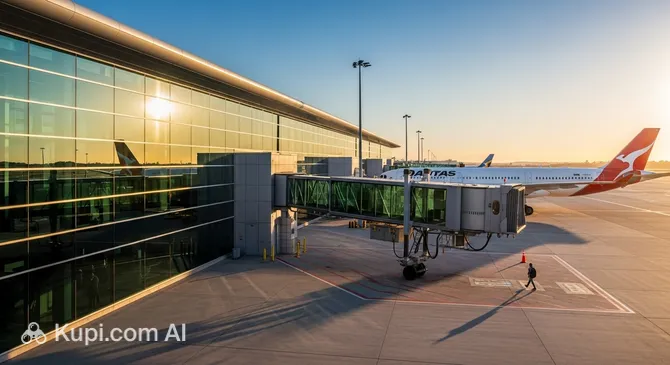
Adelaide Airport. Source: Kupi.com Binoculars

Adelaide Airport is the fifth busiest in Australia and serves as a vital hub for both domestic and international flights. Below is essential information for travelers.

IATA Code ADL
ICAO Code YPAD
City Adelaide
Distance to centre Approx. 6 km
Status International
Passengers per year Over 8.7 million (for FY 2025)
Popular Airlines Qantas, Virgin Australia, Jetstar
Schedule "Adelaide Airport" online schedule

One of the key features of Adelaide Airport is its unified terminal (T1), which handles all flights, significantly simplifying navigation and transfers. The airport is recognized as one of the most modern in Australia, offering passengers free Wi-Fi, a variety of shops, cafes, and dining options. Convenient transport links, including JetBus buses and taxis, allow you to reach the city centre in approximately 20-25 minutes. The airport is capable of accommodating large aircraft, including the Airbus A380, and is constantly working to expand its route network, connecting South Australia with key points in Asia, the Middle East, and recently, North America.

Contact Information

To contact Adelaide Airport representatives, obtain general information, or resolve any issues, you can use the following contact details:

  • Official Website: Up-to-date information on flights, services, and airport regulations is available at www.adelaideairport.com.au.
  • Inquiry Phone: +61 8 8308 9211 (for calls from outside Australia) or 08 8308 9211 (for calls within the country).
  • Address: 1 James Schofield Drive, Adelaide Airport, South Australia 5950, Australia.
  • Email: For general inquiries, you can use the address airport@aal.com.au.
  • Social Media: Follow news and updates on the airport's official pages on Facebook, X (formerly Twitter), and Instagram.
  • Lost Property Information: If you have lost items within the terminal, contact the Lost Property service. In case of lost luggage during a flight, you should contact your airline directly.
  • Customer Support: Most questions can be answered by calling the main airport number or via the feedback form on the official website.

How to Get to the Airport

Adelaide Airport is located just 6 kilometers west of the central business district of Adelaide, making it one of the most accessible capital city airports in Australia. You can reach the terminals in several ways, each with its own advantages depending on your budget, time, and amount of luggage.

The most economical way to get to the airport is by public transport. Dedicated JetBus buses from Adelaide Metro (routes J1, J1X, and J2) operate between the airport, the city, and popular suburbs such as Glenelg. The trip from the city centre will take about 25-30 minutes. Tickets can be purchased from the driver, or you can use a rechargeable metroCARD for better rates. This is an excellent choice for solo travelers and those traveling light.

For greater comfort and speed, you can choose a taxi or ride-sharing services (such as Uber). The trip from the centre of Adelaide to the airport usually takes 15-20 minutes, but may take longer during peak hours. The cost will be significantly higher than the bus, but it is the most convenient option if you have many suitcases or are traveling in a group. Designated taxi ranks and ride-sharing waiting zones are located right outside the terminal exit.

If you plan to explore South Australia by car, then car rental or driving your own vehicle is a logical solution. The route to the airport is simple and straightforward, located near the major Sir Donald Bradman Drive. Services from all major rental companies are available at the airport. For those arriving in their own car, both short-term and long-term parking are provided. The terminal car park is a few minutes' walk from the departure hall, while the more budget-friendly long-term parking is slightly further away, with a free shuttle connecting it to the terminal.

Terminals and Map

Adelaide Airport (ADL) features a modern and thoughtful layout, making it one of the most convenient in Australia for passengers. A key feature of the airport is its single integrated terminal, which serves both domestic and international flights. This solution significantly simplifies navigation and reduces transfer times, saving travelers from the need to move between different buildings.

The terminal structure is intuitive and divided by levels. Ground Floor is the arrivals area. Here you will find baggage reclaim belts, customs control counters for international flights, as well as car rental offices, taxi stands, and bus stops. Level 2 is entirely dedicated to the departures area. It houses the check-in counters of most airlines, security screening points, as well as the main departure lounge with shops, cafes, and restaurants.

Since all boarding gates are located in one building, moving between them is straightforward. After passing security control, passengers enter a spacious common area. Gates for domestic flights are freely accessible, while boarding for international flights requires passing through additional passport control, which is located in a designated part of the terminal. Despite this, everything is within walking distance.

It is recommended to arrive at the airport well in advance to complete all formalities. For domestic flights, it is advisable to be on-site 1.5-2 hours before departure, especially during peak morning and evening hours. For international flights, allow at least 3 hours — this will allow you to check in, drop off luggage, and pass through security and immigration control without rushing. The airport is well-equipped with signage, so navigating here is easy, even if you have arrived in Adelaide for the first time.

Airport History

The history of Adelaide Airport is a tale of growth and modernization, reflecting the development of the entire South Australia region. Initially, the city's main airfield was Parafield, but after World War II, it became obvious that it could not cope with the growing needs of aviation. The decision to build a new airport was made, and in 1955, a new air terminal opened at the West Beach site, known today as Adelaide Airport (ADL).

For the first few decades, the airport served primarily domestic flights. An important stage in its history was 1982, when a separate international terminal was built and opened. This event brought Adelaide to the world stage, allowing it to receive flights from other countries directly and turning the airport into an important international hub.

The most significant transformation occurred at the beginning of the 21st century. In 2005, a massive reconstruction was completed, resulting in the opening of the new integrated Terminal 1 (T1). This was a pioneering solution for Australia: a single terminal uniting both domestic and international flights under one roof. Such organization significantly simplified transfers and increased comfort for passengers. The project's success was confirmed as early as 2006, when the airport was recognized as the second-best international airport in the world in its category (5–15 million passengers).

Since then, the airport has continued to expand. In recent years, projects have been implemented to increase the terminal area and add new shops, restaurants, and gates. One interesting fact is that during the construction of the new T1 terminal, special attention was paid not only to efficiency but also to design, using plenty of glass and light to create a sense of spaciousness. Today, Adelaide Airport is a modern and award-winning complex that plays a key role in the transport system and economy of South Australia.

Services and Amenities

Adelaide Airport (ADL) offers passengers a full range of services and amenities to make their stay comfortable and pleasant. Whether you are setting off on a journey, meeting someone, or waiting for a transfer, you will find everything you need here.

For those wishing to grab a bite or do some shopping, the airport features a wide selection of restaurants, cafes, and dining venues to suit every taste — from fast food outlets to à la carte restaurants where you can sample dishes made from famous South Australian produce. Numerous shops, including Duty Free shops for international flights, offer souvenirs, clothing, books, and travel goods.

Staying connected is easy thanks to free Wi-Fi available throughout the terminal. Special charging stations and power outlets are provided in waiting areas for electronic devices. Passengers seeking enhanced comfort can use airline lounges such as the Qantas Club, Virgin Australia Lounge, and Rex Lounge, as well as the paid VIP lounge, Plaza Premium Lounge, accessible to all travelers.

Financial services include ATMs and currency exchange points located in both the arrivals and departures areas. For passengers traveling with small children, convenient parents' rooms are equipped with everything necessary for infant care. The airport is fully accessible for passengers with reduced mobility: there are ramps, lifts, accessible restrooms, and assistance services can be booked in advance through your airline.

If you need to stay overnight or rest between flights, the Atura Adelaide Airport hotel is located right at the terminal. Additionally, there are other accommodation options in the immediate vicinity of the airport. For business travelers, conference rooms and business services are available both in the airport itself and at the adjacent hotel, allowing meetings and events to be held without leaving the premises. There is also a pharmacy in the terminal in case medication or health products are needed.

Where to Eat

At Adelaide Airport, you certainly won't go hungry. Here you will find options for every taste and budget — from a quick coffee before departure to a leisurely dinner enjoying South Australian cuisine. Dining establishments are conveniently located both in the public area before security and in the secure departures zone.

In the public area (landside), before passing through screening, you can find several cozy cafes. They are ideal for those seeing someone off or arriving at the airport early. This is a great place to have a cup of coffee, eat a sandwich, or enjoy fresh pastries in a calm atmosphere before checking in for a flight.

The main variety awaits passengers in the departure zone (airside), after passing security control. For a quick snack, visit one of the coffee shops, for example, the popular local chain Cibo Espresso, to get a real taste of the city. If you prefer a full lunch, look out for restaurants offering both international cuisine and local specialties. We highly recommend visiting Coopers Alehouse — this is not just a venue, but a landmark of the state of South Australia. Here you can try famous local beverages and order hearty Australian-style dishes.

Most establishments cater to the needs of passengers with special dietary preferences. You will easily find vegetarian, vegan, and gluten-free options on the menus of many restaurants. The price range is average for airports, meaning slightly higher than in the city. The opening hours of most food outlets are aligned with the flight schedule, so they are open from early morning until the last flight departs.

Travel Tips

Planning a trip through Adelaide Airport will go smoothly if you consider a few tips. For international flights, it is recommended to arrive at the airport at least 3 hours before departure, and for domestic flights within Australia1.5-2 hours. This will give you enough time to calmly complete all formalities without rushing.

To save time, take advantage of online check-in offered by most airlines. This allows you to head straight to the bag drop counter or, if you are traveling light, to the security checkpoint. The security screening procedure in Adelaide is standard: be prepared to remove laptops, tablets, and liquids in containers up to 100 ml, packed in a transparent bag, from your carry-on luggage.

When choosing a seat on the plane, be guided by your preferences. A window seat offers beautiful views during takeoff and landing, especially if you are flying over the Australian coast. An aisle seat is more convenient if you plan to get up and stretch during the flight. For more legroom, choose seats at emergency exits, but remember that certain restrictions apply to them.

Pay special attention to the contents of your hand luggage and checked baggage. Australia has very strict biosecurity rules. You must declare all food products, plants, wooden items, and any items of animal origin. Even a regular apple or sandwich that is not properly declared can lead to a large fine. It is better to declare a doubtful item than try to hide it.

Passengers with a connection at Adelaide Airport should check with their airline in advance whether their luggage will be checked through to the final destination. If you have an international transit, follow the "International Transfers" signs. The airport is quite compact, making transfers convenient, but always leave a buffer of time between flights.

Customs control upon entering the country requires completing an Incoming Passenger Card, which is usually handed out on the plane. Fill it out honestly and carefully. Customs officers may ask questions about the purpose of your visit and the contents of your luggage. Openness and readiness to cooperate are the best approach.

To save money, book airport parking online in advance — this is often cheaper. Inside the terminal, there are drinking water fountains, so you can bring an empty bottle and fill it after security. Prices for food and drinks may vary, so do not rush to make a purchase at the very first cafe.

In case of a flight delay, first contact your airline representative for up-to-date information and possible options (rebooking, meal vouchers, or hotel). Adelaide Airport has free Wi-Fi, shops, and cafes to help pass the waiting time. Consider accessing a business lounge for a fee for greater comfort.

Reached the end of the page?

That means the route is fully explored