Support

Alexandria Station

About

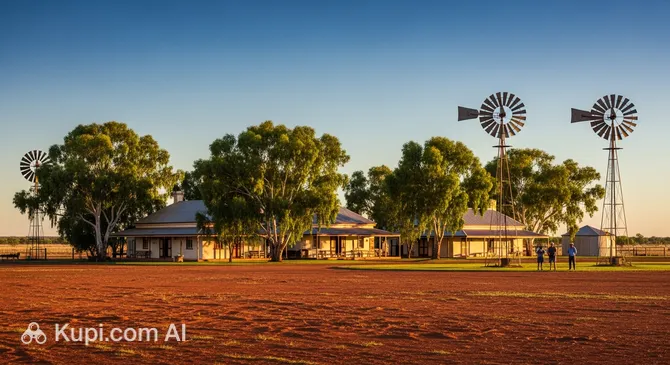
Alexandria Station. Source: Kupi.Binoculars

Alexandria Station is a legendary location in the Northern Territory of Australia, renowned not as a traditional city, but as one of the country's most significant pastoral properties. Situated on the vast Barkly Tableland, this immense cattle station captures the true spirit of the outback with its endless horizons and remote atmosphere. It serves as a fascinating example of life in the Australian bush, where the scale of operations is so grand that the station functions much like a self-contained town for its community of workers.

The geography of the area is defined by rolling plains of Mitchell grass and coolibah trees, stretching as far as the eye can see. The climate is semi-arid to tropical, characterized by hot summers and a distinct wet season that transforms the dusty landscape into a vibrant green expanse. For those intrigued by the region's past, the history of Alexandria Station offers a compelling look into the development of the pastoral industry in the late 19th century and the resilience required to thrive in such a remote environment.

Travelers passing through the region are often struck by the sheer magnitude of the property, which is one of the largest of its kind in the world. The area is known for its spectacular outback sunsets, where the sky is painted in vivid shades of orange and purple, and the incredible visibility of the starry night sky. While it is primarily a working station, the surrounding landscape of the Barkly region provides a unique backdrop for those seeking to understand the heart of the continent.

Whether you are exploring the vast distances of the Northern Territory or simply interested in Australian rural heritage, the area around Alexandria Station represents an authentic slice of life in the remote interior. It is a place that commands respect and offers a quiet, powerful beauty found nowhere else.

Weather Overview

The climate in this region is defined by distinct seasonal shifts, typical of the Northern Territory's interior, offering travelers a mix of intense heat and pleasant, milder periods. To help you pack appropriately for your journey, it is useful to review the detailed weather in Alexandria Station before you depart.

During the summer months from December to February, conditions are hot, with average temperatures hovering around 30°C to 32°C and maximums frequently climbing between 36°C and 38°C. This season also brings the highest frequency of precipitation; January, for instance, sees about 12 wet days, marking the peak of the wet season despite relatively low rainfall totals.

In contrast, the winter season from June to August offers a cool and dry respite. Average temperatures drop to approximately 20°C, with nighttime lows falling to around 13°C or 15°C. Months like July and August are exceptionally dry, typically recording zero wet days, which ensures clear skies and excellent visibility for exploring the vast landscape.

Interesting Facts

Beyond the main attractions of the outback, Alexandria Station holds many fascinating secrets and historical distinctions that few visitors realize. This location is not just a farm; it is a place of staggering scale and unique heritage that defines the Australian interior.

  • A Giant Among Giants: Alexandria Station is the largest pastoral lease in the Northern Territory and the third-largest in all of Australia. Covering approximately 16,000 square kilometers, the property is larger than entire sovereign nations like Jamaica or Lebanon, stretching across a massive portion of the Barkly Tableland.

  • The Cattle Duffing Court: In a twist of legal history, the station served as a makeshift courthouse in 1955. A special court was convened directly on the property to hear charges regarding a massive "cattle duffing" (stealing) ring, which was considered the largest livestock theft operation in the region since World War II.

  • A Self-Sufficient Village: Due to its isolation and size, the station functions more like a remote town than a typical property. It is home to a resident community of approximately 50 to 80 employees, complete with its own social club, kitchens, and extensive infrastructure to support life hundreds of kilometers from the nearest city.

  • Harvesting the Native Landscape: The station is renowned for the fertility of its Mitchell grass plains. Unlike many properties that rely solely on imported feed, Alexandria Station harvests around 10,000 bales of this native grass annually, utilizing the natural abundance of the land to sustain its massive cattle herd.

  • A Century and a Half of History: It holds the rare distinction of being the flagship property of the North Australian Pastoral Company (NAPCo) since 1877. This represents nearly 150 years of continuous operation under the same entity, making it one of the most enduring pastoral legacies in the country.

How to Get There

Reaching Alexandria Station is an adventure into the heart of the Australian outback. Located on the remote Barkly Tableland, this vast property is far removed from standard public transport networks, making the journey a logistical undertaking that requires careful planning. Most visitors arrive by private vehicle, often traversing long stretches of remote highways to experience the sheer scale of the landscape. For specific driving routes and travel tips, you can find more about how to get to Alexandria Station on our detailed page.

Since the station does not have its own public airstrip, air travel involves flying to a regional hub and driving the remaining distance. The closest commercial gateways are Mount Isa Airport (IATA: ISA) in Queensland and Tennant Creek Airport (IATA: TCA) in the Northern Territory. Both are roughly 300 to 400 kilometers away, a drive that takes several hours through isolated country. International travelers typically fly into Darwin International Airport (IATA: DRW) or connect via major cities like Brisbane to reach these regional outposts.

Rail travel is not a viable option for reaching Alexandria Station directly. While the famous The Ghan railway cuts through the Northern Territory, the nearest potential stops are hundreds of kilometers away, and there are no connecting services to the station. Consequently, the primary mode of access is by road, utilizing the Barkly Highway and the Tablelands Highway. Due to the remote nature of the area, traveling with a reliable vehicle and carrying extra supplies, such as water and fuel, is strongly recommended.

Main Attractions

Connells Lagoon Conservation Reserve is undoubtedly the premier natural attraction in the immediate vicinity. Located roughly between Alexandria Station and Brunette Downs, this reserve is unique as the only protected area in Australia established specifically to conserve the Mitchell Grassland communities. It is a haven for birdwatchers and nature enthusiasts, offering a chance to spot the rare Flock Bronzewing Pigeon and the Pictorella Mannikin. The landscape here is pristine and untouched, providing a perfect example of the native ecosystems that sustain the region's massive cattle herds.

The Barkly Tableland itself serves as a breathtaking attraction, offering some of the most expansive "big sky" views on the continent. Travelers passing through the area are often mesmerized by the sheer scale of the horizon, where the flat, treeless plains meet the sky in a seamless line. This landscape is particularly stunning at sunrise and sunset, when the golden grasses glow under the changing light, creating a photographer's paradise that captures the true essence of isolation and space in the Northern Territory.

Running through the heart of the property is the Playford River, a significant ephemeral waterway that breathes life into the arid environment. While it does not flow year-round, the river system features several permanent and semi-permanent waterholes, such as the Tobacco and Ibis waterholes. These spots become vital oases during the dry season, attracting a diverse array of wildlife and offering a glimpse into the delicate hydrological balance of the outback.

For those seeking a touch of civilization and local culture, the Barkly Homestead is the essential stopover in the region. Situated at the junction of the Barkly and Tablelands Highways, this historic roadhouse acts as the social and logistical hub for the surrounding stations, including Alexandria. It is more than just a service station; it is a gathering place where travelers can meet locals, enjoy a hearty meal, and learn about the realities of life in one of Australia's most remote districts.

Local Cuisine

Because Alexandria Station is a working cattle property rather than a city, the local cuisine is defined by the rugged, self-sufficient lifestyle of the Australian outback. You will not find fine dining restaurants here; instead, the food culture revolves around hearty, home-style meals designed to fuel hard work. The undisputed star of the region is high-quality beef. Whether enjoying a barbecue with station hands or stopping at a nearby roadhouse, you can expect steaks—such as T-bones or ribeyes—to be fresh, tender, and cooked simply to highlight the natural flavor of the meat.

A true taste of the bush that visitors should look out for is traditional damper. This iconic Australian soda bread is often cooked in a cast-iron camp oven buried in hot coals, giving it a unique smoky aroma and a thick, crunchy crust. It is a dense, filling staple best eaten warm, generously spread with butter and golden syrup, or served as a side to a savory camp stew. It represents the historical ingenuity of drovers who traveled these plains with limited dry rations.

For tourists passing through the Barkly region, dining options are centered around the classic Australian roadhouse experience, particularly at the nearby Barkly Homestead. The menus here feature "pub grub" favorites that are legendary for their size. A "Chicken Parmigiana" (crumbed chicken breast topped with tomato sauce and melted cheese) or a massive "Works Burger" containing beetroot, egg, and bacon are popular choices. These meals are unpretentious and generous, reflecting the warm hospitality of the Territory.

To quench your thirst in the semi-arid heat, the drink of choice is almost invariably an ice-cold beer, often enjoyed from a stubby holder at the end of a long day. For a non-alcoholic and traditional alternative, try billy tea. Brewed in a metal tin over an open fire and sometimes infused with the scent of gum leaves, this strong black tea is synonymous with outback camping and offers an authentic sensory connection to the landscape.

Travel Tips

Visiting Alexandria Station and the surrounding Barkly Tableland offers a unique opportunity to experience the true vastness of the Australian outback. Since this is a remote working pastoral property rather than a standard tourist city, thorough preparation is the key to a safe and enjoyable journey into this rugged frontier.

  1. Clothing and Gear: Practicality is paramount here. In the heat, wear lightweight, breathable natural fabrics like cotton or linen, and a wide-brimmed hat is mandatory for sun protection. Sturdy, closed-toe boots are best for the rough terrain. If you are visiting during the dry winter months (June to August), do not be fooled by the daytime sun; temperatures drop significantly at night, so pack a warm fleece or jacket.

  2. Transportation: There is no public transport network servicing this remote area. A reliable vehicle is essential, and a 4WD is highly recommended if you plan to explore unsealed roads off the main highways. Always carry a spare tire (preferably two), tools, and extra fuel, as distances between service stations can be immense.

  3. Finances: The local currency is the Australian Dollar (AUD). While the nearby Barkly Homestead accepts credit cards, it is wise to carry cash for smaller purchases or in case of system outages, which can happen in the outback. There are no ATMs on the station itself; the nearest banking facilities are hundreds of kilometers away in Mount Isa or Tennant Creek.

  4. Health and Safety: You will be hours away from a hospital, so carry a comprehensive first-aid kit and plenty of water—at least 5 to 10 liters per person per day. Be mindful of the intense heat and potential for dehydration. In a serious emergency, medical assistance is usually provided by the Royal Flying Doctor Service, so ensure your travel insurance covers air evacuation.

  5. Communication: Mobile coverage is extremely limited in this region. Telstra is generally the only provider with any signal, and even that is often restricted to the immediate vicinity of roadhouses or settlements. For safety on remote tracks, renting a satellite phone or a Personal Locator Beacon (PLB) is strongly advised. Download offline maps before you leave civilization.

  6. Local Etiquette: The golden rule of the outback is to leave gates as you find them—if a gate is open, leave it open; if it is closed, close it behind you. This prevents livestock from straying. Also, give a friendly wave to passing drivers; it is a custom that acknowledges the shared isolation of the road.

  7. What to Avoid: Avoid driving at dawn, dusk, or night. Native wildlife, such as kangaroos, and wandering cattle are most active during these times and can cause severe accidents. It is safer to park your vehicle and enjoy the sunset rather than risk a collision on the highway.

  8. Respect Private Property: Remember that Alexandria Station is a working cattle property and private leasehold land. Do not drive off designated public roads or enter the station's operational areas without explicit permission. Stick to public routes like the Tablelands Highway to view the landscape without trespassing.

By respecting the isolation and following these practical guidelines, you can safely appreciate the awe-inspiring scale of Alexandria Station. It is a place where self-reliance is part of the culture, ensuring your adventure in the Northern Territory is memorable for all the right reasons.

Entertainment & Nightlife

When the sun sets over the vast plains of Alexandria Station, the definition of nightlife shifts dramatically from urban bustle to the profound tranquility of the Australian outback. Travelers expecting neon-lit clubs, bustling night markets, or crowded disco districts will not find them here. Instead, evening entertainment in this remote corner of the Northern Territory is defined by silence, starlight, and the warm hospitality of isolated roadhouses. The "nightlife" here is about connecting with nature and fellow travelers rather than partying until dawn.

The primary—and essentially only—venue for a social evening in the region is the Barkly Homestead. Located at the junction of the Barkly and Tablelands Highways, this roadhouse serves as the pub, restaurant, and community center for an area larger than many European countries. The atmosphere is authentically rugged and unpretentious. You will find a mix of station hands (ringers), truck drivers hauling road trains, and tourists sharing stories over an ice-cold beer. The "Bar & Grill" here offers hearty meals and a chance to soak up the true character of the bush. There is no dress code; dusty boots, singlets, and shorts are the standard attire.

Beyond the roadhouse, the most spectacular evening show is provided by the sky itself. With zero light pollution and dry desert air, the stargazing opportunities around Alexandria Station are world-class. Simply stepping out of your vehicle or tent reveals the Milky Way in stunning clarity, stretching from horizon to horizon. Many visitors consider sitting by a campfire (where permitted) and watching the constellations to be a far more memorable experience than any nightclub. The soundtrack to your evening will not be loud music, but the crackle of fire and the distant calls of nocturnal wildlife.

Practicalities for a night out here are simple but strict. There are absolutely no taxis, ride-shares, or public transport options. You are entirely responsible for your own mobility, and driving at night is strongly discouraged due to the high risk of hitting kangaroos or wandering cattle. If you are drinking at the Barkly Homestead, you should plan to stay overnight in their motel rooms or caravan park. Safety at night involves staying within designated areas; wandering into the tall grass in the dark can be dangerous due to snakes and uneven terrain.

Before the stars come out, daytime entertainment is equally nature-focused. Visitors often spend the daylight hours birdwatching at Connells Lagoon Conservation Reserve or exploring the stark beauty of the Mitchell grass plains. The transition from the harsh, bright light of day to the cool, expansive mystery of the outback night is a daily rhythm that defines the travel experience in this unique part of Australia.

Parks & Museums

As a working cattle station rather than a traditional city, Alexandria Station does not offer manicured botanical gardens or air-conditioned art galleries. Instead, its "parks" are the endless expanses of the Barkly Tableland, and its cultural heritage is written into the dust and infrastructure of the pastoral landscape itself. Visitors here immerse themselves in a raw, living environment where the natural world and colonial history blend seamlessly.

Connells Lagoon Conservation Reserve stands out as the premier natural sanctuary in the region. Unlike the rugged desert often associated with the outback, this reserve protects a pristine example of the Mitchell Grass plains that characterize the area. It is a landscape of subtle beauty, where the flat horizon is broken only by swaying grasses and the occasional coolibah tree. For nature lovers, it serves as a vital refuge for native birdlife, including the Flock Bronzewing, making it a peaceful spot to observe the ecosystem in its most natural state.

The waterholes along the Playford River act as the station's natural "green spaces." While the river is ephemeral and often dry, the permanent and semi-permanent waterholes, such as the Tobacco Waterhole, create lush pockets of vegetation that contrast sharply with the surrounding arid plains. These shaded oases are excellent for quiet contemplation and offer a chance to see the diverse wildlife that congregates near the water, from kangaroos to waterbirds, providing a serene escape from the heat of the open country.

While there are no formal museums on the property, the Barkly Homestead functions as the region's cultural interpretation center. Located at the intersection of the main highways, this historic roadhouse offers more than just fuel and food; its walls are often adorned with photographs and memorabilia that tell the story of the drovers, station owners, and indigenous stockmen who shaped the territory. It provides visitors with an informal but authentic glimpse into the social history and challenges of life in this remote frontier.

For a deeper dive into the heritage of the area, travelers often look to the nearby town of Camooweal (just across the border in Queensland), known as the "Gateway to the Barkly." The Drovers Camp Centre there serves as a dedicated museum preserving the rich history of the droving era. It captures the spirit of the men and women who moved cattle across these vast stations, offering context that enriches the experience of driving through the Alexandria lease.

Architecturally, the station itself is a monument to pastoral resilience. The historic homestead and the massive network of cattle yards and windmills represent a unique style of industrial outback architecture. Although the homestead is private, the visible infrastructure—including the iconic Southern Cross windmills—stands as a testament to the engineering required to sustain life and industry in such an isolated environment.

For a truly authentic experience, keep an eye out for the historic mile markers and old stock route signs that still dot the highways. These humble remnants are often overlooked but serve as tangible links to the days when navigation was done by the stars and the endurance of horses. Stopping to read these markers offers a quiet moment of connection with the pioneers who first traversed this formidable landscape.

Getting Around

It is important for visitors to understand that Alexandria Station is a remote working pastoral property in the outback, not a metropolitan city. Consequently, there is absolutely no public transport system available within the station or its immediate vicinity. You will not find metros, buses, trams, or trolleybuses here. The infrastructure is designed exclusively for agricultural operations and the movement of livestock, rather than for the transit of the general public.

Because there are no public transport services, there are no tickets, travel cards, or transport apps to worry about. Concepts such as ticket validation, zones, or operating hours do not apply in this region. The "transport network" consists solely of private vehicles traversing the vast distances of the Barkly Tableland. Travelers must rely entirely on their own means of transportation to reach and navigate the area.

Alternatives that are common in urban centers, such as taxis, ride-sharing services like Uber, or bike rentals, are non-existent here. You cannot hail a cab or book a ride via a smartphone. The nearest locations that might offer limited taxi services are hundreds of kilometers away in regional hubs like Mount Isa or Tennant Creek. Once you leave these towns, you are on your own regarding mobility.

For tourists planning a visit, the only practical advice is to arrive in a reliable, well-equipped private vehicle. A 4WD is highly recommended due to the rough nature of unsealed roads and the immense scale of the landscape. Essential travel tips include carrying extra fuel, spare tires, and ample water, as there are no bus stops or train stations to fall back on if you encounter difficulties. Mobility in this part of the territory is defined by self-sufficiency and careful preparation.

Accommodation

Travelers planning a visit to the region surrounding Alexandria Station must adjust their expectations regarding accommodation. As this is a private, working pastoral property and not a standard tourist town, there are no hotels, resorts, or rental apartments located directly on the station grounds. The area is defined by its isolation, meaning the "accommodation sector" is essentially limited to the nearest roadhouse facilities and camping spots located along the major highways that border the property.

The primary and practically exclusive option for comfortable lodging in this district is the Barkly Homestead. Situated at the junction of the Barkly and Tablelands Highways, this roadhouse serves as an oasis in the semi-arid landscape. It offers a surprising range of options given its remote location, including air-conditioned motel rooms and self-contained cabins. These units provide a welcome respite from the dust and heat, featuring basic amenities like private bathrooms, televisions, and tea-making facilities, catering to travelers seeking a mid-range level of comfort.

For those traveling with caravans, camper trailers, or tents, the region is well-suited to a self-sufficient style of travel. The roadhouse complex includes a powered caravan park with access to showers, toilets, and a laundry—luxuries that are highly valued in the outback. While "free camping" is sometimes possible in designated rest areas along the highway, facilities in these spots are often non-existent, so the secure and serviced environment of the homestead is the preferred choice for most tourists.

Booking Tip: Due to the sheer lack of alternatives within a radius of several hundred kilometers, accommodation here can fill up quickly, especially during the peak dry season (May to September). It is highly recommended to book your room or powered site well in advance. Do not assume you can simply roll up late at night and find a vacancy, as you may find yourself with nowhere to stay but the side of the road.

In terms of pricing, costs are generally reflective of the remote location and the logistical challenges of running a business in the outback. You can expect to pay mid-range to slightly higher prices for motel rooms compared to coastal cities, while camping fees remain relatively affordable. Booking is typically done directly via the roadhouse's website or by phone, which is often the most reliable method given the intermittent internet connectivity in the area.

Nearby Cities

Given the immense scale of the Australian outback, the settlements surrounding Alexandria Station are best viewed as vital regional hubs and essential next stops on a long-distance journey rather than quick excursions. While the distances are vast, the open highways connect the station to key service centers that offer a stark contrast to the isolation of the pastoral lease.

Located approximately 272 kilometers away, Tennant Creek is the closest major town. Known as the "Golden Heart" of the Northern Territory due to its rich gold mining history, it offers a fascinating mix of colonial heritage and strong Indigenous culture. Visitors can explore the Battery Hill Mining Centre to learn about the gold rush era or visit the Nyinkka Nyunyu Art and Culture Centre to gain insight into the traditions of the local Warumungu people. It is also a gateway to the spectacular Karlu Karlu (Devils Marbles), a collection of massive granite boulders that are a must-see geological wonder.

Heading east into Queensland, Mount Isa serves as a crucial industrial and commercial center. As one of the most productive mining cities in the world, it presents a unique industrial landscape amidst the red earth. Travelers can take a guided underground mine tour at the Outback at Isa centre or relax by the waters of Lake Moondarra, a popular spot for fishing and picnicking. The city is also famous for hosting the largest rodeo in the Southern Hemisphere, bringing a vibrant energy to the region.

Further east lies Cloncurry, a town steeped in Australian history. It is celebrated as the birthplace of the Royal Flying Doctor Service, a vital lifeline for remote communities like Alexandria Station. The John Flynn Place Museum provides an inspiring look at how aviation and radio technology overcame the tyranny of distance in the outback. "The Curry," as it is affectionately known, offers a genuine friendly atmosphere and serves as a key service center for the surrounding cattle stations.

City Population Distance (km)
Alice Springs 23726 591
Mount Isa 21000 345
Tennant Creek 3000 272
Cloncurry 2800 438
Utopia 2000 417

These destinations offer a glimpse into the diverse culture and landscapes of the region, providing necessary services and historical context for those traversing the Barkly Tableland.

Shopping & Souvenirs

General Overview: It is essential for visitors to recognize that Alexandria Station is a remote working cattle property in the Northern Territory, not a commercial city or a tourist resort. Consequently, there are absolutely no shopping opportunities, retail stores, or boutiques located on the station itself. The "shopping scene" here is non-existent in the traditional sense. Travelers must be entirely self-sufficient, bringing all necessary food, fuel, and equipment with them, as the station relies on bulk supplies transported from distant urban centers rather than local retail outlets.

Main Shopping Areas/Streets: There are no shopping districts, high streets, or pedestrian malls in this vast pastoral lease. The nearest location that resembles a retail outlet is the Barkly Homestead, situated at the intersection of the Barkly and Tablelands Highways. This roadhouse serves as the primary service center for the region, offering a small store stocked with travel essentials, snacks, basic groceries, and automotive supplies. It is the only place within hundreds of kilometers where you can purchase a cold drink or a loaf of bread.

Shopping Malls: Travelers looking for fashion brands, electronics, or department stores will find none in the vicinity of Alexandria Station. The concept of a shopping mall does not apply to this rugged outback environment. The closest actual shopping centers are located in the regional hubs of Mount Isa in Queensland (over 300 kilometers away) or Alice Springs to the south. These cities serve as the commercial lifelines for the station, where residents and businesses source their major goods.

Markets: There are no flea markets, food markets, or craft fairs held on the station or in the immediate surrounding area. The isolation of the Barkly Tableland means that commerce is purely functional rather than recreational. For those interested in local crafts or fresh produce, the nearest opportunities would be the community markets occasionally held in Tennant Creek or the larger weekend markets in Mount Isa, both of which require a significant journey to reach.

Souvenirs: While you cannot buy souvenirs on the station itself, the nearby Barkly Homestead offers a selection of memorabilia that captures the spirit of the outback. Typical items worth picking up include branded stubby holders (beer coolers), trucker caps, and stickers, which serve as "badges of honor" for travelers who have traversed this remote route. Indigenous art and authentic bush crafts are better sourced in the galleries of Tennant Creek, where you can find genuine works by local Warumungu artists.

Opening Hours and Payment: Since the only retail facility in the region is the roadhouse, hours are dictated by the needs of travelers and truck drivers. The shop at the Barkly Homestead is generally open daily from early morning until late evening, often 6:30 AM to 10:00 PM, though fuel is usually available 24/7. Credit and debit cards (Visa and Mastercard) are widely accepted, but it is highly recommended to carry a reasonable amount of cash (Australian Dollars). Telecommunications in the outback can be unreliable, and EFTPOS outages do occur, leaving cash as the only viable payment method.

Tax-Free: The Tourist Refund Scheme (TRS) allows travelers to claim a refund on the Goods and Services Tax (GST) for large purchases, but this is only applicable at international departure points like Darwin or Brisbane airports. There are no tax-free shopping facilities or refund counters in the remote interior of the Northern Territory.

Reached the end of the page?

That means the route is fully explored