Support

Chillagoe

About

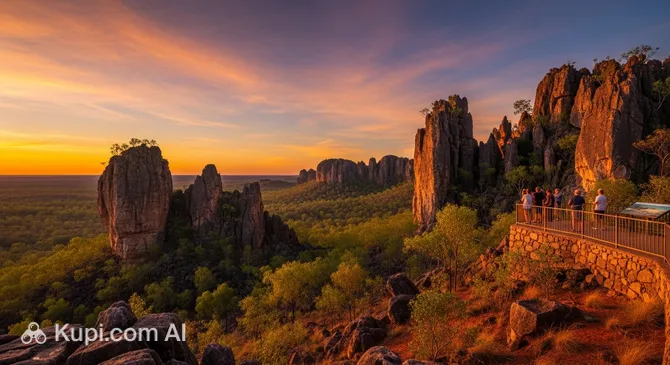
Chillagoe is a unique destination in Queensland where wild nature meets an industrial past. This small town, located deep within the continent, attracts travelers with the authentic outback atmosphere that Australia is so famous for. Despite its modest population, Chillagoe is an important point on the regional tourist map thanks to its geological wonders and distinct charm.

Chillagoe. Illustration.
Source: Kupi.com AI

The town's past is event-filled: it was once a bustling hub thanks to its mineral deposits. The fascinating history of Chillagoe has left its mark in the form of picturesque ruins of old smelting plants, which today look like majestic open-air movie sets. The climate here is dry and hot, typical of the savanna, so the best time to visit is during the cooler winter months.

The region's primary natural treasure is Chillagoe-Mungana Caves National Park. Tourists come here to explore impressive limestone caves featuring bizarre stalactites and stalagmites that are hundreds of millions of years old. No less interesting is the famous Balancing Rock, as well as the opportunity to see ancient Aboriginal rock art.

A trip to Chillagoe will be an unforgettable adventure for geology enthusiasts, photographers, and those seeking unusual routes. It is the perfect place to escape the hustle and bustle of coastal resorts and touch the rugged but mesmerizing beauty of the Australian outback.

Weather Overview

Chillagoe's climate is typical of inland Queensland: it is hot year-round, but the seasons differ markedly in rainfall and travel comfort. The current weather in Chillagoe plays an important role when planning your trip, especially if you intend to spend a lot of time outdoors exploring caves and rocks.

The summer period, lasting from November to March, is characterized by high temperatures and humidity. Average figures stay around 26–28°C, but in November, daytime maximums can reach 35°C. This is also the rainy season: up to 19 rainy days per month are recorded in January and February, so an umbrella and light waterproof clothing won't go amiss.

Winter (from June to August) and early spring are considered the best times to visit. Expect a warm summer with occasional rain and dry winters with comfortable daytime temperatures. During this period, the air warms up to a pleasant 27–29°C during the day, while nights bring welcome coolness with minimums around 15–16°C. There is practically no precipitation at this time, which guarantees clear skies for your adventures.

Average monthly temperature

Average monthly precipitation

Interesting Facts

Beyond the main attractions, Chillagoe holds many fascinating secrets that make it much more than just a point on the map. Here are a few facts that will allow you to look at this corner of Australia from a new perspective:

  • An ocean in the middle of the land. It’s hard to believe, but the arid, rocky landscapes around the town are the remains of a giant coral reef that flourished here about 400 million years ago. Travelers are literally walking on an ancient seabed, and observant tourists can find fossils of sea lilies and mollusks in the limestone.

  • High-quality marble. The region is famous not only for copper and gold but also for magnificent marble. Stone from local quarries is so highly valued that it has been used in the finishing of several prestigious buildings and architectural structures, confirming the uniqueness of local natural resources.

  • Unique cave inhabitants. In the dark zones of the Chillagoe caves, amazing birds nest — white-rumped swiftlets. These are among the few birds in the world that, like bats, use echolocation (making clicking sounds) to navigate in complete darkness.

  • An industrial lighthouse. The ruins of the old smelting plant are impressive in scale: its main brick chimneys tower over the savanna and are visible for many kilometers, serving as a landmark for everyone arriving in town.

How to Get There

A trip to Chillagoe is an immersion into the real Australian outback, requiring advance route planning. The town is located far from the coast, so logistics play a key role. To choose the best transport, we recommend studying all the ways to get to the city and estimating travel time.

There is no airport in Chillagoe itself that accepts regular commercial flights. The main air gateway for the region is Cairns Airport (IATA: CNS), located in the city of Cairns. This is a major transport hub, situated approximately 135 km from Chillagoe. The journey from the airport by rental car or taxi will take roughly 3 hours and 45 minutes. Most tourists fly here, rent 4WD vehicles, and head deep into the continent.

Alternatively, you could consider the regional Cooktown Airport (CTN), located in the town of Cooktown, about 202 km from Chillagoe. This is a less busy hub, and the journey from there will take longer — approximately 5 hours and 25 minutes by road.

For clarity, here is a summary of the main airports:

AirportPassenger trafficDistance
Cairns Airport4.9 mln135 km
Cooktown Airport20 000202 km

As for rail transport, direct passenger service to Chillagoe is not currently developed, and there are no active nearby stations in the provided data. The primary way to travel around this region remains by car. Travelers are advised to rent a reliable vehicle (preferably with four-wheel drive) in Cairns or take advantage of organized tours.

Main Attractions

Chillagoe is famous for its unique geological formations and monuments of the industrial era. Travelers here are offered a rare opportunity to combine exploring the underworld with walks through historic sites. Here are the main locations that are definitely worth including in your itinerary:

Chillagoe-Mungana Caves National Park. This is undoubtedly the main jewel of the region. The park is known for its impressive limestone karsts — jagged rocks rising above the savanna. Hidden underground is an extensive system of caves, among which the Donna, Trezkinn, and Royal Arch caves are particularly popular. Visitors can take ranger-led tours to see magnificent chambers with snow-white stalactites and rare helictites, or explore more accessible grottoes on their own.

Chillagoe Smelters. The ruins of this plant are an iconic site, serving as a reminder of the mining industry's heyday in the early 20th century. The complex includes massive brick chimneys and the remains of furnaces, creating an incredibly atmospheric and slightly surreal landscape. Walking among these historical structures allows you to feel the scale of the past, and photographers come here for unique shots against the backdrop of the sunset and the red soil of Australia.

Balancing Rock. This natural monument has become a kind of calling card for Chillagoe. A huge granite boulder, miraculously balanced on a tiny base, seems to defy gravity. A scenic walking trail through eucalyptus trees leads to the rock, making it a great spot for a short walk to enjoy views of the surrounding bush and take memorable photos.

"The Hub" Information Centre. For those who want to dive deeper into the context, it is worth stopping by the local tourist center. It houses an excellent museum with exhibits telling the story of the area's geology, flora, and fauna, as well as the lives of early settlers and miners. It is an ideal starting point for getting to know the town, where you can get maps and up-to-date information on road conditions and cave tour schedules.

Local Cuisine

The gastronomic scene in Chillagoe fully reflects the character of this remote town in the Queensland outback: it is simple, hearty, and sincere. Don't expect fine dining restaurants or trendy food markets here. Eating in Chillagoe is primarily about classic "pub grub", which allows you to experience the atmosphere of the real outback that Australia is so famous for. Local dishes are perfect for recharging after long walks through caves and ruins.

The menu is centered around meat dishes, which is not surprising for a region with developed cattle ranching. You should definitely try a juicy steak made from locally raised beef or the famous Chicken Parmigiana — a chicken schnitzel topped with tomato sauce and melted cheese, served with a generous portion of chips and salad. Seafood lovers will be offered barramundi — an iconic fish for the north of the continent, which is usually grilled or battered here.

As for drinks, in the hot savanna climate, ice-cold beer remains king. In local establishments, you can always find popular Queensland lagers, which are perfectly refreshing on a sweltering afternoon. It’s also worth noting the wines often served in local hotels. In the morning, travelers can expect strong coffee and traditional tea, often accompanied by homemade baked goods or toast.

The food culture in Chillagoe is concentrated around a few key places — historic pub-hotels and small cafes at guesthouses. These are not just eateries, but true centers of social life where locals and tourists exchange news in a relaxed atmosphere. Given the small number of establishments, many travelers arriving in campers prefer to have their own outdoor barbecues, buying groceries in advance in larger towns.

Travel Tips

A trip to Chillagoe is an expedition into the heart of the Australian outback, which requires careful preparation due to the region's remoteness. To ensure your journey to the ancient caves and historic ruins is comfortable and safe, we have compiled a list of the most important recommendations.

  1. Clothing and Equipment. Given the hot climate, choose clothing made of light natural fabrics in light colors that cover your shoulders from the sun. However, for visiting caves, be sure to bring sturdy closed-toe shoes (sneakers or hiking boots) — flip-flops won't work here due to the uneven terrain. A wide-brimmed hat, sunglasses, and high SPF sunscreen are also essential.
  2. Transport. There is no public transport within the town, nor are there familiar taxi services like Uber. The only way to get around is by rental car. Although the road to the town is paved, renting a crossover or 4WD vehicle is recommended for comfortable exploration of the surroundings and gravel access roads to attractions.
  3. Finances. The official currency is the Australian dollar (AUD). There is a post office and pubs in Chillagoe where cards are accepted, but connectivity in the outback can be intermittent. It is strongly recommended to carry enough cash, as ATMs are scarce and may be unavailable. Tipping is not mandatory, but rounding up the bill is appreciated.
  4. Health and Safety. Pharmacies in town operate on limited hours, so bring your own first-aid kit with all necessary medications. The main health threats here are dehydration and the sun. Always carry a supply of drinking water (at least 2-3 liters per person). Repellent is also a must: mosquitoes and flies can be very persistent.
  5. Communication. The primary language is English. Note that mobile service in remote areas, which Australia is famous for, is often unstable. The operator Telstra provides the best coverage in the region; SIM cards from other providers may not work at all. Download offline maps of the area to your phone in advance.
  6. Local Etiquette. In small Queensland towns, a very friendly communication style is standard. When entering a shop or pub, it's customary to say hello (a simple "G'day" or "Hello" works great). On rural highways, drivers often greet oncoming cars by raising a hand — this is a sign of politeness and solidarity in deserted areas.
  7. What to Avoid. Categorically avoid driving at dawn and dusk. During these times, wildlife activity (especially kangaroos and wallabies) is at its peak, and the risk of a road collision is very high. Also, do not enter unequipped caves without an experienced guide and proper gear.
  8. Fuel Tip. There are few petrol stations in this region, and the distances between them can be significant. Make it a rule to fill up a full tank in every large settlement (for example, in Mareeba or Dimbulah) before heading to Chillagoe, and keep an eye on your fuel level while in the town itself.

Chillagoe is a place where time flows differently, and proper preparation will allow you to fully immerse yourself in the atmosphere of this amazing region. By following these simple tips, you can avoid everyday troubles and focus on the impressive landscapes and rich history of the area.

Entertainment & Nightlife

Entertainment and evening leisure in Chillagoe have their own unique rhythm, dictated by the remoteness of this location from civilization. You won't find the nightclubs, loud discos, or cocktail lounges typical of large resorts here. Instead, the town offers an immersion into the authentic outback atmosphere that Australia is famous for: with heartfelt conversations, simple pleasures, and an incredible starry sky.

As dusk falls, social life centers around the town's main artery — Queen Street. The primary meeting place for locals and tourists is the historic Post Office Hotel (often simply called the Chillagoe Hotel). This is a classic Australian pub with wide verandas and a very laid-back atmosphere. There is no dress code, and at the neighboring tables, you might meet farmers, miners, and travelers from all over the world. People come here to play a game of pool, catch up on the latest regional news, and enjoy a hearty dinner in friendly company.

A unique form of "nightlife" in these parts is astrotourism. Due to the lack of light pollution from large cities, the sky over Chillagoe is striking in its darkness and the brightness of its constellations. the Chillagoe Observatory & Eco Lodge runs fascinating evening programs for amateur astronomers. It’s an opportunity to look through professional telescopes at the craters of the Moon, the rings of Saturn, and distant galaxies in the complete silence of the bush — an entertainment that gives a sense of peace and unity with the cosmos.

During the day, the cultural program includes visiting local museums, which add educational value to the trip. It is worth checking out the Chillagoe Heritage Museum, which houses artifacts from the mining era, or admiring the impressive collection of vintage cars at Tom Prior's Ford Museum (located on the grounds of a service station). These places provide a better understanding of the history of settling these harsh but rich lands.

Evening leisure features:

  • Kitchen operating hours: It is important to remember that life in small towns winds down early. Plan your dinner in advance: it is best to order food in pubs before 8:00 PM, as the kitchen will likely be closed later, although the bar itself may stay open until the last customer (usually 10:00 PM–11:00 PM).
  • Safety and lighting: Street lighting in Chillagoe is minimal. If you are returning to your hotel or campsite on foot, be sure to have a flashlight. This will help you avoid tripping on uneven roads and prevent unwanted encounters with nocturnal wildlife.
  • Payment: While cards are accepted in most places, banking terminals may malfunction due to unstable connectivity in the region. Always carry a supply of cash to pay for dinner and drinks.

Parks & Museums

The green zones and cultural venues of Chillagoe are not the usual manicured squares and art galleries of mega-cities, but rugged natural landscapes and unique collections of antiquities that preserve the spirit of the pioneers. In this remote corner that Australia is proud of, nature and history are so closely intertwined that a walk in the park can easily turn into a tour of an open-air geological museum.

Chillagoe-Mungana Caves National Park remains the primary natural feature of the region. Although it is primarily famous for its caves, the park's surface area deserves separate attention from nature lovers. There are scenic walking trails here that pass through dry tropical forests and scrubland. During a walk, you can observe local fauna: rock wallabies, kangaroos, and many species of birds, including rare parrots, live here. It is the perfect place for those who want to see the continent's wildlife in its pristine form, without fences or enclosures.

For machinery enthusiasts, Tom Prior's Ford Museum will be a real discovery. This is a private collection that has become a local legend, gathering dozens of vintage Ford vehicles. Many exhibits are in working order, and the museum itself is located on the grounds of an old petrol station, which adds to its atmosphere. Here you can see rare models from the early 20th century and learn amazing stories about how these machines ended up in the Australian outback.

The town's cultural and historical heart beats at the Chillagoe Heritage Museum, located in "The Hub" information center. The museum's exhibits cover a wide range of topics: from ancient fossils and Aboriginal culture to the daily lives of the first European settlers and miners. Of particular interest are the old photographs and prospectors' tools, which allow you to vividly imagine what the town looked like during the "copper rush" era.

Among the architectural monuments serving as an open-air museum, the Chillagoe Smelters ruins stand out. This industrial complex, built over a hundred years ago, is now state-protected. Walking among the giant brick chimneys and remains of machinery makes a strong impression, reminding visitors of the scale of the region's industrial past. This location is especially popular with photographers due to the contrast between the red brick and the blue sky.

As an insider tip, we recommend visiting the Chillagoe Weir on Chillagoe Creek. This is a quiet and less touristy spot located a few kilometers from town. Here you can have a picnic by the water and watch waterfowl in a peaceful setting, away from the main excursion routes.

Getting Around

It's important to note the specifics of this place right away: Chillagoe completely lacks the public transportation system familiar to city dwellers. There is no metro, trams, trolleybuses, or regular city bus routes here. The town is a small outback settlement whose infrastructure does not include a municipal transport network.

The primary and practically only means of transport for tourists is a car. Most travelers arrive here in rental 4WDs or campers from Cairns. Distances between attractions (for example, from the town to the caves in the National Park) can be several kilometers along unpaved roads, so having a car is critical. It is impossible to rent a vehicle directly in Chillagoe — take care of this in advance in the major coastal cities.

Electronic travel passes, transport cards, or mobile apps for fare payment do not work here because there is nothing to pay for. You won't need change for tickets or validators. The only transport-related expense within the location is fuel. Keep in mind that the cost of petrol and diesel in remote areas is higher than in cities, and the petrol station may close early in the evening.

As an alternative to a car, you can get around the very center of the settlement on foot. The main infrastructure facilities — hotels, pub, shop, and post office — are compactly located along the main street. However, a walk to the caves or the smelter will require significant physical effort due to the heat and distances, so the walking option is only suitable for exploring the center itself.

Special mention should be made of The Savannahlander. This is a unique historic train that runs between Cairns and Forsayth with a stop in Chillagoe. While technically rail transport, it functions exclusively as a tourist attraction rather than a means for daily travel. Tickets for it are booked several months in advance as part of a tour, and it cannot be used as a regular commuter train on the day.

Taxi services, ridesharing (like Uber or DiDi), or bicycle rentals are non-existent in Chillagoe. You won't be able to call a car via an app. If you arrived without your own transport and want to get to the remote caves, the only option will be to arrange something with one of the locals or join an organized tour, if one is offered by your hotel.

Accommodation

The choice of accommodation in Chillagoe, as in many small towns in the Australian outback, is limited but carries a special character. You won't find five-star chain hotels or high-rise hotel complexes here. Instead, tourists are invited to immerse themselves in the atmosphere of the hospitable hinterland that Australia is famous for. Typical accommodation ranges from simple rooms in historic pubs and budget spots in campgrounds to quite comfortable motels and unique eco-lodges.

Given the compact size of the town, the concept of "neighborhoods" here is very loose. Most accommodation options are concentrated along the main street or in its immediate vicinity. This is very convenient: wherever you stay, shops, historic buildings, and eateries will be within walking distance. For those who want to be closer to nature and the caves, options on the edge of the settlement offer views of the endless savanna.

Among travelers, places that combine overnight stays with a cultural experience are particularly popular. For example, staying at a hotel attached to an old pub will let you feel the spirit of the last century, although facilities may be shared. Another interesting format is staying at the local observatory, where you can watch the stars right from your cabin in the evening. There are also well-equipped caravan parks in town, offering both tent and motorhome sites as well as cozy self-contained cabins with air conditioning and their own kitchens.

Booking Tip: Since the number of beds in town is small and the flow of tourists during the "dry season" (from May to September) increases significantly, it is strongly recommended to book accommodation in advance. Trying to find a place to stay upon arrival at the height of the season may end in failure, as rooms are often fully booked by organized groups or mining workers.

The price range in Chillagoe can be described as budget and mid-range. There are no luxury surcharges, but the level of service matches the standards of a rural area — clean, functional, and without frills. As for booking methods, major international online platforms do not work with all local properties. Often, the most reliable way remains direct booking via a phone call or the official website of a specific motel or park.

Nearby Cities

For those who want to explore the surroundings, Chillagoe serves as an excellent starting point for day trips to several interesting nearby locations. Even though the town is located deep within the continent, there are settlements relatively close by that offer completely different landscapes and experiences.

Mareeba is the nearest major center, often called the region's "food bowl." The town is famous for its coffee plantations, mango orchards, and annual rodeo. It's a great place to get to know North Queensland's agricultural culture, visit a history museum, and enjoy the milder climate of the Atherton Tablelands.

Cairns and its picturesque suburb Redlynch offer a radical change of scenery. Here, the dry savanna gives way to lush wet tropics. Travelers can walk along the famous Esplanade, visit botanical gardens, or cool off in mountain streams and waterfalls like Crystal Cascades, located near Redlynch.

CityPopulationDistance
Wrotham Park78 km
Mareeba11 07998 km
Atherton7 331102 km
Port Douglas3 504125 km
Redlynch8 645128 km

These nearby destinations provide an insight into the diverse culture and landscapes of the region, from farmlands to coastal tropics, harmoniously complementing the experience of visiting the Chillagoe caves.

Shopping & Souvenirs

Shopping in Chillagoe is fundamentally different from the usual store-hopping in tourist metropolises. You won't find world-brand boutiques or giant storefronts here. The town's retail sector perfectly matches its spirit — it is utilitarianism mixed with the authenticity of the Australian outback. The range of local shops is primarily focused on providing basic necessities for residents and travelers, as well as selling unique memorabilia related to the region's history and geology.

The center of all commercial activity is the town's main transport artery — Queen Street. It is along this street that the few available retail outlets are concentrated. A walk along it won't take much time, but it will allow you to buy everything you need: from food and fuel to postage stamps. A quiet atmosphere reigns here, and a trip to the shop often turns into an opportunity to chat with the friendly locals.

It is important to understand that in Chillagoe, there are absolutely no shopping centers, malls, or department stores. The nearest major shopping complexes are in the city of Cairns or Mareeba, which are several hours' drive away. Tourists are advised to bring specific goods, clothing, or electronics with them, as it will be impossible to buy them on-site.

There are also no typical weekend markets or flea markets in town. The role of the main "market" is played by the Chillagoe General Store. This is a classic "all-in-one" rural shop where fresh produce, household goods, car parts, and camping gear sit side-by-side on the shelves. This place has a special old-school flavor that is rarely found in modern cities.

As for souvenirs, Chillagoe can offer something truly unique. The main place to buy gifts is "The Hub" tourist information center. Here, you should pay attention to:

  • Minerals and rock specimens. Given the geological wealth of the area, you can purchase beautiful samples of local marble, azurite, or malachite here.
  • Books and maps. Publications dedicated to the history of mining, caves, and Queensland nature make excellent souvenirs.
  • Local art. Works by local craftspeople and artists inspired by the savanna landscapes are often for sale.
  • Outback memorabilia. Branded "stubby coolers" (can sleeves) or caps make practical reminders of a trip to the hot outback that Australia is famous for.

When planning your purchases, keep the specific operating hours in mind. Shops are usually open from 9:00 AM to 5:00 PM on weekdays, while weekend hours may be reduced (often only until lunchtime). Some establishments may close for a break in the middle of the day.

In terms of payment, conservatism reigns. While "The Hub" and the General Store accept bank cards, connectivity in the region can be unstable, leading to terminal failures. It is strongly recommended to have cash on hand, especially for small purchases. There are very few ATMs in town, and access to them may be limited.

The Tax Free (TRS) refund system is not available in Chillagoe shops due to their small turnover and status. However, if you make large purchases (over 300 AUD on one receipt) in chain stores in neighboring large cities before your trip here, you can process a tax refund upon leaving the country at an international airport (e.g., in Cairns).
Reached the end of the page?

That means the route is fully explored