Welcome to Hughenden, a captivating destination located in the heart of Queensland, Australia. Known for its rich prehistoric heritage and stunning natural landscapes, this small outback town offers a unique glimpse into the ancient past. With a compact population of just over 1,100 residents, it provides a warm, welcoming atmosphere for travelers seeking an authentic rural experience away from the crowds.
Hughenden
About
Weather Overview
Visitors to the region will encounter a climate defined by hot summers and pleasant, mild winters. The weather in Hughenden follows a distinct pattern, with temperatures peaking significantly towards the end and beginning of the year.
December and January are typically the hottest months, featuring average temperatures around 30°C and daily maximums that often exceed 35°C. While this summer period records the highest frequency of wet days—reaching up to 10 days in February—the overall precipitation volume remains relatively low. In contrast, the winter season from June to August brings cooler conditions, with average temperatures ranging from 18.5°C to 20.6°C and nights dipping to around 12°C. This time of year is notably dry, often seeing 0mm of rainfall, making it an excellent season for exploring the outdoors.
Interesting Facts
Beyond the famous prehistoric fossils and dinosaur trails, Hughenden holds fascinating stories of early exploration and outback ingenuity that often go unnoticed. This resilient town is filled with unique landmarks and historical footnotes that offer a deeper understanding of life in the Queensland interior.
-
The Historic Coolabah Tree: Located on the banks of the Flinders River, this living monument bears a blaze mark left by explorer Frederick Walker in 1861. Walker was leading a search party for the ill-fated Burke and Wills expedition, making this tree a silent witness to one of the most significant mysteries in the history of Australia.
-
A Shire the Size of a Country: Hughenden serves as the main hub for the Flinders Shire, a massive administrative area covering over 41,000 square kilometers. To put its vastness into perspective, the shire is roughly comparable in size to the entire country of Switzerland, yet it is inhabited by only a small, tight-knit population.
-
The Historic Comet Windmill: Standing proudly in the town is the restored 35-foot Comet Windmill, known as the Wirilla Mill (No. 11). Originally serving a pastoral station, this impressive structure was relocated to Hughenden in 2008. It stands as a tribute to the region's agricultural heritage and its vital reliance on the Great Artesian Basin.
-
Mount Walker's Panoramic Views: Just south of the town lies Mount Walker, a flat-topped mesa that rises approximately 478 meters above sea level. Unlike typical mountain peaks, it features six distinct lookouts offering spectacular 360-degree views of the surrounding landscape, making it a perfect spot to watch the legendary outback sunsets.
How to Get There
Reaching this destination in the Queensland outback is an adventure in itself, offering a journey through some of Australia's most iconic landscapes. Whether you are driving the vast distances or arriving via regional hubs, you can read more about how to get to Hughenden to plan your logistics effectively.
The city of Hughenden does not have its own major commercial airport listed here, but you can fly into Longreach Airport (LRE) in the city of Longreach, which is about 287 km from Hughenden. This facility serves as a key access point for the region. Travelers should be prepared for a subsequent ground transfer; renting a vehicle is often the most practical option for covering this distance and exploring the surrounding area.
For clarity, here is a summary of the main airports:
| Airport Name | City | Passenger Traffic | Km from City |
|---|---|---|---|
| Longreach Airport | Longreach | Regional | 286.7 |
In addition to air travel options, Hughenden is accessible via the Flinders Highway, which connects the town to Townsville on the coast and Mount Isa to the west. For those who prefer a slower pace, the town is also a stop on "The Inlander" railway line. This historic train service runs twice a week from Townsville, offering a scenic and relaxing way to arrive in the heart of the dinosaur country.
Main Attractions
Hughenden offers a fascinating mix of prehistoric history, rugged natural beauty, and outback culture. While it is a small town, the quality of its key sites makes it a standout destination on the Dinosaur Trail. Here are the main places you should explore during your visit.
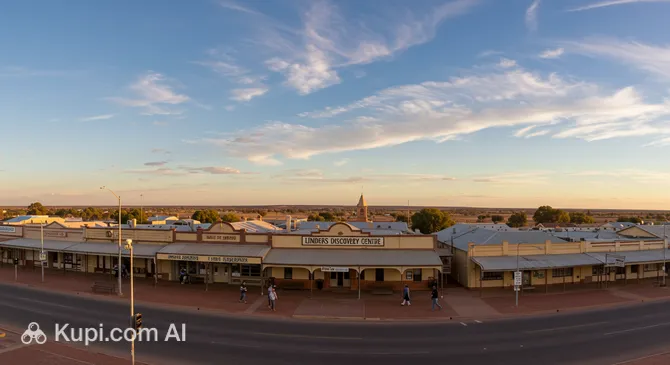
Flinders Discovery Centre is the undisputed highlight for many visitors. While famous for "Hughie," the life-size Muttaburrasaurus skeleton, the centre offers much more than just dinosaurs. It houses an extensive collection of fossils from the ancient Eromanga Sea, providing a vivid picture of the region's geological past. You can also explore displays dedicated to the area's sheep grazing history and the "Shearing the Stragglers" exhibit, which adds a layer of cultural heritage to the paleontological wonders.
A short drive north of the town lies the spectacular Porcupine Gorge National Park. Often compared to the Grand Canyon for its striking geological layers, this park is carved by Porcupine Creek into the landscape. The gorge features a unique monolith known as "The Pyramid," a massive isolated rock formation that challenges hikers and rewards them with incredible views. Visitors can hike to the base of the gorge to swim in the cool, permanent waterholes, making it a refreshing escape from the outback heat.
For a relaxing experience closer to the town center, the Eco Walk on Flinders is a must-do. This 1.5-kilometer paved pathway meanders along the banks of the Flinders River and is dotted with impressive metal sculptures created by local artists. Interpretive signage along the route explains the local flora, fauna, and dinosaur history, making it an educational stroll. It is particularly scenic in the early morning or late afternoon when the wildlife is most active.
Another quirky local icon is Darby the Dinosaur. This statue is located in the town and serves as a fun photo opportunity, symbolizing Hughenden’s status as a dinosaur capital. It is often the starting point for exploring the town's streets, where you can admire the heritage architecture and the friendly atmosphere of this resilient outback community.
Local Cuisine
The culinary scene in Hughenden reflects the town's identity as a classic Australian outback community. Dining here is honest, hearty, and centered around warm country hospitality rather than fine dining pretension. Being situated in the heart of cattle country, the region is renowned for its high-quality beef, making a locally sourced steak a highlight of any visit. Whether you prefer a T-bone or a Scotch fillet, you can expect generous portions cooked to perfection at the local establishments.
For a quintessential taste of the region, visitors should try the iconic "counter meal" at one of the town's historic pubs. The Chicken Parmigiana—affectionately known as a "Parmy"—is a staple on almost every menu, featuring a breaded chicken schnitzel topped with tomato sauce, ham, and melted cheese. For those on the move or looking for a quick lunch, the local bakeries offer traditional meat pies and sausage rolls, which are perfect for fueling up before a hike in Porcupine Gorge.
When it comes to drinks, the hot Queensland climate makes a cold beer the beverage of choice for many locals and travelers alike. Ordering a "schooner" or a "pot" of lager at the bar is a great way to cool down and strike up a conversation with residents. Non-alcoholic options are also plentiful, with local cafes serving excellent barista-made coffee and iced drinks, proving that outback towns take their morning brew just as seriously as the big cities.
The food culture in Hughenden is deeply social and revolves largely around its hotels and cafes. These venues serve as community hubs where tourists and locals mingle in a relaxed atmosphere. While you won't find bustling street food markets, the charm lies in the authenticity of the experience; enjoying a meal on a wide pub veranda while watching the sunset is one of the most memorable ways to end a day in this rugged part of Australia.
Travel Tips
Planning a trip to Hughenden is an exciting prospect, but the remote outback setting requires a bit of specific preparation to ensure a smooth journey. Here are some practical tips to help you navigate the local environment and make the most of your adventure in this historic region of Queensland.
-
Clothing and Gear: Since summers (December to February) can be intensely hot, pack lightweight, breathable clothing, sunglasses, and a wide-brimmed hat to protect against the sun. Winters bring mild days but surprisingly chilly nights, so a warm jacket or fleece is essential. Sturdy, closed-toe walking shoes are a must for hiking in Porcupine Gorge or walking on uneven terrain.
-
Transportation: A private vehicle is the most practical necessity here, as there is no local public transport system like buses or ride-hailing apps within the town. While standard cars can handle the sealed highways, a 4WD is highly recommended if you intend to explore unsealed back roads or venture deeper into the national parks.
-
Finances: The local currency is the Australian Dollar (AUD). Major credit and debit cards are generally accepted at the supermarket, pubs, and petrol stations, but carrying some cash is advisable for smaller purchases or in case of system outages. ATMs are available in the town center, though they may be limited to specific banking networks.
-
Health and Safety: The local pharmacy operates during standard business hours and is not open 24/7, so ensure you bring an adequate supply of any prescription medications. Dehydration is a real risk in the outback; always carry significantly more water than you think you need, especially when hiking or driving long distances.
-
Communication: English is the sole language spoken. Be aware that mobile phone coverage can be patchy or non-existent once you leave the immediate town area; the Telstra network typically provides the best coverage in regional Australia. It is smart to download offline maps or carry a physical map before heading out on day trips.
-
Local Etiquette: Hughenden is a friendly, tight-knit community where a simple "G'day" or a nod to passersby is the norm. On country roads, it is customary to give a small wave to drivers of approaching vehicles. When visiting local pubs, returning your empty glasses to the bar is a small gesture that is appreciated by the staff.
-
What to Avoid: Avoid driving at dawn, dusk, or night whenever possible. This is when kangaroos and livestock are most active near roads, significantly increasing the risk of dangerous collisions. Additionally, never ignore "Road Closed" signs during the wet season, even if the road looks passable, as conditions can change instantly.
-
Shopping Hours: Keep in mind that retail hours in the outback are often shorter than in the city. Most shops close by midday on Saturdays and remain closed on Sundays. It is crucial to plan your fuel and grocery stops ahead of time to avoid being caught out on a weekend.
By keeping these practicalities in mind, you will be well-equipped to enjoy the rugged beauty and warm hospitality of Hughenden without any unexpected hitches. A little preparation ensures you can focus entirely on discovering the prehistoric wonders and dramatic landscapes of the Flinders Shire.
Entertainment & Nightlife
Entertainment and nightlife in Hughenden are defined by the town's authentic outback character. You will not find pulsing nightclubs, neon-lit dance floors, or 24-hour party districts here. Instead, the evening scene revolves around the warm, social atmosphere of historic pubs and hotels. It is a place where nightlife means enjoying a cold beer after a dusty day of exploring, sharing stories with locals, and experiencing genuine country hospitality under a star-filled sky.
The hub of activity is undoubtedly Brodie Street, the town's main thoroughfare. This is where the community gathers to unwind. The atmosphere is incredibly casual and welcoming; the dress code rarely demands more than neat casual attire, with jeans and boots being the standard uniform. Visitors can expect a crowd that is a mix of local graziers, station workers, and fellow travelers, all mingling in a relaxed environment where striking up a conversation with a stranger is the norm.
For a taste of the local social life, you should visit the Great Western Hotel. It is a classic Australian pub that serves as a cornerstone of the community, offering a spacious bar area where you can enjoy a refreshing drink. Another key venue is the Royal Hotel, known for its historic charm and friendly service. These establishments typically operate until late evening, though "late" in the outback usually means winding down around 10:00 PM or midnight, depending on the crowd. The Grand Hotel is another spot on the main strip where you can soak up the rustic ambiance.
When it comes to practicalities, timing is everything. Kitchens in these venues often close by 8:00 PM or 8:30 PM, so it is wise to eat early before settling in for drinks. Prices are generally reasonable and lower than in major cities. As for getting around, Hughenden is compact, and most accommodation options are within walking distance of Brodie Street. However, the streets can be dimly lit, so carrying a torch or using your phone light is a good idea. The town is very safe, but always be mindful of uneven footpaths and local wildlife that might wander near the roads at night.
While the nights are quiet, daytime entertainment offers a different pace. Beyond the museums mentioned earlier, the Hughenden Recreational Lake is a popular spot for boating, fishing, and picnicking during the day. For those looking to cool off, the local swimming pool provides a refreshing break from the heat. While there are no large amusement parks or commercial theaters, the town occasionally hosts community events and festivals that bring the streets to life with local entertainment.
Parks & Museums
Hughenden presents a fascinating tapestry of natural beauty and cultural heritage, where prehistoric wonders meet the rugged charm of the Australian outback. While the region is globally recognized for its major dinosaur discoveries, the town also offers a variety of intimate green spaces and unique open-air exhibits that provide relaxation and a deeper connection to local history.
For those seeking a tranquil escape within the town limits, Robert Gray Memorial Park is a perfect choice. Situated along the northern banks of the Flinders River, this green retreat provides a welcome contrast to the surrounding arid landscapes. It is a favorite spot for both locals and travelers to enjoy a peaceful picnic or a barbecue in the shade of native trees. The park also serves as an excellent vantage point for birdwatching, allowing visitors to observe the diverse wildlife that thrives along the river corridor.
Art and history enthusiasts will find a distinct landmark in the Federation Rotunda. Located near the library, this architectural piece is not a traditional museum but an open-air gallery constructed from recycled machinery parts and scrap metal collected from local stations. The structure stands as an artistic tribute to the ingenuity of the pastoral industry, featuring intricate panels and sculptures that narrate the stories of the pioneers who shaped the district.
For a hands-on interaction with the region's ancient past, the designated fossicking sites offer an experience that goes beyond viewing exhibits behind glass. Unlike the static displays found in traditional museums, these areas allow visitors to hunt for their own belemnites and mollusk fossils in the dry riverbeds about 1.5 kilometers from town. It is a popular activity that provides a tangible connection to the Cretaceous period, making it a thrilling adventure for families and amateur geologists.
While the Flinders Discovery Centre and the spectacular Porcupine Gorge National Park remain the primary destinations for understanding the area's paleontological heritage and geological grandeur, these smaller parks and sites add significant value to a visit. Additionally, a stroll along the river walk reveals a series of metal sculptures celebrating local flora and fauna, further enriching the cultural landscape of this resilient community.
Getting Around
Travelers arriving in Hughenden should be aware that the city does not possess a comprehensive intra-city public transport network. Due to its small population and compact layout, there are no metro systems, trams, trolleybuses, or municipal bus routes circulating within the town itself. The transport infrastructure is designed primarily for regional connectivity rather than local commuting, meaning visitors will need to rely on alternative methods to move between local attractions, accommodation, and services.
The most significant public transport link is the railway service operated by Queensland Rail Travel. The historic The Inlander train stops at the local railway station twice a week on its journey between Townsville and Mount Isa. While this provides a scenic and comfortable way to arrive or depart, it is not suitable for daily travel within the town. Tickets for this service must be booked in advance, either online or over the phone, as there is no "tap-on, tap-off" smart card system or local travel pass available for use here. The "Go Card" used in the state's capital does not function in this region.
For getting around the town center, walking is the most practical and popular option. The central business district is small, and most shops, cafes, and hotels along Brodie Street are within easy walking distance of each other. The terrain is flat, making it accessible for pedestrians, though visitors should always carry water and wear sun protection during the day. For destinations further afield, such as the fossil hunting sites or the recreational lake, a vehicle is necessary.
Regarding alternatives to public transit, there are no ride-sharing apps like Uber or DiDi operating in this remote location. A local taxi service may be available, but availability can be sporadic, and it is highly recommended to arrange rides in advance rather than expecting to hail a cab on the street. Payment for such services is typically in cash, although some drivers may accept cards; it is always safer to carry some Australian currency.
Ultimately, the most effective way to explore the area freely is by renting a car. While there is limited public transport, hiring a vehicle allows you to visit the outlying national parks and geological sites at your own pace. If you are arriving by plane or train without a car, check with local accommodation providers, as some motels may offer courtesy transfers from the station or airport upon request.
Accommodation
Finding a place to stay in Hughenden is less about hunting for luxury resorts and more about enjoying authentic outback hospitality. As a key stop on the Dinosaur Trail and a service hub for the Flinders Shire, the town offers a range of practical and comfortable accommodation options suited to road trippers, families, and adventurers. Visitors can choose from convenient motels, historic pub rooms, and well-equipped caravan parks, all providing a welcoming base for exploring the region.
Most accommodation is centrally located near Brodie Street or along the Flinders Highway, ensuring easy access to shops, dining, and attractions like the Flinders Discovery Centre. Given the region's warm climate, air conditioning is a standard and essential feature across almost all properties. Many motels also feature swimming pools, which are a delightful amenity after a day of hiking in Porcupine Gorge or fossicking for fossils in the heat.
For travelers seeking modern conveniences, the town's motels are the most popular choice. These establishments typically offer spacious, self-contained units with en-suite bathrooms, refrigerators, and tea-making facilities. They are designed with the motorist in mind, providing ample off-street parking, which is ideal for those traveling with 4WDs or trailers. Some motels also have on-site restaurants, making dinner plans effortless.
For a more traditional experience, you might consider staying at one of the historic hotels (pubs). In true Australian country style, these venues often offer rooms on the upper floors above the bar. While facilities in these heritage buildings can range from basic rooms with shared bathrooms to refurbished suites, they offer a unique atmosphere and the chance to mingle with locals right downstairs. It is a budget-friendly option that places you in the heart of the town's social life.
Caravan parks and camping grounds are also a staple of the accommodation scene here, catering to the many travelers and families exploring the outback. These parks are generally well-appointed, offering powered sites, camp kitchens, and clean amenities blocks. For those without a tent or caravan, many parks provide self-contained cabins that offer the comfort of a motel room with the relaxed vibe of a holiday park.
Travel Tip: While Hughenden is a small town, accommodation can fill up quickly, especially during the peak tourist season from April to September and during local events. It is highly recommended to book your room or site in advance to avoid disappointment. Whether you prefer the convenience of a motel or the charm of a pub stay, you will find the local hosts to be friendly and eager to help you make the most of your visit to Australia.
Nearby Cities
For those looking to explore the surroundings, Hughenden serves as an excellent base for day trips to several interesting nearby locations: although the distances in the Australian outback are vast, the journey is often part of the adventure. Visitors willing to travel a bit further can discover historic mining towns and coastal hubs that contrast sharply with the open plains of the Flinders Shire.
One of the most significant nearby destinations is Charters Towers, located approximately 231 kilometers to the east. Once known as "The World" during the gold rush era, this town offers a step back in time with its beautifully preserved heritage architecture and historic stock exchange. It is a perfect spot for history buffs to explore the rich mining legacy of Queensland before returning to the dinosaur country.
For those planning a longer excursion or the next leg of their journey, the coastal city of Townsville awaits further east. As the unofficial capital of North Queensland, it offers access to the Great Barrier Reef, the lively Strand promenade, and the panoramic views from Castle Hill. While it is a longer drive, it serves as the primary gateway connecting the outback to the tropical coast.
| City | Population | Distance (km) |
|---|---|---|
| Townsville | 178649 | 325 |
| Clermont | 27465 | 418 |
| Ayr | 8738 | 364 |
| Charters Towers | 8126 | 231 |
| Atherton | 7331 | 418 |
These nearby destinations offer a glimpse into the diverse culture and landscapes of the region, ranging from rugged mining history to the lush tropics.
Shopping & Souvenirs
Shopping in Hughenden reflects the town's status as a vital service center for the surrounding grazing properties and a welcoming stop for travelers on the Dinosaur Trail. Visitors should not expect sprawling shopping malls or high-end fashion boutiques; instead, the retail experience here is practical, personal, and distinctly local. The town offers everything needed to restock supplies for a road trip, alongside unique opportunities to purchase regional crafts and dinosaur-themed memorabilia that celebrate the area's prehistoric heritage.
The primary hub for all commercial activity is Brodie Street. This main thoroughfare is lined with a variety of essential local businesses, including a supermarket, a pharmacy, a newsagency, and a butcher known for high-quality local beef. Strolling down this wide country street offers a relaxed shopping experience where store owners often have time for a chat. It is the perfect place to pick up camping gear, fresh bakery treats, or reading material for the next leg of your journey.
Given the town's small population, there are no large shopping malls or department store chains in Hughenden. Retail is concentrated in standalone shops along the main street. For groceries and daily necessities, the local supermarket provides a comprehensive range of products, ensuring that campers and self-caterers can find fresh produce and pantry staples without difficulty. The absence of commercial complexes adds to the town's charm, keeping the focus on small, independent operators.
For those interested in local wares, the town occasionally hosts community markets, often organized by local groups like the Lions Club. These events are typically held on weekends and feature stalls selling homemade cakes, jams, plants, and second-hand treasures. While they do not operate on a permanent daily schedule, catching one is a delightful way to mingle with residents and support local fundraising efforts.
Souvenirs in Hughenden are heavily influenced by its identity as a dinosaur capital. The retail section of the Flinders Discovery Centre is the best place to find unique gifts. Here, you can purchase high-quality dinosaur replicas, educational books, and "Hughie" the Muttaburrasaurus merchandise. Additionally, the centre often stocks works by local artists and craftspeople, ranging from handmade jewelry to pottery, making for meaningful keepsakes that support the regional creative community.
Opening hours in the outback can be quite different from the city. Most shops on Brodie Street operate from approximately 9:00 AM to 5:00 PM on weekdays. On Saturdays, trading hours are often reduced, with many businesses closing by 12:00 PM or 1:00 PM. On Sundays, the majority of retail stores are closed, although the supermarket and some petrol stations may have limited trading hours. It is highly advisable to plan your shopping needs during the week or on Saturday morning.
Regarding payment methods, major credit and debit cards (Visa and Mastercard) are widely accepted at most establishments, including the supermarket and the Discovery Centre. However, carrying some cash is recommended for smaller purchases at the newsagent, bakery, or if you happen to visit a community market stall. ATMs are available in the town center for withdrawing Australian dollars.
For international visitors, Australia operates a Tourist Refund Scheme (TRS) that allows you to claim a refund on the Goods and Services Tax (GST) for goods over $300 purchased from a single business. While it may be difficult to reach this threshold in a small country town unless purchasing significant artwork, it is a policy worth noting if you are combining your purchases with those from larger cities during your trip.
Nearby cities
Reached the end of the page?
That means the route is fully explored