Support

Kalumburu

Nearby airports

About the Airport

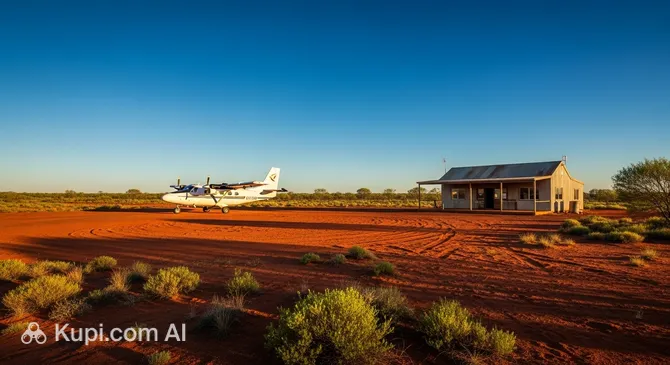
Kalumburu. Illustration.
Source: Kupi.com AI

Kalumburu Airport is not just a transport hub, but a true gateway to one of the most remote and wild corners of Western Australia. Located at the very edge of the continent, this small airfield serves as a vital artery for the local community and the rare travellers seeking to touch the pristine nature of the Kimberley region. Your introduction to the unique culture and rugged landscapes, which can be a real adventure to reach by land, begins here.

PropertyValue
IATA CodeUBU
ICAO CodeYKAL
CityKalumburu
CountryAustralia
TimezoneAustralia/Perth
ScheduleOnline Timetable

Airport Features and Advantages:

The air harbour plays a key role in ensuring the livelihood of the region, accepting not only passenger charters but also mail, cargo, and medical flights (Royal Flying Doctor Service). For tourists, this is the ideal starting point for famous fishing spots and picturesque coastlines that are practically inaccessible by other modes of transport.

The airport infrastructure is minimalist and functional, which fully corresponds to the spirit of the Australian outback. Despite the remoteness, the runway is maintained in good condition, ensuring reliable connection with the outside world in any season, even when dirt roads are washed away by rains.

Contact Information

  • Official Airport Website: The airport does not have its own website. Reference information is available on the community resource www.kalumburu.org or the Kalumburu Mission website.
  • Help Desk Phone: +61 8 9161 4333 (Mission and Airfield Administration).
  • Airport Address: Kalumburu Mission, Kalumburu, Western Australia 6740, Australia.
  • Email: Kalumburumission@bigpond.com (for questions regarding permits and airfield operations).
  • Airport Social Media: Official accounts are absent.
  • Lost Luggage Information: There is no separate lost luggage service at the airport. In case of loss or damage to items, you must contact your airline representatives directly (e.g., Aviair or Shoal Air).
  • Passenger Support Contacts: +61 8 9161 4333 (Kalumburu Mission office).

How to Get to the Airport

Transport accessibility to Kalumburu Airport has its own specifics, due to the remoteness and isolation of this community. Since this is a small settlement in the Kimberley region, there is no public transport system familiar to city dwellers. Getting from the runway to residential areas or tourist campsites is possible only by a limited number of ways, which are best planned in advance.

Public Transport

There are no bus routes, trains, or metro in Kalumburu. This is a territory of wild nature and a small community, so do not count on regular municipal transport services.

Transfers and Taxis

Taxi services or popular ride-hailing apps (like Uber) do not operate in this region. The main way to get from the airport to your accommodation involves:

  • Transfer from the host: Most tourists arrive here for fishing or ethno-tours. Campsites (e.g., McGowan Island or Honeymoon Bay) and the Kalumburu Mission often organize guest pick-ups in jeeps. This must be arranged at the accommodation booking stage.
  • Help from locals: The community is small, and often one can arrange a lift with someone local, however, this is an informal method that should not be relied upon as the primary option.

Car Rental

There are no rental company offices in the airport building or in the Kalumburu settlement. Renting a car here is impossible. Travellers arriving here by car usually rent prepared 4WD vehicles at major transport hubs, such as Kununurra Airport or Darwin International Airport, and reach their destination on them via complex unsealed roads (Gibb River Road and Kalumburu Road).

Parking at the Airport

There is no specialized guarded parking with markings and barriers at the airport. Vehicles can be left in the open area near the runway or the mission building. Parking fees are usually not charged, but cars remain unguarded. It is recommended not to leave valuable items inside the cabin.

Travel Time and Cost

Since the distance from the airfield to the community centre is only about 1.5 km, the journey takes minimum time.

Mode of TransportTravel TimeApproximate Cost
Transfer from hotel/campsite5–10 minUsually free (included in tour) or by arrangement
On foot (for trekking enthusiasts)20–30 minFree
Rented 4WD3–5 minDepends on rental conditions in the city of departure

Features and Recommendations

The main feature of logistics in Kalumburu is seasonality and the permit system. To visit the community and travel on Aboriginal lands, a special permit (Uunguu Visitor Pass) is required. If you have arrived by plane and plan to move around the surroundings, clarify with your tour operator in advance how transport to the coast will be organized, as walking can be exhausting due to the heat.

Terminals and Map

Terminal Structure and Navigation

Kalumburu Airport (UBU) differs radically from familiar large aviation hubs. There is no confusing system of corridors, jet bridges, or multiple terminals here. The entire airport complex essentially represents a single, compact zone serving both arriving and departing passengers. This is a typical Australian outback airfield, where simplicity and functionality come first.

Terminals and Their Purpose

The airport operates with one small terminal (often representing a modest single-storey building or an equipped shelter near the mission's administrative block). It serves all types of flights:

  • Regular regional transport (light aviation).
  • Charter tourist flights.
  • Medical and mail planes.

Transitions between terminals are absent due to lack of necessity. All processes happen in one place, which eliminates the possibility of getting lost.

Departure and Arrival Zones

Zoning at Kalumburu Airport is nominal. Due to low passenger traffic, flows of people practically do not intersect in time.

  • Arrival Zone: Arriving passengers descend the aircraft stairs directly onto the airfield and walk to the exit of the airfield territory or to waiting transport. Luggage is usually unloaded manually by staff and handed to passengers directly by the aircraft or in the waiting area.
  • Departure Zone: Represents a small room or covered area where passengers await boarding. There are no Duty Free shops or cafes here, so it is recommended to stock up on water and snacks in advance.

Check-in and Screening Features

Procedures in Kalumburu have their own specifics related to the use of light aircraft (e.g., Cessna Caravan).

  • Weighing: This is a mandatory and critical procedure. Not only luggage is weighed, but often the passengers themselves with hand luggage. This is necessary for the correct calculation of the centre of gravity for small aircraft.
  • Check-in: Usually happens quickly, at a simple counter or table. Electronic boarding passes may not work here due to connection interruptions, so it is recommended to have printed documents or offline copies saved.
  • Screening: Security procedures are simplified compared to international airports, but basic control is present. Liquids and prohibited items cannot be carried.

Time for Procedures

Thanks to the compactness of the airport, all formalities take minimum time. However, considering the strict rules of light aviation:

  • It is recommended to arrive at the airport 45–60 minutes before departure.
  • Check-in closes strictly according to schedule, as pilots require time for load calculations before takeoff.
  • Self-navigation is not required: airline staff or the pilot will personally escort you from the airport building to the aircraft.

Recommendations for Passengers

Since the waiting hall may not have air conditioning (or it may not cope with the extreme heat), try not to arrive too early, but do not be late either. Waiting for a flight happens in spartan conditions, so having a hat, sunglasses, and a bottle of water will make your stay at the airport more comfortable.

History of the Airport

The history of Kalumburu Airport (UBU) is inextricably linked with the history of the Benedictine mission of the same name and the development of the northernmost territories of Western Australia. What is today an important transport hub for the local community began as a modest dirt strip laid to connect missionaries with the outside world in the 1930s, when the mission moved from Pago to its current location.

World War II: Strategic Importance

The most dramatic and significant stage in the airfield's history occurred during the Second World War. Due to its geographical position at the very north of the continent, the Drysdale River Mission airstrip (the old name for Kalumburu) acquired strategic importance for the Royal Australian Air Force (RAAF). The airfield was used as a forward base for refuelling and supporting aircraft operating against Japanese forces in the Dutch East Indies (now Indonesia) and Timor.

This role made the airfield a target. 27 September 1943 went down in the region's history as a tragic date: Japanese bombers raided the mission and the airfield. As a result of the attack, buildings were destroyed and people died, including the mission superior. This event left a deep mark on the community's memory and is often mentioned in historical tours of the region.

Post-War Development and the Role of the "Road of Life"

After the war ended, the military presence was reduced, and the airfield returned to civil use. For decades, it remained the region's only reliable link with civilisation, especially during the Wet Season, which lasts from November to April. At this time, dirt roads become absolutely impassable, and aviation takes on the role of the sole supplier of food, medicines, and mail.

Modernisation and Current State

For a long time, the runway remained unpaved, which imposed restrictions on the types of aircraft accepted and depended on weather conditions. An important stage of modernisation was the asphalt paving (sealing) of the strip. This allowed aircraft to be accepted in all weather, without the risk of soil erosion, and ensured the possibility of round-the-clock operation of air ambulance services.

Today, the airport does not chase passenger traffic records; its main achievement is the uninterrupted provision of vital functions for one of Australia's most isolated communities.

Interesting Facts from History:

  • In the vicinity of the airport and in the bush, one can still find wreckage of World War II aircraft. Aviation history enthusiasts specifically fly here to see the remains of bombers and fighters that made forced landings or were shot down in the 1940s.
  • During the war years, soldiers helped missionaries in construction and agriculture, which strengthened ties between the military and the local population, and the strip itself was repeatedly expanded by engineering troops.
  • Kalumburu Airport is one of the critical points for the Royal Flying Doctor Service (RFDS) in the Kimberley region. The history of saving lives here spans as many years as the service itself has existed.

Services and Facilities

For passengers planning travel through Kalumburu Airport (UBU), it is important to adjust expectations in advance. Since this is a remote regional airfield serving a small community and tourist campsites, the level of service here corresponds to the "outback" format. The airport offers only the most necessary minimum of services, oriented towards quick boarding and disembarking, rather than long stays.

Restaurants, Cafes, and Shops

There are no catering points, cafeterias, or vending machines on the airport territory itself. There are no Duty Free shops or souvenir stalls here.

  • Advice to tourists: It is strongly recommended to carry a supply of drinking water and a light snack (snacks, sandwiches), especially if you are waiting for a flight during the hot time of day.
  • Where to buy food: The nearest and only shop — Uunguu General Store — is located in the Kalumburu settlement itself (approximately 3–4 km from the strip). There you can purchase groceries, water, and necessities, but its operating schedule is limited, and prices are higher than in major cities.

Waiting Halls, Wi-Fi, and Communications

The airport has no VIP halls, business lounges, or closed rest zones of increased comfort. The waiting area represents a simple covered platform or a small room protecting from the sun.

  • Wi-Fi and Internet: Public Wi-Fi network is absent. Mobile connection can be unstable; the best coverage in this region is usually provided by the operator Telstra, however, the signal may disappear directly on the runway.
  • Charging Stations: There are no specialized stands for charging gadgets. It is recommended to bring fully charged power banks with you.

Financial Services

ATMs, currency exchange points, and bank branches are absent at the airport. Card payment in the settlement is not possible everywhere due to connection interruptions.

Important: Travellers should withdraw cash Australian dollars in advance at the point of departure (Kununurra or Darwin), as access to cash in Kalumburu is extremely limited.

Medical Services and Passenger Assistance

There is no pharmacy or medical point in the airport building. However, since the airfield is used by the Royal Flying Doctor Service (RFDS), evacuation is organized promptly in emergency cases.

  • Medical Assistance: For non-emergency help, one should contact the community clinic (Kalumburu Clinic) located in the settlement.
  • Passengers with Reduced Mobility: There are no specialized lifts or ambulifts. Boarding small aircraft is carried out via built-in stairs. Pilots and ground staff are always ready to provide physical assistance during boarding and disembarking to passengers with reduced mobility, but the airline must be warned about this when booking the ticket.
  • Passengers with Children: Mother and child rooms or play areas are not provided. Due to the heat and lack of entertainment, waiting with small children can be tiring, so try not to arrive for the flight too early.

Accommodation: Hotels Near the Airport

There are no hotels directly on the airfield territory. Accommodation options are located at some distance and require prior booking:

  • Kalumburu Mission: The nearest place of accommodation (about 1.5–2 km). Offers basic living conditions for tourists (cabins or rooms).
  • Campsites (Honeymoon Bay, McGowan Island): Located on the coast, significantly further from the airport (about 20–30 minutes drive on dirt road). These are popular places for fishermen and nature lovers. Transfer to them must be ordered in advance from the campsite owners.

Business Services

Conference halls and business centres are absent at the airport. This is a place for starting adventures in the wild, not for business negotiations.
Where to Eat

The issue of food at Kalumburu Airport (UBU) requires special attention from travellers, as reality here differs radically from familiar international standards. It is important to understand that this is a remote regional airfield where catering points are completely absent. There are no restaurants, cafes, bars, or even vending machines with snacks and drinks here.

Restaurants and Cafes: Real Situation

Neither in the "sterile" zone (airside) nor in the general zone (landside) are there establishments where one could have a snack. The terminal represents a basic shelter from the sun, not equipped with a kitchen or retail spaces. This means that passengers will not be able to buy even a cup of coffee or a sandwich here before departure.

Where to Find Food: Alternatives in the Settlement

The only opportunity to buy food before leaving for the airport is to visit the shop in the Kalumburu settlement itself, which is located a few kilometres from the runway.

  • Uunguu General Store: This is the main and only shop in the community. Here you can purchase basic products: bread, canned food, snacks, fruits (subject to delivery), and soft drinks.
  • Opening Hours: The shop operates on a limited schedule, usually closing at lunchtime and early in the evening. On Sunday or public holidays, it may be closed.
  • Signature Offerings: Ready-made hot food or "chef's dishes" cannot be found here. The assortment resembles a typical rural shop.

Recommendations on Nutrition and Diets

Considering the complete lack of service at the airport, passengers with special needs must rely only on their own supplies.

  • Vegetarians, vegans, and allergy sufferers: Finding specialized products (gluten-free, halal, or strictly vegan dishes) in the local shop can be difficult or impossible. It is strongly recommended to bring the necessary supply of food with you from major cities (Darwin or Kununurra) at the stage of arrival in the region.
  • For a quick snack: The optimal option is to carry nuts, energy bars, dried meat (jerky), or crackers that do not spoil in the heat.
  • For a full lunch: It is recommended to eat a substantial meal at your place of accommodation (at the campsite or mission) before heading to the airport.

Water Regime

The most important rule when visiting Kalumburu is having drinking water. There are no drinking fountains at the airport. Due to high temperatures in the Kimberley region, dehydration occurs quickly. Be sure to take a minimum of 1–1.5 litres of water per person with you, especially if a flight delay is expected, as there will be nowhere to buy water after passing check-in.

Travel Tips

Travelling through Kalumburu Airport is a unique experience requiring special preparation. The rules of large international hubs do not work here, and the main factors become weather conditions and strict norms of light aviation. To ensure your trip to this remote corner of Australia goes smoothly, use the following recommendations.

Arrival Time and Check-in

Despite the miniature size of the airport, punctuality here is critically important.

  • Arrive 45–60 minutes early: Pilots of small aircraft require time to prepare the board, check cargo, and calculate the centre of gravity. Check-in closes strictly according to schedule.
  • Be ready for weighing: This is a standard procedure for light aviation. Not only luggage is weighed, but also hand luggage and the passengers themselves. Treat this with understanding — it is a question of flight safety.
  • Documents: Keep printed tickets and the visitor permit (Uunguu Visitor Pass) with you. Electronic versions may be unavailable if the phone runs out of battery or the network disappears.

Luggage and Hand Luggage

In Cessna-type aircraft, space is limited, and every kilogram counts.

  • Type of bags: It is strongly recommended to use soft sports bags or backpacks instead of rigid suitcases on wheels. Rigid frames are difficult to place in compact luggage compartments.
  • Strict limits: Usually, the luggage allowance on such flights is only 10–15 kg (including hand luggage). Clarify the limit with the airline in advance (Aviair or Shoal Air). Excess weight may simply not be accepted on board, as there will be no one to send it on the "next flight".
  • Valuables: Take cameras, medicines, and documents into the cabin, but remember that space for hand luggage at your feet is very limited.

Choosing a Seat on the Plane

In small planes, free seating usually applies, but the pilot may ask you to take a specific seat for balancing the vessel.

  • For the best views: If there is a choice, sit by the window. The flight over the Kimberley coast with its turquoise waters and red rocks is arguably the most spectacular part of the journey.
  • For motion sickness: If you get motion sick, ask for a seat immediately behind the cockpit or in the wing zone — turbulence is felt least there.

Customs and Local Control Features

Although there is no classic customs here, there are strict rules regarding the import of certain goods into the Aboriginal community.

  • Alcohol: Kalumburu is a zone with restrictions on alcohol (often a total ban or strict limits apply). Attempting to bring in alcohol without a special permit can lead to confiscation and large fines. Carefully study the current "Liquor Restrictions" rules for this region before departure.
  • Bio-control: If you are arriving from other states, do not bring fresh fruits and vegetables so as not to violate the quarantine norms of Western Australia.

Tips for Transit Passengers

Flights from Kalumburu usually arrive in Kununurra or Darwin. Given the dependence of light aviation on weather, delays here are not uncommon.

  • Time buffer: Never plan a connecting flight "back-to-back". Leave a minimum of 3–4 hours between arrival from Kalumburu and the departure of a large airliner.
  • Best option: Ideally, plan an overnight stay in the transfer city. This will save your nerves and money if the flight from the community is delayed due to a sudden storm.

Saving Time and Money

The remoteness of the region dictates its prices, but a sensible approach will help avoid unnecessary expenses.

  • Cash: Withdraw cash in advance. Card payment at the airport or for transfer may be impossible, and there are no ATMs nearby.
  • Food and water: Take empty water bottles with you (to fill them at your accommodation) and a supply of snacks. There is nowhere to buy food at the airport, and prices in the local shop are significantly higher than on the mainland.
  • Group transfer: Arrange a transfer together with other tourists from your campsite — this often allows splitting the cost of the trip.

What to Do in Case of Flight Delay

Delays in the wet season or due to maintenance are common occurrences.

  • Stay in the shade: Do not wait in the scorching sun. Use the terminal shelter or the mission building.
  • Communication: If the airline representative is not on site, call the carrier's office (it is better to save numbers in your phone in advance).
  • Patience: Remember that in the Australian outback, safety is more important than the schedule. Pilots never take risks in bad weather. Use this time to chat with locals or fellow travellers — often it is in such moments that the most interesting stories about the region are learned.

Reached the end of the page?

That means the route is fully explored