Support

Truscott-Mungalalu

Airports in the city

About the Airport

Truscott-Mungalalu. Source: Kupi.com Binoculars

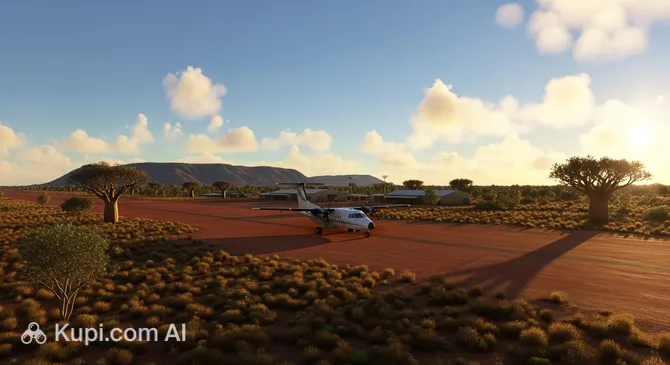
Mungalalu Truscott Airport is a unique aviation facility hidden within the rugged and picturesque landscapes of the Anjo Peninsula in the north of Western Australia. Once a secret World War II airbase, today this airfield serves as a vital link for the Kimberley region, bridging history with modern industrial needs. The airport is located on the lands of the Wunambal Gaambera indigenous people and serves less as a tourist hub and more as a gateway to one of the continent's most inaccessible corners.

IATA Code TTX
ICAO Code YTST
City Kalumburu (Anjo Peninsula)
Distance to Centre ~35 km
Status Private / Domestic (Specialised)
Annual Passengers Statistics closed (serves shifts and charters)
Schedule Charter flights and special services

Airport Features and Highlights

Truscott-Mungalalu differs from standard passenger terminals due to its special status and rich past. Firstly, it is a historical landmark: in the 1940s, B-24 Liberator bombers and Spitfire fighters were based here. Wartime artefacts can still be found on the grounds, making it a pilgrimage site for aviation history enthusiasts (accessible by special permit).

Secondly, the airport possesses excellent infrastructure for such a remote location. It features an all-weather asphalt runway 1,800 metres long, capable of handling jet aircraft. For staff and guests, a fully equipped residential camp is provided with amenities unexpected in the remote interior, such as a gym, swimming pool, and dining hall.

It is important to note that the airport operates in close cooperation with the traditional land owners and plays a key role in the logistics of oil and gas projects in the Timor Sea, as well as being used for medical evacuations and rescue operations. Access here is strictly regulated (prior permission is required), which maintains an atmosphere of exclusivity and safety.

Contact Information

As Truscott-Mungalalu is a private, closed airfield managed by Mungalalu Truscott Airbase Pty Ltd, communication channels here are limited and intended primarily for operational needs and access coordination.

  • Official Website: www.mtairbase.com.au
  • Address: Mungalalu Truscott Airbase, Anjo Peninsula, Western Australia 6740, Australia
  • Phone: +61 8 9161 4004 (Airfield Administration)
  • Email: general.manager@mtairbase.com.au
  • Social Media: Official accounts are absent due to the facility's specific status.
  • Lost Luggage and Passenger Support: There is no centralised information desk or lost and found bureau. For issues regarding forgotten items, delays, or carriage rules, you must contact the airline operating your shift or charter flight directly.

How to Get to the Airport

It is important to understand that Truscott-Mungalalu Airport is located in one of the most remote and wild parts of Australia. It is a restricted facility, and it is impossible to travel here spontaneously as one would to a standard city airport terminal. Logistics here are subject to strict rules dictated by the status of a private airbase and the challenging natural conditions of the Kimberley region.

Most visitors arrive here directly by air via charter flights from larger hubs, such as Darwin International Airport or Kununurra Airport. However, if considering an overland route from the nearest settlement, the specific terrain must be taken into account.

Car and Rental

Travelling by car is the only theoretically possible way to reach the airport by land from the settlement of Kalumburu, which is approximately 35 km away. However, this is no ordinary countryside drive.

  • Vehicle Type: Roads in this region are unsealed, often washed out, and difficult to traverse. You will require a reliable 4WD vehicle with high clearance and fuel reserves. A standard passenger car will not pass here.
  • Car Rental: There are no car rental points in Truscott itself or Kalumburu. You must rent a prepared 4WD vehicle in advance in Broome or Kununurra. Read the rental agreement carefully: many companies prohibit driving on the remote tracks of the Anjo Peninsula.
  • Travel Time: Despite the short distance (~35–40 km), the journey can take from 1 to 2 hours depending on the condition of the grader and weather conditions. In the wet season, the road often becomes completely impassable.
  • Permits: The surrounding territory belongs to indigenous peoples. Passing through requires a permit (Uunguu Visitor Pass), which must be arranged online in advance.

Taxi and Transfer

Standard taxi services (Uber, city taxi fleets) are completely absent in this area. The only transfer option is a prior arrangement with the airbase administration or operators organising tours. Transfers are usually provided only to authorised personnel, shift workers, or participants of agreed historical expeditions. The cost of such services is not fixed and is included in the general logistics package of the client company.

Public Transport

There are no railways, metro, or regular bus services in the North Kimberley region. The nearest scheduled bus stops are hundreds of kilometres away on the state's main highways. Therefore, do not count on budget travel to Truscott-Mungalalu Airport.

Airport Parking

There are spaces for parking vehicles on the airbase territory, but this is not a classic commercial car park with hourly rates. It is a secured zone for service vehicles and cars of staff living in the camp. Leaving a personal vehicle here is possible only by special agreement with the management company, Mungalalu Truscott Airbase Pty Ltd.

Recommendations for Travellers

If your goal is to visit the historical sites of the airbase, the best option is to book an organised tour that already includes the flight or transfer on all-terrain vehicles. Independent attempts to reach the base gates without prior notification (PPR — Prior Permission Required) may result in denial of access and the need to return along a difficult road.

Terminals and Map

Terminal Structure and Complex

Truscott-Mungalalu Airport (TTX) differs radically from familiar civil airports. You will not find multi-storey buildings, aerobridges, or a confusing system of gates here. The airfield infrastructure is extremely utilitarian and designed taking into account the specifics of shift transport and the harsh climate of the Kimberley region. The terminal complex consists of a compact single-storey building serving as a passenger terminal and operations centre.

Number of Terminals and Their Purpose

The airport operates one common terminal. It handles all types of flights: both charter transport for oil and gas company personnel and rare tourist expeditions. There is no division into international and domestic sectors, as all flights arrive from Australian cities (predominantly from Darwin, Broome, or Kununurra).

Map and Navigation

Navigation within Truscott-Mungalalu Airport is intuitive and does not require maps or diagrams.

  • Apron Zone: Passengers disembark from the aircraft directly onto the asphalt area and walk to the terminal building. The distance is minimal — usually no more than 50–100 metres.
  • Entrance Group: A single entrance leads to the waiting and check-in area.
  • Exit to Residential Camp: On the reverse side of the terminal is the exit to the transfer zone, from where transport takes arrivals to residential modules or work sites.

Departure and Arrival Zones

Due to the small size of the terminal, passenger flows are separated by time rather than territory.

  • Arrival Zone: There is no specialised baggage claim area with conveyor belts. Luggage is unloaded by ground staff onto special trolleys or areas next to the terminal, where passengers collect it themselves under staff supervision.
  • Departure Zone: This is a general waiting hall equipped with a powerful air conditioning system, which is critically important in tropical heat. The hall has seating, water coolers, and safety information boards.

Service Features and Transfers

The concept of "transfer between terminals" is irrelevant for Truscott. The entire service cycle takes place in one room. However, there are specifics to consider:

The main feature of the terminal is strict safety control and discipline. Since the airport serves industrial facilities, standards adopted in the mining industry apply here. This means the waiting area is a place where one must observe silence and follow staff instructions. There are no Duty Free shops, souvenir stalls, or restaurants inside the terminal.

Check-in and Screening Procedures

The check-in process at Truscott-Mungalalu differs from a standard city airport in its strictness regarding luggage contents and passenger condition.

Check-in:

  • It is recommended to arrive in the departure zone 45–60 minutes before the flight departs, unless otherwise specified by your employer or tour operator.
  • Check-in is quick, as passenger lists are usually approved in advance (flight manifests).

Screening and Security:

  • Weight Control: Weighing of baggage and hand luggage is conducted very strictly due to take-off weight limitations of small aircraft.
  • Alcohol Testing: Be prepared that before boarding (or upon arrival), passengers may undergo a mandatory alcohol test. A "zero tolerance" policy or strict restrictions often apply on the base territory.
  • Biosecurity: Checks of footwear and clothing for seeds or dirt may be conducted to prevent the introduction of invasive plant species to the territory of the protected peninsula.

Navigation Recommendations for Passengers

The main rule at Truscott-Mungalalu Airport is do not deviate from the route. The area around the runway is a high-danger zone where special machinery operates. Upon arrival, follow the staff member in a high-visibility vest directly into the building. Do not attempt to explore the terminal surroundings on your own: wild nature surrounds the area, and exiting the perimeter fence without an escort is prohibited.

Airport History

The history of Truscott-Mungalalu Airport is a gripping tale of military secrets, oblivion, and revival. Unlike most civil airports that developed gradually from small airfields, this facility emerged suddenly and on a large scale, dictated by the harsh necessities of wartime.

Foundation and War Years (1944–1945)

The airfield was founded in 1944 at the height of World War II. Construction was carried out under strict secrecy by engineering units of the RAAF (Royal Australian Air Force). The base's initial task was to create a staging ground for strikes against Japanese forces occupying the Dutch East Indies (modern-day Indonesia). The location was chosen for its strategic position on the Anjo Peninsula: close enough to the target for bombers, but far enough to remain undetected.

The base was named in honour of the legendary Australian ace, Squadron Leader Keith "Bluey" Truscott, who died tragically in 1943. By the time it opened, one of the longest and highest-quality runways in northern Australia had been built here, capable of handling heavy B-24 Liberator bombers, as well as Catalina flying boats and Spitfire fighters.

Period of Oblivion

With the end of the war in 1945, the need for a secret airbase disappeared. In 1946, the military left Truscott, leaving the infrastructure to the mercy of tropical nature. For more than half a century, the airfield stood abandoned. The jungle began to consume the buildings, and the runway, although preserved surprisingly well, was used only sporadically by small enthusiast aircraft or in emergency situations.

Revival and Modernisation (1990s – Present Day)

A new chapter in the airport's history began at the end of the 20th century. The development of offshore oil and gas projects in the Timor Sea required a reliable logistics hub on land. Truscott's unique location and the presence of a ready-made capital runway attracted business attention.

Massive reconstruction was carried out:

  • The runway was cleared, repaired, and covered with modern all-weather asphalt, allowing it to receive jet aircraft.
  • Modern infrastructure was built: a residential camp for shift workers (Mungalalu Truscott Base), hangars for machinery, and fuel storage facilities.
  • The airport passed under the management of a commercial structure, establishing close cooperation with the traditional land owners — the Wunambal Gaambera people.

Interesting Facts and Historical Heritage

Today, Truscott-Mungalalu is a kind of open-air museum where modernity sits side by side with history.

  • B-24 Liberator Tragedy: One of the saddest and most significant pages in the base's history was the crash of a B-24 bomber (tail number A72-160) in March 1945. The aircraft crashed shortly after take-off, killing all 11 crew members. The crash site with fuselage wreckage is preserved as a memorial, which guests of the base can visit (with administration permission).
  • Secret Status: During the war, the base was so classified that even many high-ranking Australian military officials did not know its exact coordinates. It served as a key refuelling and rearming point for "Z Special Unit" operations — an elite commando squad.
  • Durability: The original runway surface, laid in 1944, was of such high quality that even after 50 years of no maintenance, it remained suitable for light aviation landings, which is an engineering phenomenon for tropical climate conditions.

Services and Facilities

Given the status of Truscott-Mungalalu Airport (TTX) as a private closed airbase serving primarily oil and gas projects and rare expedition tours, the range of services here differs radically from what tourists are accustomed to seeing in standard passenger hubs. There is no commercial zone here, and all infrastructure is aimed at supporting the livelihood of shift personnel.

Dining and Shops

The terminal lacks familiar cafes, coffee shops, or restaurants with menus. There are also no Duty Free shops, souvenir stalls, or newsstands.

  • Dining: Organised on the principle of a centralised canteen (Mess Hall) within the residential camp territory. Meals are provided strictly according to schedule (breakfast, lunch, dinner) and are usually included in the service package for an employee or tour participant. The range of dishes is hearty and high-quality, but the choice is limited to the menu of the day.
  • Shopping: It is practically impossible to buy groceries, cigarettes, or personal hygiene products on-site. Travellers are strongly advised to bring all necessary personal items, snacks, and specific medications with them.

Waiting Halls and Connectivity

The waiting zone is a general air-conditioned hall in the terminal. There is no division into business lounges (VIP lounges) and economy class, as all passengers have equal access status.

  • Wi-Fi: Satellite internet is usually available on the base territory and in the terminal. However, speed may be limited, and access is often granted only to authorised users (staff). Tourists should check with organisers in advance about connection possibilities.
  • Mobile Connectivity: Coverage by standard mobile operators (Telstra, Optus) may be absent or unstable here. Main communication is carried out via satellite phones or the base's local network.
  • Device Charging: The waiting hall has standard Australian power sockets (Type I), but specialised charging stations with USB ports may not be available. It is recommended to carry a fully charged power bank.

Financial Services

ATMs, currency exchange points, and bank branches are completely absent at Truscott-Mungalalu Airport. Cash transactions are practically non-existent on the base territory. All services (accommodation, meals, transfers) are paid for in advance via bank transfer by client companies.

Medical Services

Safety is the main priority in the remote Kimberley region. The base operates a medical centre staffed by a qualified paramedic or nurse to provide first aid for work-related injuries or acute conditions. In case of serious health problems, emergency evacuation is organised by the Royal Flying Doctor Service (RFDS). There is no pharmacy for retail sale of medicines.

Services for Passengers with Children

The airport and base are industrial facilities with increased risks, so infrastructure for children (mother and child rooms, playgrounds) is absent. Visits to the base by children are possible only within the framework of special agreed tours, and parents must independently provide the child with everything necessary, including food and entertainment.

Accessibility

The terminal is single-storey, which facilitates the movement of passengers with limited mobility — there are no stairs or lifts. However, specialised escort services are absent. Boarding the aircraft is often carried out via the aircraft's built-in stairs. If you require assistance with boarding or disembarking, you must notify the air carrier well in advance of departure.

Accommodation: Hotels and Residential Camp

There are no classic hotels at the airport or in its vicinity. The only means of accommodation is the airbase residential complex — Mungalalu Truscott Base.

  • Conditions: Accommodation is organised in modular blocks ("dongas"), typical for Australian shift settlements. Rooms are simple but clean, with air conditioning, a bed, a wardrobe, and usually a shared or private bathroom.
  • Amenities: Despite the remoteness, guests have access to a gym, a swimming pool (which is a real salvation in the heat), and a barbecue area.
  • Booking: It is impossible to book a room via Booking or Airbnb. Places are allocated by the base administration exclusively for personnel and participants of authorised groups.

Business Services

There is no full-fledged business centre with secretarial services, but the base has rooms that can be used as conference rooms or briefing rooms. They are equipped with projectors and whiteboards, as planning meetings and safety briefings for work groups are regularly held here.
Where to Eat

Since Truscott-Mungalalu Airport (TTX) is a private airfield serving a shift settlement and closed expeditions, you will not find the picture familiar to tourists with food courts, coffee shops, and fast-food chains here. The dining system here is organised completely differently and is subject to the strict routine of base life.

Dining Organisation: The Canteen (The Mess)

The only place where you can have a full meal is the base's central canteen, located in the residential camp (a few minutes' drive or walk from the strip). This is not a commercial restaurant, but a classic canteen for staff ("The Mess").

  • Location: Residential zone of the base (Camp area). Access there is possible only after passing registration and briefing.
  • Service Format: Buffet. You take a tray and choose dishes yourself.
  • Price Range: For employees and participants of authorised tours, meals are generally free (included in the contract or tour cost). Cash or cards will not be needed here.

Menu and Local Features

Despite the distance from civilisation, the food at Truscott, as at most Australian mining sites, is very high quality and filling. Food supply logistics are perfectly fine-tuned.

  • Breakfast: Usually includes hot dishes (eggs, bacon, sausages, beans), as well as cereals, yoghurts, toast, and fresh fruit.
  • Lunch and Dinner: A choice of several hot dishes (meat, fish, poultry), side dishes, and a large salad bar is offered.
  • Signature Offers: Be sure to try Australian beef steaks or barramundi fish if they are on the menu of the day. On Sundays, a traditional barbecue (Sunday Roast) or themed evenings are often arranged.

Dietary Requirements

The catering company serving the base takes into account the diversity of staff needs:

  • Vegetarian and Vegan: There is always a separate section with vegetable dishes and salads.
  • Halal and Gluten-Free: Available upon request. If you have a strict diet or allergies, it is critically important to notify the organisers of your trip in advance (at least 48 hours) so that the chefs can prepare a special menu for you.

Opening Hours

This is the most important nuance. The canteen operates strictly according to a schedule adjusted to work shifts. If you arrive between meals, there may be no hot food available.

  • Breakfast: 04:30 – 07:30
  • Lunch: 11:30 – 13:00 (packed lunch boxes or "Crib" are often issued for those working in the field)
  • Dinner: 17:00 – 20:00

Bars and Alcohol: The Wet Mess

On the base territory, there is usually a recreation zone called the "Wet Mess" (bar). This is a social club for workers.

  • Assortment: Cold canned beer, cider, sometimes wine. Strong spirits are often prohibited.
  • Rules: Strict limits apply to the number of drinks per person per day (usually no more than 4 mid-strength cans). Sales are carried out only at certain hours (usually in the evening after shifts) and only with a special pass card.
  • Important: Consumption of alcohol is strictly prohibited in the departure zone and on the runway itself.

Snack Recommendations

Since there is nowhere to buy snacks in the terminal, and canteen hours are limited, we recommend:

  1. For a quick snack: In the canteen area ("Crib room"), fruit, biscuits, tea, and coffee are often available around the clock. You can take this with you before departure.
  2. Bring your own: If you are flying via charter and know you will arrive at an odd hour, be sure to bring protein bars, nuts, or chocolate from your departure city (Darwin or Kununurra).
  3. Water: There are drinking water coolers in the terminal. It is recommended to have your own reusable bottle, as plastic cups may be absent for environmental reasons.

Travel Tips

Travelling through Truscott-Mungalalu Airport (TTX) is an experience radically different from flying through a regular civil hub. Since this is a private airbase with strict industrial rules and a remote location, standard advice does not apply here. To ensure your trip goes smoothly, it is important to consider the specifics of a "closed" facility and the wild nature of the Kimberley region.

Optimal Arrival Time and Check-in

Unlike in metropolises, you do not need to arrive 3 hours early here, but being late is categorically forbidden.

  • Arrival Time: It is recommended to be in the terminal zone 45–60 minutes before departure. Passenger lists (manifests) close strictly on schedule. If you are late, the plane will not wait, and the next flight might only be in several days.
  • Documents: Always keep photo identification and your facility pass (if issued) with you. Electronic tickets are rare here; most often your name is simply checked against a list by the airline representative.
  • Luggage: Weigh your bags in advance! Strict weight limits apply on small aircraft (often 10–15 kg for checked luggage and 5–7 kg for hand luggage). Excess weight may simply not be accepted on board.

Security and Control Specifics

Truscott is a working facility with high occupational safety standards, so screening procedures here are specific.

  • Alcohol Testing (BAU): Be prepared to take a breathalyser test. Many charter flights operate a "zero tolerance" rule for alcohol. If the test shows the presence of fumes, you will not be allowed on board (or allowed to leave the base territory), which threatens serious fines or dismissal.
  • Dress Code: Some flights require wearing closed shoes and long trousers. Flip-flops and singlets may be prohibited by the airline's safety rules.
  • Biosecurity: Before departure, thoroughly clean the soles of your shoes from dirt and seeds. This is an environmental safety requirement to protect the unique nature of the Kimberley.

Choosing a Seat on the Plane

Flights to Truscott-Mungalalu are among the most scenic in Australia.

  • Window Seat: This is an absolute "must-have". During descent, incredible views open up of the jagged coastline of the Anjo Peninsula, the turquoise waters of the Timor Sea, and pristine jungles.
  • Balancing: Note that on small turboprop aircraft, seating is often assigned by the pilot or ground staff for proper aircraft centring. Your request to sit by the window may be declined for flight safety reasons.

Hand Luggage: What is Allowed and Prohibited

  • Alcohol Ban: It is categorically not recommended, and often prohibited, to carry alcohol in luggage or hand luggage when flying TO the base unless you have special permission from the manager.
  • Electronics: Lithium batteries and power banks — only in hand luggage.
  • Medication: Always take vital medicines with you in the cabin. If luggage is mistakenly not unloaded (which happens), there will be no pharmacy on-site to buy a replacement.

Tips for Transit Passengers

The concept of "transit" at Truscott differs from the usual. There are no connections between flights of different airlines here.

  • From Plane to Helicopter: If your route involves further transfer to an offshore platform or remote camp by helicopter, follow the instructions of the meeting staff quickly. The transfer often takes place "tarmac to tarmac" without entering the terminal.
  • Waiting for Transfer: If you are met by ground transport (bus or jeep), do not wander away from the terminal building. Drivers know the schedule, but no one will search for you across the airfield territory.

Customs and Quarantine

The airport does not accept international flights, so there is no passport control. However, strict internal quarantine is in force.

  • Fresh Produce: Bringing fruit, vegetables, and honey may be restricted due to the risk of spreading pests between state regions. It is better to check this in advance or not bring perishable products.

How to Save Time and Money

Since it is impossible to spend money at Truscott Airport (there are no shops), tips relate more to rational planning.

  • "Bring Everything With You": Fully charge gadgets and download content (films, books, music) in advance. Wi-Fi may be slow or unavailable, and mobile internet absent.
  • Own Bottle: Have an empty reusable bottle with you. After passing screening, you can fill it with water from the cooler for free, which will save you from thirst in the hot climate.
  • Sun Protection: Apply sunscreen and put on sunglasses even before leaving the plane. The sun in the Kimberley is aggressive, and you will have to walk from the stairs to the building across open space.

What to Do in Case of Flight Delay

In the wet season (from November to April), storms and cyclones often make adjustments to the schedule.

  • Do Not Panic: Delays here are a common occurrence for safety reasons.
  • Stay Cool: Do not go outside "for some fresh air" for long — heatstroke can occur very quickly. Wait in the air-conditioned hall.
  • Contact with the "Mainland": If the flight is delayed for a long time or rescheduled for the next day, immediately contact your employer or tour organiser via the base administration to reschedule logistics and overnight accommodation.

Airports in nearby cities

Reached the end of the page?

That means the route is fully explored