Support

Lindeman Island

About

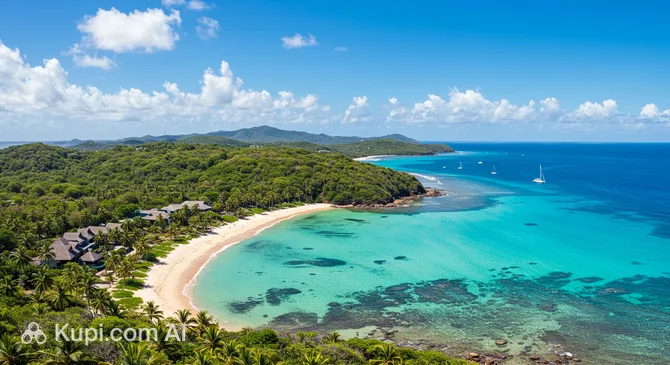
Lindeman Island is a true emerald in the coral waters of Queensland, located in the heart of the famous Whitsunday archipelago. This tropical paradise is situated near the eastern coast of Australia and attracts travelers with its pristine beauty. Here, surrounded by the turquoise waters of the Coral Sea and white-sand beaches, an atmosphere of absolute seclusion and harmony with nature prevails.

Lindeman Island. Illustration.
Source: Kupi.com AI

The island is known for its compact size and is considered one of the quietest and coziest corners of the region. Here you won't find noisy metropolises or endless crowds of tourists—the permanent population is small and primarily involved in guest services. Despite its seclusion, the history of Lindeman Island as a desirable vacation destination spans many years, making it an ideal retreat for those seeking peace away from civilization.

The main reason to visit Lindeman is the opportunity to experience true exoticism and enjoy unique natural treasures. The island serves as an excellent starting point for diving on the legendary Great Barrier Reef and exciting boat trips. Nature lovers will appreciate the picturesque hiking trails, while couples will find the perfect conditions for a romantic getaway, watching breathtaking sunsets and sunrises.

If you dream of a place where every day is filled with a sense of adventure and serenity, Lindeman Island is an excellent choice. This unique combination of comfort and wilderness will give you an unforgettable travel experience.

Weather Overview

The climate of this corner of Queensland can be characterized as pleasant and warm throughout the year, which is typical for the Whitsunday region. Due to its location, the island rarely faces extreme temperatures; however, seasonality is expressed in the amount of precipitation and humidity levels.

The summer period (December to February) is the hottest time, with average temperatures staying around 26–27°C, sometimes rising to 28°C. This is also the season when tropical downpours are most likely: for example, in January and March, the number of rainy days can reach 20–21 per month. During this time, nature is at its most vibrant, but travelers should be prepared for high humidity.

Winter (June–August) brings welcome freshness and stability. Average thermometer readings drop to a comfortable 20–21°C, and nights become cooler—around 19°C. This is the driest period of the year: in August and September, rain is extremely rare, occurring only about 5 days a month, which creates ideal conditions for hiking and beach holidays.

In general, expect a warm and humid summer with occasional rains and a mild, dry winter with plenty of sunny days. To choose the best dates for your visit and outdoor activities, we recommend checking in advance what the forecast is for the weather on Lindeman Island for the time of your vacation.

Average monthly temperature

Average monthly precipitation

Interesting Facts

In addition to the main attractions, Lindeman Island hides many fascinating secrets and historical details that reveal themselves only to inquisitive travelers. Here are a few facts that make this place truly special:

  • Coconut Past. In the early 20th century, the island was known not as an elite resort, but as a place for coconut palm cultivation. Additionally, it served as an important stop for sailors and explorers setting out to conquer the vast expanses of the Great Barrier Reef.

  • Secrets of the Deep. The island is shrouded in a romantic aura of maritime legends. Local folklore tells of mysterious shipwrecks from centuries past and even lost treasures that are rumored to still lie at the bottom of the surrounding waters.

  • Inspiration for the Arts. Lindeman is part of the picturesque Whitsunday archipelago, which consists of 74 islands. Its incredible landscapes have repeatedly inspired writers and artists, and photos of local beaches have become a standard of tropical beauty for travel catalogs worldwide.

  • Sanctuary for Giants. This is one of the best places in the region for wildlife watching. During the migration season, majestic whales can be seen swimming past the shores, and the coastal waters and land have become home to rare species of birds and sea turtles.

  • Zen Territory. The island is famous for its special energy of tranquility. It is a popular destination for yoga retreats and secluded romantic ceremonies, where ecotourism and a careful attitude toward nature are highly valued.

How to Get There

When planning a trip to this picturesque corner of Queensland, it is important to remember that Lindeman Island is an island resort, so logistics usually include a flight and a subsequent transfer by water or air. You can find out more details about how to get to Lindeman Island by studying all available routes and transport combinations.

The closest and most convenient hub is Hamilton Island Airport (IATA: HTI). It is important to note that it is not located on Lindeman Island itself, but on the neighboring Hamilton Island, about 13.4 km away. This is one of the archipelago's main hubs, receiving flights from major Australian cities. The estimated travel time to the transfer point is about 40 minutes.

Another popular option is flying to the mainland via Whitsunday Coast Airport (IATA: PPP). It is located in the town of Proserpine, at a distance of 51.3 km from Lindeman Island. Many tourists planning to visit the Whitsunday region arrive here. The journey from the terminal to the coast for the water transport connection will take approximately 1 hour and 40 minutes by taxi or shuttle.

You can also consider Mackay Airport (IATA: MKY), located in the city of Mackay. This is a larger transport hub, but it is further away—81.8 km from the destination. A journey from here will require more time: the transfer to the coast will take approximately 2 hours and 25 minutes.

For clarity, here is a summary of information on the main airports:

AirportPassenger trafficDistance
Hamilton Island Airport500 00013 km
Whitsunday Coast Airport507 00051 km
Mackay Airport969 90082 km
Moranbah Airport160 000205 km
Townsville Airport1.6 mln272 km

Main Attractions

Lindeman Island is famous for its picturesque hiking trails and untouched nature, as a large part of it is a national park. It is the perfect place for those who want to combine a beach holiday with active walks through the tropical forest, discovering breathtaking panoramas of the Whitsunday archipelago.

One of the main points of interest for tourists is Mount Oldfield. This 212-meter elevation does not require special climbing skills to ascend but rewards travelers with incredible views. The summit offers a 360-degree circular panorama: you will see the neighboring Hamilton, Whitsunday, and Pentecost islands, as well as the turquoise expanse of the Coral Sea. This is arguably the best observation point on the island for memorable photos.

For lovers of secluded relaxation by the water, Gap Beach is a real find. It can be reached via a scenic trail through the eucalyptus forest. This spot is hidden from prying eyes and is excellent for snorkeling right off the shore. Here you can enjoy the silence, watch marine life among the corals, or set up a picnic against the backdrop of wild nature, far from civilization.

Another gem of the island is Plantation Beach. This wide sandy beach with a palm grove was for a long time the center of the island's resort life. It is pleasant to walk along the shoreline at sunset or simply relax on the soft sand. Many popular trails leading into the island's interior start nearby, where you can encounter various birds and the famous blue butterflies that inhabit the local valleys.

Local Cuisine

The local cuisine of Lindeman Island is a harmonious blend of seafood and vibrant tropical accents that perfectly complements the atmosphere of relaxed vacationing. The gastronomic scene here is built on the freshness of ingredients: the menu is centered around catches from the pristine waters of the Coral Sea. Gourmets should definitely try the local delicacies—fresh oysters, juicy rock lobsters, and tiger prawns. A special place on the table is occupied by fish caught right at the coral reefs, the taste of which requires no complex sauces.

One of the most memorable culinary experiences for tourists is a fish barbecue outdoors. Tender fillets seasoned with lime and aromatic local herbs are prepared right on the coast, allowing you to enjoy dinner to the sound of the surf. Lovers of exotic tastes will appreciate original salads with added seaweed and side dishes made from unusual tropical vegetables that add a piquant touch to the meals.

As for drinks, refreshing flavors reign supreme. Bars will offer you signature cocktails based on passion fruit and lime juice, which are excellent for quenching thirst on a hot day. Homemade lemonades are also popular, and, of course, natural coconut water, often drunk straight from the nut.

The food culture on the island is closely tied to nature. Instead of noisy restaurants, beach picnics are frequently arranged, where the main decorations are mountains of tropical fruits: mangoes, papayas, pineapples, and coconuts. Since farmers' markets on the island are a rarity and products are brought in from the mainland, local chefs try to turn every dinner into an event. It would be a stroke of luck to catch a seafood festival or a gastronomic evening where the region's best chefs demonstrate their skill, turning the ocean's gifts into true masterpieces.

Travel Tips

Traveling to Lindeman Island is an immersion into a world of wild nature and tropical serenity that requires slightly more careful preparation than a trip to a typical resort. To make your stay as comfortable and safe as possible, we have compiled a list of the most important recommendations relevant for this corner of the Whitsunday archipelago.

  1. Clothing and Equipment. Given the tropical climate, opt for light, breathable clothing made from natural fabrics. Be sure to bring a wide-brimmed hat and high-quality sunglasses. If you plan to visit during jellyfish season (October to May), it is highly recommended to have a special stinger suit for swimming. For walks in the national park and climbing Mount Oldfield, you will need comfortable closed-toe shoes with non-slip soles.
  2. Transport on the Island. Lindeman Island is a car-free zone. There is no public transport, taxis, or car rental services. The only way to get around is walking along the scenic trails. Gauge your strength and time when planning routes between beaches and observation points. You can only reach the island itself by water or air (private boat or charter).
  3. Finances and Payment. The official currency is the Australian Dollar (AUD). Since the island is primarily a nature park with limited infrastructure, do not rely on finding ATMs or exchange offices on-site. Withdraw cash in advance on the mainland (e.g., in Airlie Beach) or on Hamilton Island. Cards are accepted everywhere in Australia, but on remote islands, terminals may not work due to connectivity issues.
  4. Health and Safety. The nearest pharmacy and full medical assistance are located on the neighboring Hamilton Island or on the mainland. Be sure to pack a personal first-aid kit: motion sickness remedies, antiseptics, plasters, and insect repellent. The sun in Queensland is very intense, so SPF 50+ sunscreen should be applied every 2 hours, even in cloudy weather.
  5. Communication and Internet. The primary language of communication is English. Mobile reception on the island can be unstable; the Telstra network generally has the best signal, but "dead zones" are possible in lowlands and bays. Wi-Fi is available only in private residence areas or on vessels. We recommend downloading offline maps and necessary apps in advance so as not to depend on the network.
  6. Ecological Etiquette. Australians are very protective of nature. The main rule for visiting the national park is "pack it in, pack it out." There are no trash bins on the wild trails. When meeting other tourists on narrow paths, it is customary to say hello with a short nod or the phrase "G'day." Do not feed wild animals and birds—it harms their health and disrupts the ecosystem.
  7. What to Avoid. Strictly avoid contact with corals: do not step on them or break off pieces "as a souvenir." This not only causes irreparable harm to the reef but can also be dangerous for you (coral cuts take a long time to heal). You should also avoid swimming at wild beaches at dusk or dawn, when marine life is most active.
  8. Water and Food Supply. Since there are no supermarkets in the usual sense on the island and infrastructure may be limited, always take a sufficient supply of drinking water and snacks with you if you are heading out for a walk or a picnic for the whole day. Tropical heat causes rapid dehydration, so water is your primary companion.

Lindeman Island will give you a unique experience of being at one with nature if you show it respect and a little foresight. By following these simple tips, you can avoid minor troubles and focus entirely on the beauty of the turquoise lagoons and green hills.

Entertainment & Nightlife

Entertainment and nightlife on Lindeman Island are drastically different from the typical rhythm of popular tourist centers. Here you won't find neon signs, noisy districts with discos until morning, or overcrowded bars. This place is designed for those seeking privacy and silence. The concept of evenings on the island is built around contemplating nature, romance, and total relaxation under the starry sky of the Southern Hemisphere.

The main center of "nightlife" here shifts to the water. Since stationary infrastructure on the island itself is limited (especially during periods of resort reconstruction), the decks of private yachts and catamarans become the epicenter of evening activity. Travelers often arrange dinners on board, enjoying fresh seafood and wine in the absolute silence of the bays. The most popular "establishment" could arguably be Gap Beach at sunset: people come here with blankets and picnic baskets to see off the sun as it dips into the Coral Sea.

If your soul craves classic entertainment, music, and cocktails, tourists are recommended to head to neighboring Hamilton Island, located just a few kilometers away. It can be reached by boat. This is where the social life of the archipelago is concentrated:

  • In the Marina Village area on Hamilton, life bustles until late at night. Here you can find pubs with live music and fine dining restaurants.

  • For younger crowds and dance enthusiasts, the mainland town of Airlie Beach, often called the "Gateway to the Whitsundays," becomes a point of attraction. Its main street, Shute Harbour Road, is famous for its bars and backpacker parties.

The atmosphere of evenings on Lindeman itself is "eco-chic" and tranquility. The concept of a dress code doesn't exist here: linen clothes, light dresses, and sandals are appropriate. The main rule is comfort. People come here not to show off, but to restore their strength. The audience consists mainly of couples, yachting enthusiasts, and ecotourists who value privacy.

Safety and Tips:

Night walks on the island are absolutely safe in terms of crime—there are practically no strangers here. However, remember that this is a national park area. There is no lighting on the trails, so a powerful flashlight is a must for evening strolls. Avoid walking in tall grass in the dark and keep an eye on the tides if you are on the beach. It is impossible to call a "taxi" here—all movement is on foot or by pre-arranged rental boats.

As for daytime entertainment, it is entirely dedicated to active outdoor recreation. During daylight hours, tourists can enjoy snorkeling in crystal clear waters, kayaking along the coast, and trekking. The island's main "day club" is the summit of Mount Oldfield, which offers the best views of the archipelago, replacing any urban observation decks.

Parks & Museums

Lindeman Island is, above all, a celebration of wild nature, where green zones occupy almost the entire land territory. Unlike traditional cities, you won't find the usual urban parks with benches and fountains or classic museum complexes here. The entire island is a single nature reserve that serves as a living open-air museum, telling the story of the Whitsunday region's geology and biodiversity.

The main natural asset is Lindeman Islands National Park. It covers over 700 hectares and protects the unique ecosystems of the volcanic island. The park is famous for its variety of landscapes: from dry eucalyptus forests and grasslands to wet tropical gullies where rare plant species are hidden. It is a true paradise for birdwatchers: more than 50 bird species can be found here, including colorful lorikeets and majestic sea eagles. A walk through the park replaces a visit to a botanical garden, allowing you to see Australian flora in its original form.

Of special note are the wetlands and mangroves located in the northern part of the island. This zone plays a key role in the Great Barrier Reef ecosystem, serving as a "nursery" for many marine inhabitants. While there are no paved paths here, exploring this part of the island during low tide allows you to connect with the complex and fragile life of the shoreline that ordinary tourists often overlook.

Regarding cultural institutions, there are no museums or art galleries on Lindeman Island itself. This is a place for a digital detox and communion with nature. Travelers interested in the region's history and art should look at cultural sites located on the mainland in nearby towns:

  • Proserpine Historical Museum. Located in the town of Proserpine (the journey will take some time as it requires a crossing to the mainland). The museum's exhibits detail the development of the Whitsunday region, the history of the sugar industry, and the life of the first European settlers. This is a great opportunity to learn the context in which the island resorts developed.

  • Cultural Heritage of the Ngaro People. Although this is not a museum in a building, the entire Whitsunday waters are considered the territory of the Ngaro sea people. Ancient rock paintings and caves have been preserved on neighboring islands (such as Hook Island). On Lindeman, the history of the indigenous inhabitants is felt in the untouched landscapes that have remained unchanged for millennia.

From a historical perspective, Lindeman Island is interesting as the location of the first resort in the archipelago. It was founded back in the 1920s by Angus Nicholson. Although old buildings have given way to more modern (and currently closed for reconstruction) complexes, the atmosphere of the island itself holds the memory of the golden era of Australian tourism, when travelers arrived here by steamships in search of the exotic.

For those seeking authentic experiences, we suggest heading to Boat Port on the northwest of the island. This is a secluded spot with a small campsite, reachable by boat or on foot. There is no infrastructure here, but this is exactly where you can feel like a pioneer, enjoying the silence broken only by the sound of the wind in the casuarinas and the splashing of waves.

Getting Around

The public transport system on Lindeman Island is fundamentally different from typical urban infrastructure. It is important to understand that there are no subways, buses, trams, or trolleys here. The island is a car-free zone and is predominantly a national park, so you won't find the usual routes, schedules, or stops here.

The primary and virtually only way to get around on land is walking. The island is crisscrossed by a network of marked trails that connect the main beaches, camping areas, and natural attractions. Tourists should rely solely on their own strength: there are no taxi services, ride-sharing apps (like Uber), or bicycle rentals. The terrain is hilly in places, so your main "vehicle" will be comfortable trekking shoes.

The role of external transport connecting Lindeman with civilization is fulfilled by watercraft and light aircraft. These are private boats, yachts, and charter vessels arriving from the mainland or neighboring Hamilton Island. It is important to note that there is no regular government ferry with cheap tickets here. All logistics are based on individual arrangements with private carriers or tour operators.

Since there is no classic transport network, transport cards (such as the Go Card, popular in Queensland) or mobile apps for fare payment do not work here. Payments for transfers are made as a one-off, usually when booking the service. Prices for water taxis or charters can be high, so it is highly recommended to plan and pay for movements in advance, before arriving on the island.

During the operation of resort complexes on similar islands, electric buggies (golf carts) are often used to transport guests and luggage around the hotel grounds. However, for independent travelers and tourists arriving at the national park, this type of transport is unavailable. The main advice for visitors: bring a minimum of heavy luggage, as you will have to carry it manually from the drop-off point to your resting place.

Accommodation

The accommodation situation on Lindeman Island currently differs from standard tourist destinations. Since most of the territory is a national park and the former major resort complex is closed for reconstruction, there are no active hotels, hostels, or apartments in the traditional sense. This destination is primarily geared toward fans of ecotourism and "wild" vacations.

The only official accommodation option directly on the island is camping. The campsite is located in the picturesque Boat Port bay on the northwestern side of the island. This spot offers complete seclusion and stunning sunset views, but it requires careful preparation from travelers. Infrastructure here is minimal: there are no showers, toilets, or sources of drinking water, so tourists must be completely self-sufficient and bring all their own gear and food supplies.

If you are not ready for an overnight stay in a tent but still want to visit Lindeman, the optimal solution is to stay on neighboring islands or the mainland. Most tourists choose comfortable hotels on Hamilton Island or in Airlie Beach, from where they can reach the national park by rental boat or as part of a day tour. In this case, a full range of accommodation will be available to you: from budget hostels to world-class luxury resorts.

Price Range and Booking:

Camping on Lindeman Island falls into the budget segment. The site fee is symbolic and is collected by the Queensland National Parks service. However, it is necessary to book a spot and obtain a special permit in advance through the official government website, as camping capacity is strictly limited (usually no more than 6 groups at a time). We recommend taking care of your booking several weeks before the trip, especially if you plan to visit during the dry season or holidays.

Nearby Cities

For those who want to add variety to their secluded island holiday, the surrounding area offers several interesting destinations for day trips. The Queensland coast, located relatively nearby, provides access to colorful towns with rich history and tropical nature, creating a vivid contrast to the silence of the national park.

One of the nearest major centers is Mackay. This city is often called the sugar capital of Australia, but it primarily attracts tourists with its Art Deco architecture and the beautiful Bluewater Lagoon, where you can safely swim year-round. From here, it is also convenient to go on excursions to the picturesque Pioneer Valley or the Eungella National Park to see platypuses in the wild.

Fans of beach holidays and fresh fruit should visit Bowen. This is one of the oldest towns in the north of the state, famous for its secluded bays like Horseshoe Bay and ideal conditions for snorkeling right off the beach. Additionally, it is here that the famous Australian mangoes are grown, in honor of which a huge monument—"The Big Mango"—is installed in the town.

If you are ready for a longer journey, take a look at Townsville. This is the region's largest city and the unofficial capital of North Queensland, where urban dynamics blend with natural beauty. Here you can walk along the landscaped Strand promenade, visit the Great Barrier Reef Marine Park headquarters, or climb the pink granite monolith of Castle Hill to enjoy a panoramic view of the ocean.

CityPopulationDistance
Hamilton Island1 21314 km
South Molle Island29 km
Daydream Island32 km
Airlie Beach3 40039 km
Hook Island39 km

Visiting these towns will allow you to learn more about the culture of the Whitsunday region and will complement your vacation experiences with new gastronomic and visual discoveries.

Shopping & Souvenirs

General Overview: It is important to note right away that Lindeman Island is primarily a national park and an ecological tourism zone where traditional urban infrastructure is absent. There are no shops, boutiques, or even small kiosks with essential goods here. Shopping in the traditional sense is impossible on the island. This is a place for "digital" and "consumer" detox, so tourists need to take care of everything they need in advance. All food, water, hygiene products, and equipment should be brought from the mainland or larger neighboring islands.

Main Shopping Areas/Streets: Since there are no settlements on the island, there are no shopping streets. The nearest area where you can enjoy some window shopping is on neighboring Hamilton Island in the Marina Village district. There you can find resort-wear boutiques, art galleries, and souvenir shops. Those planning a trip to Lindeman are recommended to visit the shopping streets of Airlie Beach on the mainland, specifically Shute Harbour Road, where all the Whitsunday region's tourist trade is concentrated.

Shopping Centers: There are no large malls on Lindeman Island. Travelers heading to the campsite are best off buying provisions at shopping centers on the mainland before sailing. The most convenient option is Whitsunday Plaza in the Cannonvale area, near Airlie Beach. This is a full-scale shopping complex with supermarkets, pharmacies, and camping and outdoor activity stores where you can find absolutely everything for self-sufficient living on the island.

Markets: No farmers' or flea markets are held on the island itself. However, if your route takes you through Airlie Beach, be sure to check out the Saturday Airlie Beach Markets on the waterfront. This is a great place to buy fresh tropical fruits, local delicacies, and handmade items that will brighten up your picnic on Lindeman's wild beaches.

Souvenirs: The main souvenir you will take away from Lindeman Island is unique photographs and impressions of untouched nature. You will have to buy physical gifts in other places in the region. Popular souvenirs from a trip to Australia and the Great Barrier Reef area include opal jewelry, kangaroo leather goods, traditional Aboriginal art (boomerangs, paintings), and local honey. All of this is abundantly presented in souvenir shops at airports and mainland resorts.

Opening Hours and Payment: Since there are no shops on the island, information on opening hours is irrelevant for Lindeman itself. However, remember that the payment for the camping permit is made exclusively online through Queensland government portals and must be done in advance. In the Whitsunday region as a whole, cashless payment by cards or smartphones is preferred, though a little cash may come in handy for small expenses at mainland markets.

Tax Free: The Tourist Refund Scheme (TRS) operates in Australia for foreign tourists upon departure from the country. Since no purchases can be made on Lindeman Island, you can only use this service at an international departure airport by presenting receipts for goods bought at large stores on the mainland or other islands totaling at least 300 AUD on a single receipt.
Reached the end of the page?

That means the route is fully explored