Support

Mataranka

About

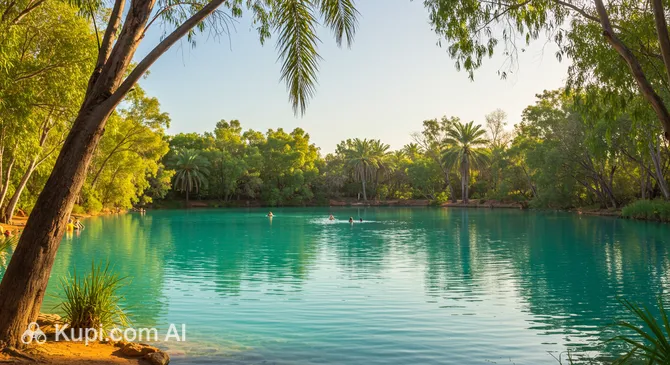
Mataranka is a tiny but incredibly picturesque town tucked away in the tropical wilderness of the Northern Territory. Located about 420 kilometers southeast of Darwin, it is a true gem that Australia is proud of. Home to only about 300 people on the banks of the Roper River, it serves as an ideal sanctuary for those seeking seclusion and tranquility far from the city bustle.

Mataranka. Illustration.
Source: Kupi.com AI

Despite its modest size, the town is famous nationwide for its natural riches. The main attraction is the crystal-clear thermal springs with turquoise water, surrounded by a palm forest. Mataranka serves as the gateway to Elsey National Park, where travelers can find scenic trails, rare bird species, and a sense of complete harmony with the wild.

The atmosphere here is wonderfully friendly and relaxed. Tourists come not only for the healing waters but also to touch the region's past. The fascinating history of Mataranka is closely intertwined with Aboriginal traditions and the legends of the Australian outback. This place offers a unique chance to experience the true flavor of the continent and take home unforgettable memories.

Weather Overview

The weather in Mataranka is defined by a classic tropical climate, characterized by a clear division into wet and dry seasons. Temperatures remain high year-round, but conditions for relaxation change significantly depending on the month. Expect a hot and humid period from November to March, followed by comfortable, sunny, and dry weather in the winter months.

The hottest and rainiest period occurs at the beginning and end of the year. From October to March, average temperatures stay in the 29-32°C range, with maximum values in October potentially reaching 38.3°C. January is considered the wettest month, with about 19 days of rain and high humidity. Nature comes alive during this time, but travelers should be prepared for tropical downpours.

The most favorable time to visit is from May to August (Australian winter). During these months, rainfall is virtually non-existent (0 mm), and the average temperature drops to a pleasant 22-25°C. June and July are the coolest months, when nighttime temperatures can dip to 15-16°C, making a dip in the warm thermal springs especially enjoyable.

When planning your trip, it's important to consider these seasonal differences. To pack correctly and choose the best dates for your visit, we recommend checking the detailed weather in Mataranka by month in advance.

Average monthly temperature

Average monthly precipitation

Interesting Facts

Mataranka is not just a hot springs resort, but a place with a rich history that not all travelers know about. This tiny town hides surprising facts connecting it to classic literature, military secrets, and outback legends.

  • Literary Legend. Mataranka gained worldwide fame thanks to the novel "We of the Never Never." This autobiographical book by Jeannie Gunn, describing life at the remote Elsey Station in the early 20th century, made the region a symbol of the Australian frontier. The places described in the book have become iconic, and the name "Never Never" is now inextricably linked to the mysterious outback of Australia.

  • Secret Military Hub. During World War II, this quiet oasis turned into a strategically important site. Mataranka served as a major staging post for military convoys heading north and even had its own airfield, remaining a key link in the territory's defense.

  • Railway Heritage. The town's history is closely tied to the ambitious project of building the North Australia Railway. At the beginning of the last century, Mataranka was a vital point on the map for engineers and workers trying to conquer the harsh nature and pave a way through the wild scrub to the center of the continent.

  • Natural Thermostat. The local springs are unique not only for their clarity but also for their remarkable stability. Year-round, regardless of the wet or dry season, the water temperature in the Mataranka Thermal Pool and Bitter Springs stays at exactly 34°C, which is considered the ideal temperature for the human body.

How to Get There

Planning a trip to this picturesque corner of the Northern Territory, it's worth considering its distance from major cities. Mataranka is located on the famous Stuart Highway, and the journey here is part of the adventure. Detailed information on routes, schedules, and tickets can be found on the page how to get to Mataranka.

There is no airport in Mataranka itself. The nearest hub for regular flights is Tindal Airport (IATA: KTR). It is located in the town of Katherine, about 87 km north of Mataranka. It is a small regional airport serving domestic flights. A trip from there to your destination by rental car or taxi will take about 1 hour. For international travelers, the main gateway to the region is usually Darwin Airport, located significantly further north, from where you can continue by car or bus.

For convenience, here is a summary of the main airports:

AirportPassenger trafficDistance
Tindal15 00086 km

Rail travel in this region has its own characteristics. There is no station in Mataranka itself, but the legendary train, The Ghan, which travels across the continent from Adelaide to Darwin, passes through the nearby town of Katherine. Tourists can disembark at the Katherine station and cover the remaining 100 km by bus or car.

The most popular and accessible way to reach Mataranka is by road. The town sits directly on the Stuart Highway, the main transport artery crossing Australia from north to south. Intercity buses (such as Greyhound Australia) regularly run between Darwin and Alice Springs, stopping here. Traveling by car offers the freedom of movement and the chance to enjoy the unique landscapes of the Australian outback.

Main Attractions

The town's main highlights are undoubtedly its natural wonders and rich historical heritage, immortalized in literature and film. Travelers come to Mataranka to dip into crystal-clear warm waters and connect with the legends of the Australian frontier. Here is a list of must-visit places for your itinerary.

The most popular spot for relaxation is the famous Mataranka Thermal Pool (Rainbow Spring). This natural pool with a sandy bottom is located in a shady palm grove within Elsey National Park. The water here is remarkably clear and stays at a comfortable 34°C year-round. The pool is equipped with convenient steps, making it feel like a giant open-air bathtub, perfect for relaxing after a long journey.

For those who prefer a more "wild" and natural experience, Bitter Springs is a real find. Located just a few kilometers from the town center, it features a long, winding stream with a gentle current. Tourists love this spot for the chance to "drift": you simply lie back in the water (many bring inflatable rings or "noodles") and let the current slowly carry you through the tropical foliage. The water is so clear that you can observe underwater plants and even spot freshwater turtles.

History buffs will enjoy visiting the Elsey Homestead Replica. This is an exact copy of the original house, built for the filming of the famous Australian movie "We of the Never Never." The building is constructed from local cypress and detailed to recreate the life of early 20th-century settlers. Here, you can feel the atmosphere of isolation and resilience faced by the pioneers of the Northern Territory.

To dive deeper into the region's past, visit the Never Never Museum located in the town center. The museum's exhibits cover indigenous culture, the construction of the North Australia Railway, and Mataranka's role during World War II. It is a small but informative place that helps you understand how the unique character of this remote corner of Australia was formed.

And, of course, you cannot overlook Elsey National Park itself. Besides the springs, it offers excellent opportunities for hiking, such as the Botanic Walk leading to the scenic Mataranka Falls. The park is also known as a great spot for fishing on the Roper River, home to the famous barramundi, though it's important to remember safety rules and be cautious near the water.

Local Cuisine

Mataranka's culinary scene reflects the rugged yet generous spirit of the Australian outback. Far from the fine-dining restaurants of megapolises, simple but incredibly delicious food prepared with heart prevails here. Nature's bounty often forms the basis of the local menu: fresh barramundi caught in local rivers is considered the region's main delicacy. It is grilled or baked with herbs to preserve its naturally delicate flavor.

Meat lovers should definitely try the famous kangaroo meat, cooked over an open fire. This lean and flavor-rich meat is a hallmark of Australia. For the more adventurous gourmets, local establishments and markets offer true exclusives: crocodile or emu meat snacks. These dishes literally allow you to taste the wild nature of the continent.

Aboriginal traditions hold a special place in the culinary culture. In Mataranka, you can find dishes using "bush tucker"—wild herbs, seeds, and fruits. Try charcoal-grilled vegetables with unusual tropical fruit sauces or traditional damper bread, baked right in the campfire. This is not just food, but a way to touch the ancient history of the Northern Territory.

As for drinks, ice-cold beer served in local pubs is invariably popular in the hot tropical climate. It is the primary social drink, accompanying hearty dinners and friendly conversations. For non-alcoholic options, look for fresh-pressed seasonal fruit juices found at farm stalls along with homemade jams and local honey.

The dining culture here is relaxed and informal. Tourists and locals often dine in cozy roadside cafes or set up picnics in nature. While there are no major food festivals in town, any local holiday is accompanied by abundant treats, where the hospitality of the residents is fully revealed.

Travel Tips

A trip to Mataranka is an immersion into the real Australian outback, where nature dictates the rules and civilization takes a backseat. To ensure your trip to this remote corner of the Northern Territory is as comfortable and safe as possible, we have prepared several important recommendations.

  1. Clothing and Gear. Given the hot tropical climate, bring light, breathable clothing made from natural fabrics (cotton, linen). Be sure to pack swimwear—a visit to the famous thermal springs would be incomplete without it. Don't forget a wide-brimmed hat, high-quality sunglasses, and high-SPF sunscreen. For walks in Elsey National Park, you'll need comfortable closed-toe shoes to protect your feet from thorns and insects.

  2. Transport Nuances. There is no public transport, taxis, or services like Uber in Mataranka. The only way to move around freely is a rental car, preferably an SUV or crossover if you plan to go off-pavement. Be extremely careful on the roads at dawn and dusk: this is when kangaroos and wallabies often wander onto the highway, creating dangerous situations.

  3. Finances and Payment. The official currency is the Australian dollar (AUD). While hotels, fuel stations, and supermarkets accept Visa and MasterCard, we strongly recommend carrying a supply of cash. In remote areas, communication outages can occur, causing terminals to temporarily stop working. There are very few ATMs in town and no bank branches at all, so it's better to withdraw money in advance in larger towns (Darwin or Katherine).

  4. Health and Safety. Mataranka is wild nature. The golden rule: swim only in specially designated areas (thermal pools), as saltwater crocodiles may inhabit the region's rivers. Pharmacies here are basic, and the nearest major hospital is in Katherine (100 km away), so be sure to bring an expanded first-aid kit with antihistamines, tropical insect repellent, and personal medications.

  5. Connectivity and Internet. Be prepared for a digital detox. Mobile reception in the region can be unstable; Telstra provides the best coverage, while other providers may lose signal immediately outside the settlement. Wi-Fi is available at some accommodations, but the speed is often slow. Download offline maps and guides to your phone in advance.

  6. Local Etiquette. The atmosphere here is very relaxed and friendly. It is customary to greet passersby and staff with a simple "G'day" (good day). Locals value respect for nature: never leave trash in the forest or near the springs. Also, remember that much of the surrounding land has sacred meaning for Aboriginal people, so follow the signs and do not enter closed territories.

  7. What to Avoid. Categorically avoid driving at night outside the town. The risk of colliding with large animals on unlit highways is immense. Also, do not attempt to feed wild animals, even if they seem friendly and approach you—it can be dangerous for both you and them.

  8. Fuel Tip. In the Australian outback, follow the rule: "If you see a gas station, fill up." Distances between settlements can be large, and fuel consumption increases in the heat with the air conditioning on. Always try to keep your tank at least half full and have a supply of drinking water in the car in case of an unforeseen stop.

Mataranka is a place where time flows slower, allowing you to truly reset. By following these simple tips, you can avoid everyday hassles and fully dedicate yourself to enjoying the warm waters of the springs and the magic of Australian nature.

Entertainment & Nightlife

Nightlife in Mataranka is the complete opposite of noisy megapolises with their neon signs and 24-hour clubs. Here, in the heart of Australia's Northern Territory, evening entertainment is infused with an atmosphere of tranquility, friendliness, and local character. Instead of discos, travelers can expect cozy gatherings by the fire, incredibly starry skies, and colorful pubs where you can meet real outback characters.

The center of evening activity is often the historic Mataranka Hotel. This is a classic Australian pub located right off the highway. People don't come here for fancy cocktails, but for an ice-cold beer and a hearty meal after a long drive. The atmosphere is as casual as it gets: local farmers and tourists chat at the same bar, play pool, or simply enjoy the cool evening air. There is no dress code—shorts and a t-shirt are perfectly appropriate.

Another popular spot is Mataranka Homestead Tourist Resort. This complex, located closer to the natural attractions, often becomes a hub during the tourist season. In the evenings, they frequently host entertainment programs, live music, or open-air movie screenings. At the local bistro and bar, you can dine in a relaxed setting while enjoying the sounds of nature at night.

If you are looking for a quieter dinner, check out the restaurant at Territory Manor Motel. They often serve dishes featuring local barramundi, and the setting is a bit more secluded than the bustling pub. It's important to remember that kitchens in Mataranka establishments close quite early, usually around 8:00–8:30 PM, so it's best to plan your dinner in advance.

Safety in Mataranka is high, and evening walks pose no threat from people. However, caution is advised due to wildlife: wallabies or snakes can be encountered on unlit sections of roads. There is little street lighting, so having a flashlight is very useful. There are no taxi or Uber services here, so if you are staying far from an establishment, plan your return trip in advance (and remember the strict drink-driving laws).

During the day, entertainment in Mataranka is centered around nature. Most tourists spend their time swimming in crystal-clear waters, visiting the Mataranka Thermal Springs, or exploring history at the local museum. But it is the evening that provides a unique opportunity to feel the true spirit of the Australian outback, slow down, and enjoy the moment.

Parks & Museums

Mataranka is famous for its natural splendor and rich historical heritage, offering guests a unique blend of tropical oases and cultural monuments. Green spaces here are closely intertwined with the legends of the Australian outback, creating a unique atmosphere for exploration and relaxation.

The region's main natural treasure is Elsey National Park. This vast reserve covers the scenic banks of the Roper River and is home to the famous Mataranka Thermal Springs. The park is ideal for hiking enthusiasts: the popular "Botanic Walk" takes tourists through a variety of local flora, from fan palms to sprawling paperbark trees. This is a place where you can feel a true connection with the wild nature of Australia.

Another significant natural location is the area around Bitter Springs. Although primarily known for its waters, the surrounding zone is a magnificent example of a tropical forest surviving in an arid climate. Walking along shady paths amidst thick vegetation allows you to see rare birds and enjoy the silence far from civilization. For a more relaxed break within the town limits, Stan Martin Park is a well-maintained green area equipped with picnic spots, where travelers often stop to rest in the shade.

You can dive into the region's past at the Never Never Museum, located in the town center. The museum's exhibits cover key stages in Mataranka's development: from the culture of the local Mangarayi Aboriginal people to the construction of the North Australia Railway and the events of World War II. It houses unique artifacts and photographs telling the story of the harsh life of early settlers and the town's strategic role in the country's defense.

The Elsey Homestead Replica deserves special attention. It is a carefully recreated copy of the original house, built from local cypress for the filming of the movie based on the famous novel "We of the Never Never." Visiting the homestead is a chance to see firsthand how the pioneers of the Northern Territory lived and to touch the literary history of the region. It's also worth stopping by the Stockyard Gallery, which acts as a cultural hub, exhibiting works by local artists and offering unique handmade souvenirs.

For those seeking authentic experiences, look out for the statues of characters from the book "We of the Never Never" scattered around town. A small self-guided tour to find these sculptures is a great way to learn more about Mataranka's folklore and find great photo opportunities.

Getting Around

There is no public transport system in Mataranka as such. Given the town's tiny size and small population, there are no subways, trams, trolleys, or even regular city bus routes. The settlement's infrastructure is primarily geared toward travelers with their own transport.

The main way to get around the area is by car. While distances between shops, accommodation, and the main attractions (thermal springs) might look small on a map, walking between them under the scorching tropical sun is exhausting and unsafe. A rental car or a motorhome is the standard for tourists in this region.

Standard urban taxi services or popular ride-sharing apps (like Uber) do not operate in Mataranka. It is impossible to hail a car on the street here. If you are traveling without a car, the only way to get from the bus stop to your hotel may be a transfer organized by your accommodation providers, which should be arranged in advance via phone or email.

The only link to the outside world is provided by Greyhound Australia intercity buses. They run along the Stuart Highway and stop in Mataranka, connecting it to Darwin and Alice Springs. Tickets for these trips must be purchased online in advance, as there are no physical ticket offices or payment terminals at the stop. To board, simply show your electronic ticket on your smartphone.

Bicycle rental is not a widespread service, though some campsites or tourist bases may provide bikes to their guests. Given the local conditions, tourists are strongly advised to rent a reliable vehicle in a major city before arriving here to have freedom of movement and comfortably explore the region's natural beauty.

Accommodation

Accommodation in Mataranka is primarily about immersing yourself in the Australian outback atmosphere without sacrificing basic comfort. You won't find high-rise hotels, glass facades, or luxury chain brands here. The town's accommodation options consist mainly of cozy motels, guest houses, cottages, and, of course, numerous caravan parks and campsites, which are the most popular form of lodging in this region.

In terms of location, accommodation can be divided into two main categories. The first includes options located directly along the Stuart Highway. These are ideal for those making a short stopover and who value quick access to the road and fuel stations. The second category includes complexes situated deeper within the green zones, closer to the Roper River and the national park. Staying here allows you to wake up to birdsong and be within walking distance of the main natural attractions.

The most famous place, closely tied to the town's history, is the Mataranka Homestead Tourist Resort. This resort complex is located in the immediate vicinity of the famous thermal springs, allowing guests to visit the pool in the early morning or late evening, avoiding the main tourist crowds. Another popular option is the Territory Manor Motel, which offers comfortable mud-brick rooms and is considered one of the best places for those seeking mid-range amenities with a pool and an on-site restaurant.

Booking Tip: Mataranka is an extremely popular destination during the "dry season" (May to September). During this period, especially during school holidays, the town fills up with travelers. If you plan to visit during this time, we strongly recommend booking your accommodation or campsite several months in advance. During the "wet season," the demand drops, and you can find a spot even upon arrival, although some campsites may be closed due to weather conditions.

The price range in the town can be described as budget to mid-range. The cost of a tent or caravan site is very affordable, while standalone cabins or motel rooms will cost more, though still generally less than in major tourist centers. Booking is available through popular online aggregators as well as directly through the complexes' websites or by phone, which can often be more reliable in a remote region.

Nearby Cities

For those who want to explore the surroundings, Mataranka serves as an excellent starting point for day trips to several interesting nearby locations:

The most popular and accessible destination is the town of Katherine, located just an hour's drive to the north. It is a regional hub where civilization meets the wilderness. The main reason to visit Katherine is the majestic Nitmiluk Gorge. Here you can go on a river cruise, rent a canoe, or explore the Cutta Cutta Caves, known for their limestone formations and rare bat species.

For nature lovers, a trip to Jabiru is an interesting option. This town is located in the heart of the famous Kakadu National Park, a UNESCO World Heritage site. Although the journey takes longer, it is a unique opportunity to see the famous wetlands, learn about ancient Aboriginal rock art, and, if you're lucky, observe saltwater crocodiles in their natural habitat.

CityPopulationDistance
Roper River1 10019 km
Katherine1 488100 km
Daly Waters9151 km
Roper Bar100159 km
Ngukurr1 300180 km

These nearby destinations provide a glimpse into the diverse culture and landscapes of the region.

Shopping & Souvenirs

General Overview: Shopping in the town of Mataranka has its own unique characteristics, dictated by the size of this small settlement and its distance from major civilization. You won't find world-renowned boutiques or huge department stores here. Commerce in Mataranka is primarily focused on providing travelers with essential items, food, and fuel, as well as selling unique local souvenirs that reflect the culture of the Northern Territory.

Main Shopping Areas/Streets: All commercial life in the town is concentrated along the main transport artery—the Stuart Highway—and the adjacent Roper Road. This is where the main shops, fuel stations, and cafes are located. A walk from one end of the shopping zone to the other takes only a few minutes, but it is here that you can find everything needed to continue a journey through the outback.

Shopping Centers: In Mataranka, with a population of only a few hundred people, there are no large shopping centers or malls. The nearest full-scale shopping complexes are in Katherine (about 100 km north) or in Darwin. Within the town itself, the local supermarket serves as a shopping hub where you can restock on food and water, and buy camping gear and basic household goods.

Markets: Traditional scheduled street markets are virtually non-existent here. However, the Stockyard Gallery functions as a cultural and commercial hub. This is where local artisans and artists display their work. It has a creative atmosphere, and visitors can not only purchase items but also chat with residents over a cup of coffee in the gallery garden.

Souvenirs: From Mataranka, it's worth bringing back something that recalls the spirit of the "Never Never." The most popular purchases are items of Aboriginal art: paintings, hand-painted boomerangs, and didgeridoos. Leather goods, such as traditional Australian hats or stockwhips, which recall the region's pastoral past, are also in high demand. Don't forget books dedicated to local history, particularly various editions of the novel "We of the Never Never," and local treats like tropical fruit jams.

Opening Hours and Payment: Shops in Mataranka usually open from early morning (around 7:00–8:00 AM) until 5:00 PM or 6:00 PM. The supermarket may stay open a bit longer, and fuel stations often operate late or 24/7. Most outlets accept major credit cards (Visa, MasterCard), but it is strongly recommended to carry cash. In case of connectivity issues or when buying small souvenirs from private artisans, cash may be the only way to pay.

Tax Free: The Tourist Refund Scheme (TRS) operates in Australia for purchases of 300 AUD or more at a single store. However, it is impossible to process a refund within Mataranka itself. You will need to keep your original receipts and present them along with the goods at a special TRS office upon departure from the country at an international airport (usually Darwin, if that is your departure point).
Nearby cities

Reached the end of the page?

That means the route is fully explored