Support

Watarrka

About

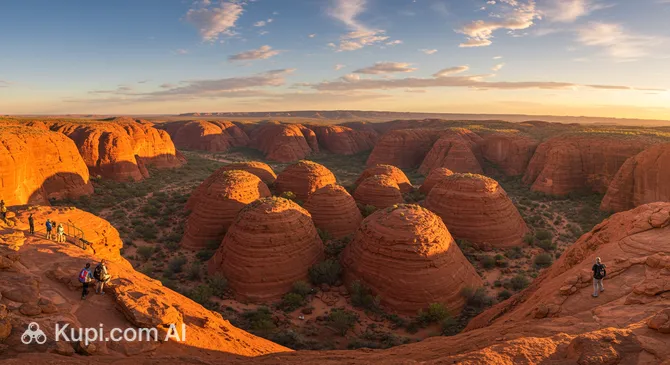
Watarrka is not your typical city with bustling avenues, but a unique natural corner located in the heart of the "Red Centre." This region is situated in the Northern Territory of a wonderful country like Australia, roughly halfway between the famous Uluru rock and the town of Alice Springs. Covering over 70,000 hectares, the territory is a true oasis in the middle of a harsh desert, where majestic cliffs rise instead of skyscrapers.

Watarrka. Illustration.
Source: Kupi.com AI

The crown jewel of the area is the legendary Kings Canyon. Its sheer walls of red sandstone create a grand natural amphitheater, hiding lush palm groves and cool waterholes known as the "Garden of Eden" within its depths. The contrast of fiery red rocks and vibrant greenery creates landscapes of incredible beauty that are impossible to forget.

These lands hold deep sacred significance for the indigenous peoples. The rich history of Watarrka is inextricably linked with the culture and traditions of local tribes, whose legends live in every stone of this ancient landscape. Travelers come here not only for the breathtaking views but also to touch the spiritual heritage of the continent.

Watarrka is an ideal place for those seeking solitude and inspiration. Picturesque hiking trails are laid out here, allowing you to see rare species of animals and plants in their natural habitat. A visit to this protected land will give you the opportunity to witness unforgettable sunrises and feel the powerful energy of the Australian nature.

Weather Overview

The climate in this region is typical for the desert "Red Centre" of Australia and is characterized by distinct seasonal contrasts. Expect a hot summer with occasional rainfall and a cool, dry winter, making visits to the park possible year-round with the right preparation. The highest temperatures are recorded in January, when the average maximum reaches +36.4°C, so during this time of year, it is better to plan walks for the early morning.

The winter months, from June to August, bring much-anticipated coolness: during the day, the air warms up to an average of +20°C, but nights can be brisk with temperatures around +7°C. Rain is infrequent here, but a small amount of precipitation is most likely in November or January. To ensure your trip to the canyons is perfect, we recommend checking what weather in Watarrka is expected on your chosen dates in advance.

Average monthly temperature

Average monthly precipitation

Interesting Facts

Beyond the breathtaking panoramic views, Watarrka National Park holds many secrets that allow you to look at this harsh corner of Australia from a completely unexpected perspective.

  • A Geological Giant. The park's main attraction, Kings Canyon, has been forming for over 500 million years. Its majestic red sandstone walls soar to heights of up to 150 meters, standing as silent witnesses to ancient eras.

  • An Oasis in the Desert. Hidden within the scorching canyon is an amazing "Lost World." Thanks to the shade from the high cliffs, moisture is preserved here, allowing thick ferns and groves of ancient palms to grow, creating an incredible contrast with the surrounding red sands.

  • Sacred Territory. For the Anangu people, Watarrka is not just a beautiful landscape, but a place of power. According to Aboriginal beliefs, ancestral spirits lived here. Ancient rock paintings and ritual sites hidden from prying eyes can still be found within the park.

  • The Phenomenon of Vanishing Waterfalls. This is one of the few places in the region where you can observe a rare natural phenomenon. In the height of the dry season, after heavy rains, powerful streams of water begin to flow down the sheer walls, temporarily turning dry rocks into a grand cascade.

  • A Refuge for Rare Life. The gorge's special microclimate has become home to unique flora and fauna. Rare species of eucalyptus and rock wallabies are found here, having survived in this natural shelter for millennia while conditions on the surface changed dramatically.

How to Get There

Watarrka is a remote and protected corner of the Northern Territory, so there is no direct transport link to major metropolises. Traveling here is a true adventure through the Australian outback. You can find out more about how to get to Watarrka by studying various routes, but the main method remains flying to the nearest regional centers followed by a trip by car or tour bus.

There is no airport in Watarrka National Park itself. The nearest air gateway is Connellan Airport (AYQ), located in the resort town of Yulara (near Uluru). It is about 117 km from the park. The journey from there by taxi or transfer will take about 3 hours 15 minutes. This airport receives flights from major Australian cities and is a convenient starting point for those who want to combine a visit to Uluru and Kings Canyon.

Another popular option is flying into Alice Springs Airport (ASP), which is located in the town of Alice Springs. This is a larger transport hub, located about 243 km from Watarrka. The journey from here will take more time—approximately 6 hours 25 minutes by ground transport; however, this route is often chosen by tourists wishing to drive through picturesque desert highways.

For clarity, here is a summary of the main airports:

AirportPassenger trafficDistance
Connellan Airport300 000117 km
Alice Springs Airport622 000243 km

Rail connections in this region are limited due to geographic features. There is no train station in Watarrka itself, but you can arrive at the Alice Springs Railway Station (XHW) in the town of Alice Springs. This is where the famous "The Ghan" train, crossing the continent, arrives. The station is about 243 km from Watarrka. From there, you can reach the park by rental 4WD or bus in about 6 hours 25 minutes.

Below is information about the nearest railway station:

StationPassenger trafficDistance
Alice Springs Railway Station41 000243 km

Main Attractions

The main point of attraction for travelers in this region is, of course, the National Park itself. However, hidden within it are several unique locations and routes, each deserving of individual attention. Here is a list of places you should definitely include in your itinerary when visiting Watarrka.

The Rim Walk is the park's most famous and impressive hiking trail. The approximately 6-kilometer path runs along the very edge of the grand canyon, opening up breathtaking panoramas of the red cliffs and the endless desert. After overcoming a steep climb at the beginning of the journey, you will enter a world of whimsical stone domes resembling the ruins of an ancient civilization—this place is known as the Lost City. A walk here allows you to feel the true scale and majesty of Australian nature.

Deep within the gorge lies a true oasis—the Garden of Eden. This is a permanent waterhole surrounded by lush greenery, cycads, and tall ferns, which contrast sharply with the fiery red walls of the canyon. You can descend here via wooden stairs while following the main route. The coolness and shade make this place perfect for a rest, and the special atmosphere of silence and solitude fully justifies its biblical name.

For those who prefer a more relaxed pace, the Kings Creek Walk is an excellent choice. This route lies along the canyon floor among massive boulders and eucalyptus trees. The trail is fairly flat and easy, making it accessible for families with children and elderly people. Walking here, you can look up at the majestic sheer walls from below, creating a completely different but equally powerful impression of nature's might.

Slightly away from the main canyon is the picturesque Kathleen Springs. A paved path leads here, accessible even for strollers and wheelchairs. At the end of the path, a calm waterhole fed by underground springs awaits you. This place has important cultural significance for the indigenous people, and along the way, you will find information signs telling legends and stories about this sacred land.

Local Cuisine

Since Watarrka is a protected natural area, you won't encounter the usual city streets with a string of restaurants. The dining culture in this region is inextricably linked to the places where tourists stay—lodges, campgrounds, and cattle stations. The local cuisine focuses on simplicity, heartiness, and authentic Australian flair, which travelers need to regain their strength after long walks through the canyons.

A real gastronomic adventure is getting to know dishes from the so-called "Bush Tucker" (wild menu). You should definitely try kangaroo meat, which is often served here as steaks with berry sauces or as part of juicy burgers. Another exotic specialty of the region is camel meat—local campground cafes are famous for their signature camel burgers. Fish lovers will enjoy Barramundi—an iconic Australian fish, usually grilled with lemon and herbs.

An integral part of a meal in the "Red Centre" is traditional Australian bread—Damper. This unleavened bread, cooked over campfire coals, is often served hot with main courses or as a dessert with golden syrup. The atmosphere of dinner here is just as important as the food itself: a popular format is the "barbecue under the stars," where tourists can enjoy grilled meats and vegetables while sitting by an open fire under the endless desert sky.

As for drinks, after a hot day on the trails, cold Australian beer takes the lead—from popular lagers to craft varieties from the Northern Territory. You can also always find a decent selection of local wines on the menu, especially a rich Shiraz, which perfectly complements grilled meat dishes. Of the non-alcoholic drinks, plain water is vital, but refreshing homemade lemonades that help maintain energy in the arid climate are also popular.

Travel Tips

A trip to Watarrka is an immersion into the harsh but beautiful nature of the "Red Centre." To ensure your visit to this remote region, which Australia is so proud of, leaves only pleasant memories and is safe, we have prepared a list of important practical recommendations.

  1. Clothing and Gear. The rule of layering applies in the desert: it's hot during the day, and temperatures can drop sharply at night. You will need reliable hiking boots with ankle support, a wide-brimmed hat, and sunglasses. Pro tip: be sure to purchase a special face fly net—flies in this region can be extremely persistent and interfere with your walks.
  2. Transport and Roads. There is no public transport within the park. The only convenient way to get around is a rental car, preferably a 4WD. Be vigilant: avoid driving at dawn, dusk, and night, as active kangaroos, camels, and wild horses often wander onto the highways, creating hazardous situations.
  3. Communication and Navigation. Mobile coverage in the canyon area is extremely unstable and often non-existent. Relatively reliable connection is only available with the Telstra provider, but even that can disappear in low-lying areas. Wi-Fi is primarily available in hotels and often for an extra fee. Download offline maps and necessary guides to your phone in advance.
  4. Hydration and Health. Dehydration is the main danger in the outback. You must have a supply of at least 3–4 liters of drinking water per person per day, especially if you plan to hike long routes. There are no pharmacies nearby, so bring an expanded first-aid kit with bandages and sun protection.
  5. Trail Safety Rules. Never go to the very edge of a cliff for a spectacular photo. Red sandstone is a crumbly rock and can suddenly collapse under a person's weight. Also, strictly follow ranger warnings: if the forecast predicts heat above +36°C, access to the "Rim Walk" trail closes as early as 9:00 AM.
  6. Respect for Culture. You are on land that has sacred meaning for indigenous peoples. Do not go behind fences marking sacred sites, and always ask for permission before photographing local residents. A friendly "G'day" when meeting other tourists on the trail is considered good manners here.
  7. Wildlife. It is strictly forbidden to feed wild animals, including dingoes. They may look friendly but are predators and can show aggression if they become accustomed to receiving food from people. Keep your distance and observe the fauna from afar.
  8. Financial Matters. Although the Kings Canyon Resort complex accepts bank cards, terminals may not work due to satellite communication failures. There are no ATMs in the immediate vicinity, so always have a sufficient supply of cash with you.

Preparation is the key to a successful exploration of Watarrka. By following these simple rules, you can avoid unpleasant surprises and focus entirely on contemplating the majesty of ancient canyons.

Entertainment & Nightlife

Nightlife in Watarrka is fundamentally different from what metropolises offer. Here you won't find neon signs, noisy nightclubs, or bar districts open until dawn. This is a remote corner of wild nature, where the main "entertainment" is the incredible starry sky of the Southern Hemisphere. After sunset, life here centers around the tourist camps and lodges, where the atmosphere of the Australian outback prevails—relaxed, friendly, and slightly adventurous.

The center of evening leisure is rightfully considered the territory of the Kings Canyon Resort. This is where the most popular meeting spot is located—the Thirsty Dingo bar. It's a classic outback pub with a laid-back atmosphere where tourists from all over the world gather to discuss the day's trails. The dress code here is as casual as it gets: hiking boots and fleece jackets are the most appropriate attire. The bar offers an excellent selection of cold Australian beer and hearty meals, and in the evenings, there's often live music or sports broadcasts.

For those seeking a more romantic and refined atmosphere, the resort offers a unique dining experience, Under a Desert Moon. This is an exclusive open-air event where tables with white tablecloths are set right among the red sands, lit only by a campfire and starlight. A multi-course menu prepared from local produce and a glass of wine create an unforgettable mood. You need to book this dinner in advance, as the number of seats is limited.

Another point of attraction is Kings Creek Station, a working cattle station located nearby. Evenings here are steeped in the spirit of real farm life. Travelers gather around a communal campfire, roast marshmallows, and listen to local rangers' stories about life in the desert. There is no pretension here, just sincerity and the chance to try the famous camel burgers at the local cafe, which stays open late.

In terms of safety, night walks within the hotel grounds are perfectly comfortable, but heading outside them after dark is not recommended without an experienced guide. There is no lighting in the desert, and there's a high risk of tripping or encountering active nocturnal animals, including dingoes. If you are moving between locations, be sure to carry a powerful flashlight. There are no taxis in the usual sense, so all movements are made on foot within the complex or by rental car.

As for daytime entertainment, besides trekking, Watarrka offers immersion into Aboriginal culture. Visit the Karrke Cultural Centre, where representatives of the Luritja people talk about traditional medicine, art, and bush tucker. For thrill-seekers, helicopter tours are available, allowing you to see the grand rift of the canyon from a bird's-eye view—a sight that cannot be fully appreciated from the ground.

Parks & Museums

Watarrka is a unique place where the boundaries between a natural reserve and an open-air museum are almost erased. In this remote corner of Australia, you won't find typical city parks with benches or classic art galleries. The role of green zones here is played by ancient oases preserved from prehistoric times, and the function of museums is performed by indigenous cultural centers and historical cattle stations that keep the memory of the first settlers.

The main natural object of the region is Watarrka National Park itself. It is a huge protected area covering the George Gill Range. For tourists, this is not just a park, but a living encyclopedia of botany and geology. More than 600 species of plants grow here, many of which are endemic and found nowhere else in the world. A walk through the park allows you to see what the continent looked like millions of years ago when the climate was much wetter. This place is ideal for those who want to study the unique desert flora in its natural environment.

Special attention should be paid to the Kathleen Springs nature area. Unlike the monumental Kings Canyon, this place is characterized by its intimacy and silence. A green oasis is located at the end of a picturesque gorge, where a permanent water source is found. For travelers, this is an opportunity to rest in the shade of centuries-old trees and watch the birds, of which there are many. Additionally, this area is interesting from a historical perspective: on the way to the spring, you can see the remains of old cattle yards, reminding of the farming past of these lands.

Since there are no classic museum buildings here, the role of the main guardian of cultural heritage is taken by the Karrke Cultural Centre. This is a unique platform created by the Luritja and Pertame people. A visit to this place is comparable to a tour of an ethnographic museum, only here all the exhibits are living, and the stories are told by the traditions' bearers themselves. Tourists are shown the art of creating dot paintings, told about the meaning of ancient symbols, and introduced to the use of local plants in medicine and daily life. This is the best way to understand the deep connection of Aboriginal people with their land.

To immerse yourself in the history of the European exploration of the region, pay attention to the historical heritage of Kings Creek Station. Although technically a working farm and tourist base, it functions as an open-air museum dedicated to life in the outback. Here you can learn about the hardships faced by pioneers who explored the harsh desert and see machinery and tools from years past. This place allows you to appreciate the contrast between the ancient culture of the indigenous inhabitants and the relatively recent history of cattle ranching.

Insider tip for lovers of unusual experiences: look out for the so-called "Ghost Gums" growing in the park. These trees with snow-white bark against the bright red cliffs create an incredible visual effect and are unique living sculptures that often become the main subjects of photos from Watarrka.

Getting Around

It's important to note right away that Watarrka is not a city with developed infrastructure, but a remote national park in a desert area. Therefore, the usual urban public transport system is completely absent: you won't find subways, trams, trolleybuses, or minibuses here. Movement within the region follows entirely different rules dictated by the conditions of the wilderness.

The primary means of transport for most independent travelers is a rental car. Without a personal vehicle or participation in an organized tour, sightseeing will be extremely difficult. The distances between accommodation facilities (such as the Kings Canyon Resort) and the start of hiking trails can be several kilometers, which is not recommended or safe to walk along the highway in the heat.

The only equivalent to public transport here are the tourist shuttles (transfers) organized by local hotels. For example, the region's main resort offers its guests a regular bus transfer to the start of the main hiking route (Rim Walk) and back. This is a convenient option for those who want to hike the trail without worrying about parking, or for those who arrived in a large motorhome and don't want to move from their spot unnecessarily. The schedule for these buses is usually strictly tied to the optimal time of day for hiking (early morning).

The payment system here is as simplified as possible. There are no transport cards, complex zones, passes, or mobile apps for transport payments in Watarrka. Payment for the transfer is made directly at the reception desk of your hotel or lodge. The service cost is fixed, and a seat on the bus must be booked in advance, preferably the evening before.

As for alternative transport such as city taxis, Uber, or car-sharing services, they are completely absent in this region. You won't be able to call a car via an app in the middle of the desert. There are also no bicycle or electric scooter rental services for moving between locations due to the long distances, lack of bike paths, and harsh weather conditions.

However, there is an exclusive type of "transport" for viewing the surroundings—a helicopter. Helipads are located near the main tourist bases. While this is more of a sightseeing activity than a way to get from point A to point B, the flight allows you to quickly move over hard-to-reach areas of the plateau and appreciate the scale of the canyon from the air.

Tourists traveling by car should keep an important practical detail in mind: gas stations here are a rarity. There are only a couple of points in the Watarrka area where you can refuel (for example, at Kings Creek Station and the resort complex), and fuel prices here are significantly higher than in major towns. Always monitor your fuel level and plan your route to have a range reserve.

Accommodation

Since Watarrka is a remote national park in the heart of the desert, the choice of accommodation is not as large as in typical tourist cities. However, the existing infrastructure is well-thought-out and covers the needs of various travelers: from "wild" tourists with tents to those who appreciate comfort. All accommodation options are concentrated in two main tourist complexes, each offering a unique outback experience.

The main base for most tourists is the area in close proximity to the park entrance. This is where the largest complex, Kings Canyon Resort, is located. It is a true oasis of civilization, offering a wide range of accommodation: from standard hotel rooms and luxury suites with whirlpool baths to budget lodge rooms and equipped sites for motorhomes. Infrastructure includes a pool, restaurants, and a shop, making it a convenient base for families and organized groups.

If you are looking for a more authentic atmosphere, consider Kings Creek Station, a working cattle station located about 30 kilometers from the canyon. This place is ideal for those who want to feel the spirit of the real Australia. Permanent canvas tents (safari cabins) are popular here, combining closeness to nature with basic comfort. For discerning travelers, exclusive glamping in a secluded area is available at the station, providing maximum privacy and high-level service.

Booking Tip: Given the limited number of accommodation options and the immense popularity of Kings Canyon, it is necessary to book accommodation in advance. During the high season (the Australian winter from May to September), free rooms and camping spots run out several months before the arrival date. Attempting to find lodging upon arrival ("same-day") in this region can turn into a serious problem.

Price Range and Booking: Prices for accommodation here vary from budget (tent sites) to high (luxury rooms and glamping), and the cost of services is on average higher than in cities due to complex logistics in the desert. Booking is available through major international online platforms as well as directly on the resort websites, which often guarantees better cancellation terms.

Nearby Cities

For those looking to explore the surroundings, Watarrka serves as an excellent starting point for day trips to several interesting nearby locations:

The most popular destination is Alice Springs—the unofficial capital of the "Red Centre." This town offers tourists an immersion into the history of the continent's exploration: here you can visit the Royal Flying Doctor Service base, the School of the Air, and the famous Desert Park, which houses representatives of the region's flora and fauna. Alice Springs is also famous for its art galleries featuring Aboriginal art.

If you are ready for a longer journey, consider Coober Pedy. This is a truly unique place, known as the "opal capital of the world." Due to the unbearable heat, many residents built their homes, churches, and hotels underground. A visit to the underground city and opal mines will leave a lasting impression, although the trip there requires significant time.

Another interesting point on the map is Tennant Creek, located to the north. This town is steeped in the atmosphere of the 1930s gold rush. Nearby is the famous "Devils Marbles" Conservation Reserve (Karlu Karlu)—a collection of massive granite boulders balancing on top of each other, creating a mystical landscape that is especially beautiful at sunset.

CityPopulationDistance
Yulara1 099121 km
Hermannsburg128 km
Mulga Park180 km
Erldunda193 km
Amata211 km

These nearby destinations provide an idea of the diverse culture and landscapes of the region, but when planning trips, always consider the long distances of the Australian outback and stock up on fuel and water.

Shopping & Souvenirs

Shopping in Watarrka is fundamentally different from usual store visits in large cities. Since it is a remote national park located deep within the continent, you won't find fashion boutiques, outlets, or shopping alleys here. Trade in this region is exclusively utilitarian and souvenir-oriented. The main goal of local retail points is to provide travelers with basic necessities, food, and mementos of their visit to the "Red Centre."

The concept of "shopping streets" does not exist in Watarrka, as there is no town in the traditional sense. All commercial life is concentrated within the tourist complexes. The main places where you can make purchases are the souvenir shop and mini-market at Kings Canyon Resort, as well as the shop at Kings Creek Station. This is where tourists buy everything from toothpaste and fuel to exclusive works of art.

There are no large shopping centers or malls within hundreds of kilometers. The nearest proper shopping is only available in Alice Springs, which is more than a four-hour drive away. In Watarrka itself, only small "General Store" style shops operate, with an inventory adapted to the needs of people far from civilization. Here you can restock water, buy snacks for hiking, sunscreen, and basic medications.

Markets, flea fairs, or food bazaars are not held in this region due to the small permanent population. However, if you are looking for authentic products, pay attention to the selection at Kings Creek Station. While not a market, they often sell their own products related to bush life, which partly replaces the market experience of interacting with local producers.

Despite the limited choice, souvenirs from Watarrka can be very interesting and distinctive. First and foremost, look for Aboriginal art: dot paintings, carved wooden items, and boomerangs. These items are often created by local artists from the Luritja tribe, and purchasing them supports the community. Also popular are wide-brimmed leather hats, essential in the desert, camel wool products, and cosmetics based on local plants (such as Kakadu plum or eucalyptus).

Shops at the tourist bases usually have convenient opening hours tailored to the travelers' rhythm. They open early in the morning (around 7:00 AM) so tourists can buy everything they need before heading out on a trail, and stay open until evening (usually 7:00 PM or 8:00 PM). Cash in Australian dollars and major bank cards are widely accepted. However, given possible satellite communication outages in the desert, it is strongly recommended to carry a supply of cash.

A tax refund system (Tax Free or TRS) operates throughout the country, including Australia as a whole. If you make a purchase in one store for more than 300 AUD (including GST) and receive a tax invoice, you can claim the tax back when leaving the country. There are no refund points in Watarrka itself; the procedure is handled at international airports (e.g., in Sydney or Melbourne) before your flight home. Keep your receipts if you plan to buy expensive souvenirs or gear.
Nearby cities

Reached the end of the page?

That means the route is fully explored