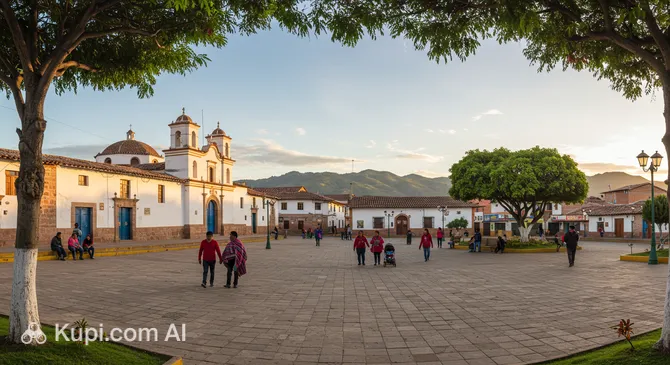
In the heart of the city of Cobija lies the cozy Hugo Poli Square (Praça Hugo Poli) — an important public space that serves as a focal point for both locals and travelers. This place is a classic example of a Bolivian urban center, where traditions, daily life, and the characteristic architecture of the Pando region blend harmoniously.
Situated in close proximity to the border shared by Bolivia and Brazil, the square reflects a unique border-town atmosphere. It is an open area with greenery and recreational zones, serving as a true island of tranquility amidst the rhythm of a commercial city.
Hugo Poli Square. Illustration.
Source: Kupi.com AI
Traveler photos:
For tourists, Hugo Poli Square is primarily an opportunity to see city life from the inside. It isn't overloaded with grandiose monuments, but it carefully preserves the atmosphere of a typical Bolivian Amazonian settlement, making it a significant point on the region's tourist map.
Contacts
To clarify up-to-date information about events or rules for visiting central city zones, it is recommended to contact tourist information centers or follow official city resources.
Visiting this place is, first and foremost, an introduction to the authentic culture and daily life of the country's northern inhabitants. Here, you can take a leisurely stroll along shady paths, enjoying the warm climate and watching the city wake up or wind down. The square is ideal for taking a few vibrant photos, capturing the local architecture and colorful passersby.
Many travelers use Hugo Poli Square as an excellent spot to rest and "recharge." You can simply sit on a bench and immerse yourself in observing the city's hustle and bustle, which seems surprisingly harmonious here. This place often becomes a hub for spontaneous meetings and conversations, allowing tourists to feel like part of the local community.
Additionally, the square serves as a great landmark and starting point for further exploration of the streets. From here, it's easy to head out in search of local markets or cozy cafes to continue your gastronomic and cultural adventure in this border region.
Getting There
Reaching this central location is easy, as Hugo Poli Square is located in the very heart of the city. If you are already staying in the central part, a pleasant walk will allow you to reach your destination quickly. For those in more distant areas, the most convenient and fastest way to get around is a local taxi, whose drivers know this popular public space very well.
Travelers from other regions usually arrive in the city of Cobija via flights through the local airport or by land through border crossings with Brazil and Peru. Given the remoteness of the Pando department in the north of the country, it is recommended to plan your route in advance, paying attention to regional flight schedules and road conditions during the rainy season.
Nearest city: Cobija
History & Facts
The history of this place is inextricably linked with the development of the city itself, which was founded on February 9, 1906, by Colonel Enrique Cornejo. Initially, the settlement was named Puerto Bahía and originated as a strategic outpost on the picturesque banks of the Acre River. The city and its key spaces received their current name a bit later, in 1908, by decision of the country's government.
The golden age of this region coincided with the era of the famous rubber boom at the beginning of the 20th century. Thanks to rubber extraction and Brazil nut harvesting, Cobija experienced an incredible economic boom. It was during this period that the architectural look of the center took shape, and the squares became centers of social and business life.
The city's geographical location turned it into a vital trade and customs hub. For decades, Hugo Poli Square has remained a silent witness to the transformation of a border settlement into a modern administrative center, while preserving the atmosphere of the times when river navigation was the main engine of progress in the Amazon.
Time Needed
For a quick look and a few souvenir photos of the square, 30 minutes will be quite enough. This is sufficient time to appreciate the layout and general atmosphere of the place.
If you want to feel the leisurely pace of life in an Amazonian city, we recommend setting aside about one hour. You can sit on one of the benches, watch the locals, and perhaps try some street food often offered by nearby vendors. It is the perfect place for a short break between visiting other city attractions.
Working Hours
Since Hugo Poli Square is an open public space, it is accessible to visitors 24/7. You can drop by early in the morning to catch the coolness or in the evening when the city lights come on.
There are no special ticket offices or entry restrictions; however, to get information about potential holiday events or festivals sometimes held in the square, it is worth checking the official websites of city departments.
Open 24 hours
Nearby
Exploring the surroundings of the central square will allow you to dive deeper into the atmosphere of the border city and discover cozy corners where local life thrives. Cobija is a small city, so many interesting locations are within walking distance.
A walk through the nearby streets will reveal a variety of dining options and colorful art objects that will complement your understanding of the culture of this remote region.