Support

Rio Branco Palace

About

The majestic Rio Branco Palace is more than just the official residence of the Acre state government; it is the primary architectural symbol that the city of Rio Branco takes pride in. Built in Neoclassical style, this building stands out from the urban landscape with its massive Doric and Ionic columns, reminiscent of the grandeur of ancient temples. Constructed of brick in an era when wood predominated in the region, the palace was a true breakthrough in local architecture and engineering.
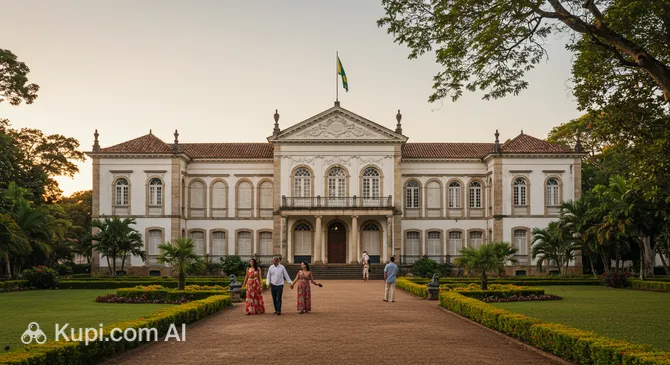
Rio Branco Palace
Rio Branco Palace. Иллюстрация. Источник: Kupi.com AI

Today, this historic monument in Brazil serves an important educational role: its first floor is entirely dedicated to a museum exhibition. Here, through photographs, artifacts, and interactive materials, the dramatic and rich history of the Acre people is revealed—from ancient geoglyphs to the present day. The second floor still retains its status as a venue for official state ceremonies.

Surrounded by well-kept gardens, fountains, and squares, Rio Branco Palace forms a harmonious cultural ensemble. This site attracts visitors with its atmosphere of continuity between generations and its status as a state-protected cultural heritage site.

Contacts

For up-to-date information regarding museum visits or official events, you can use the contact details provided below. It is recommended to check the facility's status prior to your visit.

How to contactContact
AddressAv. Getúlio Vargas, s/n - Centro, Rio Branco - AC, 69900-100, Brazil
Phone+55 68 99259-7067

What to Do

A visit to Rio Branco Palace is a fascinating journey into the past. Inside the Rio Branco Palace Museum, you will find themed halls where the state's history comes to life. Here, you can see mysterious finds from ancient civilizations (geoglyphs), learn about the daily lives of rubber tappers—seringueiros—and get to know the biography of the famous defender of the Amazon, Chico Mendes. Interactive videos and rare archival photos make immersion into the region's culture truly vivid and visual.

Be sure to notice the building's interiors: after careful restoration, you can see finishes made of precious Amazonian wood, which emphasize the luxury and status of the residence. Walking through the halls, you will feel the contrast between the formality of a government institution and the hospitality of a museum, which is often free to enter for all visitors.

Spending time outside is equally interesting. The palace grounds flow seamlessly into Eurico Dutra Square, where an elegant fountain and a commemorative obelisk are located. It's an excellent spot for a quiet rest and photo shoots—the palace's architecture provides a magnificent backdrop. If you're lucky, you might catch one of the cultural events or open-air exhibitions regularly held on the complex grounds.

Getting There

Rio Branco Palace occupies a place of honor in the very heart of the city, at Av. Getúlio Vargas, s/n. Its central location makes it an easily accessible landmark: the building is located directly across from Revolution Square (Praça da Revolução) and adjacent to Eurico Dutra Square. If you are staying in one of the hotels in the historic center, the walk to the palace will take just a few minutes.

For those traveling from outlying areas, it is most convenient to use a taxi or popular ride-hailing apps. The trip from Rio Branco International Airport, located approximately 20 kilometers away, takes between 20 to 40 minutes depending on traffic density. Additionally, numerous bus routes pass through Getúlio Vargas Avenue, making it easy to reach the site via public transport.

If you prefer active recreation, the palace can be reached by bicycle—there are designated areas for parking and walking around the adjacent squares. In any case, thanks to its majestic facade and central position, it is almost impossible to miss this architectural masterpiece.

Ближайший город: Rio Branco

History & Facts

The history of the construction of Rio Branco Palace began on June 15, 1929. The project was initiated by Governor Hugo Carneiro, who sought to transform the region's administrative center from wood to stone. The design was entrusted to German architect Alberto Massler, who embodied the strict and elegant features of ancient Greek classics in the building's appearance. Although the official opening took place just a year later, construction work continued until 1948.

For a long time, the palace served as both an administrative hub and a symbol of Acre's transition into a new era of development. However, by the end of the 20th century, the building had fallen into disrepair. A massive restoration, begun in 1999 under the leadership of Governor Jorge Viana, literally saved the monument from destruction. Precious wood from local forests was used during the work, allowing for the restoration of the luxurious interiors while maintaining their historical authenticity.

A significant milestone occurred in 1999, when a government decree recognized the palace as a historical heritage site of the State of Acre. In 2002, the renovated building opened its doors to the public as a museum, and the final status of the Rio Branco Palace Museum was officially established in 2008. Today, it is not merely a government office, but a living testament to the resilience and cultural wealth of the region.

Time Needed

For a leisurely tour of the museum's indoor exhibits and a walk through the surrounding grounds, 1–2 hours is sufficient for most travelers. This time is enough to explore the historical halls, examine interior details, and take commemorative photos against the backdrop of the monumental columns.

If you plan to complement your visit with a walk through the neighboring squares and a visit to the Obelisk to the Heroes of the Revolution, you should set aside a bit more time in your schedule. The palace fits perfectly into a sightseeing route of the city center, serving as its standout architectural highlight.

Working Hours

Currently, Rio Branco Palace may be temporarily closed for restoration work or official government events. Typically, the museum is open to visitors during the daytime on weekdays.

To ensure a successful trip, we strongly recommend checking the current schedule on official city portals or verifying information on-site immediately before your visit.

Nearby

A walk around the vicinity of Rio Branco Palace will allow you to dive deeper into the atmosphere of the state of Acre and get to know its key symbols. The city's central district is rich in monuments and public spaces, all located within just a few minutes' walk of each other.

Exploring these sites will round out your understanding of local history, cultural traditions, and the daily life of Amazonian residents. Below is a list of interesting locations nearby:

NameDistance
Cathedral of Our Lady of Nazareth0.1 km
Revolution Square0.2 km
Captain Ciríaco Park1 km
American Chicken1.1 km
Cuzco Peruvian Cuisine Bar1.2 km
Chalet Wheat Breads and Pastries1.2 km
La Cave Bar & Restaurant1.5 km

Reached the end of the page?

That means the route is fully explored