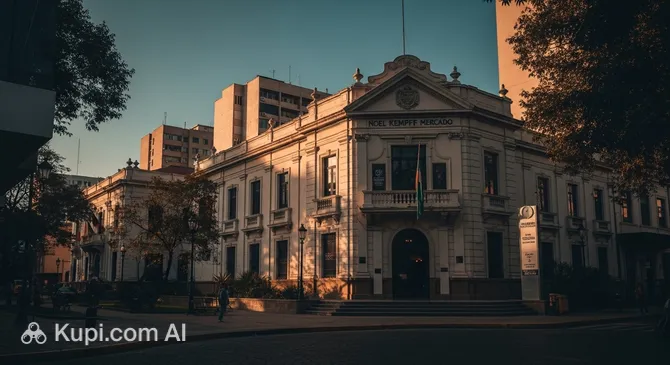
A journey into the wildlife of the Amazon region begins in the heart of Santa Cruz de la Sierra. The Noel Kempff Mercado Museum of Natural History is not just an exhibition space, but the largest scientific center in Bolivia, housing unique evidence of our planet's life. Located in a majestic former bank building, it preserves within its walls the evolutionary history of South American flora and fauna.
Noel Kempff Mercado Natural History Museum. Illustration.
Source: Kupi.com AI
Traveler photos:
Inside the museum, impressive collections await visitors: from tens of thousands of insects and birds to the rarest paleontological finds. A particular highlight of the exhibition is the remains of a giant ground sloth (megatherium) and ancient dinosaurs. Here, you can see the rare mineral bolivianite and learn about the work of scientists using satellite technology to preserve the biodiversity of the Amazon.
The museum is internationally recognized and serves as a vital base for researchers from across Latin America. Its halls, featuring interactive displays and realistic dioramas, make science accessible and interesting for visitors of all ages, turning a simple walk into an exciting educational adventure.
Contacts
To ensure your trip goes smoothly, it's worth saving the contact details of this scientific institution in advance. This will help you quickly find your way or clarify up-to-date information before your visit.
Visitors can embark on a fascinating journey through halls representing all facets of Bolivia's natural world. The main draw for guests remains the paleontological exhibits, where you can examine dinosaur bones and the skeletons of prehistoric giants in detail. Geology enthusiasts will be impressed by the displays of minerals, notably the unique bicolor bolivianite found only in this part of the world.
The museum provides all the conditions for an educational leisure experience. You can study masterfully crafted dioramas recreating jungle ecosystems, admire vast collections of tropical butterflies and birds, or dive into scientific materials in the specialized library. Educational lectures and interactive tours are often held for schoolchildren and tour groups, helping them better understand the fragile balance of nature.
Furthermore, the museum often serves as a starting point for environmental education, offering information about the national parks in the Santa Cruz department. It is an ideal place to prepare for a journey into the country's wild reserves by learning about the habits of rare animals and the characteristics of local flora in the comfortable setting of modern exhibition halls.
Getting There
Finding this scientific and cultural institution in Santa Cruz de la Sierra is easy, as it is centrally located at the intersection of the busy Av. Irala and Av. Ejercito Nacional. If you are coming from the international airport, the car journey will take approximately 20–30 minutes, depending on traffic.
The most comfortable way to get around the city is by taxi, which can be called via an app or hailed on the street. Additionally, many public transport routes pass by the museum, making it accessible for budget travelers. For precise navigation, it is recommended to use modern map services and aim for daytime travel to avoid evening traffic jams.
Nearest city: Santa Cruz de la Sierra
History & Facts
The history of this place began in May 1985, when an initiative group of students and professors from the Gabriel René Moreno Autonomous University organized the first flora and fauna exhibition. The museum received official status on October 23, 1986, becoming a key point for studying the nature of Bolivia. The institution is named after Noel Kempff Mercado, a legendary naturalist who dedicated his life to researching Amazonian ecosystems.
In 1992, the collections moved to their current building on Irala Avenue, which previously housed the Central Bank. This expansion allowed for the creation of full-fledged laboratories, a specialized library, and spacious exhibition halls. The move transformed the museum from a modest university collection into a leading research center in Latin America.
Today, the museum continues to follow the legacy of its inspirer, serving not only as a repository of rare artifacts but also as an active participant in environmental programs. Important research in paleontology and geology is conducted here, and the scientific archives are constantly updated with new finds discovered during expeditions to remote corners of the country.
Time Needed
To take a leisurely look at all the themed halls and get acquainted with the museum's rich collections, a typical tourist needs about 2 to 3 hours. This is enough time to explore the main exhibits, examine the details of fossils, and read the explanatory displays about the region's biodiversity.
If you plan to visit the museum with children or have a professional interest in biology, your visit may last longer. Attentively studying the interactive displays and participating in an organized tour will make your visit more meaningful and memorable.
Working Hours
When planning your visit, please note that the museum welcomes visitors on weekdays, from Monday to Friday. Doors are open from 08:30 to 15:30 without a lunch break, making it easy to fit a visit into your daytime schedule. The institution is usually closed on weekends (Saturday and Sunday).
As the schedule may change due to public holidays or scientific conferences, it is recommended to check the current opening hours on the official website or by phone before your trip. The best time to visit is in the morning hours when there are fewer organized school groups in the halls.
Day
Working hours
Monday
08:30–15:30
Tuesday
08:30–15:30
Wednesday
08:30–15:30
Thursday
08:30–15:30
Friday
08:30–15:30
Saturday
Закрыто
Sunday
Закрыто
Nearby
Exploring the surroundings of the museum can significantly enrich your travel experience. The central location of the site allows you to easily combine viewing the exhibits with walks in parks and visits to entertainment centers for the whole family.