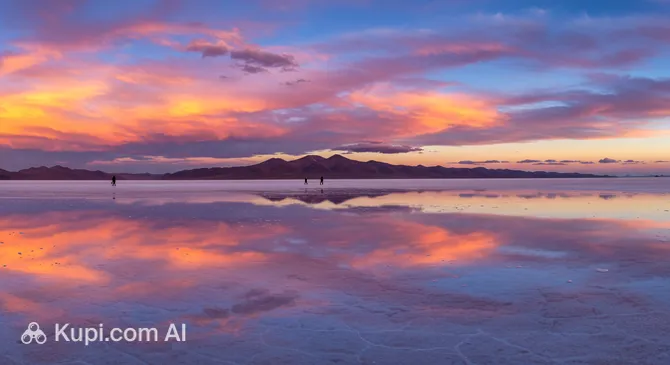
Uyuni might seem like a small, quiet town in the high Andean plains, but it serves as the essential threshold to one of the most spectacular natural wonders on Earth. Located in the southwest of Bolivia, this dusty settlement in the Potosí Department has a unique, frontier-like atmosphere that captivates travelers from around the globe.
With a population of approximately 27,000 residents, the city sits at an elevation of nearly 3,700 meters above sea level. The climate here is generally cold and semi-arid, characterized by bright, sunny days and freezing nights. Despite its modest size, the town buzzes with energy as tourists prepare for their expeditions into the surrounding deserts and salt flats.
Uyuni. Illustration.
Source: Kupi.com AI
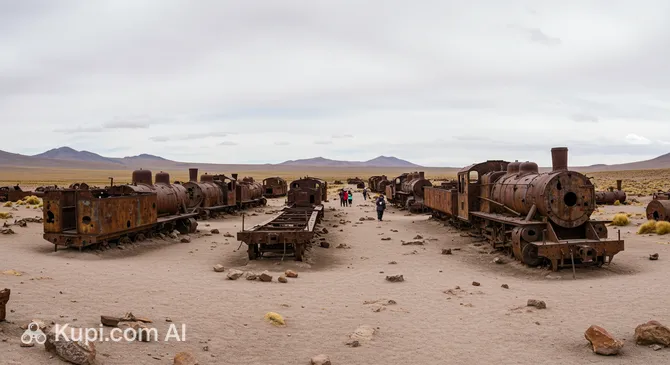
While many view the town simply as a transit point, the history of Uyuni reveals a significant past as a crucial transportation hub connecting the mines of the region to the Pacific Ocean. This heritage is most visibly preserved at the famous Train Cemetery (Cementerio de Trenes), located just outside the town center. Here, rusted antique locomotives from the 19th and early 20th centuries sit abandoned against the stark desert horizon, offering a surreal and photogenic glimpse into the industrial era.
Of course, the primary allure is the breathtaking Salar de Uyuni, the world's largest salt flat. Whether you are looking to capture perspective-bending photos on the blindingly white crust or marvel at the mirror effect during the rainy season, this natural phenomenon is truly unforgettable. Uyuni stands as a welcoming outpost for adventurers ready to explore the stark beauty of the Altiplano.
Weather Overview
The climate in this high-altitude region is generally cold and semi-arid, characterized by intense sunshine during the day and sharp drops in temperature after sunset. To help plan your expedition to the salt flats, it is helpful to review the detailed weather in Uyuni before you pack.
The warmest period occurs from November to January, where average temperatures hover around 12°C, with daytime highs reaching up to 19.4°C. This season also brings the most precipitation; January is the wettest month with approximately 19 wet days, which is essential for creating the stunning reflective surface on the salt flats.
In contrast, the winter months from May to August are extremely dry and cold. During this time, precipitation is almost non-existent, and while daytime highs can reach roughly 11°C to 14°C, nights are freezing with minimum temperatures dropping to around -2.7°C in June. Expect clear, crisp skies and very cold nights if you visit during the middle of the year.
Average monthly temperature
Average monthly precipitation
Interesting Facts
Beyond the main attractions, Uyuni holds many fascinating secrets that reveal its deep historical roots and unique high-altitude environment. While most visitors pass through quickly, those who look closer will find that this desert outpost is a place of industrial milestones and quirky geographical phenomena.
Uyuni is historically significant as the birthplace of the Bolivian railway system, having welcomed the country's very first train in 1889. This ambitious project, led by President Aniceto Arce, was designed to transport minerals to the Pacific coast, and its legacy is permanently etched into the landscape at the haunting Train Cemetery.
The name "Uyuni" is derived from the Aymara language and roughly translates to "a pen" or "enclosure." This linguistic origin points to the town's pre-colonial history as a vital resting hub and concentration point for llama caravans traversing the treacherous Altiplano.
Due to the extreme elevation of nearly 3,700 meters, the physics of cooking are noticeably different here; water boils at approximately 87°C (189°F) instead of 100°C. This makes preparing simple staples like rice or pasta a culinary challenge, often requiring pressure cookers to ensure food is fully cooked.
The city gained modern fame as a key stage for the Dakar Rally after the race moved to South America. A prominent monument carved entirely from salt blocks stands as a tribute to this event, symbolizing the intersection of local resources and international sports culture.
Train Cemetery. Illustration.
Source: Kupi.com AI
Traveler photos:
How to Get There
Reaching this remote destination in the high Altiplano is easier than it might seem, thanks to its growing popularity among international travelers. For a complete overview of travel options, including bus routes and private transfers, you can check more about how to get to Uyuni before finalizing your plans.
The most direct way to arrive is by flying into the local Uyuni airport (IATA: UYU). This small facility is conveniently located just 2.5 km from the city center. Upon arrival, a transfer to your hotel or the town center is very quick, taking approximately 5 to 10 minutes by taxi or shuttle. While the passenger traffic is relatively modest, it is the primary hub for visitors aiming directly for the salt flats.
Another option in the wider region is the Capitan Oriel Lea Plaza Airport (IATA: TJA), located in the city of Tarija. It serves a larger number of passengers compared to the local airstrip. However, it is important to note that this airport is situated about 251.5 km away from Uyuni. The overland journey from Tarija to Uyuni is substantial, taking roughly 6 hours and 40 minutes by road transport, so this option is best suited for those planning a multi-stop itinerary across southern Bolivia.
For clarity, here is a summary of the main airports:
While many travelers arrive in Uyuni solely for the salt flats, the city and its immediate surroundings offer several fascinating sites that reflect the region's unique history and culture. From industrial relics to vibrant local gathering spots, here are the main attractions to explore during your stay.
Undoubtedly the most iconic site within the city limits is the Train Cemetery (Cementerio de Trenes). Located just a few kilometers from the town center, this open-air museum is a hauntingly beautiful collection of rusted steam locomotives and rail cars from the 19th and 20th centuries. These steel giants, once used to transport minerals to the Pacific ports, were abandoned when the mining industry collapsed. Today, they stand in stark contrast to the desert landscape, covered in graffiti and slowly eroding in the salty winds, making for an unforgettable photography location.
Train Cemetery. Illustration.
Source: Kupi.com AI
Traveler photos:
Naturally, the crown jewel of the region is the Salar de Uyuni. Although it spans a vast area outside the town, the city of Uyuni is the primary gateway to this natural wonder. Covering over 10,000 square kilometers, it is the world's largest salt flat. Visitors are drawn here to witness the blinding white expanse of salt crusts, the cactus-studded islands like Incahuasi, and the mesmerizing mirror effect created when a thin layer of water covers the surface during the rainy season.
In the heart of the city, you will find Plaza Aniceto Arce, the main square and a central hub of activity. It is a great place to observe local life and see the city's modest but charming landmarks, including the clock tower and the monument to the heroes of the Chaco War. The plaza is surrounded by shops and eateries, offering a glimpse into the daily routine of this high-altitude settlement.
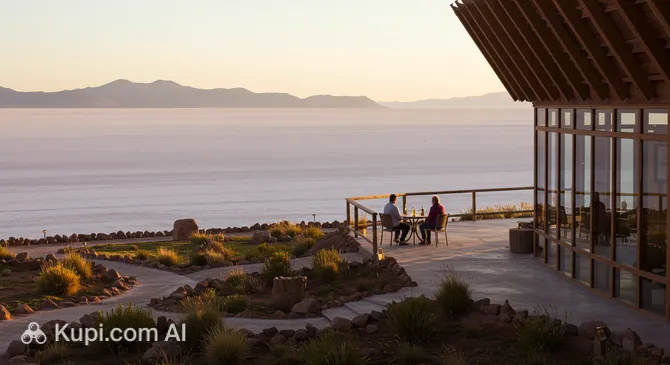
For those looking to experience the local hospitality style, the Jardines de Uyuni Hotel is a notable landmark in itself. Distinctive for its Andean rustic architecture, it incorporates local materials such as stone and salt into its design. It serves as an excellent example of how the region's tourism infrastructure has adapted to the harsh yet beautiful environment, offering a cozy refuge with amenities like a heated pool and sauna to combat the desert chill.
Jardines de Uyuni Hotel. Illustration.
Source: Kupi.com AI
Traveler photos:
Local Cuisine
The culinary scene in Uyuni is heavily influenced by the harsh, high-altitude environment of the Altiplano, resulting in hearty, warming dishes designed to provide energy against the cold. The local diet relies on indigenous staples that have been cultivated in the Andes for thousands of years, particularly quinoa, potatoes, and corn. One of the most comforting meals you can find is sopa de quinua, a rich vegetable soup thickened with the region's "golden grain," often serving as a perfect starter to warm you up after a long day on the salt flats.
For adventurous eaters, the true star of the local menu is llama meat. Considered a healthy alternative to beef due to its low fat and high protein content, it is widely available in local restaurants. You can try it served as a tender steak, often accompanied by quinoa or rice, or as charque (dried and salted meat), which is a traditional method of preservation in the mountains. The flavor is somewhat similar to beef but with a distinct, leaner texture that is unique to the region.
When it comes to beverages, the most essential drink for any visitor is mate de coca. This herbal tea made from coca leaves is not only a cultural staple but also a natural remedy for altitude sickness, helping travelers adjust to the thin air. In the evenings, you might want to try Singani, Bolivia's national spirit distilled from white Muscat of Alexandria grapes. It is commonly mixed with Sprite and a slice of lime to create a refreshing cocktail known as Chuflay.
Llama Cafe. Illustration.
Source: Kupi.com AI
Traveler photos:
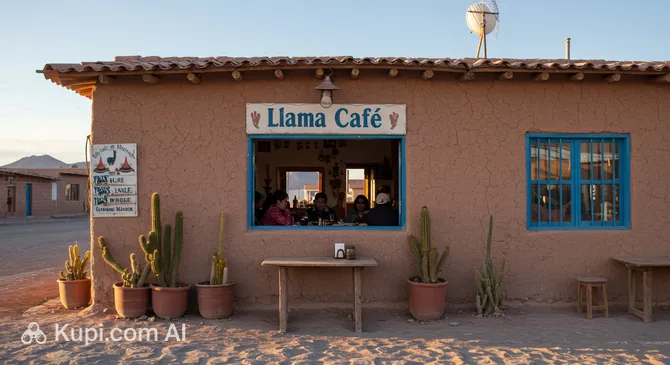
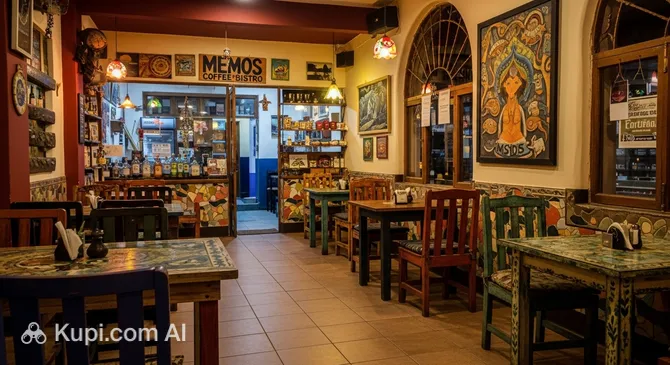
The dining atmosphere in Uyuni ranges from simple market stalls to cozy cafes catering to international tourists. The central streets, particularly around the main plaza and Avenida Ferroviaria, are lined with establishments offering everything from spicy Bolivian stews to wood-fired pizzas. For a relaxed environment to enjoy a meal or a hot drink, travelers often visit Llama Cafe, a popular spot known for its friendly service. Another excellent option for a break is Memos Coffee Bistro, where you can recharge with good coffee and light snacks before your next excursion.
Travel Tips
Visiting Uyuni is an adventure unlike any other, but the extreme altitude and remote location require a bit more preparation than your average holiday. To ensure your trip to the edge of the salt flats is as smooth and enjoyable as possible, here are some essential practical tips to keep in mind.
Pack for All Seasons. The high-altitude climate is unpredictable; you might experience scorching sun at noon and freezing temperatures at night. Bring layers—thermal underwear, a warm fleece, and a windproof jacket are must-haves. Don't forget high-SPF sunscreen and quality sunglasses, as the reflection of the sun off the white salt flats can be blindingly intense.
Getting Around is Simple. The city of Uyuni itself is small and grid-like, making it very walkable. You can easily reach most restaurants, shops, and tour agencies on foot. For longer distances or if you have heavy luggage, taxis are plentiful and inexpensive, usually costing a fixed low rate for rides within the town limits. There is no public metro or tram system here.
Cash is King. While some upscale hotels and tour operators accept credit cards (often with a surcharge), cash is essential for daily expenses. ATMs are available near the main plaza, but they can occasionally run out of money or reject foreign cards. It is wise to withdraw sufficient Bolivianos (BOB) in larger cities before arriving, and always carry small change for bathrooms and snacks during tours.
Respect the Altitude. At nearly 3,700 meters, altitude sickness (soroche) is a real concern. Take it easy for the first day, avoid heavy meals and alcohol, and stay hydrated. Local pharmacies (farmacias) are generally well-stocked with remedies, and drinking mate de coca (coca leaf tea) is a popular and effective local way to alleviate symptoms.
Stay Connected. Spanish is the primary language, and while tour guides often speak English, shopkeepers and taxi drivers may not. Learning a few basic phrases or having a translation app is very helpful. If you need mobile data, an Entel SIM card typically offers the best coverage in these remote regions, though signals can still be spotty on the salt flats.
Mind Your Manners. Bolivians are generally polite and reserved. It is customary to greet people with a "Buenos días" or "Buenas tardes" when entering a shop or restaurant. Crucially, always ask for permission before taking close-up photographs of locals, especially indigenous women, as snapping photos without consent is considered rude and intrusive.
Avoid Tap Water. To prevent stomach issues that could ruin your trip, strictly avoid drinking tap water. Stick to bottled water for drinking and brushing your teeth. It is readily available in all shops and kiosks throughout the town.
Bring Extra Power. The cold temperatures and high altitude can drain camera and phone batteries much faster than usual. Always carry a fully charged power bank and spare batteries for your camera to ensure you don't miss capturing the incredible landscapes of the Salar.
By keeping these practicalities in mind, you will be well-equipped to handle the rugged beauty of the Altiplano. Uyuni is a place that rewards the prepared traveler, allowing you to focus less on logistics and more on the breathtaking scenery that awaits you.
Entertainment & Nightlife
Entertainment in Uyuni is relatively low-key, reflecting the town's nature as a high-altitude transit hub where travelers often arrive exhausted or need to wake up before dawn for tours. You will not find sprawling nightclubs, thumping discotheques, or a 24-hour party scene here. Instead, the nightlife is centered around cozy, heated spaces where visitors from around the world gather to share travel stories, enjoy a warm meal, and sip on local drinks.
The heart of the evening activity is undoubtedly Avenida Ferroviaria. This main strip, along with the streets surrounding Plaza Aniceto Arce, is where the majority of restaurants, bars, and pizzerias are located. The atmosphere is distinctly international and relaxed; the "dress code" almost universally consists of fleece jackets, hiking boots, and wool hats due to the freezing desert nights. Most venues open around dinner time and start to empty out by 10:00 PM or 11:00 PM, as most patrons have 3:00 AM starts for sunrise tours on the salt flats.
For a pleasant evening out, many travelers head to Llama Cafe. While it serves as a coffee spot by day, in the evenings it becomes a welcoming social hub where you can enjoy local craft beers or a glass of wine in a friendly environment. It is an excellent place to unwind without the intensity of a loud bar. Similarly, Memos Coffee Bistro offers a comfortable setting that bridges the gap between a cafe and a lounge, making it a popular choice for those looking for a warm atmosphere to relax after a long expedition.
Memos Coffee Bistro. Illustration.
Source: Kupi.com AI
Traveler photos:
If you are looking for something slightly more lively, the "Extreme Fun Pub" (often associated with Minuteman Pizza inside the Toñito Hotel) is a legendary spot among backpackers. It is one of the few places that feels like a traditional pub, offering a selection of cocktails and a vibrant crowd. However, even here, the vibe is more about socializing than wild partying.
Practical advice for a night out in Uyuni revolves largely around the climate and altitude. The temperature drops drastically after sunset, often below freezing, so dress in heavy layers even if you are just walking a few blocks to dinner. Prices are generally affordable, with beers and cocktails costing significantly less than in Western countries, though slightly more than in other rural parts of Bolivia due to the tourism focus. Cash is essential, as many smaller bars do not accept cards.
regarding safety, the main tourist zone around the plaza and Avenida Ferroviaria is generally safe for walking in the early evening. However, the streets can be poorly lit and empty late at night. If you stay at a hotel on the outskirts or plan to be out past midnight, it is advisable to ask your venue to call a radio taxi for you rather than walking alone in the dark.
During the daylight hours, entertainment options within the city limits are modest. Aside from the famous train cemetery, you can visit the small Museo Arqueológico y Antropológico de los Andes Meridionales on Avenida Arce to learn about the local cultures of the southern Andes. For a more local experience, wandering through the open-air markets on Avenida Potosí offers a glimpse into daily life, where residents buy everything from fresh produce to colorful textiles.
Parks & Museums
While Uyuni is not a destination known for lush botanical gardens or sprawling green urban parks due to its arid, high-altitude climate, the city offers a different kind of outdoor appeal. Its cultural landscape is defined by open-air history and civic spaces that serve as gathering points for locals and travelers alike. The "museums" here are often as rugged as the environment itself, telling the story of a town forged by railways and mining.
The most famous cultural site is undoubtedly the Train Cemetery (Cementerio de Trenes). Functioning as a unique open-air museum, this area is scattered with dozens of rusted steam locomotives and wagons that date back to the late 19th century. Visitors can wander freely among the skeletal remains of these iron giants, climbing on the structures and exploring the machinery up close. It serves as a poignant reminder of Bolivia's first railway line and the region's glorious mining past, offering a stark, industrial beauty that contrasts with the surrounding desert.
For those interested in the deeper history of the region, the Museo Arqueológico y Antropológico de los Andes Meridionales is a small but valuable institution located on Avenida Arce. This museum houses a collection of artifacts from the southern Andean cultures, including pottery, textiles, and strangely elongated skulls that demonstrate ancient cranial deformation practices. It provides essential context to the indigenous communities that have thrived in this harsh environment long before the trains arrived.
In terms of public spaces, Plaza Aniceto Arce acts as the city's main "park" and civic heart. Although it features more pavement and monuments than grass, it is a vital social hub where you can see statues commemorating national heroes and the workers of the Chaco War. It is a pleasant spot to sit and observe the bustle of the town, surrounded by the distinctive clock tower and local businesses.
Beyond the city limits, the "natural areas" are defined by the raw beauty of the Altiplano. While not a park in the traditional sense, the vast, flat desert plains surrounding Uyuni offer a sense of boundless space and silence that many visitors find meditative. The stark horizon and the clear, high-altitude light turn the entire landscape into a natural gallery of geological forms.
Insider Tip: If you visit the Archeological Museum, be sure to check the opening hours in advance or ask at your hotel, as they can be irregular. Also, keep an eye out for the small salt sculptures often displayed along the main pedestrian avenue, which serve as a prelude to the massive salt hotel museums found on the Salar itself.
Getting Around
Navigating Uyuni is refreshingly simple compared to larger metropolises. Due to its small size and compact grid layout, the city does not possess a complex public transport network like a metro, tram, or extensive municipal bus system. There are no travel zones to memorize or complicated route maps to decipher. For the vast majority of visitors, the "transport system" consists entirely of walking and utilizing local taxis.
The primary form of motorized public transport within the city limits is the taxi. These are abundant and serve as the de facto bus service for locals and tourists alike. You will see standard sedans and station wagons roaming the streets constantly. They do not operate on fixed routes like buses; instead, they function as private hires. Taxis are incredibly affordable, with rides within the town center typically costing a fixed, low rate per person. They are the most convenient option for getting from the bus terminal to your hotel or transporting luggage.
Regarding payment, cash is the only accepted method. There are no travel cards, digital passes, or mobile apps for transport in Uyuni. You must pay the driver directly in the local currency (Bolivianos). It is highly recommended to carry small change and coins, as drivers often do not have change for large banknotes. Prices are generally standard for short trips within the urban area, but it is always wise to confirm the fare with the driver before entering the vehicle to avoid any misunderstandings.
For most tourists, walking is the most practical and enjoyable alternative. The city center is flat and easy to navigate on foot, with most hotels, restaurants, and tour agencies located within a few blocks of the main square, Plaza Aniceto Arce. You can walk from one end of the main commercial zone to the other in about 15 to 20 minutes. Walking allows you to easily stop at local markets and shops that you might miss from a car window.
While there are no car-sharing apps or official bike rental schemes for commuting, many tour agencies offer bicycle rentals for excursions. However, these are intended more for visiting nearby attractions like the Train Cemetery rather than for general city transport. If you need to travel late at night or early in the morning for a tour, ask your hotel or restaurant to call a "radio taxi" for you. This is safer and more reliable than hailing one on the street in the dark.
Accommodation
Accommodation in Uyuni is designed primarily to serve the needs of travelers preparing for or returning from expeditions to the salt flats. The options generally range from basic backpacker hostels and guesthouses to more comfortable mid-range hotels. While the town is not known for ultra-luxury chains, it offers a unique category of lodging specific to this region: hotels built entirely out of salt blocks, which provide a truly memorable experience.
For convenience, most tourists choose to stay in the city center, particularly near Plaza Aniceto Arce and Avenida Ferroviaria. Staying here puts you within walking distance of tour agencies, restaurants, and the bus station. However, if you are seeking a more atmospheric stay, the outskirts of town and the nearby village of Colchani are home to the famous salt hotels. These locations are quieter and offer stunning views of the desert, though they require a taxi or transfer to reach the town center.
Among the well-known options within the city, the Jardines de Uyuni Hotel stands out as a prime example of local hospitality. It is designed with a rustic Andean aesthetic, incorporating stone and local materials to create a cozy refuge from the cold. Establishments like this are popular because they offer reliable amenities that can be scarce in budget lodgings, such as central heating and consistent hot water.
Booking Tip: The most critical factor when choosing accommodation in Uyuni is heating. Nighttime temperatures frequently drop below freezing, and many budget hostels lack adequate insulation or heating systems. It is highly recommended to book in advance, especially during the peak winter season (June to August), and to specifically confirm that your room includes a heater and hot showers.
In terms of pricing, Uyuni caters to all budgets. You can find very affordable beds in shared dormitories or simple private rooms for a low cost. Mid-range hotels and salt hotels command a higher price but offer significantly better comfort and protection against the elements. While walk-ins are possible for cheaper hostels, booking online via major travel platforms is the safest way to secure a warm and comfortable room before you arrive.
Nearby Cities
For those looking to explore the surroundings, Uyuni serves as an excellent base for day trips to several interesting nearby locations:
One of the most historically rich destinations in the region is Potosí. Located approximately 149 km away, this city is a UNESCO World Heritage site and was once one of the wealthiest places on Earth due to its massive silver reserves. Visitors can explore the famous Cerro Rico mines or tour the Casa Nacional de la Moneda, offering a fascinating glimpse into Bolivia's colonial past. Although it is a high-altitude journey, the cultural immersion makes it well worth the effort.
Another captivating option, though better suited for a longer excursion, is Sucre. Known as the "White City" for its pristine, whitewashed colonial buildings, it serves as the constitutional capital of the country. Sucre offers a significantly milder climate than the Altiplano and features attractions such as the Cal Orck'o park, which showcases an impressive collection of dinosaur footprints. It provides a relaxing contrast to the rugged desert environment of Uyuni.
City
Population
Distance
Villa Martin Colchak
1 221
93 km
Potosí
264 402
149 km
Tupiza
23 100
157 km
Llica
553
164 km
Camargo
4 502
170 km
These nearby destinations offer a glimpse into the diverse culture and landscapes of the region.
Shopping & Souvenirs
Shopping in Uyuni is a modest but culturally rewarding experience. Do not expect sprawling shopping malls or luxury boutiques here; instead, the town offers a variety of small, family-run shops and open-air stalls that cater to the needs of travelers and locals alike. The retail scene is primarily focused on two things: essential gear for surviving the cold desert climate and unique souvenirs that reflect the region's identity.
The most distinctive items you can buy here are salt handicrafts. Given the proximity to the world's largest salt flat, local artisans carve intricate figures, jewelry boxes, and llama statues entirely out of salt blocks. While you can find these in the town center, the best selection is often found in the nearby village of Colchani, which serves as the processing center for the salt miners and is typically the first stop on most Salar tours.
Another shopping staple in Uyuni is alpaca and llama wool clothing. Because the nights in the Altiplano are freezing, the streets are lined with stalls selling colorful sweaters, gloves, scarves, and chullos (traditional Andean hats with earflaps). These items are not only practical for your trip but also make for high-quality, authentic gifts. You will also see plenty of aguayo cloth—the brightly colored, multi-patterned fabric used by local women to carry babies and goods—fashioned into bags, tablecloths, and accessories.
The main commercial hub for tourists is Avenida Ferroviaria. This wide avenue is home to numerous souvenir shops, mini-markets, and pharmacies. It is the perfect place to stock up on supplies before a tour, such as water, snacks, batteries, and sunscreen. For a more local experience, you can visit the street market along Avenida Potosí. Here, vendors sell everything from fresh produce and coca leaves to electronics and household goods, offering a glimpse into the daily commerce of the city.
Shopping Tips:
Cash Only: The vast majority of market stalls and small shops do not accept credit cards. Always carry enough Bolivianos in small denominations.
Bargaining: In street markets and souvenir stalls, polite bargaining is common and expected. However, prices in fixed-storefronts and pharmacies are usually set.
Essentials: If you forgot to pack warm layers, this is the cheapest and best place to buy thick wool socks and fleece-lined trousers before heading out onto the salt flats.