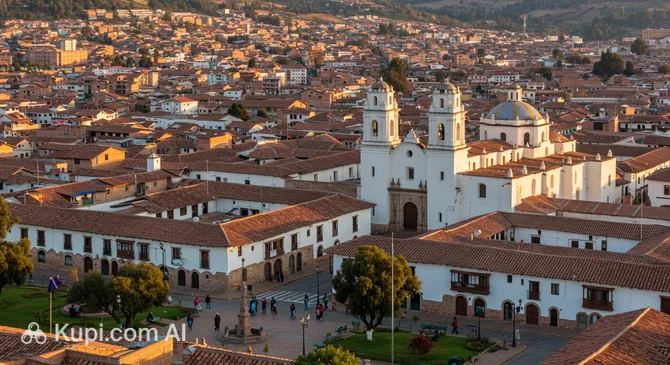
Sucre, often revered as the "White City" for its pristine colonial architecture, is the constitutional capital of Bolivia. This charming city offers a sophisticated yet relaxed atmosphere, distinct from the bustling pace of other major urban centers in the region. With its well-preserved historical center, vibrant cultural scene, and elegant whitewashed buildings, Sucre is widely considered one of the most beautiful and tranquil destinations in South America.
Sucre. Illustration.
Source: Kupi.com AI
Geographically, the city is nestled in the south-central part of the country within the Chuquisaca Department. It sits at a moderate elevation of approximately 2,810 meters (9,200 feet), which blesses the area with a pleasant, temperate climate year-round—often described as an "eternal spring." Home to a population of around 300,000 people, Sucre feels lively yet manageable, serving as both a significant university hub and a welcoming spot for travelers.
The rich history of Sucre is woven into its very fabric, visible in its narrow cobblestone streets and grand churches. As a UNESCO World Heritage Site, it holds a special place in the nation's heart as the birthplace of independence. Visitors can explore the Casa de la Libertad, the historic hall where the country's declaration of independence was signed, or marvel at the Parque Cretácico, which showcases one of the world's largest collections of dinosaur footprints at the Cal Orck'o cliff.
Whether you are admiring the panoramic views of red-tiled roofs from the La Recoleta lookout or enjoying a quiet afternoon in the leafy Plaza 25 de Mayo, Sucre offers a perfect blend of heritage and relaxation. It is a destination that invites you to slow down and appreciate the rich cultural tapestry of the Andes.
Weather Overview
Sucre enjoys a moderate, high-altitude climate often described as "eternal spring," making it a pleasant destination year-round. However, understanding the distinct seasonal variations is key to packing the right gear. For a more detailed forecast during your specific travel dates, you can consult the guide to the weather in Sucre.
The year is generally divided into a wet summer and a dry winter. From November to March, the city experiences its warmest days, with average highs reaching up to 20°C. This period is also the rainiest, particularly in January and February, which can see roughly 26 wet days per month, so a waterproof jacket is essential.
Conversely, the winter months from May to August are characterized by clear blue skies and almost no precipitation. While daytime temperatures remain comfortable around 18°C, the nights become significantly crisper, with lows dropping to approximately 3.7°C in June. Expect generally mild daytime temperatures throughout the year, accompanied by frequent showers in the summer and cold, dry nights during the winter season.
Average monthly temperature
Average monthly precipitation
Interesting Facts
Beyond the main attractions, Sucre holds many fascinating secrets and curious details that reveal the depth of its character. From prehistoric giants to unique architectural oddities, the city offers plenty of surprises for those who look a little closer.
Sucre is historically known as the "City of Four Names," a title that reflects its complex evolution. Over the centuries, it has been officially called Charcas, La Plata, Chuquisaca, and finally Sucre, with each name representing a distinct era in its rich timeline.
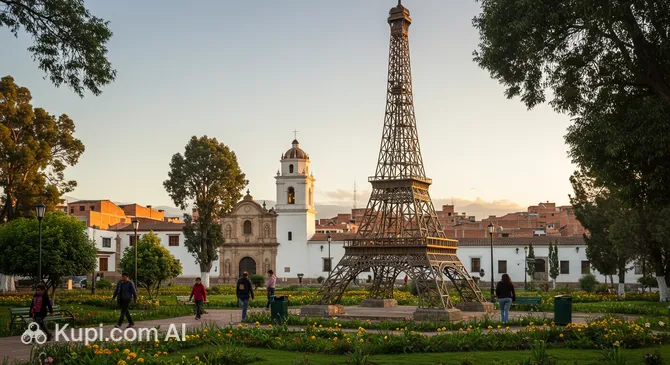
The city boasts a surprising connection to Paris through the Eiffel Tower – Bolívar Park. This miniature iron tower, located within Simon Bolivar Park, was designed by Gustave Eiffel himself and shipped from France in the early 20th century to serve as a meteorological observatory.
Just a short distance from the city center lies the Cal Orck'o cliff, which features the largest collection of dinosaur footprints in the world. This massive vertical limestone wall preserves over 5,000 individual prints from at least 15 different species, dating back approximately 68 million years.
Sucre was once the seat of the only papal-sanctioned principality in South America. In the late 19th century, a wealthy local mining tycoon was granted the title of Prince of La Glorieta by the Pope, leaving behind an eclectic castle that mixes various architectural styles.
Eiffel Tower – Bolívar Park. Illustration.
Source: Kupi.com AI
Traveller photos:
How to Get There
Reaching the "White City" involves navigating the beautiful Andean highlands, and understanding your entry points is the first step of the journey. While domestic flights connect the capital directly, many international travelers arrive via major hubs in neighboring cities before making their way to the constitutional capital. For a comprehensive guide on all transport methods, you can read more about how to get to Sucre.
Since Sucre acts as a regional gem rather than a primary international gateway, you might fly into Viru Viru International Airport (VVI) in Santa Cruz de la Sierra. This is the country's busiest air hub, handling a large volume of passengers annually. It is located approximately 272 km from Sucre. If you choose to travel by road from this airport, the journey takes about 7 hours, offering scenic views of the transition from lowlands to valleys. Another significant option is J Wilsterman Airport (CBB) in Cochabamba, a key regional hub with substantial traffic. Situated roughly 203 km away, a road trip from here would take approximately 5.5 hours, winding through the mountainous terrain.
For clarity, here is a summary of the main airports in the region:
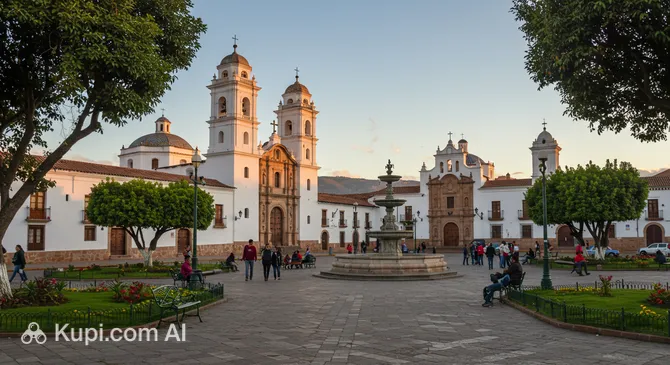
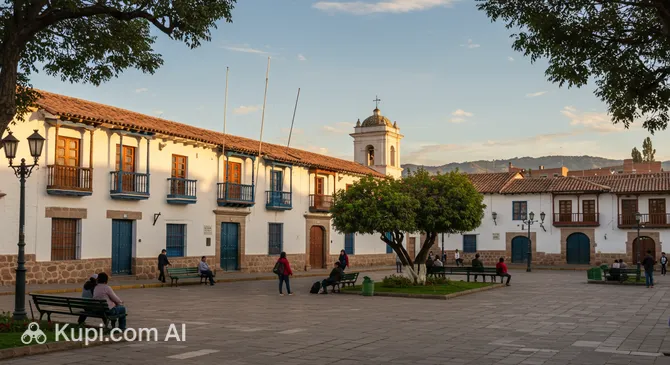
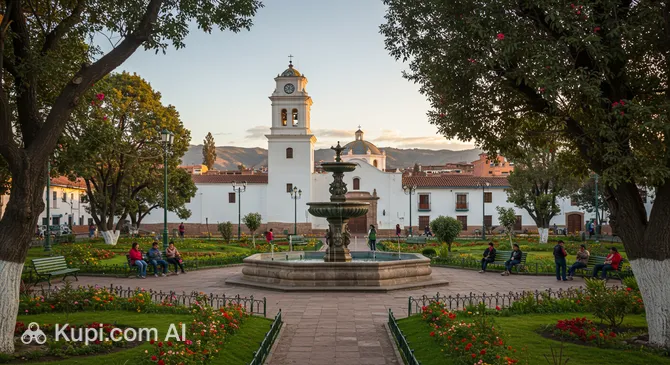
Sucre is a treasure trove of colonial history and architectural beauty, offering visitors a chance to step back in time. The city's compact center is easily explorable on foot, allowing you to discover its most significant landmarks at a leisurely pace. At the very heart of this experience is the vibrant 25 de Mayo Main Square. Flanked by the Cathedral and the Prefecture, this plaza is the perfect spot to sit on a bench, enjoy the manicured gardens, and watch the daily life of the locals unfold against a backdrop of stunning white buildings.
25 de Mayo Main Square. Illustration.
Source: Kupi.com AI
Traveller photos:
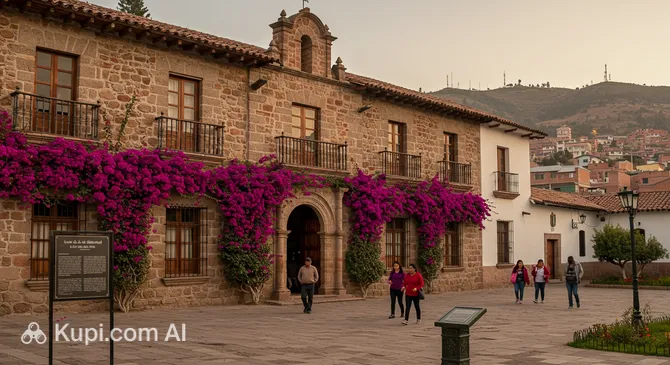
Just a stone's throw from the main square lies the Casa de la Libertad, arguably the most important historical building in the nation. This well-preserved colonial hall is where the Bolivian Act of Independence was signed in 1825. Tourists are drawn here not only for the profound historical significance but also to admire the impressive portraits, antique furniture, and the grand salon that once served as a Jesuit chapel and university assembly hall.
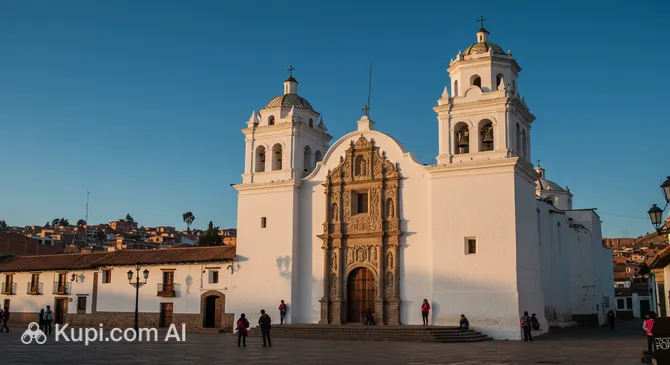
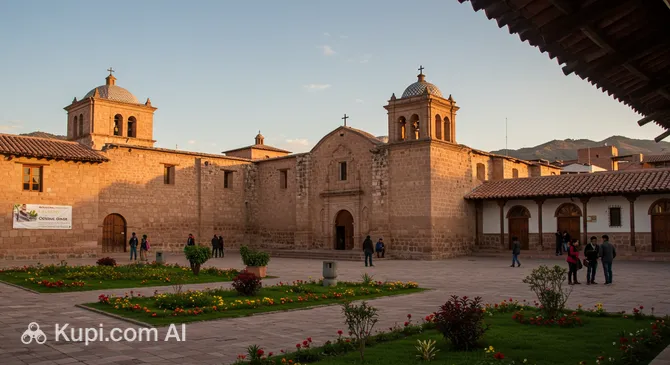
For those seeking the best panoramic views of the "White City," a visit to the Church of San Felipe de Neri is essential. This neoclassical convent, built in the 18th century, features a beautiful courtyard and grand archways. The highlight for many visitors is the access to the tiled rooftop and bell towers, which offer breathtaking perspectives of Sucre’s red-tiled roofs and whitewashed walls shimmering in the sunlight.
Church of San Felipe de Neri. Illustration.
Source: Kupi.com AI
Traveller photos:
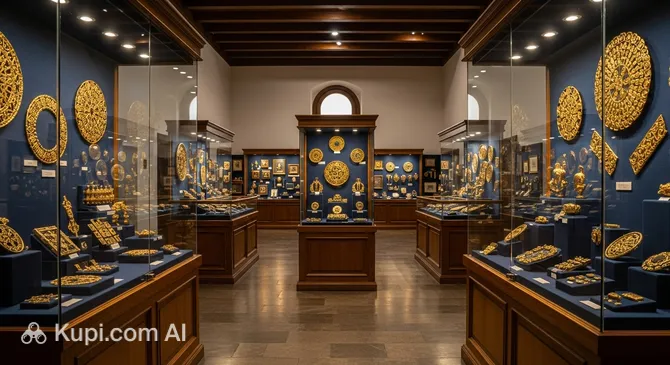
To delve deeper into the region's mineral wealth, the Museo del Tesoro offers a fascinating educational experience. Located in one of the oldest houses in the city, this high-quality museum is dedicated to the art and history of gold, silver, and gemstones in Bolivia. It is particularly interesting for its insights into mining techniques and its dazzling display of jewelry, making it a unique stop for culture and geology enthusiasts alike.
Local Cuisine
Sucre is widely regarded as the gastronomic capital of Bolivia, offering a culinary landscape that blends deep-rooted Andean traditions with Spanish colonial influences. The local food is characterized by its bold flavors, generous portions, and the use of high-quality regional ingredients like red chili peppers (ají colorado), corn, and pork. For food lovers, the city provides an endless array of textures and tastes, ranging from spicy stews to delicate pastries.
No visit to the city is complete without trying the signature dish, Mondongo Chuquisaqueño. This hearty meal consists of tender pork ribs cooked in a vibrant red chili sauce, accompanied by "mote" (yellow corn) and potatoes. Another local favorite is the Chorizo Chuquisaqueño, a flavorful sausage often served as a sandwich with lettuce, tomato, and spicy sauces. For a mid-morning snack, the salteña—a savory, broth-filled pastry—is a daily ritual here, with the local variety known for its slightly sweet dough and spicy meat filling.
When it comes to beverages, the region is famous for Singani, a grape brandy produced in the nearby valleys. It is most commonly enjoyed in a refreshing cocktail called Chuflay, mixed with ginger ale and lime. Beer enthusiasts will also find a growing scene here; places like Brewcraft offer a selection of artisanal brews in a relaxed setting. Additionally, Sucre is renowned for its chocolate production, and travelers often indulge in locally made truffles and bars sold in specialty shops throughout the historic center.
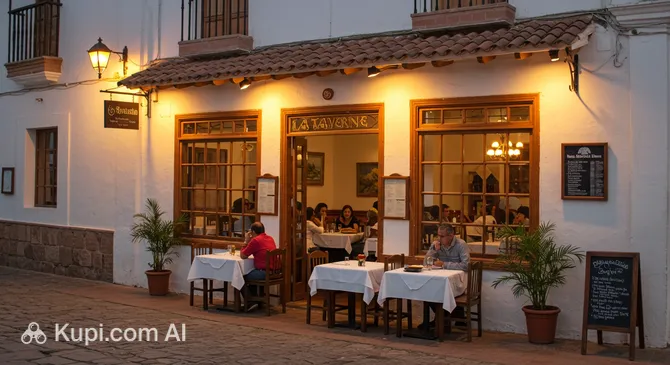
The dining culture in Sucre ranges from bustling traditional markets to sophisticated restaurants. The central market is the go-to spot for an authentic breakfast or a fresh fruit juice, while the evening scene offers elegant options. For those seeking a cozy atmosphere and a menu that fuses French techniques with local ingredients, La Taverne is a popular choice among visitors. Alternatively, Nativa Restaurant provides a wonderful opportunity to explore Bolivian heritage through modern culinary interpretations.
La Taverne. Illustration.
Source: Kupi.com AI
Traveller photos:
Travel Tips
Visiting Sucre is a delightful experience, but a little preparation goes a long way in ensuring your trip is as smooth as it is memorable. Here are some practical tips to help you navigate the "White City" with confidence and ease.
Clothing and Gear: Due to the high altitude, the weather can be changeable. It is best to dress in layers; while the midday sun can feel quite warm, temperatures drop significantly once the sun goes down. Bring a warm jacket for the evenings and comfortable walking shoes with good grip, as the historic center is paved with slippery cobblestones. If you plan to visit churches or religious sites, modest clothing that covers shoulders and knees is respectful and often required. Don't forget high-SPF sunscreen and sunglasses, as the UV rays are strong in the Andes.
Transportation: The historic center is compact and best explored on foot. For longer distances, taxis are plentiful and very affordable; however, they rarely use meters, so it is standard practice to agree on the fare before getting in. Public transportation consists of colorful buses called micros, which are extremely cheap and offer a fun way to see the city, with destinations clearly marked on their windshields. Car rental is generally unnecessary within the city limits and can be stressful due to narrow streets.
Finances: The local currency is the Boliviano (BOB). While upscale hotels and restaurants accept credit cards, cash is king in Sucre, especially for taxis, small shops, and entrance fees to some museums. ATMs are widely available around the main square and financial district. It is wise to carry small bills and coins, as breaking large banknotes can be difficult in smaller establishments. Tipping is not strictly mandatory but is becoming common; leaving about 10% in nice restaurants is a kind gesture.
Health and Safety: Sucre is located at 2,810 meters (9,220 feet), so mild altitude sickness (soroche) can affect travelers. Take it easy on your first day, stay hydrated, and try the local remedy, coca tea. Tap water is not safe to drink; always opt for bottled or purified water. Pharmacies are easy to find in the center, and there are typically shifts for 24-hour service (turnos). The city is generally one of the safest in Bolivia, but exercise standard caution: keep an eye on your belongings in crowded markets and avoid poorly lit areas at night.
Communication: Spanish is the primary language spoken in Sucre. While staff at high-end hotels and tour agencies may speak English, it is not widely spoken by the general public or taxi drivers. Learning a few basic phrases like "Buenos días" (Good morning) and "¿Cuánto cuesta?" (How much?) will be greatly appreciated. Wi-Fi is standard in most hostels and cafes. For mobile data, you can easily purchase a prepaid SIM card from providers like Entel or Tigo with your passport.
Local Etiquette: Bolivians are generally polite and formal. It is customary to greet people when entering a shop or sharing a taxi with a "Buenos días" or "Buenas tardes." When eating in a shared space or walking past diners, it is polite to say "Buen provecho" (enjoy your meal). If you wish to take photos of locals, especially indigenous women (Cholitas) in traditional dress, always ask for permission first; some may ask for a small tip in exchange.
What to Avoid: Never take photographs of people without their explicit consent, as this is considered extremely rude and can lead to confrontation. Additionally, avoid relying strictly on card payments; assume you will need cash for most daily transactions to avoid being caught out.
Market Life Hack: For a cheap and delicious vitamin boost, head to the top floor of the Mercado Central. The fruit juice section is legendary; the ladies there will often give you a "yapa"—a free refill or extra portion—after you finish your first glass. It’s a classic local experience you shouldn't miss.
With these tips in mind, you are ready to immerse yourself in the colonial charm and relaxed rhythm of Sucre. Enjoy the friendly atmosphere and the stunning beauty of this Andean gem!
Entertainment & Nightlife
While Sucre is known for its tranquility, the city possesses a youthful and vibrant energy after dark, largely thanks to its substantial university population. The nightlife here is less about thumping mega-clubs and more about sociable bars, live music venues, and cultural spectacles. The atmosphere is generally relaxed and welcoming, making it easy for travelers to mingle with locals and students in a safe, fun environment.
The heart of the action beats around the historic center. As the sun sets, the streets radiating from the main square begin to fill up. Calle Nicolás Ortiz, often affectionately referred to by travelers as the main hub for nightlife, is lined with pubs, cafes, and restaurants that stay open late. Another hotspot is Calle Bolivar, where you can find a mix of trendy spots and traditional venues. For a more scenic start to your evening, the area around Pedro de Anzúrez Square (La Recoleta) offers stunning views of the illuminated city, perfect for a sunset drink before heading down to the center.
Pedro de Anzúrez Square. Illustration.
Source: Kupi.com AI
Traveller photos:
For those seeking a deep dive into Bolivian folklore, an evening at the Origins Cultural Space is a must. This venue offers a high-energy dinner show that takes the audience on a journey through the country's diverse regions via traditional dance and music. It is a colorful and educational way to spend a night, featuring elaborate costumes and talented performers, making it one of the top evening entertainment options in the city.
Origins Cultural Space. Illustration.
Source: Kupi.com AI
Traveller photos:
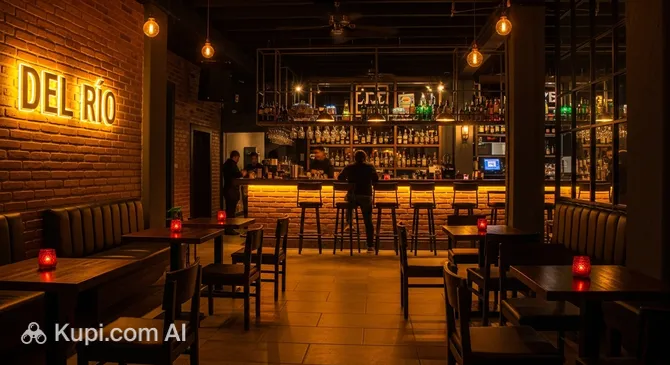
If you prefer a more casual night out with good drinks and conversation, the city has plenty of options. Del Río Resto Bar is a popular choice for its contemporary vibe, offering a great selection of cocktails and food in a stylish setting. The bar scene in Sucre often features happy hours, usually running from roughly 6:00 PM to 9:00 PM, which is a great time to explore different venues without breaking the bank.
Del Río Resto Bar. Illustration.
Source: Kupi.com AI
Traveller photos:
Practical Advice and Safety:
Nightlife in Sucre usually kicks off around 9:00 PM or 10:00 PM, with bars closing around 2:00 AM or 3:00 AM on weekends. The dress code is almost universally casual; jeans and a warm jacket are standard, as nights can get chilly. While the historic center is generally safe for walking in the early evening, it is always advisable to take a taxi if you are staying outside the immediate center or traveling late at night. Radio taxis are reliable and inexpensive, typically costing between 5 to 10 Bolivianos for a ride within the city.
Daytime Entertainment:
Before the sun goes down, Sucre offers a different kind of entertainment focused on history and leisure. Beyond the famous museums, visitors can enjoy the city's theaters, such as the beautiful Teatro Gran Mariscal, which hosts concerts and plays. For families or those looking for a relaxed afternoon, the city's parks provide a green escape, while the local cinemas screen both international and Latin American films.
Parks & Museums
Sucre is not only a showcase of colonial architecture but also a city that breathes through its elegant gardens and celebrates its heritage in diverse cultural institutions. The "White City" offers a seamless blend of open-air relaxation and intellectual enrichment, inviting visitors to stroll through manicured pathways before stepping into galleries that preserve the region's artistic soul.
One of the most beloved green spaces is Simon Bolivar Park, a sprawling urban oasis that reflects the city's aristocratic past. Designed with a distinct French influence, the park features wide avenues, ornamental fountains, and a rose garden that blooms year-round. It is a favorite spot for families and students to relax under the shade of ancient trees. Within its grounds, you can find the curious miniature Eiffel Tower, a structure that adds a touch of European whimsy to the Andean setting. The park serves as a perfect transition from the bustling center to the quieter, more residential areas of the city.
Simon Bolivar Park. Illustration.
Source: Kupi.com AI
Traveller photos:
For a unique combination of history and serenity, the General Cemetery of Sucre is widely considered one of the finest in South America. Far from being a somber place, it functions as a peaceful park where locals come to read, study, or walk among the manicured cypress trees and elaborate mausoleums. The architecture here ranges from Neoclassical to Art Deco, housing the remains of presidents and historical figures. It offers a fascinating insight into the local customs regarding life and death, presenting a tranquil environment that feels more like an open-air museum than a graveyard.
Reflecting the opulent lifestyle of the 19th and 20th centuries, the Guereo Mansion stands as a testament to the city's architectural diversity. Located near the exit of Bolivar Park, this historic residence is admired for its eclectic style and beautiful gardens. While often viewed from the outside, its presence adds to the charm of the neighborhood, and it serves as a reminder of the economic boom that once shaped the region. The mansion's intricate facade and well-preserved grounds make it a captivating subject for photography and architectural appreciation.
Guereo Mansion. Illustration.
Source: Kupi.com AI
Traveller photos:
To deeply understand the indigenous culture of the region, a visit to the ASUR Museum of Indigenous Art is essential. This facility is dedicated to preserving and displaying the intricate textile traditions of the Jalq'a and Tarabuco communities. Unlike typical static displays, the museum often features local weavers demonstrating their craft, allowing visitors to see the complex techniques used to create their storytelling tapestries. It provides a meaningful connection to the living history of the Chuquisaca region, showcasing art forms that predate the colonial era.
For a truly authentic experience, consider visiting the cemetery in the late afternoon when the light is softest. Many young local guides offer tours that reveal the stories behind the most famous tombs, providing a narrative that is both respectful and deeply informative about Bolivian history.
Getting Around
Navigating Sucre is relatively straightforward, as the city's historic center is compact and best explored on foot. However, for reaching the outer neighborhoods, the bus terminal, or specific attractions located further afield, the city relies on a network of road-based transport. There is no metro, tram, or underground system; instead, the public transportation infrastructure consists primarily of buses and taxis that share the narrow colonial streets.
The most common and economical way to travel is by using the micros. These are small, often colorful buses or minibuses that serve as the backbone of local mobility. Unlike systems in larger global cities, micros in Sucre do not typically use route numbers. Instead, they display their destinations and key landmarks—such as "Mercado Central," "Terminal," or specific neighborhoods—on large placards placed in the windshield. To catch a micro, you simply wave your hand from the curb; there are very few designated bus stops outside of major avenues.
The payment system for public transport is entirely cash-based. There are no travel passes, electronic cards, or mobile apps for fare payment. A single journey on a micro is extremely affordable, typically costing between 1.50 and 2 Bolivianos. You pay the driver directly, usually upon boarding or sometimes when disembarking, depending on the specific driver's preference. It is crucial for tourists to carry small change, as drivers often struggle to break bills larger than 10 or 20 Bolivianos.
When you are ready to get off the bus, you must verbally alert the driver, as buttons or pull-cords are rare or often unused. shouting "¡Me quedo!" (I stay here) or "¡En la esquina, por favor!" (At the corner, please) is the standard way to request a stop. Micros generally operate from early morning, around 6:00 AM, until approximately 9:00 PM or 10:00 PM. After these hours, service becomes scarce, and switching to a taxi is recommended.
Taxis are abundant and offer a flexible alternative to buses. They do not utilize meters; instead, fares are based on a flat rate for a "carrera" (trip) within the city limits. A standard ride within the central district usually costs between 5 to 10 Bolivianos per person. It is essential to agree on the price with the driver before entering the vehicle to avoid misunderstandings. While ride-sharing apps are not the primary method of hailing rides here, "Radio Taxis"—dispatched vehicles that you call by phone or WhatsApp—are considered the safest and most reliable option, especially at night.
For visitors heading to the famous dinosaur footprints at the Cal Orck'o cliff, there is a special tourist service known as the Dino Truck. This designated bus departs from Plaza 25 de Mayo at scheduled times throughout the day. It provides a direct and hassle-free connection to the park, making it a convenient "special feature" of the local transport landscape for sightseers who prefer not to navigate the regular micro routes.
Regarding connections to the Alcantari International Airport, which is located about 30 kilometers away, travelers can utilize shared minibuses. These are distinct from the city micros and offer a cost-effective shuttle service between the city center and the terminal. While car rentals are available, they are generally not recommended for exploring the city itself due to the narrow, one-way cobblestone streets and limited parking availability.
Accommodation
Finding a place to stay in Sucre is often a highlight of the trip, as the city offers a charming array of accommodation options that reflect its colonial heritage. The range is diverse, catering to backpackers, families, and travelers seeking comfort. You will find everything from lively budget hostels with social atmospheres to elegant boutique hotels housed in restored white-washed mansions. Many of the mid-range and upscale establishments feature beautiful central courtyards (patios) adorned with fountains and gardens, providing a peaceful retreat from the city streets.
The most convenient and popular area for tourists to stay is the Historic Center, particularly within the blocks surrounding the main square. Staying here puts you within easy walking distance of major landmarks, museums, and the best restaurants. The streets around the central market and those leading up to the Recoleta viewpoint are also excellent choices, offering a mix of quiet guesthouses and vibrant traveler hubs. Due to the city's compact nature, almost any location in the central district ensures you are never far from the action.
In terms of cost, Sucre is generally very affordable compared to international standards. Budget travelers can find dormitory beds or simple private rooms at very low rates, while mid-range options offer excellent value with amenities like private bathrooms, Wi-Fi, and breakfast included. Even the more luxurious colonial hotels are reasonably priced, allowing visitors to enjoy historic grandeur without breaking the bank. Booking can be done easily through major online platforms, though many smaller hostals also accept direct inquiries or walk-ins during the low season.
Booking Tip: While there is usually plenty of availability, it is wise to book your accommodation in advance if you plan to visit during major festivals, such as the Virgin of Guadalupe festival in September or Easter week. During these peak times, the best rooms in the historic center fill up quickly.
Nearby Cities
For those looking to explore the surroundings, Sucre serves as an excellent base for day trips to several interesting nearby locations:
One of the most significant nearby destinations is Potosí, a city steeped in colonial history and famed for the Cerro Rico silver mines. As one of the highest cities in the world, it offers a breathtaking experience both literally and figuratively. Visitors can tour the historic Casa Nacional de la Moneda (National Mint), explore the colonial architecture recognized by UNESCO, or take a guided tour into the mines to understand the region's rich industrial past.
Although not listed in the table above, the town of Tarabuco is a quintessential day trip for travelers in Sucre. Located approximately 65 kilometers away, it is best known for its vibrant Sunday market, which is one of the most authentic in Bolivia. Here, the local Yampara people, distinguished by their unique traditional dress, gather to trade textiles, fresh produce, and crafts, offering a colorful immersion into indigenous culture.
For a more relaxed and closer excursion, Yotala is a charming village situated just 15 kilometers from the city. It is a favorite spot for locals and tourists alike who wish to enjoy a quiet afternoon in the countryside. The town retains a nostalgic rural atmosphere with its cobblestone streets and colonial homes, and it serves as a gateway to exploring nearby natural attractions such as the Obispo waterfalls.
These nearby destinations offer a glimpse into the diverse culture and landscapes of the region.
Shopping & Souvenirs
Shopping in Sucre is a delightful experience that mirrors the city's relaxed and cultured atmosphere. Rather than massive modern complexes filled with international chains, you will find charming boutiques, artisanal workshops, and bustling local markets. The "White City" is particularly renowned for its high-quality handicrafts, making it one of the best places in Bolivia to purchase authentic souvenirs that reflect the region's rich indigenous heritage and colonial history.
The primary shopping districts are conveniently located within the historic center, radiating outwards from the 25 de Mayo Main Square. Calle Calvo and Calle España are two of the most popular streets for visitors, lined with shops selling everything from alpaca wool clothing to intricate silverware. A stroll down these cobblestone avenues offers plenty of window-shopping opportunities, with many stores housed in beautifully restored colonial buildings that add a touch of elegance to the retail experience.
While the city preserves a traditional feel, those looking for a more modern shopping environment can visit the Centro Comercial SAS. Located just a few blocks from the main plaza, this is Sucre's principal shopping mall. Although modest in size compared to global standards, it provides a convenient "one-stop" location featuring a supermarket, a cinema, a food court, and various clothing and electronics stores. It is a practical spot for travelers needing to restock on travel essentials or seeking a quick bite in a contemporary setting.
For a deep dive into local life, the Mercado Central is an unmissable destination. This vibrant market is the beating heart of the city's commerce, where locals buy their daily groceries. While the ground floor is dedicated to fresh produce, meats, and the famous fruit juice stalls, the upper levels and surrounding stalls offer a variety of household goods, baskets, and inexpensive clothing. It is a sensory overload of colors and scents that provides a genuine glimpse into the daily rhythm of the Chuquisaca region.
When it comes to souvenirs, Sucre is famous for three main things: textiles, chocolate, and jewelry. The region is known for its exquisite indigenous weavings, particularly the red and black designs of the Jalq'a culture, which can be found in specialized fair-trade shops. Additionally, Sucre is often called the "Chocolate Capital of Bolivia," so picking up a box of high-quality local truffles or bars is a must. For those interested in precious metals and stones, the city offers beautiful silverwork and the unique Bolivianita gemstone. High-end pieces can often be found in the gift shop of the Museo del Tesoro, which specializes in certified local gems.
Museo del Tesoro. Illustration.
Source: Kupi.com AI
Traveller photos:
Store opening hours in Sucre typically follow a split schedule to accommodate the traditional midday siesta. Most shops open around 9:00 AM, close for lunch between 12:30 PM and 2:30 PM, and then reopen until roughly 8:00 PM. The Central Market opens much earlier, often by 6:00 AM. Regarding payment, cash is definitely king. While upscale boutiques, hotels, and the supermarket in the SAS mall accept credit and debit cards, smaller shops and market stalls deal exclusively in Bolivianos. It is always wise to carry small bills for easier transactions.
Tourists should be aware that Bolivia does not have a widely established tax-free shopping or VAT refund system for foreign visitors similar to those found in Europe. The price you see on the tag is generally the final price, although bargaining is acceptable and expected in markets and with street vendors. In formal shops and boutiques, however, prices are fixed.
We use cookies and services to collect user information. This is essential for the functioning of the site and for marketing purposes. You can find out more in .