Support

Arapongas

About

Arapongas is a charming city in the state of Paraná that possesses a unique feature setting it apart from other towns in the region. It is often called the "City of Birds," a poetic nickname that is no coincidence. Located in southern Brazil, this city attracts travelers with its cozy atmosphere, developed infrastructure, and picturesque surroundings. With a population of just over 100,000, Arapongas harmoniously combines the dynamics of an important industrial hub with the tranquility of a green provincial town.
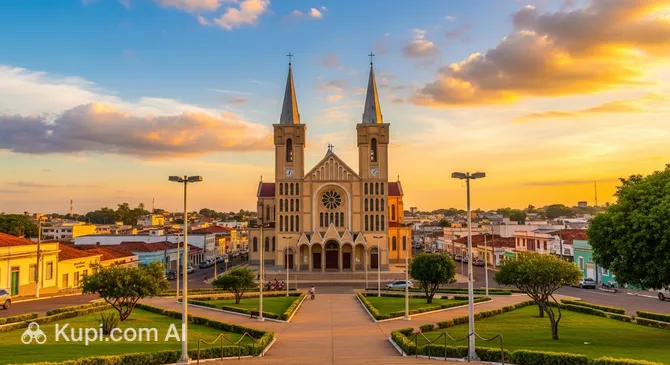
Arapongas. Illustration.
Source: Kupi.com AI

The fascinating history of Arapongas is reflected in the city's toponymy: almost all the streets here are named after various bird species native to the continent. This gives walks through the center a special charm, turning a map study into an engaging ornithology lesson. The climate here is humid subtropical, which encourages lush greenery in the parks and squares, making the city pleasant to visit almost year-round.

Among the key places for relaxation, the Bird Park (Parque dos Pássaros) stands out as a true green oasis and a favorite leisure spot for locals. Here, you can stroll around a picturesque lake and enjoy the silence of nature. Additionally, the city is known for its majestic Sanctuary of Our Lady of Aparecida (Santuário Nossa Senhora Aparecida), located on the main square, which impresses with its architecture. It is also worth noting that Arapongas is considered the furniture capital of the state, attracting connoisseurs of quality design and interiors.

If you are planning a route through the state of Paraná, be sure to stop by Arapongas. It is a wonderful opportunity to experience the authentic culture of the region and feel the sincere Brazilian hospitality in the "winged" city.

Weather Overview

The climate of Arapongas can be described as favorable for tourism for most of the year, although it has a pronounced seasonality. Travelers should expect a warm summer with occasional rains and a mild, drier winter. This weather pattern is typical for northern Paraná and allows for enjoyable walks through the "City of Birds," provided you prepare for nature's whims.

The hottest and most humid period occurs at the beginning of the year. In January and February, daytime temperatures often reach a maximum of 28.6°C; however, this is also the rainiest time, with up to 22 days of precipitation recorded in January. By the middle of the year, the heat subsides. July is considered the coldest month, with an average temperature of about 18.5°C and nighttime lows of 13.2°C, but rains are extremely rare during this time, occurring only about 3 days a month.

Spring and autumn offer comfortable transitional conditions. For example, as early as September, the air warms up again to 29.2°C, while April pleases with a pleasant average temperature of 22.4°C. To ensure your holiday goes perfectly and your suitcase is packed correctly, we recommend checking the detailed weather in Arapongas for your travel dates in advance.

Average monthly temperature

Average monthly precipitation

Interesting Facts

In addition to its main attractions, Arapongas holds many fascinating secrets that make its history and present truly unique for the observant traveler.

  • Heritage on the Rails: The old railway station, opened in the 1940s, is not just a historical building, but the true heart of the city. The active development of the settlement began with the arrival of the railroad. Today, this atmospheric building houses the Museum of Art and History (MAHra), where you can see rare photographs and everyday objects from the first settlers.

  • Garden City Concept: The layout of Arapongas was not haphazard. The city was designed by the Companhia de Terras Norte do Paraná using urban planning ideas that were advanced for the time. The unique system of streets named after birds was part of a harmony-with-nature concept inspired by English garden cities.

  • Furniture Giant: The scale of local production boggles the mind of even experienced economists. Arapongas is the second-largest furniture cluster in all of Brazil. Every two years, the city hosts the Movelpar exhibition, transforming into an international center for design and business, drawing specialists from across Latin America.

  • Geographical Crossroads: The city is located in a unique climatic zone. Arapongas sits almost on the Tropic of Capricorn line, which creates an interesting transitional climate — a mix of tropical and subtropical zones that provides the lush greenery so beloved by the region's feathered inhabitants.

How to Get There

When planning a trip to the "City of Birds," it is important to think about your route in advance. Arapongas is conveniently located in the state of Paraná, allowing it to be reached in various ways, although there is no direct air service to the city itself. You can find out all the ways to get to the city and choose the one that best fits your budget and schedule.

There is no airport in Arapongas itself that accepts regular passenger flights, so travelers usually use air hubs in neighboring cities. The most convenient option is Londrina Airport (IATA: LDB), located in the city of Londrina. It is only 33.2 km from the center of Arapongas. A trip by taxi or transfer from here will take you about 1 hour and 10 minutes. This is one of the most popular routes for tourists due to its proximity to the destination.

An alternative option is Maringá Regional Airport (IATA: MGF), located in the city of Maringá, approximately 58.8 km from Arapongas. The drive from this airport takes roughly 1 hour and 50 minutes. Both airports serve as regional hubs with good passenger traffic, ensuring regular connections with the country's major centers.

For clarity, here is a summary of the main airports:

AirportPassenger trafficDistance
Londrina Airport784 00033 km
Regional de Maringá820 00059 km
A. De Barros Airport309 000136 km
Dr Gastao Vidigal Airport38 026205 km
Comte Antonio Amilton Beraldo Airport11 394237 km

As for rail transport, there is currently no regular passenger service to Arapongas. Railways in this region of Brazil are used primarily for freight. Therefore, tourists should not count on the train as a primary way to arrive in the city.

In the absence of trains, comfortable intercity buses serve as an excellent alternative. The Arapongas Bus Station (Rodoviária de Arapongas) is well-connected to major cities in the state and neighboring regions. Traveling by bus along the roads of Paraná is not only a budget-friendly but also a scenic way to reach your destination, enjoying views of the Brazilian nature from the window.

Main Attractions

Arapongas offers tourists several memorable locations that reveal the city from different perspectives: from its natural beauty to its spiritual and historical heritage. Although the city is primarily known as an industrial center, there are places here where you can relax your soul and get to know the local culture.

Bird Park (Parque dos Pássaros) is perhaps the most famous natural attraction in the city, fully justifying Arapongas' nickname. This spacious park is an ideal place for leisurely walks and picnics. Tourists are drawn here by the well-maintained trails, a large lake, and an abundance of greenery. Of particular interest are the ruins of an old hydroelectric plant preserved on the grounds, which give the park a mysterious historical look and serve as an excellent backdrop for photos.

In the very heart of the city stands the Sanctuary of Our Lady of Aparecida (Santuário Nossa Senhora Aparecida). This majestic structure is not only a religious center but also the main architectural landmark of Arapongas. Visitors note the beautiful interior decoration of the temple and its special, peaceful atmosphere. Its location on the central square makes it a convenient starting point for exploring the city's architecture.

History buffs should visit the Arapongas Museum of Art and History (MAHra). It occupies the building of the old railway station, which played a key role in the region's development. The museum's exhibition carefully preserves the memory of the first settlers and the stages of colonization in northern Paraná. The building itself, which retains the flavor of the mid-20th century, is an important monument of the era and allows tourists to better understand the origins of this "winged" city.

Local Cuisine

The cuisine of Arapongas vividly reflects the traditions of southern Brazil, where gastronomic culture was heavily influenced by European immigrants and ranching customs. The main culinary ritual here is certainly churrasco. In local restaurants, often operating on the "rodízio" system (pay one price and eat as much as you want), you will be offered a wide range of meats on skewers. Beef ribs, which are cooked over low heat until the meat becomes incredibly tender, are considered a special delicacy.

While in the state of Paraná, you should pay attention to a regional classic — barreado. This is a thick beef stew that is traditionally simmered in a clay pot for about 12 hours. The meat falls apart into fibers and is mixed with cassava flour, creating a hearty and aromatic dish often served with banana slices. Italian traditions are also very strong in Arapongas: local pizzerias and trattorias offer high-quality pasta and pizza that are just as good as those prepared in São Paulo.

Street food culture thrives at open-air markets called "feiras." These are the best places to feel the city's pulse and try pastel — a large deep-fried pastry made from thin dough with various fillings, ranging from cheese and ground meat to palmito (heart of palm). Locals usually wash it down with ice-cold caldo de cana — fresh-squeezed sugarcane juice, which is perfectly refreshing and energizing.

Among drinks, the king of the table in daily life is chimarrão — a hot infusion of mate drunk from a special vessel (gourd) through a metal straw. It is not just a tea, but a symbol of southern hospitality and socializing. Additionally, northern Paraná is famous for its coffee heritage, so be sure to stop by local coffee shops to appreciate a cup of strong and aromatic Brazilian espresso.

Travel Tips

Preparing for a trip to Arapongas will help you fully enjoy the atmosphere of the "City of Birds" without unnecessary hassle or surprises. We have compiled a list of useful recommendations to make your journey through this cozy and hospitable corner of Paraná as comfortable as possible.

  1. Clothing and Seasonality: Since the climate here is subtropical, you will need light clothing made from natural fabrics (cotton, linen) for most of the year. In the summer period (December to February), be sure to bring a raincoat or umbrella — downpours can be heavy but brief. For visiting the Bird Park, choose comfortable closed shoes. If you plan to enter the Sanctuary of Our Lady of Aparecida, remember the dress code: shoulders and knees should be covered.

  2. Transport: Arapongas is a relatively small city, and there is no metro. The most convenient way for a tourist to get around is by taxi via mobile apps (Uber or 99), which work reliably and are inexpensive. Public buses run regularly, but navigating the routes without knowing the language can be difficult. Renting a car makes sense if you plan to travel around the state's surroundings.

  3. Finances and Payment: The official currency is the Real. Bank cards (Visa, Mastercard) are accepted almost everywhere, from restaurants to supermarkets. However, for purchases at street markets ("feiras") or small kiosks, it is better to have cash. Tips in Brazil are usually already included in the bill as a 10% service charge (taxa de serviço), but leaving a little extra change is considered good manners.

  4. Health and Safety: Arapongas is a fairly calm city, but basic precautions should be followed: do not display expensive gadgets on the street and keep an eye on your belongings in crowded places. Pharmacies (Farmácias) are frequent, and some large chains operate 24/7. Important: be sure to use repellents, especially in the evening and when visiting parks, to protect against mosquitoes.

  5. Communication: The main language is Portuguese. Not everyone knows English, even in the service sector. We strongly recommend downloading an offline translator to your phone. A SIM card from local operators (Claro, Vivo, TIM) can be bought at pharmacies or mobile shops; a passport is required for registration. Wi-Fi is available in most hotels and cafes.

  6. Local Etiquette: Brazilians are very open and tactile. When meeting, it is customary to shake hands, and acquaintances may hug or kiss each other on the cheek. A universal gesture of approval and greeting is the thumbs-up ("jóia"); you can use it to answer the question "How are you?".

  7. What to Avoid: Never drink tap water — buy bottled water. Also, avoid the "OK" gesture (a ring made by the thumb and index finger), as in Brazil it is considered extremely offensive and indecent.

  8. Tip for Nature Lovers: Since Arapongas is famous for its feathered inhabitants, bring binoculars. The best time for birdwatching in city parks and on streets with "bird" names is early morning or before sunset when nature is most active.

By following these simple tips, you can avoid awkward situations and focus on the main thing — exploring the culture and nature of this wonderful Brazilian city. Arapongas knows how to surprise, and with the right preparation, your trip will leave only the warmest memories!

Entertainment & Nightlife

The nightlife in Arapongas, while not matching the scale of megacities like São Paulo, has its own unique charm and coziness typical of the interior cities of Paraná. Evening leisure here is primarily about socializing with friends, delicious food, and live music. Most activity is concentrated in the city center, where numerous bars and eateries open their doors after sunset. The atmosphere here is democratic and relaxed: locals love to spend time over a glass of cold draft beer and traditional shared appetizers.

The epicenter of evening life is the area around the city's main artery — Avenida Arapongas — and its adjacent streets. This is where you will find the highest concentration of establishments. On weekends, especially Friday and Saturday, the sidewalks fill with tables, and the city comes alive with the sounds of music. The most popular genre here is undoubtedly sertanejo (Brazilian country), which can be heard from almost every other venue, often performed live by local duos.

If you are looking for specific entertainment venues, it is worth checking out the city's modern spots. Film lovers should definitely visit Cine Gracher. This is a modern cinema located in the Havan complex, where you can watch the latest global and national releases in comfortable halls. For those who prefer a louder night out and dancing, the city has nightclubs and bars with live music, such as Club A, which often hosts themed parties.

Regarding practical tips: nightlife here starts quite late. Bars begin to fill up closer to 9:00 PM or 10:00 PM. The dress code in most places is casual but neat: jeans and a shirt or t-shirt are appropriate everywhere. Prices in Arapongas will pleasantly surprise tourists — the average check for dinner with drinks will be noticeably lower than in state capitals.

Safety in Arapongas is not as critical an issue as in larger Brazilian cities, but vigilance should still be maintained. Central streets, such as Avenida Arapongas, are well-lit and patrolled, so walking there is quite safe. However, for traveling between distant neighborhoods or returning to your hotel late at night, it is strongly recommended to use a taxi or apps (Uber, 99) rather than walking through deserted alleys.

In addition to nocturnal entertainment, the city offers cultural leisure. Art lovers can visit the Vianinha Theater (Teatro Vianinha), which is an important cultural point on the city map. Plays, dance performances, and musical concerts are regularly held here, attracting the local intelligentsia.

Parks & Museums

Despite its reputation as an industrial center, Arapongas possesses a rich cultural environment and cozy public spaces that often remain outside standard guidebooks. The city offers several interesting locations where you can get acquainted with the creative life of the region and relax in the shade of trees.

One of the city's most important cultural venues is Cine Teatro Mauá. Unlike modern cinemas in shopping malls, this historical space serves as a home for the performing arts. Theater festivals are regularly held here, including the well-known FESTARA, as well as musical concerts and dance performances. The building itself is an important urban heritage site, preserving the atmosphere of the middle of the last century and bringing together the local intelligentsia.

For those seeking quiet and intellectual leisure, the Machado de Assis Municipal Public Library (Biblioteca Pública Municipal Machado de Assis) opens its doors. Located in the Cultural Center building, it is not just a book repository, but also a place for literary meetings and educational workshops. This is a great opportunity to see the non-tourist, everyday life of educated citizens in Brazil.

The heart of outdoor social life is Pius XII Square (Praça Pio XII). While we mentioned it in previous blocks as the location of the main temple, its secular function is also worth noting. It is the main stage for city celebrations: this is where Christmas decorations are set up, and gastronomic fairs and folklore performances are held. The square is designed as a classic meeting point ("ponto de encontro"), where families and young people gather in the evenings.

Returning to the Museum of Art and History (MAHra), it is worth noting the specifics of its collection, which are often overlooked. Besides the everyday life of the early settlers, the exhibition places a special emphasis on the "Coffee Cycle" (Ciclo do Café) — a period when the region's "red earth" (terra roxa) brought in fabulous profits and formed the economic backbone of the state. The museum details how coffee plantations transformed the landscape and demographics of Arapongas.

As for the Bird Park (Parque dos Pássaros), in addition to contemplative relaxation, it serves as an important hub for an active lifestyle. Locals come here not only for the views but also for sports: the park is equipped with quality running tracks and workout zones. This is an example of successful ecological renovation that turned a former problem zone into the city's main "lung" and sporting arena.

Getting Around

The public transport system in Arapongas corresponds to the size of the city: it is compact, straightforward, and based exclusively on bus services. Here you will not find a metro, trams, or trolleybuses, which is typical for cities of this scale in this region. The primary and only mode of mass passenger transport is city buses, which connect the center with residential areas and industrial zones.

The bus network is managed by a local operating company (most often TUA — Transporte Urbano de Arapongas). The route network is built on a radial principle: most trips depart from or pass through the Central Urban Terminal (Terminal Urbano), located in the city center. This is very convenient for tourists: if you get lost, just hop on any bus heading towards "Terminal" or "Centro," and you will find yourself in the thick of things.

An electronic ticketing system is used for fare payment. Residents use rechargeable transport cards that are tapped on a validator when entering through the front door. Tourists can pay the fare in cash to the conductor or driver upon boarding, but it is highly advisable to have small bills and coins, as change from large banknotes can be an issue. The fare is fixed and does not depend on the length of the route.

The most popular and convenient alternative to buses for travelers is taxi-hailing and ridesharing apps. Uber and 99 operate very actively in the city. Cars arrive quickly, and the cost of trips around the city remains very affordable. This eliminates the need to figure out bus schedules and carry cash. Conventional taxis are also available at designated stands (pontos de táxi), usually located near the bus station, hospitals, and major squares.

The central part of Arapongas is compact enough for walking. However, it is worth considering that the terrain can be hilly. Cycling infrastructure is developing but is not yet ubiquitous, so renting a bike is more suitable for park rides than as a primary means of getting around the streets. It is important to remember that on weekends and holidays, bus intervals increase significantly, so on those days, it is better to rely on taxis or walking.

Accommodation

The hotel sector in Arapongas was shaped by its status as a major industrial center. Practical and modern accommodation options prevail here, aimed primarily at business travelers and participants in furniture exhibitions. Tourists can expect quality middle-class hotels (3-4 stars) and budget guesthouses. There are virtually no luxury resorts or large-scale luxury chain complexes in the city, but the existing hotels offer a decent level of comfort, cleanliness, and good Wi-Fi, which is important for the modern traveler.

When choosing a place to stay, it makes the most sense to consider two main areas. The City Center (Centro) is an ideal choice for those who want to feel the rhythm of Arapongas, walk to restaurants on Avenida Arapongas, and visit the main attractions, such as the cathedral. The second popular option is hotels located along the highways (specifically, the PR-444 route). They are excellent for transit tourists traveling by car, offering convenient access and spacious parking, although they are far from the city bustle and walking areas.

An important tip for planning your trip concerns the event calendar. Since Arapongas is the furniture capital, during major industry exhibitions such as Movelpar, the city experiences a real influx of guests. During these periods, the demand for housing exceeds supply many times over, and it is necessary to book a room several months in advance. At other times of the year, finding a free room will not be difficult even a couple of days before arrival.

The price range in Arapongas can be described as moderate and affordable. The cost of living here is generally lower than in neighboring Londrina or the state capital Curitiba, with comparable service quality. Most local hotels are listed on major international booking platforms, making it easy to compare prices and conditions. However, for small budget guesthouses, it is sometimes more profitable to contact the management directly or look for options on local Brazilian websites.

Nearby Cities

For those who want to explore the surroundings, Arapongas serves as an excellent starting point for day trips to several interesting nearby locations. Thanks to its fortunate location in northern Paraná, travelers can easily reach major cultural centers and unique themed towns in less than an hour.

Just 30 kilometers away is Londrina — the state's second-largest city and an important university center. It is an ideal place for lovers of urban leisure: here you can stroll along the beautiful Lake Igapó waterfront, visit the Historical Museum, or go shopping in large malls. The city is famous for its rich cultural life and numerous festivals.

A little further, about 50 kilometers away, is Maringá. This city is known for its high quality of life and abundance of green zones, for which it is often called the "Garden City." The main architectural landmark that tourists come here for is the Cathedral (Catedral Basílica Menor Nossa Senhora da Glória) — a cone-shaped building considered the tallest cathedral in Latin America.

Lovers of unusual shopping should check out neighboring Apucarana. This city holds the proud title of the national "Cap Capital" (Capital do Boné), as millions of headpieces are produced here every year. Additionally, Apucarana attracts pilgrims with its religious parks and shrines, offering a peaceful atmosphere for walks.

CityPopulationDistance
Rolandia63 31614 km
Apucarana120 91917 km
Cambe96 73322 km
Mandaguari32 65827 km
Astorga24 69829 km

These nearby destinations provide insight into the diverse culture and landscapes of the region, from the German heritage in Rolândia to the modern urbanism of Londrina and Maringá.

Shopping & Souvenirs

Shopping in Arapongas has its own unique specifics dictated by the city's industrial profile. Since Arapongas holds the title of the "Furniture Capital" of Brazil, the commercial sphere here is largely focused on interior design and home goods. However, for the average tourist, the city offers a pleasant traditional street-retail experience: there is no bustle of giant megacities, and stores are located compactly and conveniently. A stroll through the shopping streets allows you to combine shopping with viewing the city's architecture.

The city's main shopping artery is undoubtedly Avenida Arapongas. This long street, passing through the entire center, is a true open-air shopping mall. Most clothing, shoe, cosmetic, and accessory stores are concentrated here. Showcases of famous Brazilian chain brands sit alongside small family boutiques. The sidewalks here are wide, making shopping comfortable, and the abundance of cafes allows for a coffee break between purchases.

Although there are no classic giant-sized malls in Arapongas, the Havan department store serves as the main shopping complex. This recognizable building with its characteristic Statue of Liberty at the entrance has become a popular leisure spot for townspeople. Inside, you can find a wide range of goods: from electronics and toys to clothing and home textiles. The complex stays open longer than regular stores and includes a food court and a cinema, making it a convenient place for evening shopping.

For those who want to feel the local flavor, it is worth visiting the street fairs known as "feiras." One of the most popular is the Feira da Lua ("Moon Fair"), which is usually held on weekday evenings in city squares. Here, you can buy not only fresh produce and street food but also items from local artisans. It is a great place to find inexpensive and authentic trifles.

When choosing souvenirs from Arapongas, look at two categories of goods. First, given its status as the "City of Birds," items with ornithological themes are popular: wooden figurines, paintings, or textiles featuring birds. Second, thanks to the developed furniture industry, you can find magnificent home decor items in the city — from stylish lamps to designer vases that can easily fit in a suitcase.

Stores in the city center usually operate on a classic schedule: Monday to Friday from 09:00 AM to 06:00 PM, and on Saturday until 01:00 PM. Large chain stores and the Havan complex are open longer, often until 10:00 PM, including weekends. The main method of payment is bank cards (Visa, Mastercard), which are accepted even in small kiosks. Cash Reais will mainly be useful at street markets.

The Tax Free system (VAT refund) is not widely used in retail in Brazil as it is in Europe. In Arapongas, this service is unavailable, so tourists should not count on tax refunds when leaving the country. The prices indicated on price tags are final.

Nearby cities

Reached the end of the page?

That means the route is fully explored