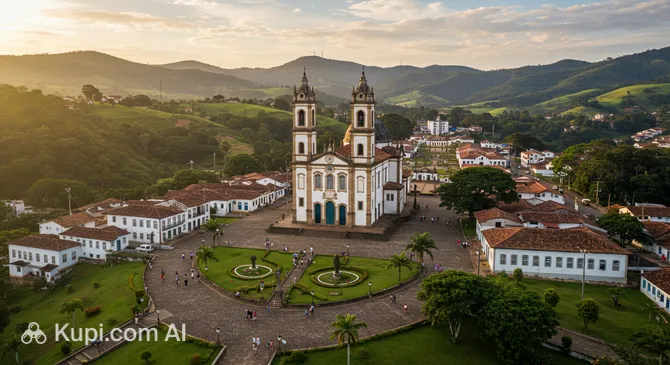
Congonhas is a small but surprisingly colorful city located in the state of Minas Gerais. This historical gem, of which Brazil is rightfully proud, attracts travelers with its unique atmosphere, where the grandeur of the colonial past harmoniously intertwines with the steady rhythm of modern provincial life.
The city is nestled in the picturesque foothills, about 90 kilometers south of the administrative center, Belo Horizonte. This geographical position grants it a pleasant climate and breathtaking panoramic views, making it an excellent place to escape the bustle of metropolises. The population of Congonhas is approximately 48,519 people, which helps maintain a friendly and cozy environment.
Congonhas. Illustration.
Source: Kupi.com AI
The city's main fame is linked to its outstanding architectural heritage. Congonhas is known worldwide for the magnificent Bom Jesus do Congonhas complex — a UNESCO World Heritage site. This place is a true mecca for connoisseurs of Baroque art and the works of the legendary sculptor Aleijadinho. The rich history of Congonhas can be felt on every street, transporting guests back to the 18th century and the gold rush era.
This city is an ideal destination for those who want to immerse themselves in the authentic culture of the region and see some of the most significant artistic monuments in South America. Congonhas offers a unique blend of spirituality, history, and natural beauty, inviting every traveler to discover its treasures.
Weather Overview
The climate in Congonhas can be described as tropical highland, due to the city's location among the hills of Minas Gerais. The weather here is generally mild and comfortable for travel; however, it has a pronounced seasonality. To choose the ideal time for your visit and pack your suitcase correctly, we recommend checking what weather in Congonhas is expected during your trip dates.
The summer period, which in the Southern Hemisphere lasts from December to March, is characterized by warm and humid weather. The average temperature during these months stays around 22°C, with air warming up to 26.5°C during the day. However, this is also the rainiest time of year: in January and February, precipitation can occur up to 20 days a month, so an umbrella and a raincoat will be necessary.
Winter (June, July, August), on the other hand, is the driest season. During this time, the rains practically stop — there is usually only one rainy day in July. Days remain sunny and pleasant with temperatures up to 23°C, but nights become noticeably cooler: the thermometer can drop to 10.9–12°C. Expect warm summers with periodic rains and cold, dry winters.
Spring and autumn serve as a comfortable transition between seasons. For example, in April, the number of rainy days decreases to 11, and the average temperature is about 20.4°C. October and November mark the return of the rainy season and a gradual increase in temperature, preparing the city for the hot summer.
Average monthly temperature
Average monthly precipitation
Interesting Facts
Beyond the main attractions, Congonhas holds many fascinating secrets and details that often escape the ordinary tourist's eye. Here are a few facts that reveal the uniqueness of this historical city:
Architectural Dualism. One of the most amazing features of the city's main church is a rare blend of styles. The exterior of the temple, with its characteristic wavy pediment, is executed in the traditions of Brazilian Baroque, while the interior is striking with the luxury and elegance of Italian Rococo. This combination makes the Sanctuary of Bom Jesus do Matozinhos a unique masterpiece of architecture.
The Master’s Heroism. The creator of the famous sculptures, Aleijadinho, is considered the greatest sculptor of Brazilian art. City legends and historical chronicles state that he created his masterpieces while suffering from a severe illness that deformed his body but did not break his spirit, allowing him to gift the world a true national treasure.
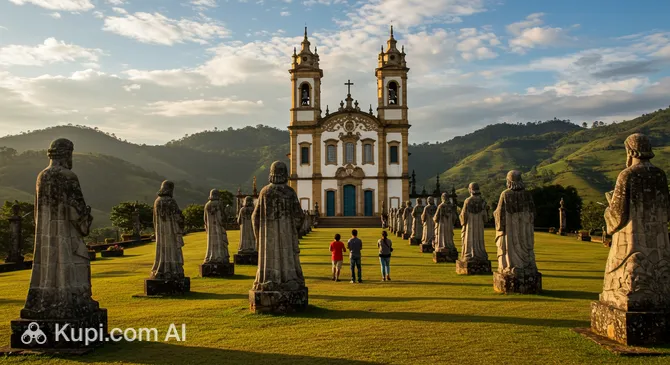
Bible in Stone. The sanctuary complex was intended not just as a church, but as a grand staging of biblical events. The ensemble of the twelve prophets and the Chapels of the Passion of Christ forms a single narrative that pilgrims "read" as they ascend to the temple.
Preserving Heritage. To save the unique history and art of the region for future generations, the modern Congonhas Museum was created. It not only stores artifacts but also helps to decode the deep symbolism of Aleijadinho's works, making them more understandable for contemporaries.
Sanctuary of Bom Jesus do Matosinhos. Illustration.
Source: Kupi.com AI
Traveler photos:
How to Get There
When planning a trip to this historical corner of Minas Gerais, it is important to think through the logistics in advance. Congonhas itself does not have its own airport, so tourists usually fly to nearby major cities and then continue their journey by land. You can find all the ways to get to the city to choose the most convenient route.
The most popular and convenient option is a flight through Tancredo Neves International Airport (IATA: CNF). It is located in the city of Belo Horizonte, approximately 97 km from Congonhas. This is a major hub receiving many flights. The drive from here by rental car or taxi will take about 2.5–3 hours. Also, intercity buses run regularly from the state capital, making this the main route for most travelers.
If you plan to combine your trip with a visit to Rio de Janeiro, you can consider Galeão Antonio Carlos Jobim International Airport (IATA: GIG). It is located much further away, at a distance of about 262 km. The journey by taxi or transfer from there will be long and will take more than 6-7 hours, so this option is more suitable for those who want to enjoy a road trip through Brazil.
For convenience, here is a summary of the main airports used to reach the region:
Regarding rail travel, there are currently no direct passenger trains to Congonhas that are convenient for tourists. The main ground transport is buses and cars. The city is conveniently located near the important federal highway BR-040, which connects Rio de Janeiro and Belo Horizonte. Comfortable buses depart from the Belo Horizonte bus station almost every hour, with a travel time of about an hour and a half, making the trip quick and untiring.
Main Attractions
The main jewel of the city, for which travelers from all over the world come here, is the Sanctuary of Bom Jesus do Matozinhos. This grand architectural complex, listed as a UNESCO World Heritage site, is rightfully considered the pinnacle of Brazilian Baroque. Particular admiration is drawn to the staircase decorated with twelve statues of Old Testament prophets by the legendary master Aleijadinho. Carved from soapstone, these sculptures are striking in their expressiveness and drama, creating a unique ensemble against the backdrop of picturesque hills.
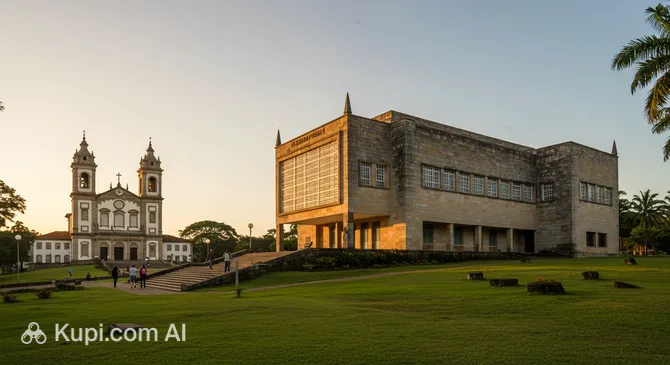
To fully appreciate the scale and significance of the region's historical heritage, it is worth visiting the Congonhas Museum. This modern cultural space, located adjacent to the sanctuary, serves as an ideal complement to viewing the architectural monuments. The museum's exhibits tell the story of the pilgrimage, the stages of the basilica's construction, and the artistic features of Aleijadinho's work. Interactive exhibitions and a rich collection of artifacts help to deeply understand the spirit of the gold rush era and colonial Brazil.
Congonhas Museum. Illustration.
Source: Kupi.com AI
Traveler photos:
Another significant place to visit is the Church of Saint Joseph the Worker. This temple, although less famous than the main basilica, possesses its own unique charm and historical value. It attracts tourists with its elegant architecture and calm atmosphere, allowing for solitude and enjoyment of the interior's beauty without the crowds typical of more popular locations. It is a wonderful example of religious architecture that completes the picture of the city's rich spiritual past.
Local Cuisine
The gastronomic scene in Congonhas is a true journey into the world of traditional Minas Gerais cuisine, which is considered one of the most delicious and soul-warming in all of Brazil. Local culinary art is characterized by its heartiness, simplicity, and use of fresh farm products. The basis of the diet consists of meat (pork and beef), beans, corn, and, of course, the famous local cheeses, which are added to almost everything here.
The main dish that every tourist must try is feijoada. This is a thick, rich stew of black beans with various types of meat and smoked products, traditionally prepared for holidays but found on restaurant menus on weekdays as well. Also popular are cornmeal-based dishes resembling polenta, which are served here as a hearty side dish for meat and vegetables. Lovers of authentic flavors should pay attention to "corn" specialties such as couscous or local variations of porridges.
For those with a sweet tooth, Congonhas offers a rich selection of desserts. In local markets and shops, you can find sweets made from cane sugar, coconut, and pumpkin. You cannot leave without trying traditional Brazilian desserts using local cheese and fruit marmalade (goiabada). It is customary to wash all this down with strong and aromatic coffee grown in this region, or fresh tropical fruit juices. Among alcoholic beverages, the king of the table is cachaça — a strong sugar cane spirit used to make the famous caipirinha cocktail.
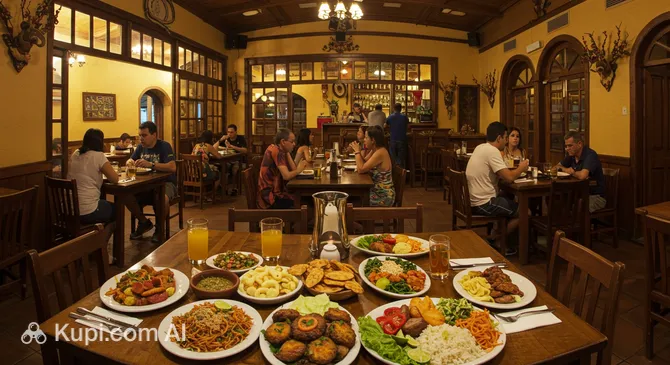
The food culture in the city is very casual. Locals love dining in "pay-by-weight" restaurants (comida a quilo), where you can try a little bit of everything. For an introduction to regional cuisine in a cozy atmosphere, the Malagueta Restaurant is an excellent choice. Additionally, gastronomic festivals are regularly held in the city, where food is accompanied by live music and dancing, turning an ordinary dinner into a true celebration of hospitality.
Travel Tips
A trip to this historical city promises to be an unforgettable immersion into the era of Brazilian Baroque; however, the features of the local terrain and way of life require a little preparation. To ensure your journey is as comfortable as possible and without everyday surprises, we have compiled a list of proven practical recommendations for every tourist.
Clothing and Footwear. The most important element of your wardrobe here is comfortable, broken-in shoes with flat soles (sneakers or trainers). The historical center is paved with ancient cobblestones, and the streets often go steeply uphill, so it is better to forget about heels. Given the variability of the weather in the mountains, dress in layers: it can be hot during the day, and by evening the temperature drops significantly, so a light jacket or sweater will come in handy. Remember the dress code when visiting churches: shoulders and knees should be covered.
Transport. The historical center is compact and best explored on foot, but be prepared for physical exertion due to the hilly terrain. If the climb to the Sanctuary of Bom Jesus do Matozinhos seems too tiring, don't hesitate to take a taxi — there are stands in the center. Apps like Uber work, but there aren't as many cars as in big cities, so always allow extra time for waiting.
Finances. The official currency is the Brazilian Real. While most restaurants accept cards, cash is essential. You will need it for buying souvenirs from street craftsmen, paying for small snacks, and bus fares. ATMs can be found at bank branches in the lower, commercial part of the city. Tips in restaurants (usually 10%) are often already included in the bill as "taxa de serviço," but a little extra change beyond that is always welcomed.
Health and Safety. Congonhas is a peaceful city, but standard caution rules don't hurt: do not leave your belongings unattended and avoid unlit alleys late at night. Pharmacies (Farmácias) are on the main streets, but few are open 24 hours. Be sure to use sunscreen and a hat even in cloudy weather — the sun in the highlands is very active and deceptive.
Communication. The main language is Portuguese. English is not understood everywhere, mainly just by staff in museums and some hotels. Local residents are very friendly and will try to help with gestures, but for reliability, download an offline translator to your phone in advance. It is better to buy a SIM card in a large city upon arrival in the country, as there may be delays with number registration for foreigners in small towns.
Local Etiquette. Brazilians are open and welcoming people. When entering a shop, elevator, or getting into a taxi, it is customary to say hello ("Bom dia" or "Boa tarde"). In religious places, especially during services, maintain silence and respect for believers — these are active temples, not just tourist sites.
What to Avoid. It is categorically forbidden to touch the soapstone statues of the prophets. This material is very soft and prone to erosion, and skin oils damage its surface. Also, refrain from trying to climb onto historical parapets for a flashy selfie — this is regarded as disrespect for a World Heritage site.
Tip for Photographers. Plan your visit to the prophets' complex for early morning or pre-sunset hours (Golden Hour). At this time, not only does the heat subside, but the sunlight falls at an angle that perfectly emphasizes the drama and volume of Aleijadinho's famous sculptures, allowing you to get the best shots.
We hope these tips help you plan the perfect trip to this charming corner of Minas Gerais. Congonhas knows how to make you fall in love with its atmosphere, and armed with these little tricks, you can enjoy its beauty and hospitality without any extra worries.
Entertainment & Nightlife
Nightlife in Congonhas differs significantly from the loud parties of Rio de Janeiro or São Paulo. Here, you won't find massive nightclubs with booming music until dawn. Evening leisure in this historical corner of Minas Gerais is permeated with an atmosphere of coziness, tranquility, and heartfelt communication. Most activity is concentrated in the historical center, where ancient architecture under the glow of streetlights creates romantic settings for leisurely walks and dinners.
The main entertainment for locals and tourists is visiting traditional bars and restaurants, which are called "botecos" here. These are places where you can enjoy live music, often in the style of samba or sertanejo, and taste the best regional cuisine. If you are looking for a reliable place for a pleasant evening, you should stop by the Malagueta Restaurant. A hospitable atmosphere reigns here, and the menu offers an excellent selection of snacks that pair perfectly with a glass of cool beer or traditional cachaça.
Malagueta Restaurant. Illustration.
Source: Kupi.com AI
Traveler photos:
The atmosphere in Congonhas establishments is very casual. There is practically no dress code; a casual style will be appropriate everywhere. The crowd here is friendly and open, often with large families or groups of friends sitting at neighboring tables. It should be noted that the nightlife here winds down quite early. Most restaurants and bars close their doors around midnight or 1:00 AM, so it is better to start planning your evening earlier, around 7:00 or 8:00 PM. Prices in the establishments are quite moderate compared to Brazil's major tourist centers.
In terms of safety, the historical center of Congonhas is considered a peaceful area for evening strolls. However, as in any city, it is worth sticking to well-lit streets and avoiding deserted alleys. For returning to your hotel late at night, it is recommended to use a taxi or call a car through an app to avoid searching for your way in the dark.
In addition to gastronomic pleasures, the evening is the best time to see the city's main attractions in a new light. The famous Sanctuary of Bom Jesus do Matozinhos with its prophets looks especially majestic thanks to the night lighting, creating a mystical and solemn picture.
As for daytime entertainment, the city's cultural program is equally rich. Be sure to set aside time to visit the Congonhas Museum. This modern space will help you gain a deeper understanding of the region's history and the context of the monuments you admired in the evening. During the day, the city lives a slow-paced life, inviting tourists to explore churches and souvenir shops and enjoy views of the hilly landscapes.
Parks & Museums
Although Congonhas is primarily known for its colonial architecture, the city and its surroundings offer pleasant opportunities for outdoor relaxation and a deep dive into the cultural context. Green zones here harmoniously complement the historical landscape, and museum spaces help piece together the mosaic of the region's rich past.
For those who want to take a break from stone and Baroque, the main natural oasis is Cachoeira Park (Parque da Cachoeira). This is a vast recreation area located just a few kilometers from the city center. The park attracts visitors with its natural pools fed by the waters of the Santo Antônio waterfall. It is equipped with sports fields, picnic areas, and camping sites, making it an ideal place for a family weekend or a relaxed day outdoors surrounded by lush Brazilian vegetation.
Another important green zone, inextricably linked with history, is the area surrounding the Sanctuary of Bom Jesus do Matozinhos. The complex includes the so-called "Garden of Steps" (Jardim dos Passos), where six chapels are located with figures depicting the Passion of Christ. A walk through this sloping garden not only reveals the spiritual meaning of the place but also allows you to enjoy magnificent panoramic views of the city and the surrounding hills, creating the feeling of an open-air museum.
Congonhas Museum. Illustration.
Source: Kupi.com AI
Traveler photos:
The city's key cultural institution is the Congonhas Museum. This modern building, subtly integrated into the historical landscape near the sanctuary, fulfills the vital mission of preserving the Baroque heritage. Unlike the old churches, it uses multimedia technologies and interactive installations. Tourists can examine copies of the famous prophets in detail, study Aleijadinho's architectural solutions, and understand the context of the gold rush that shaped this region.
The Romaria cultural complex also deserves attention. Originally built in the 1930s as a shelter for pilgrims, this large circular structure now serves as a center for art and history. Temporary exhibitions, cultural events, and concerts are often held here. Visiting Romaria allows you to feel the spirit of old hospitality traditions and see how historical space is adapted for the city's modern needs.
Insider Tip: If you have time, take a look at the Museum of Image and Memory (Museu da Imagem e Memória), located in the historical center. This small but heartfelt place stores old photographs and household items that tell of the daily life of citizens in past centuries, adding a human dimension to the grandeur of Congonhas' monumental history.
Getting Around
The transport system in Congonhas matches the size and pace of life of this small historical city. There are no subways or trams here, and the main way for tourists to get around remains walking and car transport. Due to the compactness of the historical center, most attractions can be explored on foot; however, the hilly terrain should be considered — the climbs can be quite steep.
Buses are the only form of public transport in the city. The local bus network connects the center with distant residential areas and the outskirts. For a tourist, these routes might be useful if you are staying far from the main attractions or want to save energy on the climb to the basilica. Buses run regularly, but the schedule may change on weekends and holidays. Stops are usually marked with simple signs, and the route is indicated on the vehicle's windshield.
The fare payment system here is as simple and conservative as possible. In city buses, payment is made in cash to the conductor or driver upon entry. As a rule, there are no validators for contactless cards or mobile apps in local transport. The fare is low, but it is extremely important to have small bills and coins with you, as there may not be change for large banknotes.
As an alternative to public transport, taxis are popular. They can be found at special stands in the city center, for example, near the bus station or main squares. Most cars are equipped with meters, but it doesn't hurt to ask the driver for an estimated cost before the trip. This is an especially convenient option for traveling to the Sanctuary of Bom Jesus do Matozinhos if you do not want to climb the hill on foot.
Ride-hailing services like Uber or 99 also operate in the region, but the number of available cars may be limited, especially in the evening or early morning. Waiting times here are usually longer than in metropolises, so plan your trips with a bit of extra time.
For independent travelers, renting a car can be a convenient option for trips to the surrounding area, but within Congonhas itself, a car can become a burden due to narrow cobbled streets and a lack of parking spaces in the historical zone. Bicycle rental is not developed in the city, and the steep slopes make this type of transport suitable only for the most athletic enthusiasts.
Accommodation
Accommodation options in Congonhas fully reflect its provincial coziness and historical character. Here, tourists should not look for large chain hotels, high-rise hotel complexes, or luxury resorts. The core of the housing stock consists of small, often family-run hotels and traditional Brazilian pousadas. These are atmospheric guest houses known for their warm welcome and homely environment, offering travelers an immersion into the authentic lifestyle of Minas Gerais.
When choosing a place to stay, it is important to consider the city's geography, which is divided into two main parts. The Historical Center, located on an elevation, is the most attractive area for tourists. By staying here, you will be within walking distance of the main architectural monuments and can enjoy evening views of the ancient churches. However, keep in mind that this part of the city features steep slopes and climbs, and the cobblestone streets can be inconvenient for wheeled suitcases.
Sanctuary of Bom Jesus do Matosinhos. Illustration.
Source: Kupi.com AI
Traveler photos:
Many travelers seek accommodation specifically near the architectural complex of the Sanctuary of Bom Jesus do Matozinhos. Hotels in this zone often offer rooms with panoramic views of the famous prophets, creating a special magic for your stay. An alternative is the Lower City (the center of commercial activity). Here, the landscape is flatter, housing prices may be slightly lower, and access to shops, banks, and pharmacies is easier. This is a convenient option for those who plan active trips to the surroundings and do not want to climb the hill every time.
Booking Tip: Congonhas is an important religious center, so the booking calendar here is closely tied to church holidays. If your trip falls on Holy Week (Semana Santa) or the September Jubilee of Bom Jesus (Jubileu do Senhor Bom Jesus), you need to look for accommodation several months in advance. During these periods, the city fills with thousands of pilgrims, and finding a free room upon arrival is practically impossible.
The price range in the city varies from budget to mid-range. You can find very inexpensive hostels or simple rooms for an overnight stay, as well as comfortable pousadas with beautiful interiors and a pool. The price almost always includes the famous "mineiro" breakfast (café mineiro) with cheese bread, fresh fruit, homemade cakes, and strong coffee. Booking is available through popular international online platforms, but many small guest houses also readily accept orders via messaging apps or by phone.
Nearby Cities
For those looking to explore the surroundings, Congonhas serves as an excellent starting point for day trips to several interesting nearby places. Its location in the heart of Minas Gerais allows for easy access to other significant cities, each possessing its own unique character.
First and foremost, it is worth visiting the state capital — Belo Horizonte. This metropolis, known as the "garden city," offers tourists a rich cultural program. Here you can see the famous Pampulha architectural complex, created by Oscar Niemeyer, stroll through numerous parks, and visit the famous Central Market to taste the region's best cheeses and sweets.
History buffs will be interested in Conselheiro Lafaiete, located very close by. It is one of the state's oldest settlements, which was once an important stop on the Royal Road. The city attracts visitors with its calm atmosphere, ancient churches, and preserved colonial buildings that tell of the past of Brazil's "golden age."
Also worth noting is Nova Lima. This city is historically linked to gold mining and British influence in the region. Tourists are attracted here not only by historical buildings but also by the picturesque mountain landscapes around it, which are ideal for nature lovers and ecotourism.
These nearby destinations provide an insight into the diverse culture and landscapes of the region. A short trip to any of these cities will be a great addition to your journey through Congonhas.
Shopping & Souvenirs
Shopping in Congonhas is not about chasing fashion brands or visiting huge shopping malls. It is, first and foremost, an immersion into local culture and craftsmanship traditions. The city is famous for its unique handmade items that cannot be found in other regions. For a tourist, a shopping trip here turns into a fascinating hunt for authentic souvenirs that hold the warmth of local craftsmen's hands and the spirit of the colonial era.
The main trading artery for travelers is the historical zone around the famous Bom Jesus complex. The street leading up to the basilica (Ladeira do Bom Jesus) is literally dotted with small souvenir shops, art studios, and workshops. This is where you can watch craftsmen at work and purchase the most popular items. For everyday purchases, pharmacies, and supermarkets, it is worth heading down to the lower part of the city, in the area of Júlia Kubitschek Avenue (Avenida Júlia Kubitschek), where local life is concentrated.
There are no large modern shopping centers in the usual sense in Congonhas. The city maintains its provincial way of life, and the format of giant malls has not taken root here. If you need a large-scale shopping trip with visits to international brand boutiques and cinemas, it is best to plan a trip to the state capital, Belo Horizonte, or the neighboring city of Conselheiro Lafaiete, where the choice is much wider. In Congonhas itself, trade is represented by small galleries and private shops.
The most colorful places for shopping are the markets and street fairs. Special attention should be given to the craft market located in the immediate vicinity of the Sanctuary of Bom Jesus do Matozinhos. This is the heart of the city's tourist trade. Hundreds of items, from miniature figurines to massive interior objects, are displayed here under the open sky. There is also a municipal market in the city where you can buy fresh local products, fruits, and cheeses.
Sanctuary of Bom Jesus do Matosinhos. Illustration.
Source: Kupi.com AI
Traveler photos:
When choosing souvenirs, first and foremost pay attention to items made of soapstone (pedra-sabão). This is the region's signature. Local craftsmen masterfully carve copies of Aleijadinho's famous prophets, boxes, chess sets, candle holders, and kitchenware (soapstone pots and pans retain heat for a long time) from this soft mineral. Additionally, it is worth bringing back:
Traditional Minas Gerais sweets (especially doce de leite — milk caramel).
Local "Minas" cheese.
Religious paraphernalia (rosaries, icons) found in shops near churches.
High-quality locally produced cachaça.
Interesting books on art and history can also be found in the souvenir shop offered by the Congonhas Museum.
Shop opening hours in Congonhas are standard for the Brazilian province. Most retail outlets are open Monday to Friday from 09:00 to 18:00, often with a lunch break. On Saturday, shops usually work until 13:00, and Sunday is a day off (except for souvenir shops at attractions, which are open on weekends for tourists). Regarding payment, credit cards are accepted without problems in large shops and restaurants. However, at street markets and in small craft shops, it is preferable to have cash Reais, as not everyone has terminals, and a discount can often be obtained for cash payment.
The Tax Free system in Congonhas is practically non-existent for tourists. This is a small settlement, and there are no shops participating in international VAT refund programs. This option is mostly available in large shopping centers in metropolises or at international airports, so you should not count on tax refunds for souvenir purchases here.